Home Weird World Photo Galleries Hubble’s Spiral Galaxies – Amazing space pictures

Hubble’s Spiral Galaxies – Amazing space pictures

0
49

20140103-232101.webp

The Eye of the Void: Why the Universe is Watching Us Back

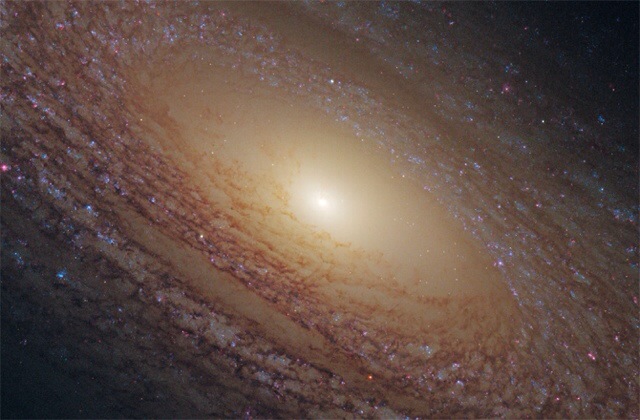
Stop what you are doing. Look at that image above. Really look at it.

You are looking at a graveyard. A ghost story written in light. That isn’t just a collection of sparkles; it’s a time machine that drags us back to the violent, screaming birth of everything we know. Since 1990, a school bus-sized tube of metal and glass called the Hubble Space Telescope has been floating above our atmosphere, staring into the dark. And what it found staring back changed everything.

We used to think the dark patches of the sky were empty. Just nothing. A void. Then Hubble pointed its lens at a patch of nothingness the size of a grain of sand held at arm’s length. It opened the shutter and just waited. It soaked up photons that had been traveling for billions of years.

The result? That image. The Ultra-Deep Field.

It wasn’t empty. It was crowded. Thousands of galaxies. Trillions of stars. In a grain of sand. This data forced astronomers to scramble. It forced them to rewrite the textbooks on how spiral galaxies—the beautiful, pinwheel monsters of the cosmos—actually grow up. But there is a deeper mystery here. One that goes beyond simple astrophysics and touches on the terrifying architecture of our reality.

The Sacred Geometry of the Spiral

Why a spiral? Have you ever asked yourself that?

Look at a sunflower. Look at a hurricane on a weather map. Look at the water draining out of your bathtub. Now look at a galaxy. It’s the same shape. The Fibonacci sequence. The Golden Ratio. It’s everywhere.

Some people call this nature’s efficiency. Others, the ones who stay up late connecting the dots on internet forums, call it a fingerprint. Evidence of a designer? Or maybe evidence of a program. If we are living in a simulation, the spiral is the code repeating itself. Fractal geometry on a scale so big it breaks the human brain.

The veteran observatory hasn’t just been snapping vacation photos of the universe. It’s been building a crime scene board. And the suspects are these majestic spirals that seem to pervade the entire observable universe.

We’ve cracked open the archives. We are going to take a trip through the most mind-bending, insomnia-inducing galactic views Hubble ever sent home. Buckle up. It gets weird from here.

20140103-232150.webp

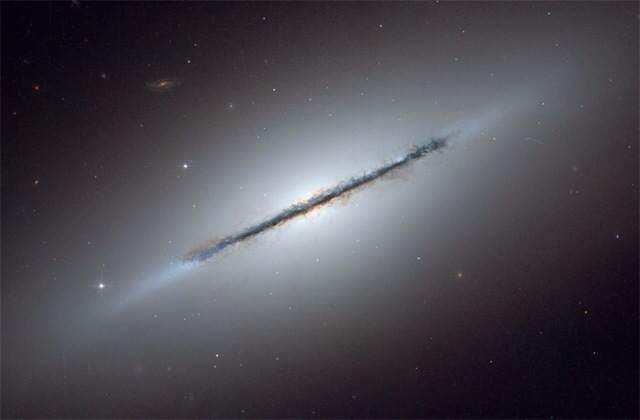
The Knife Edge: NGC 5866

This is what happens when you catch a galaxy undressed. This is NGC 5866, seen almost perfectly edge-on from Hubble’s perspective. It doesn’t look like a spiral here, does it? It looks like a slit in the fabric of space. A UFO. A cosmic frisbee.

The terrifying part isn’t the light. It’s the shadow.

See that dark line slicing through the middle? That is galactic dust. It silhouettes the bright core. But “dust” makes it sound harmless, like what you find under your sofa. It isn’t. That dust is the heavy ash of dead stars. It is the building block of planets. It’s the stuff you and I are made of. Carbon. Oxygen. Iron.

What Hides in the Dust?

Astronomers love to talk about the “Habitable Zone” or the “Goldilocks Zone.” But look at the density of that core. In the center of NGC 5866, stars are packed so tight that night never falls. If you lived on a planet in there, the sky would be a blinding sheet of white fire. Radiation would cook you alive.

But out in the edges? In the quiet suburbs of the galaxy? That’s where things get interesting.

Recent internet theories love to speculate about the “Galactic Fedora” shape of this object (it is technically the “Spindle Galaxy”). But let’s get real. The symmetry is unnerving. Gravity is a messy artist, usually. It smashes things. It warps them. Yet here, we see a disk so flat, so perfect, it looks engineered.

Is it possible that life exists in that thin dark line? Hidden behind the dust, shielded from our prying eyes? We scan the radio waves for signals, but if a civilization wanted to stay hidden, a thick lane of cosmic soot is the perfect curtain.

20140103-232229.webp

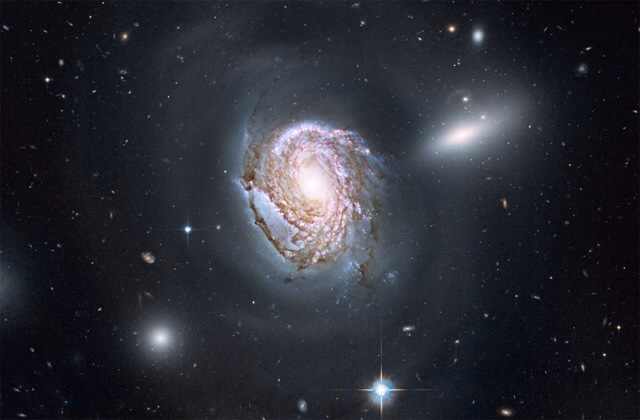
The Lonely Giant: The Coma Cluster Phantom

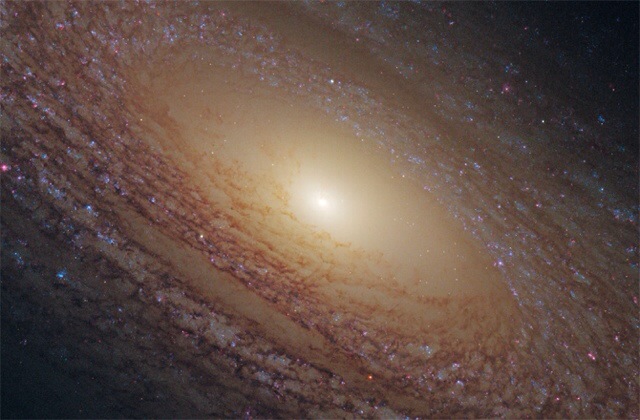
We don’t even have a catchy name for this one. It’s just “an unnamed spiral galaxy.” That fact alone should give you chills. We have mapped so much of the sky that entire galaxies—cities of billions of stars—don’t even get a proper label. They are just numbers in a database.

This phantom is sitting deep within the Coma Cluster, roughly 320 million light-years away in the constellation Coma Berenices. Let’s talk about distance for a second. 320 million years. Dinosaurs weren’t even a glimmer in evolution’s eye when the light in this picture left those stars.

You are looking at the deep past. This galaxy could be dead by now. It could have collided with a neighbor, exploded, or faded into the dark. We wouldn’t know. We won’t know for another 320 million years. We are watching a movie that ended eons ago.

The “Missing Mass” Conspiracy

The Coma Cluster is famous for another reason: Dark Matter. Back in the 1930s, an astronomer named Fritz Zwicky looked at this cluster and realized the math didn’t add up. The galaxies were moving too fast. They should have flung themselves apart like a broken merry-go-round. There wasn’t enough visible gravity to hold them together.

He realized there had to be something else. Something invisible. Something heavy.

He called it *Dunkle Materie*. Dark Matter. This unnamed spiral is swimming in a sea of invisible ghosts. 85% of the matter in the universe is invisible to us. We can’t see it, touch it, or measure it directly. We only know it’s there because of how it tugs on things like this galaxy.

Look at the arms in the image. See the complex detail? The feathering? That structure is being held together by a ghost. It makes you wonder—are we the anomaly? Is the visible stuff, the shiny stars, just the foam on top of a dark ocean?

20140103-232328.webp

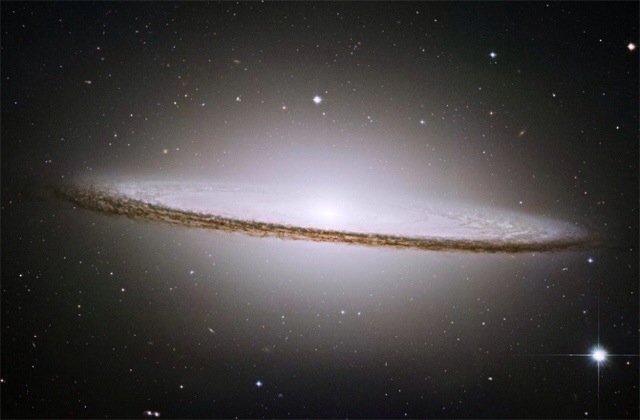
The Crown Jewel: Messier 104 (The Sombrero)

This is the celebrity. The Sombrero Galaxy. Even if you don’t know space, you know this shape. It sits on the border of Virgo and Corvus, and it is huge. 50,000 light-years across.

But let’s ignore the beauty and talk about the monster in the basement.

At the heart of the Sombrero—that glowing white bulge—lies a Supermassive Black Hole that is absolutely terrifying. We are talking about a mass of 1 billion suns. Not one million. One *billion*.

It is one of the most massive black holes ever measured in a nearby galaxy. It is eating everything around it. That bright glow? That’s the last scream of gas and dust as it gets ripped apart by gravity before falling into the hole. The rim of the sombrero—those thick lanes of dust obscuring the starlight—is essentially the debris field.

Are Black Holes Portals?

Here is where modern physics starts to sound like science fiction. Einstein’s math predicts black holes. But it also predicts that if you can spin a black hole fast enough, or manipulate the charge, the singularity might not crush you. It might open a door. An Einstein-Rosen bridge. A wormhole.

Could a civilization sufficiently advanced use the Sombrero’s core as a transit hub? A galactic subway station?

We see high-energy X-rays shooting out of this thing. We see chaos. But maybe, just maybe, that chaos is the exhaust from a machine we can’t comprehend. The sheer scale of the Sombrero makes our own Milky Way look quaint. It’s an aggressive, high-gravity beast.

20140103-232407.webp

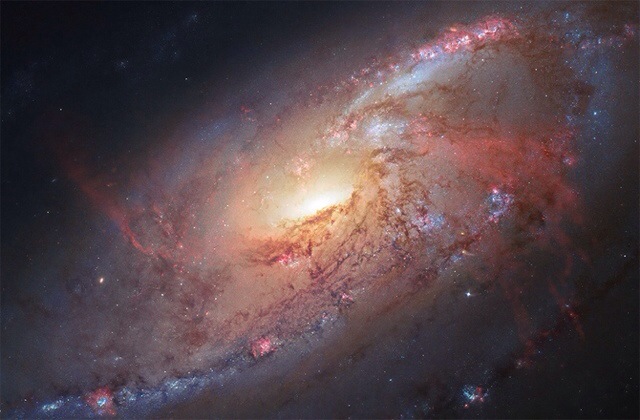
The Hidden Reality: M106

Trust nothing. Not even your eyes.

This unique view of M106 isn’t a single photo. It’s a Frankenstein monster of data. It combines Hubble data with photographs taken by astrophotographer Robert Gendler. And it reveals something that shouldn’t be there.
Look at the purple stuff. Those aren’t normal spiral arms. Ordinary arms are full of stars. These purple tendrils? They are made of hot gas. And they aren’t flat. They curve *out* of the galactic plane.

This galaxy is leaking.

Something at the center is pumping so much energy into the system that it is blowing jets of material out into the void. It’s like a galactic fountain. This tells us that galaxies aren’t just static islands. They are engines. They process matter. They recycle the universe.

The Simulation Glitch?

Why does M106 have four arms instead of two? The extra set—the “anomalous arms”—don’t contain stars. They are visible in X-ray and radio waves. For years, we didn’t even know they were there. It was like finding a secret room in a house you’ve lived in for decades.

It makes you wonder what else is hiding in plain sight. We only see a tiny sliver of the electromagnetic spectrum. We see the rainbow—Red to Violet. That’s it. We are blind to the rest. We are walking through a room full of elephants, but we can only see the mice.

With tools like Hubble and the new James Webb telescope, we are finally putting on the glasses that let us see the monsters.

20140103-232450.webp

The Cosmic Car Crash: Arp 273

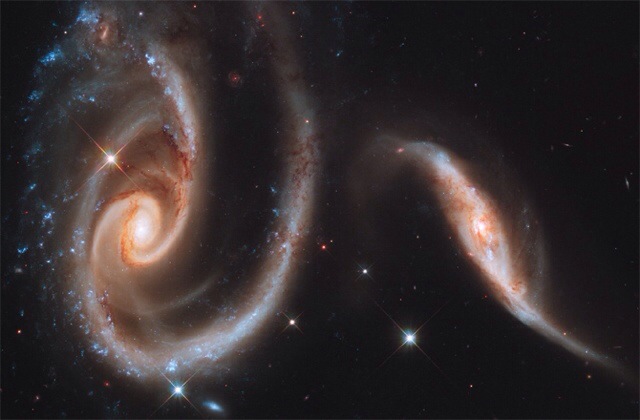
To celebrate Hubble’s 21st year in space, astronomers released this image. They call it “The Rose.” Aww. Isn’t that sweet? A flower in the sky.

Wrong. This is a murder scene.

Arp 273 is a pair of interacting galaxies. The large one at the top is being warped and distorted by the gravity of the smaller one below. They are crashing into each other. But because space is so big, the crash happens in slow motion. This collision will take hundreds of millions of years to finish.

See that lopsided arm on the big spiral? That’s tidal force. The little galaxy passed through the big one, missed the center, and its gravity dragged that arm out like taffy. It’s a scar.

The Future of the Milky Way

Why should you care about a collision 300 million light-years away? Because this is a crystal ball. This is our future.

Right now, the Andromeda Galaxy is hurtling toward us at 68 miles per second. It is bigger than us. It is hungry. In about 4 billion years, the Milky Way and Andromeda will do exactly what Arp 273 is doing. We will slam together. The night sky will be torn apart. Constellations will vanish as stars are flung into the abyss.

It won’t be the end of the world—stars are so far apart they rarely hit each other—but the view will be spectacular. And terrifying.

The Final Question: Are We Alone?

Hubble has shown us billions of galaxies. Each galaxy has billions of stars. Most of those stars have planets. The math is staggering. The number of Earth-like planets in the universe is likely in the quadrillions.

So where is everyone?

This is the Fermi Paradox. If the universe is this old, and this crowded, and filled with the same chemical ingredients everywhere, we should be swimming in signals. We should see Dyson Spheres around those stars. We should see intergalactic highways.

But we see silence. Just beautiful, deadly spirals spinning in the dark.

Maybe we are the first. Maybe we are the last. Or maybe, just maybe, the other civilizations looked into the deep field, saw what was staring back, and decided to turn off their lights and hide.

Hubble didn’t just give us wallpapers for our computers. It gave us an existential crisis. It showed us the machinery of God, or the simulation, or the random chaos—whatever you want to call it. It showed us that the universe is beautiful, yes. But it is also huge, cold, and utterly indifferent to our existence.

And that makes the blue marble we live on that much more precious.

Keep watching the skies.

Originally posted 2014-01-03 22:26:14. Republished by Blog Post Promoter