History’s Greatest Enigmas: The Code, The Pit, and The Ghost Ship
Some stories have no ending. Some questions have no answer. They just hang there in the mists of time, taunting us, daring us to solve them. We think we have it all figured out, with our satellites and our carbon dating and our supercomputers. We think history is a closed book.
It isn’t.
There are gaps. Pages torn out by an unseen hand. Codes we can’t crack. Treasures we can’t find. People who simply… vanish. These aren’t just old tales. They are active, breathing mysteries that defy every neat explanation we try to force upon them. They are the glitches in the matrix of our past, reminding us that we don’t know nearly as much as we believe we do. Today, we’re pulling on the threads of three of the most maddening, most compelling unsolved cases in history. Prepare to question everything.
The Alien Rosetta Stone? Cracking the Phaistos Disc
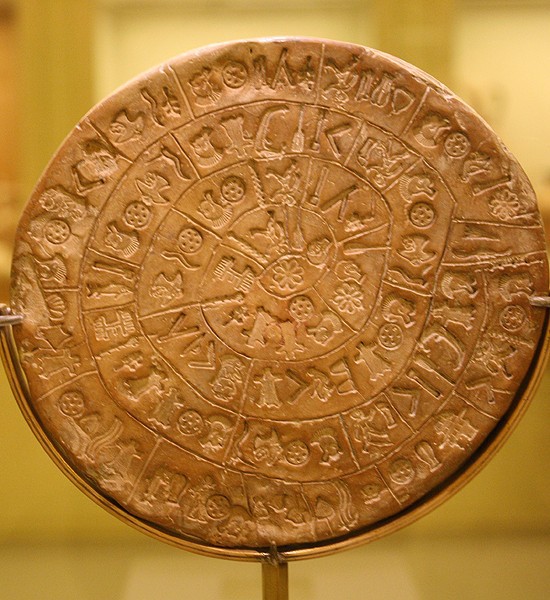
Imagine walking through the ruins of a palace that crumbled to dust 3,700 years ago. You’re an archaeologist, Luigi Pernier, and it’s 1908. The sun is beating down on the island of Crete. In a dusty, forgotten corner of the Minoan palace of Phaistos, you find it. A small, unassuming disc of baked clay, no bigger than a CD.
But this is no ordinary piece of pottery. It’s covered, on both sides, with a spiral of symbols. A language. A message from a lost world.

This is the Phaistos Disc. And for over a century, it has remained utterly, infuriatingly silent.
What makes it so impossible? The script is a complete one-off. A total orphan. Of the 241 symbols pressed into the clay, making up 45 unique signs, none of them perfectly match any other known writing system from the ancient world. Not Linear A. Not Linear B. Not Egyptian hieroglyphs. Nothing.
We see a warrior with a Mohawk-style helmet. A plumed headdress. A flying bird. A fish. A woman. A boat. They are arranged in groups, separated by lines, marching from the outside in toward the center. It’s clearly a sophisticated system. Someone knew what they were doing. Someone had a story to tell.
And here’s the kick in the head. The symbols weren’t carved by hand. They were *stamped*. The creator of the disc used a set of pre-made punches to press each symbol into the wet clay. This is, for all intents and purposes, the earliest known example of movable type. This is the principle of a printing press, used 3,000 years before Johannes Gutenberg was even a whisper of an idea. Who were these people?
Deep Dive: The Mysterious Minoans
To understand the disc, you have to understand its birthplace. The Minoan civilization, flourishing on the island of Crete from around 2700 to 1450 BC, was Europe’s first great Bronze Age power. They were master sailors, incredible artists, and brilliant architects who built sprawling palace complexes like the one at Knossos, famously associated with the myth of King Minos and the Labyrinth. They were a civilization that seemed to value beauty and life, with frescoes depicting dancing, dolphins, and bull-leaping ceremonies. Then, around 1450 BC, they were rocked by a series of catastrophes, likely including the massive volcanic eruption of Thera (modern Santorini), and they faded into the background of history, their culture absorbed by the rising Mycenaeans from mainland Greece.
They left behind two scripts we *can* find elsewhere: the still-undeciphered Linear A and the later Linear B, which was cracked in the 1950s and shown to be an early form of Greek. The Phaistos Disc, however, stands alone. Was it from a different culture entirely? A gift from a foreign king? Or was it a sacred, secret script used by Minoan priests for one specific purpose?
The Theories: From the Plausible to the Paranoid
Without a “Rosetta Stone”—a second artifact with the same script alongside a known language—decipherment is a near-impossible game of guesswork. And people love to guess.
- A Hymn or Prayer: Many scholars believe the spiraling, repetitive nature of the text suggests a religious hymn or a magic spell, meant to be read aloud in a ritual. The symbols might represent deities, offerings, or incantations.
- A Legal Document or Treaty: Could it be a record of a peace treaty between the Minoans and another power? The official seal of a king, listing his titles and deeds? It’s possible, but the pictorial nature of the symbols feels more poetic than bureaucratic.
- An Ancient Board Game: Some have suggested it’s not a text at all, but the playing surface for a game, with the symbols dictating moves or outcomes. This seems unlikely given the careful grouping of the signs into what look like words.
- A Complete Hoax: This one pops up regularly. Could Luigi Pernier, wanting to make a name for himself, have faked the whole thing? Most archaeologists reject this. The firing techniques are consistent with other Minoan artifacts, and faking such a complex and internally consistent object in 1908 would have been extraordinarily difficult.
Then you get the internet theories. The wild stuff. Is it a star map from an alien civilization? A message from the lost continent of Atlantis? A prophecy of future events? Even with modern computational analysis and AI algorithms thrown at the problem, the disc has given up zero secrets. It is a lock without a key. A message in a bottle from a civilization so far removed from ours that we can’t even begin to read their handwriting.
The Money Pit: A 200-Year Obsession with Buried Treasure… or a Deadly Trap?
Some mysteries are intellectual. Some are spiritual. And some are just a deep, dark hole in the ground that has swallowed fortunes, reputations, and even human lives.
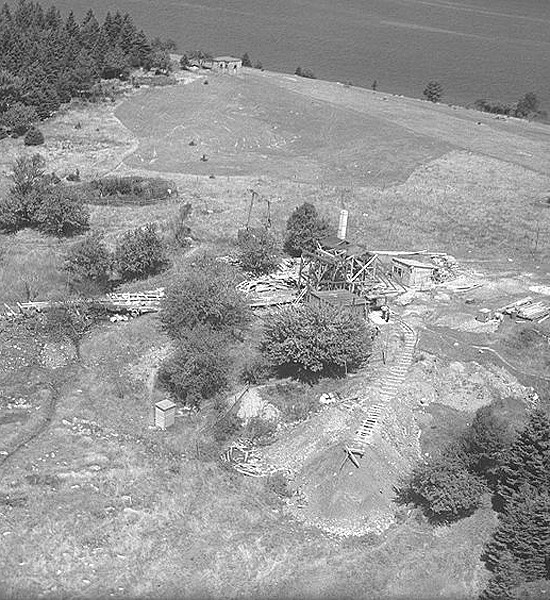
Welcome to Oak Island.
It’s a tiny, 140-acre speck of land off the coast of Nova Scotia, Canada. And for more than 220 years, it has been the site of the world’s most tantalizing and destructive treasure hunt. The story begins in 1795. A teenager named Daniel McGinnis noticed a circular depression in the ground under an old oak tree. The tree had a thick branch that had been sawed off, with rope marks worn into the wood above it. It looked like a block and tackle had been used to lower something heavy. Something big.
McGinnis and two friends started digging. What they found kicked off a mystery that continues to this day.

Just a few feet down, they hit a layer of flagstones. At 10 feet deep, they hit a platform of solid oak logs. At 20 feet, another one. At 30 feet, another. This was no sinkhole. This was engineered. This was deliberate. As decades passed, company after company poured money and men into the hole, which became known as “The Money Pit.” They dug deeper, finding more log platforms, layers of charcoal, putty, and coconut fiber—a material that had to have been brought from the tropics. At 90 feet, they found a stone tablet inscribed with a strange cipher.
While the stone itself is now lost, multiple accounts from the 1800s claim it was translated to read: “Forty feet below, two million pounds lie buried.”
That was all the motivation anyone needed. But the builders of the Money Pit were clever. Devilishly so.
Deep Dive: The Booby Traps of Oak Island
Just as searchers got close to the supposed treasure level, around 100 feet down, their drills hit a hard surface—thought to be a treasure chest—and the entire shaft suddenly flooded with seawater. Violently. It filled up in minutes. After decades of further investigation, they discovered why. The original builders had constructed an elaborate system of box drains, underground tunnels running from the nearby Smith’s Cove, designed to act as a permanent booby trap. The moment the main shaft reached a certain depth, the pressure difference would be breached, and the Atlantic Ocean itself would rush in to protect whatever lies at the bottom. The engineering required to build such a system in the 16th or 17th century is staggering. Who on earth had that kind of knowledge and resources?
Who Built It? Pirates, Templars, or Philosophers?
The question of “who” is almost as big as the question of “what.”
- Pirate Treasure: The most obvious answer. Legends connect the pit to everyone from Captain Kidd to Blackbeard. Pirates were known to bury treasure, but an operation of this complexity seems far beyond the scope of a typical pirate crew.
- The Knights Templar: This is a fan favorite. The theory suggests that after the Templars were disbanded in 1307, they fled Europe with their immense wealth—and possibly sacred relics like the Holy Grail or the Ark of the Covenant—and sailed to the New World, constructing the pit to hide their secrets until the time was right.
- Marie Antoinette’s Crown Jewels: Another story claims that during the French Revolution, the queen’s handmaiden fled with the royal jewels, sailing to Nova Scotia and enlisting the help of the French Navy to construct the vault.
- Sir Francis Bacon: Some believe the pit contains not gold, but the original manuscripts of William Shakespeare, which they claim were actually written by the philosopher Francis Bacon. A secret society, following Bacon’s esoteric beliefs, supposedly created the pit to preserve this world-changing knowledge.
A prophecy says that seven men must die before the island gives up its secret. To date, six men have lost their lives in the search. Today, the hunt is more intense than ever, led by brothers Rick and Marty Lagina and documented on the TV show *The Curse of Oak Island*. They’ve found tantalizing clues—a Spanish coin from the 1600s, a lead cross with potential Templar connections, traces of gold in the water—but the ultimate prize remains elusive, protected by mud, water, and a centuries-old curse.
The Ghost Ship of the Pacific: What Happened to the Crew of the MV Joyita?
The ocean doesn’t like to keep secrets. It usually gives up its dead. It spits wreckage back onto the shore. It leaves clues. But on October 3, 1955, it decided to make an exception. That was the day the charter boat *MV Joyita* set sail from Samoa for the Tokelau Islands, a journey that should have taken about 48 hours.
The ship never arrived.
A massive search and rescue operation was launched. For weeks, planes and ships scoured the South Pacific. Nothing. Not a life raft, not a slick of oil, not a single piece of floating debris. It was as if the *Joyita*, with its 16 crew members and 9 passengers, including a doctor and two children, had been erased from existence.
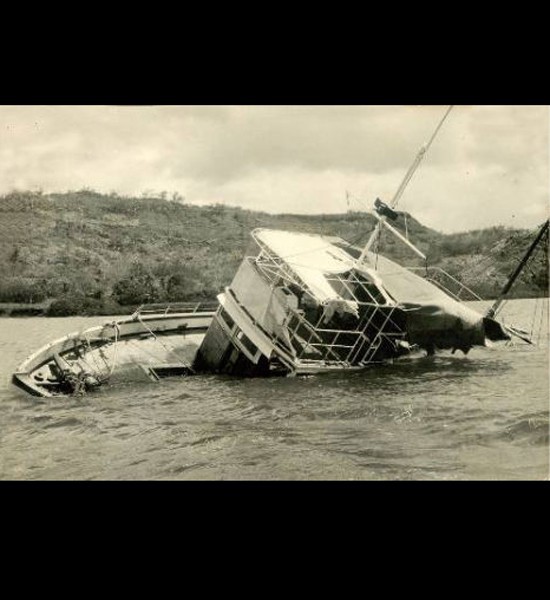
Five weeks later, on November 10th, a merchant ship found her. Adrift and partially submerged, more than 600 miles west of her scheduled route. The ship was a wreck, listing heavily, its deck awash with waves.
But it wasn’t empty.
It was haunted. By silence.

Every single person was gone. The ship’s logbook, sextant, and firearms were missing. The radio was discovered to be tuned to the international marine distress channel, but a break in the wiring meant it had a range of only about two miles. The ship’s clocks were stopped at 10:25. The investigators found a doctor’s bag on the deck with a stethoscope and bloody bandages. Four tons of cargo were gone. All three life rafts were missing.
And that’s where the story takes a hard left turn into the bizarre.
Deep Dive: The ‘Unsinkable’ Ghost Ship
Here’s the central, maddening fact of the *Joyita* case: the ship was, for all practical purposes, unsinkable. It was a former U.S. Navy patrol boat, and its hull was lined with 640 cubic feet of cork. Even with its engine rooms completely flooded, it would not sink. The damage found—a corroded pipe had allowed a slow leak—was serious but not catastrophic. The ship was damaged, yes, but it was still floating. It was still a viable refuge in the middle of the vast Pacific Ocean.
So why, in the name of all that is holy, would 25 people abandon a perfectly seaworthy (if damaged) vessel to take their chances in small, open life rafts on the high seas? It’s a question with no logical answer.
Mutiny, Pirates, or Something Else?
The official inquiry could only conclude that the fate of the passengers and crew was “inexplicable.” But that hasn’t stopped the theories from churning for over 60 years.
- Attack and Abduction: The most popular theory involves pirates or holdouts from WWII Japanese garrisons still hiding on remote islands. Perhaps they attacked the *Joyita*, stole the cargo, took the people prisoner, and set the ship adrift. The bloody bandages could be evidence of a fight.
- Mutiny and Murder: The captain, Thomas “Dusty” Miller, was a seasoned sailor but was running from debts. Did a dispute over money or the cargo lead to a fight? Did the crew mutiny, kill the passengers, and flee with the valuable goods?
- Insurance Fraud Gone Wrong: Some have suggested the whole thing was a scam. The owner wanted to scuttle the boat for insurance money, but something went horribly wrong, and everyone ended up dead.
- The Unexplained: And then, you have the whispers. The sea is a strange place. Did they run into a rogue wave that swept everyone overboard? Did they encounter something so terrifying, so otherworldly, that jumping into the ocean seemed like the better option? A UFO? A sea monster? When logic fails, the imagination runs wild.
No bodies were ever found. Not one. The 25 souls aboard the *MV Joyita* simply sailed over the horizon and into a fog of permanent mystery.
An unbreakable code from a lost civilization. A booby-trapped pit that promises infinite riches or a watery grave. A ghost ship floating silent on an empty ocean. These are more than just stories. They are monuments to the unknown. They prove that for all our progress, the world still holds deep, dark corners full of questions we may never be able to answer. History isn’t always written by the victors. Sometimes, it isn’t written at all. It just… vanishes. And we’re left to wonder.
Originally posted 2016-08-22 12:16:14. Republished by Blog Post Promoter