The Legend, The Lies, and The Blood: A Deep Dive Into The Barrow Gang
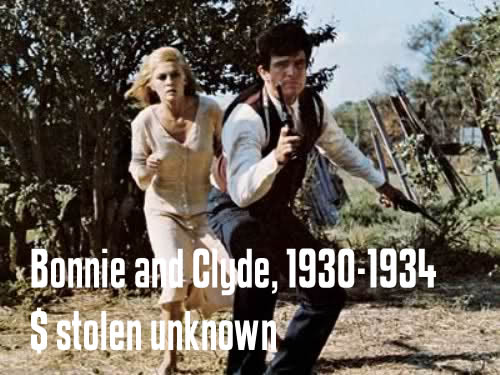
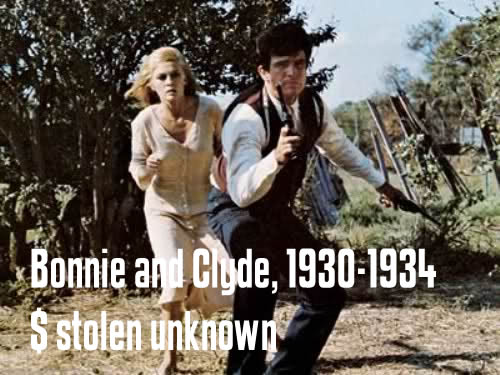
Forget the movies. Forget the glamour. The real story of Bonnie Parker and Clyde Barrow isn’t a romance. It’s a horror story. It’s a tragedy written in gasoline, blood, and the red dust of the Great Depression. While pop culture likes to paint them as star-crossed lovers fighting the system, the reality was much colder, much grittier, and far more mysterious. How much money did they actually steal? Nobody knows. The dollar amount is lost to history. But the cost in human lives? That tally is crystal clear.
We are looking at the years 1930 to 1934. The Public Enemy Era. A time when banks were failing, people were starving, and outlaws became folk heroes. But were they heroes? Absolutely not. They were desperate kids with big guns and a death wish.
The Origin of the Monsters: West Dallas Dirt
To understand the rampage, you have to understand the hunger. Clyde Barrow wasn’t born a mastermind. He was born into the crushing poverty of the Telico gloom, eventually moving to the “Devil’s Back Porch” in West Dallas. This wasn’t just being poor. This was sleeping-under-a-wagon poor. It breaks you. Or it makes you hard.
Clyde chose hard. He wanted to be famous. He wanted respect. And in 1930s America, a fast car and a mesmerizing girlfriend were the quickest ways to get it. Bonnie Parker? She was a tiny, poetry-writing waitress with a bored soul and a dangerous attraction to bad boys. When they met, it was like striking a match in a room full of dynamite. Boom.
They didn’t start with banks. That’s a common misconception. They started small. Petty theft. Smashing grab-and-gos. But the violence escalated with terrifying speed. Prison changed Clyde. Specifically, the Eastham Prison Farm. It was a brutal, hellish place where guards beat inmates senseless. Historians agree that Clyde went into Eastham a schoolboy crook and came out a rattlesnake. He actually chopped off two of his own toes with an axe just to get out of work detail. Think about that pain. That desperation. That is the man who would terrorize the Midwest.
The Myth of Robin Hood: Who Did They Really Rob?
There is a persistent internet theory that Bonnie and Clyde were “Robin Hoods” who only robbed the big, bad banks that were foreclosing on farmers. It’s a nice thought. It fits the narrative. But is it true? Not even close.
The Barrow Gang was disorganized. They were chaotic. While they did hit around a dozen banks, the vast majority of their crimes were against regular, working-class people. They robbed grocery stores. They robbed gas stations. They robbed funeral homes. In some cases, they risked their lives—and took the lives of others—for less than ten dollars. Imagine killing a father of three for a handful of change. That’s not Robin Hood. That’s a frantic, starving animal backed into a corner.
Why does the myth persist? Because the public needed it. In the 1930s, the government was the enemy. The banks were the villains. If you saw a young couple sticking it to the “Man,” you cheered. You ignored the bodies they left behind because you wanted to believe someone could win against the system. It was mass delusion fueled by newspaper headlines.
The Arsenal: Why The Police Were Scared
Here is where things get technical and terrifying. The police in the early 1930s were woefully outgunned. Your average Sheriff had a six-shooter and maybe a shotgun. Clyde Barrow? He had military-grade hardware.
Clyde loved the Browning Automatic Rifle (BAR). This was a weapon designed for the trenches of World War I, not for a shootout on a dusty Texas highway. Clyde stole these from National Guard armories. He cut down the barrels to make them concealable. He modified the magazines. He created a handheld machine gun that could punch through the engine block of a police cruiser.
When the cops chased the Barrow Gang, they weren’t just risking getting shot. They were risking getting shredded. In the Joplin shootout of 1933, the gang unleashed such a wall of firepower that the police were forced to retreat, leaving two officers dead. The gang escaped, but they left behind something that would seal their fate: a roll of undeveloped film. Those photos—Bonnie with a cigar (a joke prop), Clyde holding her up—were splashed across every paper in America. They became instant celebrities. And instant targets.
The Ford V8: The Getaway Machine
You can’t tell this story without the car. The 1934 Ford V8. It was faster than almost anything the police had. Clyde was obsessed with them. He could outrun anything on the road. There is a famous letter, allegedly written by Clyde to Henry Ford, praising the “dandy car.”
“While I still have got breath in my lungs I will tell you what a dandy car you make. I have drove Fords exclusively when I could get away with one. For sustained speed and freedom from trouble the Ford has got every other car skinned and even if my business hasen’t been strickly legal it don’t hurt anything to tell you what a fine car you got in the V8.”
Is the letter real? Handwriting analysis is split. Some say it’s a forgery created for publicity. Others swear it matches Clyde’s scrawl. Either way, the car was their lifeline. It was their home. They lived in it, ate in it, and bathed in river water while parked next to it. It was a claustrophobic, smelly, rolling fortress.
The Turn: When The Public Stopped Cheering
For a while, they were darlings of the press. But the tide turned. Why? The Grapevine killings. Easter Sunday, 1934. Two highway patrolmen, H.D. Murphy and Edward Wheeler, stopped a car on a country road. They thought it was a motorist in trouble.
Before they could even draw their weapons, they were gunned down. Patrolman Murphy was a rookie. It was his first day on motorcycle duty. Witnesses claimed Bonnie walked up to the dying officer and finished him off, laughing. One witness said she shouted, “Look at his head bounce!”
This story horrified the nation. The “romantic outlaws” were now cop-killing monsters. However, modern historians doubt Bonnie actually pulled the trigger or said those words. It’s highly likely that another gang member, Henry Methvin, panicked and fired. But the damage was done. The public wanted them dead.
Enter Frank Hamer: The Texas Ranger
The state of Texas was tired of being embarrassed. They hired Frank Hamer. He wasn’t a regular cop. He was a relic. A legendary Texas Ranger who had survived over 50 gunfights. He didn’t want to arrest them. He was hunting them.
Hamer studied them like a biologist studies wolves. He mapped their patterns. He realized they moved in a giant circle, visiting family on the borders of state lines where jurisdiction became messy. He knew they were creatures of habit. And he knew that sooner or later, they would need to contact their families.
The Ambush: Execution or Justice?
May 23, 1934. Gibsland, Louisiana. 9:15 AM.
Hamer and his posse set up a blind on a rural road. They enlisted the help of Ivy Methvin, the father of gang member Henry Methvin. They parked Ivy’s truck on the side of the road, taking off a wheel to make it look broken down. It was the bait.
Clyde came driving down the road at high speed. He saw the truck. He knew Ivy. He slowed down to help. That was his last mistake.
There was no “Freeze!” There was no “Put your hands up!” As soon as the car stopped, the posse opened fire. And they didn’t stop. They emptied their automatic rifles. Then they grabbed shotguns and emptied those. Then they used pistols.
One hundred and thirty rounds hit the car. The noise was so loud it left the officers temporarily deaf. The car was perforated like a sieve. Inside, Bonnie and Clyde were decimated. The coroner’s report is gruesome reading. Clyde’s head had practically exploded. Bonnie died with a half-eaten sandwich in her hand. It was overkill. It was rage. It was a message.
The Aftermath: The Human Vultures
This is the part of the story that most history books skip. It’s too dark. But it happened.
Within minutes of the shooting, locals swarmed the scene. They didn’t call for an ambulance. They started grabbing souvenirs. People tried to cut off Clyde’s ear with a pocket knife. Someone snipped locks of Bonnie’s bloody hair. They tore pieces of the car away. One man tried to saw off Clyde’s trigger finger. The police had to physically fight the crowd back to protect the bodies. It shows a morbid, twisted side of human nature. The crowd was just as hungry for violence as the gang had been.
Modern Theories: What If?
History is never settled. New theories keep popping up on forums and deep-dive video essays. Let’s look at a few.
Theory 1: Bonnie was Pregnant.
This is a persistent rumor. Some claim that when she died, Bonnie was two months pregnant. Is there evidence? No autopsy confirmed it at the time, but the chaotic nature of the “exam” (done at a local funeral home, not a medical lab) leaves room for doubt. If true, it adds a sickening layer of tragedy to the ambush.
Theory 2: The “Stand Down” Order.
Some believe Hamer wanted to take them alive, but one of the other deputies panicked and fired early, forcing the rest to unload. The official story says they challenged them. The bullet holes suggest otherwise. The car was in gear. Clyde’s foot was off the brake. They were moving. It looks like an assassination.
Theory 3: The Loot.
Where is the money? The prompt mentions “$ stolen unknown.” Most of what they stole was spent immediately on gas, repairs, and food. They weren’t burying gold bars. They were living dollar to dollar. The “treasure” was a myth. They died with almost nothing in their pockets.
The Cultural Impact: Why Do We Care?
Why are we still talking about them? Why is the 1967 film a classic? Why are there songs, books, and festivals?
Because they represent ultimate freedom and ultimate consequence. We all hate our jobs sometimes. We all hate paying bills. For a brief, violent moment, Bonnie and Clyde said “No” to all of it. They lived fast, loved hard, and died young. It’s the ultimate rebellious fantasy.
But strip away the Hollywood gloss, and you are left with two scared kids in a stolen Ford, running from a world that had no place for them. They were murderers, yes. Thieves, absolutely. But they were also products of a broken nation. Their death marked the end of the “Outlaw Era” and the beginning of the modern FBI.
The “Death Car” Today
You can still see the car. It’s in a casino in Primm, Nevada. It’s riddled with holes. It’s rusted. It feels haunted. Standing next to it, you don’t feel the romance. You feel the violence. You feel the heavy weight of 130 bullets. It stands as a silent monument to a crime spree that captivated the world.
So, the next time you hear the names Bonnie and Clyde, don’t think of the movie stars. Think of the dust. Think of the fear. Think of the sound of a V8 engine roaring down a lonely Texas road, running out of time.
Originally posted 2016-04-28 12:27:54. Republished by Blog Post Promoter
![bonnie-and-clyde[1]](https://coolinterestingnews.com/wp-content/uploads/2013/02/bonnie-and-clyde1.webp)