The Silent Scream: Did a Lab in Israel Just Prove Black Holes Evaporate?
They are the monsters of the universe. The ultimate prisons.
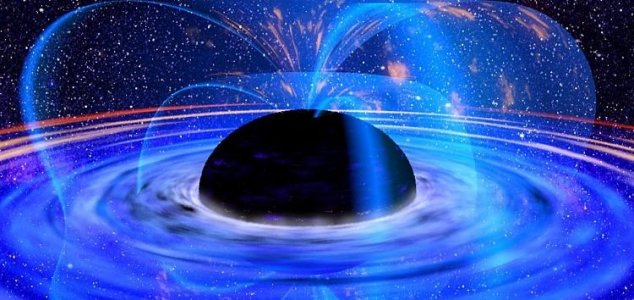
Black holes. Regions of spacetime so violent, so gravitationally dominant, that nothing—not light, not matter, not hope—can escape. Once you cross the line, the event horizon, you’re gone. Forever.
That’s what we all thought, anyway.
But what if it’s a lie? What if black holes aren’t eternal? What if they leak? What if they slowly, painstakingly, over trillions upon trillions of years… die?
This was the bombshell theory dropped on the world of physics over four decades ago by the legendary Stephen Hawking. He proposed that these cosmic titans aren’t perfectly black. He claimed they glow, ever so faintly, with a strange energy. A phenomenon that came to be known as Hawking radiation. It was an idea so radical it broke the known rules of science. And for 40 years, it remained just that: a brilliant, unprovable idea.
Until now. Maybe.
Because hidden away in a laboratory, a physicist named Jeff Steinhauer claims to have built his own black hole—not from stars, but from sound—and he says he has seen the impossible. He has seen it leak.

Deep Dive: The Cosmic Crime Scene
Before we step into that lab, you have to understand why Hawking’s idea sent such a shockwave through the scientific community. To do that, you have to understand the monster itself.
Imagine a star, many times more massive than our sun, reaching the end of its life. It runs out of fuel. The colossal outward pressure from its nuclear furnace suddenly vanishes. What’s left is gravity. Unchecked, unforgiving, absolute gravity.
The star collapses in on itself in a fraction of a second. It implodes with a force that is almost unimaginable, crushing down, down, down, until all its mass is squeezed into an infinitely dense point. A singularity.
Around this point, a boundary forms—the event horizon. It isn’t a physical wall. It’s something far scarier. It is the point of no return. The point where the gravitational pull becomes so strong that the escape velocity is faster than the speed of light. Since nothing can travel faster than light, nothing can get out.
This creates a perfect trap. If you toss a book into a black hole, its information—the words, the paper, the atomic structure—is gone. Erased from the universe. This violated a fundamental law of physics: information can never be destroyed. This conundrum became known as the “Information Paradox,” and it kept physicists awake at night for decades.
Hawking’s Ghostly Solution: Radiation from Nothing
Stephen Hawking stared into this abyss and came back with a truly mind-bending answer.
He turned to the strange world of quantum mechanics. In the quantum world, “empty” space isn’t empty at all. It’s a bubbling, chaotic soup of “virtual particles” that pop into existence for a fleeting moment before annihilating each other and disappearing again. A particle and its anti-particle. Matter and anti-matter. Born from nothing, returning to nothing.
Hawking wondered: what happens if a pair of these virtual particles pops into existence right on the razor’s edge of a black hole’s event horizon?
The results were terrifyingly elegant. He calculated that it would be possible for one particle to fall into the black hole while its twin escapes into space. The escaped particle can no longer annihilate with its partner. It becomes real. It flies off into the cosmos, carrying a tiny bit of energy with it.
And where does that energy come from? It’s stolen directly from the black hole’s mass. E=mc², after all. Mass and energy are two sides of the same coin. By creating a real particle, the black hole pays the price. It loses an infinitesimal amount of its own mass.
One particle at a time. Trillion after trillion of years. The black hole slowly radiates its own existence away. It “evaporates.”
This was the theory of Hawking radiation. It was beautiful. It potentially solved the information paradox. But there was one massive problem. The radiation from a real black hole would be so faint, so weak, that it would be completely drowned out by the background radiation of the universe. We could never, ever hope to detect it with any telescope we could build.
The theory was stuck. A ghost that couldn’t be proven.
Building a Black Hole in a Bathtub
If you can’t go to the mountain, you bring the mountain to you. Or, in this case, if you can’t go to a black hole, you build one in a lab in Haifa, Israel.
This is where Professor Jeff Steinhauer from Technion university enters the story. He didn’t use gravity. He didn’t crush any stars. He used sound. And super-cooled helium.
He created what scientists call an “analogue black hole,” or sometimes, a “dumb hole”—a place where sound cannot escape.
Think about it like this. Imagine a river that starts off flowing slowly, then enters a narrow canyon and speeds up, eventually going over a massive waterfall. Now, imagine a fish in that river. In the slow-moving part, the fish can easily swim faster than the current. It can swim upstream, downstream, wherever it wants.
But as the river speeds up, there comes a point where the water is flowing faster than the fish can possibly swim. If the fish crosses that line, it doesn’t matter how hard it thrashes its tail. It’s going over the waterfall. That point of no return is the fish’s event horizon.
Steinhauer did the same thing, but with sound.
The Quantum Waterfall Experiment
Here’s the recipe for a sonic black hole:
- The Medium: First, you take a gas of helium atoms and cool it down to just a fraction of a degree above absolute zero. At these insane temperatures, the atoms stop acting like individual particles and enter a bizarre state of matter called a Bose-Einstein condensate. They essentially begin to move as one single, giant quantum wave.
- The Flow: Next, you use lasers to make this quantum fluid flow, creating a current. You carefully control it so that in one region, the fluid is flowing slower than the speed of sound within that fluid. In another region, you accelerate it so it flows *faster* than the speed of sound.
- The “Event Horizon”: The boundary between the slower (subsonic) and faster (supersonic) flow is your event horizon. A sound wave (which is just a vibration of the atoms) can travel upstream in the slow section. But if that sound wave drifts into the supersonic section, it gets swept away. It’s trapped. It can never travel back upstream against the current. It’s inside a black hole for sound.
This setup was Steinhauer’s cosmic stage. Now, all he had to do was listen for the ghost.
The Ghost in the Machine: What Did The Experiment Actually Find?
Just like Hawking predicted virtual particles popping into existence in space, quantum mechanics predicts that tiny packets of sound energy, called “phonons,” should be doing the same thing in Steinhauer’s super-cooled fluid.
His experiment was designed to see if pairs of these phonons would appear at his sonic event horizon, with one getting trapped and swept away, while the other escaped. If this happened, the escaping phonon would be the sonic equivalent of Hawking radiation.
And that’s exactly what he reported finding.
Over the course of 4,600 experimental runs, he detected pairs of correlated phonons emerging from the event horizon. One was being dragged into the “black hole” while its partner was being flung outwards, escaping into the “universe” of the lab equipment. The energy signature of the escaping phonons matched the predictions of Hawking’s equations with stunning accuracy. It was thermal. It was constant. It looked, for all the world, like Hawking radiation.
The results, published in *Nature Physics*, sent a jolt through the physics world. Had he done it? Had he finally provided the first-ever experimental evidence for Hawking’s 40-year-old theory?
The Skeptics Circle: Is It Real, Or Just a Cool Trick?
Of course, it’s never that simple. The internet, along with the scientific community, erupted in debate.
The experiments were, as physicist Silke Weinfurtner put it, “beautiful.” The technical achievement was undeniable. But did it *prove* Hawking’s theory for real, gravitational black holes?
That’s the sticking point.
Critics were quick to point out that an analogy, no matter how good, is still just an analogy. A river is not a black hole. A sonic event horizon is not a gravitational one. The underlying physics might be mathematically similar, but that doesn’t make them the same thing. It proves that a phenomenon *like* Hawking radiation can exist in a very specific, man-made fluid system. It doesn’t definitively prove that the same thing happens at the edge of Sagittarius A*, the supermassive black hole at the center of our galaxy.
Some online forums buzzed with arguments that the experiment might not even be showing what Steinhauer claimed. Could there be other quantum effects in the Bose-Einstein condensate that were mimicking the signal? Was the “thermal” nature of the radiation a perfect match, or just a very close approximation?
Steinhauer has stood by his results, publishing more data and refining his work over the years. But the debate rages on. It’s a tantalizing clue, a powerful piece of supporting evidence, but perhaps not the smoking gun that will win Hawking a posthumous Nobel Prize.
What If It’s True? The Terrifying Consequences
Let’s step back from the debate for a moment and ask the most thrilling question of all: What if he’s right? What if this lab experiment really does confirm that black holes evaporate?
The consequences are staggering.
For one, it means the universe has an expiration date. In the far, far future, after all the stars have burned out and galaxies have drifted apart, the only things left will be cold, dead stellar remnants and black holes. If Hawking is right, even these monsters will eventually die. They will radiate away into a faint mist of particles, leaving behind… nothing.
Just a cold, dark, empty universe. The true Heat Death.
But it also re-ignites the biggest unsolved mystery in all of physics: the Information Paradox.
Remember how all the information that falls into a black hole is supposed to be lost forever? Well, if the black hole evaporates, that problem gets a thousand times worse. The radiation that comes out is predicted to be random and thermal. It contains no useful information. It’s like burning a library. You get heat and light, but you can’t read the books from the smoke.
So, if the black hole disappears completely, where did the information about everything that ever fell into it *go*? Does it truly vanish, breaking the laws of quantum physics? Is it somehow encoded in the faint radiation in a way we don’t understand? Or does it escape through some other, even stranger mechanism, like a wormhole to another universe?
This is not just an academic question. It strikes at the heart of reality itself. If information can be destroyed, our understanding of cause and effect, of the very fabric of spacetime, could be wrong.
The quest to find Hawking radiation isn’t just about proving one man right. It’s about figuring out if the universe has a memory, or if it is destined for a final, absolute oblivion where everything that ever was is forgotten forever.
The experiment in that lab in Israel didn’t give us the final answer. But it gave us something just as valuable: a glimmer of light from the darkest place in the universe. It showed us that the abyss might just be willing to give up its secrets, one ghostly particle at a time.
Originally posted 2016-05-04 21:56:50. Republished by Blog Post Promoter