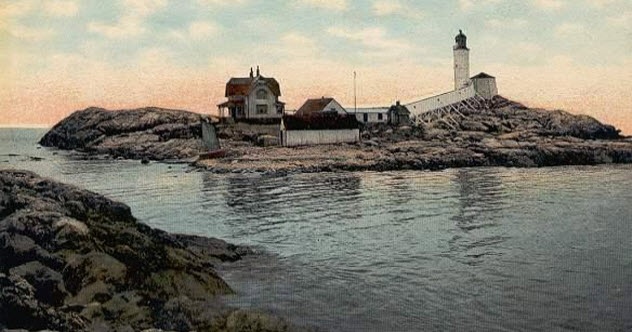
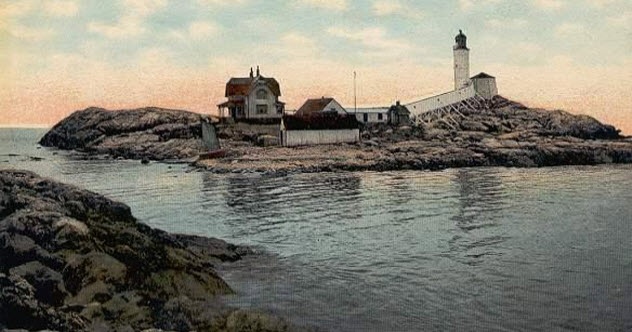
The Ipswich Horror: Is New England’s Most Vicious Pirate Still Guarding His Cursed Treasure?
There are stories that cling to the old towns of New England like thick sea fog. Whispers that crawl out of the cobblestone streets and dark harbors, tales of ghosts and gold, of righteous men and their wicked counterparts. And in the historic seaport of Ipswich, Massachusetts, one name still has the power to chill the blood.
Harry Main.
It’s not a name you’ll find in most history books. You won’t see statues erected in his honor. But if you listen closely to the wind whipping off the Atlantic, you might just hear his story. It’s a story of ambition, betrayal, and a darkness so profound it supposedly stained the very sand of the Ipswich coast.
They say he was a pirate. But Harry Main was so much worse. He didn’t sail the seven seas under a Jolly Roger. No. His hunting ground was the shore. His victims were desperate sailors who thought they’d found salvation. And his legend ends with a curse so specific, so terrifying, it feels torn from the pages of mythology.
So, who was this man? Was he real? And if he was, is his vengeful spirit still shoveling sand against an eternal tide, forever protecting a treasure drenched in blood?
Two Friends, Two Fates
Our story begins, as many do, with hope. The year is 1671. The New World is a canvas of brutal opportunity. Two men, friends and fellow fishermen, arrive in Ipswich from the rugged, isolated Isles of Shoals. Their names are Harry Main and Andrew Diamond.

Imagine Ipswich in the late 17th century. It’s a bustling hub. The air is thick with the smell of salt, tar, and fresh-cut lumber. The sound of hammers and saws is a constant song of progress. Ships with tall masts line the wharfs, their bellies full of timber, fish, and rum, ready for the profitable but perilous journey back to Great Britain. For a man with ambition and a strong back, this was a place to make a fortune.
And Andrew Diamond did just that.
Diamond saw the town’s potential and seized it. He became a pillar of the community, helping to build the very wharfs that made Ipswich a commercial power. He co-owned a fleet of merchant ships, his name spoken with respect in the taverns and meeting houses. He grew wealthy, respected, a testament to the American dream before the country was even born. He was a success story.
Harry Main was not.
While his friend built an empire, something in Harry soured. Did he lack Diamond’s business sense? Was he cursed with bad luck? Or did a darker seed, planted long ago, finally begin to sprout in the fertile soil of greed and jealousy? Whatever the cause, Main’s path diverged sharply from his friend’s. He turned his eyes away from honest trade and looked toward the churning, unforgiving sea, seeing not a source of livelihood, but a source of plunder.
What is a Mooncusser? The Devil on the Shore
Harry Main became a “wrecker.” This wasn’t an official job, but a grim profession practiced by those living on treacherous coastlines. When a ship met its unfortunate end on the rocks, the locals had a sort of informal right to whatever washed ashore. It was a morbid form of beachcombing. Main, however, took it a step further. He decided not to wait for misfortune to strike.
He would create it.
This is where he earned a more sinister title: “mooncusser.”
Think about it. On a dark, stormy night, with the moon hidden by thick clouds, a ship’s captain is navigating by little more than instinct and prayer. The waves are crashing, the wind is howling. They are lost, desperate for a landmark, for the welcoming light of a harbor or a lighthouse. And then, they see it. A single, steady light on the shore. A bonfire. A sign of safety. A beacon of hope.
The captain steers his vessel toward the light, relief washing over him and his crew. They are saved.
But the light is a lie.
The mooncusser’s fire isn’t in a safe harbor. It’s placed deliberately on a beach lined with jagged, ship-shredding rocks and deadly sandbars. The relief of the sailors turns to stark terror as they hear the gut-wrenching crunch of their ship’s hull splintering apart. The vessel is doomed. The men are thrown into the violent, freezing surf.
This was Harry Main’s work. A predator using deception as his weapon. It’s the same monstrous trickery we see in fiction, from the island of General Zaroff in *The Most Dangerous Game* to the cursed founders of Antonio Bay in John Carpenter’s classic horror film, *The Fog*. But the legend of Harry Main insists this was no fiction.
And he wasn’t done. The legend gets much, much worse. A simple wrecker might steal the cargo. Harry Main, they say, made sure there were no witnesses. He would stalk the beaches after a wreck of his own making, club or knife in hand, and murder any poor soul who managed to survive the wreck and crawl ashore. He extinguished the light in their eyes just as he had extinguished the light of their ship.
A Dark Past: The Isles of Shoals Connection
Where does such evil come from? Does a man just wake up one day and decide to become a monster? The whispers say Main’s darkness followed him to Ipswich. Remember, he came from the Isles of Shoals, a small, desolate archipelago off the coast of New Hampshire and Maine.
Even today, the Isles are windswept and isolated. In the 17th century, they were a world apart, a hard place for hard people, where disputes were often settled beyond the immediate reach of colonial law. The original story links Main to an unsolved double murder there in the 19th century, which is a clear chronological mix-up. But legends are messy. They often stitch together different fears from different eras. What if the legend is remembering something else? What if an older, forgotten crime on those islands set Harry on his path?
Let’s entertain a theory. What if Main and Diamond weren’t just fishermen on the Isles? What if they were involved in something darker, something that went wrong? Perhaps a smuggling deal, a fatal brawl. Maybe they fled the islands not as hopeful entrepreneurs, but as fugitives. Once in Ipswich, Diamond committed himself to a legitimate life, a way to wash the stain of his past clean with success and public service. But Main… maybe Main found he had a taste for it. Maybe the violence didn’t scare him. It thrilled him.
This is the stuff of internet rabbit holes and late-night speculation, of course. There are no records to prove it. But it paints a chilling picture: a man not corrupted by failure, but one who was already a monster simply looking for a new hunting ground.
The Damnation of Harry Main
A man cannot commit such atrocities forever. Sooner or later, the tide turns. The whispers in the taverns grew louder. Too many ships were wrecking near Ipswich. Too many bodies were washing ashore bearing marks of violence, not just drowning. The town’s prosperity was built on shipping, and a monster on their shores was bad for business. And bad for the soul.
The legend doesn’t tell us how he was caught. Perhaps a survivor lived to tell the tale. Perhaps his old friend Diamond, horrified at what his companion had become, turned him in. But his punishment is the most vivid part of the entire story.
They didn’t hang him.
That would have been too quick, too merciful. No, the townspeople, in a moment of what they must have felt was divine justice, devised a punishment that fit the crime. They dragged Harry Main out to a sandbar at low tide, the very kind of place he had used to destroy so many lives. They chained him to a stake driven deep into the wet sand.
And they handed him a shovel.
His sentence was this: he had to shovel sand. He had to fight the incoming tide. As long as he could keep himself from being submerged, he could live. It was a Sisyphean task, a nightmare of pointless, frantic labor. He, who had used the shore to kill, was now being killed by the shore. He must have shoveled with the strength of a madman as the cold Atlantic water first licked at his ankles, then his knees, then his waist. Cursing the town? Begging for mercy? We can only imagine his final, gurgling screams as the tide inexorably rose and claimed him for good.
The Ghost of Water Street and the Cursed Hoard
Death was not the end for Harry Main. An evil that profound, the legend says, doesn’t just disappear. It lingers. It haunts.
His ghost is said to remain in Ipswich, forever tied to his former residence on Water Street. Over the centuries, residents and visitors have reported chilling phenomena. Sudden, inexplicable cold spots in the height of summer. The feeling of being watched by unseen eyes. And most terrifyingly, a sound that should not be there: the faint, rhythmic scraping of a shovel on wet sand, coming from inside the walls.
But a ghost needs a reason to stay. For Harry Main, it’s not just rage. It’s greed.
He is said to be guarding his treasure. All the loot he plundered from the ships he destroyed and the men he murdered. Gold coins, silver candlesticks, precious jewels, and personal effects soaked in saltwater and blood. The hoard is supposedly hidden somewhere in or near his old home, protected by what locals describe as “magic.” A curse.
What kind of curse? Maybe the treasure is impossible to find, forever shifting its location. Maybe anyone who gets close is plagued by horrible luck or grisly accidents. Or maybe, just maybe, if you start digging for Harry Main’s gold, you’ll find him standing right behind you, shovel in hand, unwilling to let his prize go.
Fact, Fiction, or Something In-Between?
So, what’s the real story? Is there any historical proof for this incredible tale?
The hard truth is, historical records for a “Harry Main” fitting this description are thin to nonexistent. Andrew Diamond was a real person, a prominent citizen of 17th-century Ipswich. That part is true. But the paper trail for his supposed friend, the mooncusser, runs cold. There are no court records of his trial or his uniquely gruesome execution.
But that doesn’t mean the story is pure invention.
Legends like this are rarely born from nothing. They are often an amalgamation of real events, real people, and the deepest fears of a community. Wrecking was a real and often brutal practice along many coastlines. Piracy was a constant threat. Could there have been a real, vicious wrecker in Ipswich whose crimes were so shocking that his story grew and mutated over the generations, eventually attaching itself to the name Harry Main?
Perhaps the story served as a cautionary tale, a boogeyman created to frighten people away from the temptations of the shore. It’s a powerful narrative about how the pursuit of easy money can lead to the damnation of one’s soul.
The legend of Harry Main is more than just a ghost story. It’s a dark mirror to the official history of a town. Behind the celebrated narrative of hard work and prosperity lies a shadow-story of greed, murder, and supernatural revenge.
So the next time you find yourself on the North Shore of Massachusetts, take a walk down Water Street in Ipswich as dusk begins to fall. Listen past the sound of the cars and the chatter of tourists. Listen for something else. A whisper on the sea breeze. A rhythmic scraping that seems to come from nowhere and everywhere at once.
Is it just the wind? Or is Harry Main still out there on his sandbar, fighting a battle he can never win, forever guarding a treasure that can never be found?