The Silent Network: Are the Sajama Lines South America’s Greatest Forgotten Mystery?
You’ve heard of the Nazca Lines. Of course you have. The giant spider, the hummingbird, the astronaut-like figure etched into the Peruvian desert floor. They’re a global icon of ancient mystery, a go-to for every documentary about unexplained wonders or alien visitors.
But what if I told you Nazca was just the opening act?
What if there was another, far larger, far more complex, and arguably far more profound network of lines, hiding in plain sight? A network so vast it makes Nazca look like a child’s doodle on a postcard. A system of tens of thousands of perfectly straight lines, crisscrossing a landscape the size of a small country, all pointing to a secret we’ve completely forgotten.
This isn’t a what-if. This is real.
Welcome to western Bolivia. Welcome to the shadow of the sacred volcano, Mount Sajama. Welcome to the world’s largest, and most ignored, piece of prehistoric art: The Sajama Lines.
A Mind-Bending Scale We Can Barely Comprehend
Let’s get the numbers out of the way, because they’re insane. The Nazca Lines cover about 450 square kilometers. Impressive. The Sajama Lines? They sprawl across an astronomical 22,525 square kilometers. That’s not a typo.
That’s roughly the size of the entire state of New Jersey. Or Wales.
This network is nearly FIFTEEN TIMES larger than its famous Peruvian cousin. Some individual lines run for an impossible 18 kilometers (that’s over 11 miles) in a nearly perfect, unbroken straight line. They go over hills, through valleys, and across rugged, unforgiving terrain as if these obstacles simply didn’t exist for their creators. The total combined length of all the lines, if laid end-to-end, could stretch from New York City to Los Angeles. And back again. Maybe twice.
For centuries, nobody understood the scale. People living there knew about the “sacred paths.” Occasional adventurers noted them. But they were just lines on the ground. You can’t see the forest for the trees, and you certainly can’t see a 22,000-square-kilometer geometric pattern when you’re standing in the middle of it. It wasn’t until the eye in the sky—our modern satellites—looked down that humanity finally gasped and understood the true, staggering scope of what our ancestors had built.
What Exactly ARE These Lines?
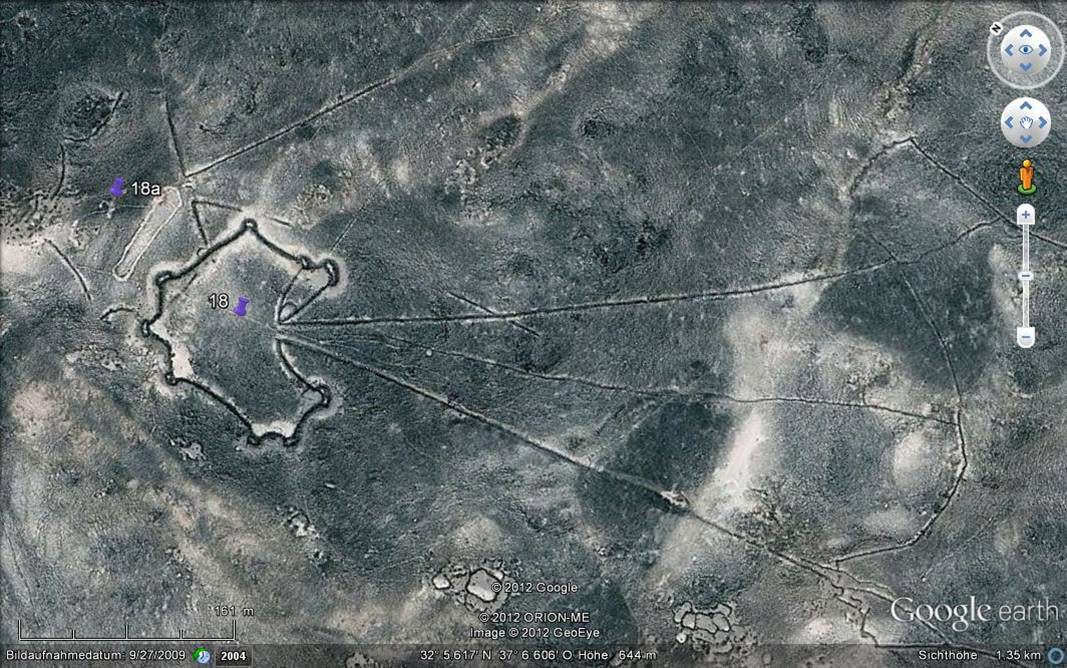
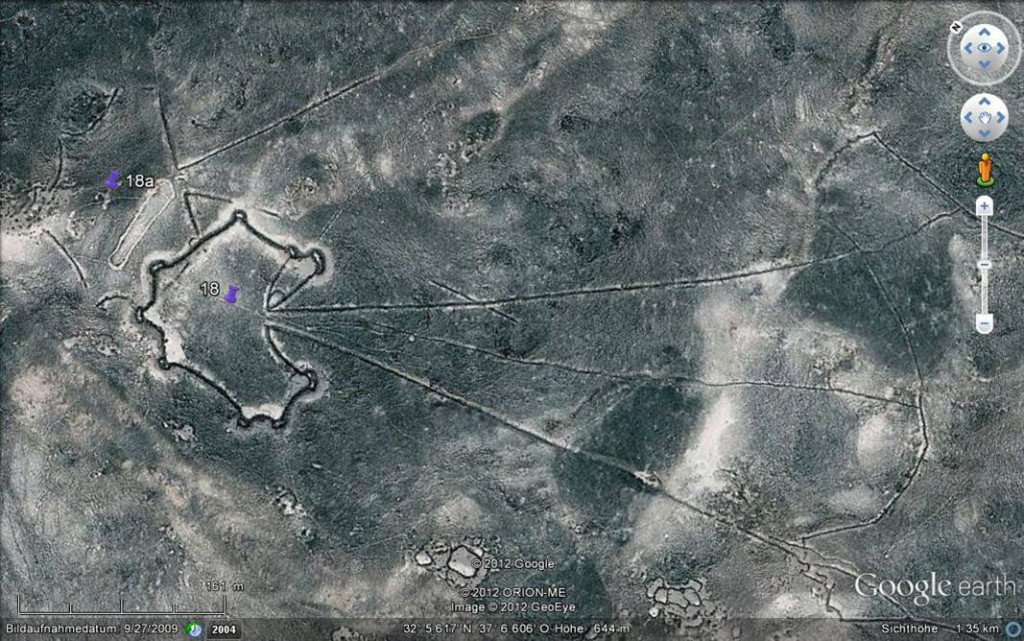
So what are we looking at? These aren’t trenches. They aren’t walls. They are paths. Carefully created paths from one to three meters wide.
The method of their creation is beautifully simple, yet profoundly effective. The high-altitude Altiplano of Bolivia is covered by a dark surface layer of oxidized rock and soil, baked by the relentless sun. The ancient builders, with unimaginable patience, scraped this dark layer away. They carefully cleared away the dark pebbles and vegetation, exposing the lighter, sandy soil underneath. A simple contrast. Dark, light. That’s it.
A simple method that, when repeated tens of thousands of times over thousands of years, created the largest known geoglyph on planet Earth. This wasn’t the work of one king or one generation. This was a cultural project, a spiritual obsession that lasted for an estimated 3,000 years, beginning long before the rise of the Inca Empire.
Think about that. Three millennia. A project that was continuously worked on for a period of time longer than the entire history of the Roman Empire, from its founding to its fall.
The Silent Builders: A Message from a Lost People
Who built them? The short answer is: we don’t know. No written records exist. The people who completed this continental-scale artwork left no instruction manual, no signature, no boastful carvings declaring their purpose. Their identity is lost to the high-altitude winds.
The best guess points to the ancestors of the modern Aymara and Quechua peoples, the indigenous inhabitants of the region who lived there long before the Inca swept through and assimilated them. These were people who lived in a world without writing, where knowledge and tradition were passed down orally, from one generation to the next.
Imagine the scene. A father takes his son out onto the high plain. He points to a faint line stretching to the horizon. He explains how to clear the rocks, how to keep the line true, how to honor the path his grandfather and his grandfather’s grandfather worked on. It was a sacred duty, a part of life, like farming or weaving. A ritual embedded into the very fabric of their society for a hundred generations.
The Ultimate Question: WHY?
This is where the mystery deepens. This is where speculation runs wild, and for good reason. Why would a culture dedicate so much energy, for so long, to creating a massive network of straight lines visible only in its totality from space?
Let’s dive into the theories, from the academic to the out-there.
Deep Dive: Theory 1 – The Sacred Pilgrimage Map
The most widely accepted theory among archaeologists is that the lines served a spiritual or ritualistic purpose. Many of the lines radiate outwards from central points. These points are often small hills, significant rock formations, or, most importantly, chullpas—ancient, tower-like burial structures.
The entire network is oriented around the snow-capped peak of Mount Sajama, a dormant volcano that was, and still is, considered a powerful deity, or apu, a holy mountain. It’s possible the lines were sacred roads, or “ceques,” that connected hundreds, perhaps thousands, of small shrines, burial sites, and communities in a grand, spiritual web.
Imagine pilgrims traveling not by the easiest route, but by the straightest. Walking these lines wasn’t about getting from Point A to Point B efficiently. It was a moving meditation. A physical act of devotion. Each step along the perfectly straight path was a prayer, a way of connecting the living with the ancestors buried in the chullpas and the gods dwelling in the mountains.
Deep Dive: Theory 2 – A Celestial Calendar on the Ground
Whenever you find massive, ancient structures with geometric precision, someone will suggest astronomy. And why not? Ancient cultures were master astronomers. Their survival depended on it.
Could the Sajama Lines be a giant astronomical map? Do the lines point to the rising and setting positions of the sun and moon on solstices and equinoxes? Do they track the movements of Venus or the Pleiades star cluster? The sheer number of lines makes this theory both tantalizing and incredibly difficult to prove. With over 16,000 kilometers of lines pointing in every conceivable direction, you’re bound to find some that align with something by pure chance.
However, modern researchers using tools like Google Earth and stellar cartography software are trying to find patterns. They’re looking for clusters of lines that point to the same celestial events. The results so far are inconclusive, but the possibility is electrifying. What if this wasn’t just a map of the earth, but a map of the heavens, laid out on the ground for the gods to see?
Deep Dive: Theory 3 – The Fringe Possibilities
Of course, we have to go there. For any mystery this grand, there are theories that push the boundaries of conventional thinking. And you, the reader, deserve to hear them.
Some have proposed the lines are ancient boundary markers, a giant property map delineating the lands of different clans or families. But this seems unlikely. The lines completely ignore natural boundaries like ravines and hills, which would make them very impractical as fences or borders.
Others have suggested a link to water, that they might point to underground springs or follow subtle energy lines in the earth, a kind of massive dowsing map. Again, there’s little evidence to support this.
And then there’s the big one. The one you hear whispered in late-night internet forums. Alien landing strips. The argument is simple: why build something so huge you can only appreciate it from the sky, unless you were trying to signal something… in the sky? The perfectly straight lines, far more precise than necessary for human walkers, look like modern runways. Could they have been navigational aids for ancient astronauts? It’s a wild thought, and one that most scientists dismiss. But in the absence of a definitive answer, all questions remain on the table.
An Engineering Feat That Should Not Be Possible
Regardless of *why* they were built, the *how* is just as baffling. How did a pre-industrial people, with no modern surveying equipment, no lasers, no GPS, create thousands of perfectly straight lines over dozens of miles?
Think about walking a straight line. It’s hard enough in a field. Now try to extend that line for 11 miles, up and down hills, across valleys, maintaining its integrity the entire way. It’s a monumental challenge of engineering and coordination.
The likely method involved simple tools and immense skill. They probably used sets of sighting posts. A builder would stand at the start point, have an assistant walk ahead, and direct them left or right until they were perfectly aligned. They’d plant a stake. Then they’d repeat the process, over and over, stake by stake, mile after mile. It’s a plausible method, but to execute it on this scale, across such difficult terrain, with such consistent accuracy, suggests a level of mastery and dedication that is hard for us to imagine today.
Sajama vs. Nazca: The Great Injustice of Ancient Mysteries
So why is Nazca a household name while Sajama languishes in obscurity? Why do tourists flock to Peru to see the monkey, while the world’s largest geoglyph in neighboring Bolivia gets almost no attention?
The answer might be simple marketing. Nazca has figures. It has animals and shapes that are easy to understand, easy to put on a T-shirt. They are pictorial. Sajama is abstract. It’s pure, severe geometry. It’s a statement, not a picture. It requires you to think, to contemplate the scale and the intent, rather than just recognize a shape.
Sajama is also remote, located in a sparsely populated and less-traveled region of Bolivia. It has no UNESCO protection, no visitor center, no fences. The lines are vulnerable to erosion, vehicle traffic, and modern development. Many have already been damaged or erased. We are losing pieces of this global treasure before we’ve even begun to understand it.
A Silent Message Waiting to Be Read
The Sajama Lines are more than just a mystery. They are a silent testament to the power of human faith, commitment, and vision. For 3,000 years, people worked on this network. They were born, they lived their lives, and they died, all while contributing to a single, unified project they would never see completed. A project whose true form and scale they could never perceive from the ground.
They were building for something bigger than themselves. For their gods. For their ancestors. For the future.
The lines are still there, etched into the skin of the planet. A faint, sprawling message written in a language we have forgotten how to read. They challenge our assumptions about what “primitive” people were capable of. They are a question, posed to the sky and to us.
What other wonders are hiding in plain sight, waiting for us to just look down and see?
What do you think they were for? The comments are open. Let the debate begin.