Home Weird World Strange Stories Great con men – Joseph Weil

Great con men – Joseph Weil

0
66

The Man Who Sold Lies for a Living: Unmasking America’s Greatest Con Artist

Some men build empires of steel and stone. Others build them on dreams. And then there are the rare few, the ghosts in the machine of society, who build empires out of thin air.

Joseph “Yellow Kid” Weil was one of those ghosts.

Forget what you think you know about con men. Weil wasn’t some back-alley hustler running a three-card monte. He was an artist. A psychologist. A master puppeteer who saw the secret strings of greed and desire that control us all, and he played them like a symphony. Over a career that spanned half a century, he didn’t just steal money. He convinced people—smart, successful, powerful people—to happily, eagerly, *beggingly* hand over their fortunes.

They say he swindled more than eight million dollars. In today’s money? We’re talking about a figure well north of $100 million. He conned businessmen, doctors, and bankers. He even supposedly swindled a dictator. And he did it all with a smile, a perfectly tailored suit, and an almost supernatural understanding of human weakness.

This isn’t just a story about a criminal. This is a deep dive into the mind of a genius. A journey into the shadows of the American Dream, where the line between ambition and larceny gets terrifyingly blurry. So, buckle up. We’re about to pull back the curtain on the incredible, unbelievable, and absolutely true story of the Yellow Kid.

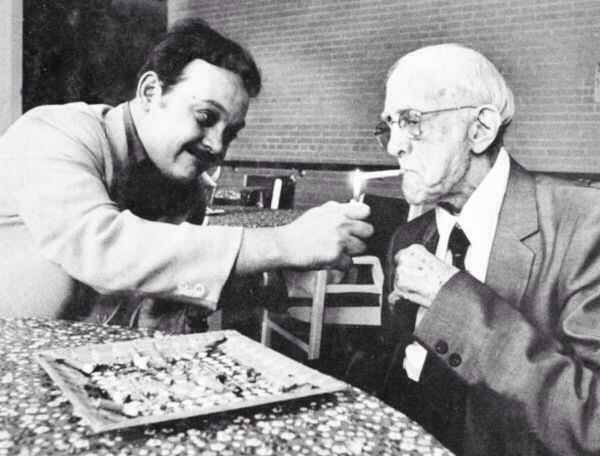
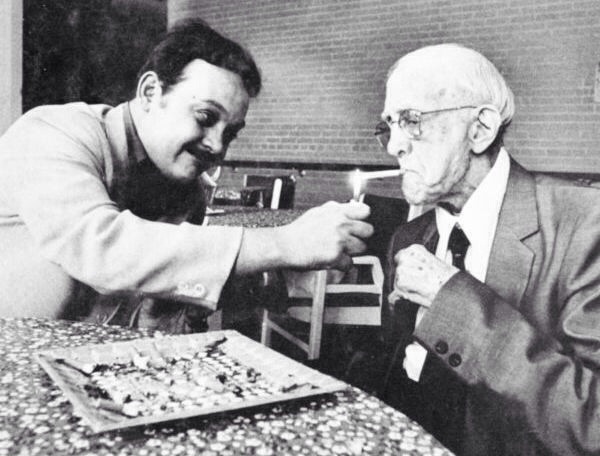
20131220-211148.webp

The Birth of a Legend: From Chicago Streets to the Big Leagues

Every legend has an origin story. Joseph Weil’s began not in some shadowy underworld, but on the gritty, working-class streets of Chicago on July 1, 1875. Born to German immigrants Mr. and Mrs. Otto Weil, young Joseph was sharp. Too sharp, perhaps, for the rigid confines of a classroom. He dropped out of school at seventeen, not out of failure, but out of boredom. The real world, he quickly realized, was a far more interesting textbook.

A Glimpse into Weil’s First Hustle

His first job was as a collector. A simple, honest gig. But Weil saw things others didn’t. He noticed his coworkers were skimming. Pocketing small sums here and there, a few cents off the dollar. An honest man might have reported them. A fearful man would have looked the other way.

Weil did neither.

He saw an opportunity. He saw a system. He approached his thieving colleagues not with a threat, but with a business proposition. He wouldn’t snitch. In fact, he’d protect them. For a cut, of course. Just like that, at an age when most boys are still figuring out what to do with their lives, Joseph Weil was running his first organized protection racket. It was his first taste of the con, the quiet thrill of bending the rules and profiting from the secret sins of others. He was hooked.

Under the Wing of a Master: The Rainwater Elixir

Raw talent needs a mentor to shape it. Weil found his in a man who could have been a character straight out of a Mark Twain novel: Doc Meriwether. The “Doc” was a classic snake-oil salesman, a grifter who traveled from town to town, peddling his miracle cure-all, “Doc Meriwether’s Elixir.”

The chief ingredient? Rainwater. Maybe a little coloring for effect.

Working the public sales with Meriwether in the 1890s, Weil learned the fundamentals of his future craft. He learned how to read a crowd. How to build trust with a warm smile and a confident voice. He learned how to create a spectacle, how to turn a simple bottle of water into a bottle of pure hope. Most importantly, he learned that people don’t buy a product; they buy a story. And nobody, he would soon prove, could sell a story like Joseph Weil.

The Psychology of the Swindle: Why People Fell for It Every Time

What was Weil’s secret? How did one man outsmart hundreds of the nation’s brightest for decades? It wasn’t magic. It was psychology. W.T. Brannon, his biographer, hit the nail on the head when he said Weil possessed an “uncanny knowledge of human nature.”

Weil understood a fundamental, uncomfortable truth: most people are greedy. They want the easy way out. The inside track. The secret shortcut to wealth and success. They want to get something for nothing.

Weil’s Golden Rule: “Larceny in His Heart”

This became the cornerstone of his entire philosophy. Weil famously explained, “Each of my victims had larceny in his heart.” He wasn’t just tricking innocent people. He was setting a trap for those who were already looking for a dishonest advantage. He would present them with an opportunity that was just a little too good to be true, an offer that required them to bend their own morals just a little bit.

Think about it. It’s genius. By making his “mark” a willing accomplice in what they *thought* was a scheme to cheat someone else, Weil insulated himself. How could they go to the police? How could they admit that they had lost their life savings while trying to take part in an illegal scheme? They couldn’t. They were trapped by their own greed. They would swallow their losses, ashamed and silent. And Weil would simply vanish.

Unpacking the Yellow Kid’s Greatest Hits

Weil’s cons were not simple tricks; they were elaborate theatrical productions. He played dozens of roles: a geologist, a famous chemist, a financial wizard, an inventor. He and his crew would set up fake offices, print fake newspapers, and create entire fictional worlds, all for a single mark.

The Talking Dog Hoax: A Masterclass in Absurdity

One of his most famous, and frankly hilarious, schemes was the “talking dog” con. Weil and a partner would find a wealthy, eccentric pet lover. They’d approach the mark with an incredible proposition: they had a dog that could speak. A genuine talking canine! To prove it, an accomplice, hidden out of sight, would provide the dog’s “voice,” answering questions and shocking the mark into disbelief and wonder.

The price for such a marvel? Tens of thousands of dollars. After the sale was complete and the money was in hand, the mark would rush home, eager to show off their new prodigy. But when they asked the dog a question… silence. Frantic, they would call Weil, who would explain with a very sad voice that the poor dog had tragically come down with a sudden, severe case of laryngitis. By the time the victim realized they’d bought a perfectly normal, non-speaking dog, Weil was long gone.

The Phony Wiretap: Rigging the Racetrack

Another classic was the racetrack scheme. This was the “big con” at its finest. Weil would pose as a disgruntled telegraph operator or a corrupt insider from a wire service. He’d find a wealthy businessman with a passion for horse racing and let him in on a “secret.” He claimed he could delay the race results just long enough to get the winner’s name *before* the local bookies did. This would allow them to place a guaranteed winning bet.

To build trust, they’d let the mark win a few small bets. The information was always perfect. The wins were real. The mark’s confidence would soar. He was on the inside! He was beating the system! Once the victim was convinced, Weil would set up the final sting—a “can’t-miss” opportunity to bet their entire fortune. They’d pool their money, the mark would place the massive bet… and then something would “go wrong.” The wire would get cut, the information would be wrong, the horse would lose. The mark would be ruined. Weil and his team would express their shared shock and dismay before disappearing with the entire investment.

The Ultimate Con: The Prison Stock Swindle

Perhaps the most brazen story of all involves a detective. A cop. A man paid to see through lies. This detective was escorting a convicted Weil to prison when the master went to work. Over the course of the journey, Weil spun an incredible tale about a secret stock opportunity, a company on the verge of a massive breakthrough. He was so convincing, so charismatic, that by the time they reached the prison gates, the detective wasn’t just listening—he was buying. The detective handed over $30,000 in cash for worthless pieces of paper from the very man he was supposed to be locking up. Chew on that for a second. The sheer audacity is breathtaking.

The $2 Million Swindle: Did the Yellow Kid Con a Dictator?

Now we venture into the territory of legend. The whispers and rumors that have followed Weil’s name for a century. The biggest one? That in the late 1920s, Joseph “Yellow Kid” Weil successfully swindled Italian dictator Benito Mussolini out of a staggering $2 million.

Is it true? The story has become a cornerstone of the Weil mythos, repeated in books and articles. But concrete proof is frustratingly thin. It’s the kind of story that’s almost *too* perfect.

The Alleged Plot: How Could It Have Worked?

Theories abound on internet forums and in alternative history circles. The most common version of the tale suggests Weil and his crew posed as American financiers or engineers with a fake plan to develop Italian marshlands or sell fraudulent mining rights. They would have used their usual playbook: impeccable credentials, a convincing story, and an appeal to the greed and ego of their target. Mussolini, eager to modernize Italy and project an image of financial strength, might have been a prime target for a scheme that promised massive returns and national glory.

Sifting Through the Evidence

The problem is the lack of a paper trail. A dictator’s regime isn’t exactly known for its transparency. If Mussolini’s government had been duped out of millions by an American grifter, it’s highly unlikely they would have ever admitted it. Such an embarrassment would have been buried so deep it would never see the light of day. For believers, this lack of evidence is, in itself, evidence. For skeptics, it’s just a fantastic story that likely grew out of Weil’s already giant reputation. We may never know for sure, but the very possibility that a Chicago con man pulled one over on one of the 20th century’s most infamous dictators is a testament to the power of his legend.

Where Did “The Yellow Kid” Really Come From?

The nickname itself is a piece of history. It wasn’t, as many believed, because he wore yellow gloves or a yellow vest. The truth is far more interesting and ties him directly to the pop culture of his day.

In the 1890s, one of the first and most popular newspaper comic strips was called “Hogan’s Alley.” Its main character was a bald, jug-eared, gap-toothed kid in a yellow nightshirt. He was known simply as “The Yellow Kid.”

Weil often worked with a grifter named Frank Hogan. One day in 1903, a Chicago Alderman named “Bathhouse John” Coughlin, who knew of their exploits, made a joke. He pointed to the duo and, referencing the popular comic, called Hogan “Hogan” and Weil “The Yellow Kid.”

The name stuck. The press loved it. It was catchy, memorable, and hinted at a mischievous, almost cartoonish quality to his crimes. Weil himself confirmed this origin in his biography, tired of the endless, and untrue, stories about his supposed yellow wardrobe.

From Grifter to Guru: The Reformation of Joseph Weil

After decades of living in the shadows, constantly on the run, Weil’s life of crime eventually caught up with him. He served several prison sentences, but even behind bars, his mind never stopped working. In the late 1940s, he finally reformed his “dastardly ways.”

But he didn’t just fade away. He did something even more shocking: he wrote a book. His memoir, “Yellow Kid Weil: The Autobiography of a Master Swindler,” became a sensation. He told all. He named names. He detailed his methods with the precision of a surgeon. The man who had built a career on secrets was now selling them to the public.

A Chilling Philosophy on Human Nature

More than just a collection of wild stories, his book offered a dark and cynical look into the human soul. It’s here we find his most haunting quote:

“The average person, in my estimation, is ninety-nine per cent animal and one per cent human. The ninety-nine per cent that is animal causes very little trouble. But the one per cent that is human causes all our woes.”

What did he mean? He believed that our “animal” side is simple—it seeks food, shelter, comfort. It’s the “human” one percent—the part that dreams, that envies, that craves more than it needs—that leads us into trouble. It’s the part that makes us susceptible to the con. He argued that crime would only diminish when people finally learned they couldn’t get something for nothing. And then he added a chilling caveat: “as I doubt they will.”

Joseph “Yellow Kid” Weil died in February 1976, having lived to be 100 years old. He saw the world change from horse-drawn carriages to the space age. And through it all, he maintained that one thing never changed: human nature.

He was a thief, a liar, a master manipulator. But was he also one of the sharpest and most honest observers of the human condition? He saw the darkness inside us—the little bit of larceny we all carry—and he built an empire on it. And his story serves as a timeless, terrifying warning. The next time you hear an offer that sounds too good to be true… remember the Yellow Kid. Because the greatest con men don’t just take your money. They make you believe it was your idea all along.

Originally posted 2013-12-20 20:15:49. Republished by Blog Post Promoter