Home Weird World Space Massive asteroid to shave past Earth

Massive asteroid to shave past Earth

0
52

The Day the Sky Fell Twice: The Chilling True Story of Asteroid 2012 DA14

February 15th, 2013. Remember that day? You probably don’t. It was just another Friday. Maybe you were at work, at school, or planning your weekend. But while we went about our lives, a cosmic drama of unbelievable proportions was unfolding right over our heads. A story with a twist so bizarre, it sounds like something ripped from a Hollywood script.

It’s a story about a cosmic bullet we saw coming. And another one we didn’t.

This is the tale of 2012 DA14, the asteroid that gave Earth a record-setting close shave. But it’s also the story of the terrifying fireball that exploded over a Russian city on the exact same day. A coincidence? A connection? Or a warning that our quiet little corner of the galaxy is a whole lot more dangerous than we think?

Strap in. Because the official story is only half the truth.

A Whisper From the Void: The Discovery

It didn’t begin with flashing red lights at NASA. It didn’t start in some high-tech, billion-dollar observatory. No, the first warning came from a small, unassuming observatory in the mountains of southern Spain. The La Sagra Sky Survey. On February 23, 2012, a team of astronomers there spotted something. A tiny, faint pinprick of light moving against the backdrop of distant stars.

It was moving fast. And it was moving in our direction.

They designated it 2012 DA14. A cold, bureaucratic name for what was, in essence, a mountain of rock hurtling through the dark. Scientists around the world scrambled to calculate its path. The numbers came in, and they were staggering. This wasn’t some distant passerby. This was a close call. A very, very close call.

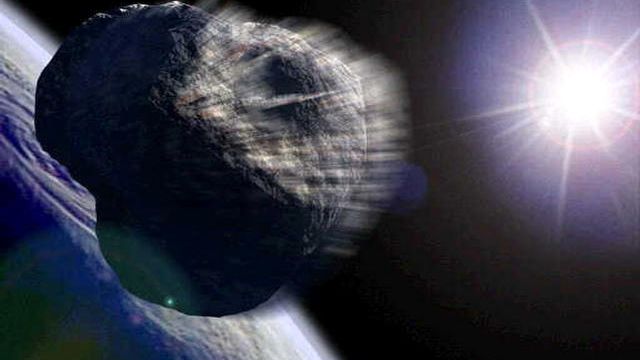
The object was about 50 meters across—half the size of a football field. A cosmic city block. And its trajectory was going to bring it screaming past Earth in just under a year.

asteroid

The Cosmic Bullet’s Trajectory

NASA tried to calm the public. They released videos and press statements. Don Yeomans, a top man at the Near-Earth Object Program, became the face of reassurance. “This is a record-setting close approach,” he admitted, but he was quick to add the crucial part: “the asteroid, designated 2012 DA14, won’t hit Earth.”

Phew. Right?

But then they told us *how* close it would be.

This wasn’t a “flyby” in the astronomical sense, millions of miles away. No. At its closest point, 2012 DA14 would be just 17,200 miles above the planet’s surface. Think about that for a second. The moon is about 239,000 miles away. This was a cosmic hair’s breadth.

Threading a Multi-Billion Dollar Needle

Here’s what really makes your skin crawl. That 17,200-mile altitude is an incredibly busy neighborhood. 2012 DA14 was set to fly *inside* the orbit of our most valuable satellites. It would thread the gap between low Earth orbit, where the International Space Station and spy satellites live, and the higher belt of geosynchronous satellites.

Those are the big ones. The ones that run our world. GPS. Weather forecasting. Global communications. International banking. Everything that makes modern life possible depends on that fragile ring of technology.

And a 130,000-ton rock was about to go blazing right through the middle of it at 17,500 miles per hour.

Yeomans tried to downplay it. “The odds of impact with a satellite are extremely remote,” he said. “Almost nothing orbits where DA14 passes the Earth.” A comforting thought. But it still felt like someone was firing a cannonball through a Swiss watch factory and hoping for the best.

The Unthinkable Coincidence: A Fireball Over Russia

So, the world watched and waited for February 15th, 2013. Astronomers had their telescopes pointed. News crews were ready. It was going to be a fascinating, but ultimately harmless, celestial event. The close pass of 2012 DA14 was scheduled to happen in the afternoon, over the Indian Ocean.

But the universe had other plans.

Just 16 hours *before* DA14’s scheduled flyby, on the other side of the world, the sky exploded.

It happened over Chelyabinsk, a Russian industrial city near the Ural Mountains. At 9:20 AM local time, a light brighter than the sun seared across the morning sky. It was seen for hundreds of miles. People were blinded by the flash. A heat wave washed over the frozen landscape, so intense that people felt it on their faces. Then came the sound. A series of deafening, bone-rattling sonic booms that shattered windows in thousands of buildings across the region.

Car alarms blared. The shockwave knocked people off their feet. A factory roof collapsed. Over 1,500 people were injured, mostly by flying glass. It was chaos. Panic.

No one saw it coming. There was no warning. This wasn’t 2012 DA14. This was something else entirely. A totally separate, smaller asteroid, about 20 meters wide, had entered the atmosphere at a shallow angle and disintegrated in a massive airburst 18 miles above the ground. The energy released was estimated to be 30 times more powerful than the atomic bomb that leveled Hiroshima.

Dashcams and Shockwaves: A City Under Siege

The only reason we know so much about what happened in Chelyabinsk is a quirk of modern Russian life: the dashboard camera. Hundreds of dashcams captured the event from every conceivable angle. The footage is terrifying. A silent, impossibly bright streak, followed seconds later by the sound of the apocalypse arriving. You see the shockwave ripple across the ground, blowing out windows and shaking cars.

It was the largest object to strike Earth in over a century, since the Tunguska event in 1908. And it happened on the very same day that the world was looking for a completely different asteroid.

What are the odds?

Coincidence or Connection? The Theories Explode

NASA and other official agencies were quick to state the facts: The Chelyabinsk meteor and 2012 DA14 were unrelated. They came from different directions. Their orbits were completely different. It was, they insisted, a freak cosmic coincidence.

But does that feel right to you? Really?

The internet, of course, exploded with other ideas. Whispers grew into theories. Could the Chelyabinsk object have been a smaller moon or a chunk of debris that was traveling with 2012 DA14, breaking off just before the main event? A cosmic traveling companion we never detected?

Others went darker. Was the Russian event a weapons test gone wrong? A new type of hypersonic missile that was covered up by blaming it on a meteor? Some even suggested it was a warning shot. A message from *someone* or *something* else, demonstrating what *could* have happened if the much larger 2012 DA14 had been on a slightly different course.

Officially, it’s a coincidence. A one-in-a-million (or maybe one-in-a-billion) chance. But in the world of high strangeness, there are no coincidences.

Deep Dive: What If Our Luck Ran Out?

The Chelyabinsk event, as terrifying as it was, was a firecracker. 2012 DA14 was a stick of dynamite. It was more than twice as wide and many, many times more massive. If *it* had hit, the story would be very different.

Let’s be clear. It wouldn’t be an extinction-level event like the one that wiped out the dinosaurs. But as Don Yeomans pointed out, it would be far from harmless.

“Even if DA14 did strike the planet, the impact wouldn’t be cataclysmic, unless, of course, you happened to be near it,” he said.

And that’s the key. Imagine it hitting not the empty ocean, but a city. London. Tokyo. New York.

The Ghost of Tunguska: A Warning from 1908

To understand the danger, we have to look back to 1908 in a remote, desolate part of Siberia called Tunguska. An object, estimated to be roughly the same size as 2012 DA14, exploded in the atmosphere. The blast flattened over 80 million trees across 830 square miles of forest. It was an area larger than a major metropolitan city.

The shockwave was registered by seismic stations across Europe. For days, the sky over Asia and Europe glowed with an eerie light, allowing people in London to read newspapers outside at midnight. Eyewitnesses miles away were knocked unconscious. Reindeer herds were vaporized. To this day, no impact crater has ever been found, leading scientists to believe it was an airburst, just like Chelyabinsk, but on a much, much grander scale.

That was 2012 DA14’s potential. A city-killer. It wouldn’t wipe out humanity, but it would wipe a city off the map in a literal flash of light.

Simulating a Modern Impact

If an asteroid like 2012 DA14—a stony, not metallic, object—were to strike over a modern city, it would likely explode several miles up. The initial flash of light and thermal radiation would be immense, capable of causing third-degree burns and igniting fires across the entire metro area.

Then the shockwave would hit. Far more powerful than the one in Chelyabinsk, it would behave like a massive bomb. Most buildings, except for reinforced concrete structures, would be flattened. The “overpressure” would be unsurvivable for anyone caught in the open. The death toll would be in the hundreds of thousands, if not millions.

The Arizona crater Yeomans mentioned was created by a metallic asteroid. Because iron is so much denser, it held together and slammed into the ground, digging a hole a mile wide. A stony asteroid like DA14 is more likely to disintegrate in the air. But don’t let that fool you. An airburst is just as devastating. Instead of digging a hole, it spreads its destruction over a much wider area. A ground impact is a sledgehammer. An airburst is a shotgun blast.

The Guardians of the Sky: Who’s Watching Out for Us?

The double-whammy of 2013 was a wake-up call. A serious one. For decades, the search for Near-Earth Objects (NEOs) was a niche, underfunded part of astronomy. After Chelyabinsk, that changed. Suddenly, politicians and the public realized this wasn’t just science fiction.

NASA established the Planetary Defense Coordination Office (PDCO). Its sole job is to find, track, and characterize potentially hazardous asteroids and comets. They run programs like the Catalina Sky Survey and Pan-STARRS, which relentlessly scan the skies every single night.

From Telescopes to AI: The Modern Asteroid Hunt

The game has changed. We’re not just relying on a few astronomers in Spain anymore. Today, automated systems and AI algorithms sift through mountains of data, flagging any object that moves in a way it shouldn’t. We’ve found over 90% of the huge, one-kilometer-plus “planet-killer” asteroids (good news: none are on a collision course for the foreseeable future).

But the real challenge is the smaller stuff. The city-killers, like 2012 DA14. The surprise attackers, like Chelyabinsk. There are millions of them out there, and we’ve only found a tiny fraction. They are small, dark, and hard to see until they’re almost on top of us.

A New Hope: We Can Now Fight Back

For all of human history, we could do nothing but look up and wait. If an asteroid was coming, our fate was sealed. But that’s not true anymore.

In 2022, NASA pulled off one of the most incredible missions in history: DART, the Double Asteroid Redirection Test. They intentionally slammed a spacecraft, about the size of a vending machine, into a small asteroid named Dimorphos, located millions of miles from Earth. It was a cosmic game of billiards.

And it worked. It worked perfectly. The impact successfully altered the asteroid’s orbit, proving for the first time that humanity has the technology to deflect an incoming threat. We can give a killer asteroid a little nudge, years in advance, to make sure it sails harmlessly by.

We are no longer dinosaurs, waiting for the sky to fall. We now have a shield.

The Next Close Shave: Are We Ready for Apophis?

The story of 2012 DA14 and the Chelyabinsk meteor is a chilling reminder that the universe is a shooting gallery, and we are the target. We got lucky. Incredibly, unbelievably lucky that day.

But luck runs out.

Another big one is on the horizon. Asteroid 99942 Apophis, named for the Egyptian god of chaos. It’s a beast, over 1,200 feet wide. For a while, it was considered a serious threat for an impact in 2029 or 2036. Better tracking has since ruled out an impact, but on April 13, 2029, it will pass so close to Earth that it will be visible to the naked eye. It will fly below those same geosynchronous satellites.

It will be a stark, visible reminder, a serpent in the sky, showing us how close we constantly are to disaster. The 2013 event taught us that we can be blindsided. It taught us that even when we’re watching the right hand, the left hand can deliver a knockout blow.

The question is no longer *if* another asteroid will threaten a populated area. The question is *when*. And will we be ready?

Originally posted 2016-04-23 00:27:56. Republished by Blog Post Promoter