The God of Chaos: NASA’s 2068 Doomsday Asteroid and the Secret It’s Hiding
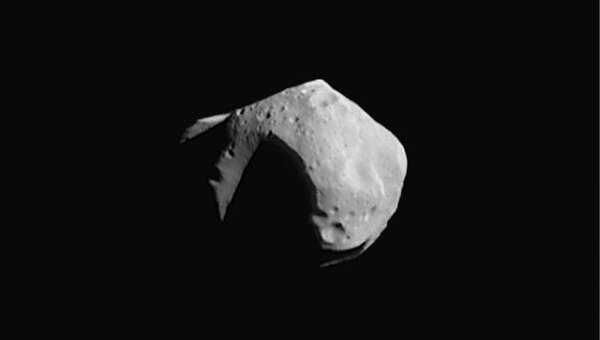
There’s a cosmic bullet out there with our name on it. A mountain-sized monster, darker than coal, tumbling through the endless, silent void of space. And for years, the world’s greatest minds believed its trajectory was a loaded gun pointed directly at Earth.
Its name is 99942 Apophis.
A name chosen for a reason. In ancient Egyptian mythology, Apophis was the serpent demon. The uncreator. The spirit of death and darkness who dwelled in the eternal night, forever trying to swallow the sun and plunge the world into oblivion. A fitting title for a rock that could, one day, end everything we know.
The official story? We’re safe. They ran the numbers again. They checked the data. They tell us to sleep soundly. But the closer you look at the history of this terrifying asteroid, the more you realize the story isn’t that simple. The original calculations, the hushed reports, the variables they *still* can’t fully predict… they all point to a much more unsettling truth. The God of Chaos is coming. And our 2029 rendezvous with it might not be a near-miss, but the setup for a final, catastrophic punch.
A Christmas Scare Like No Other
Let’s rewind. The year is 2004. Astronomers at the Kitt Peak National Observatory in Arizona spot a new smudge of light. Just another Near-Earth Object, or NEO. Thousands are tracked. Nothing special.
Until they ran the numbers.
As more data came in, a cold dread began to creep through the astronomical community. The initial orbital calculations were startling. Then they became terrifying. By December 23rd, the new object, now designated Apophis, was given a 1-in-300 chance of hitting Earth. A few days later, on Christmas Eve, the odds shortened. Dramatically. They were now looking at a 1-in-37 chance of impact. A 2.7% probability.
Now, 2.7% might not sound like much. But in the world of cosmic risk, it’s a code red planetary emergency. The Torino Scale, which rates asteroid threats, had never seen anything like it. Apophis shot up to a level 4. No other object had ever gone above a 1. It was an unprecedented threat. A 340-meter-wide beast, packing more energy than all the world’s nuclear weapons combined, was potentially on a collision course with our planet. And the impact date was Friday, April 13th, 2029.
The panic was real, even if it was kept behind closed doors. For a few frantic days, scientists around the globe re-examined old photographic plates, searched for any prior observations, desperate for more data to refine the orbit. They found some. A sigh of relief echoed through observatories worldwide. The 2029 impact was ruled out.
The world celebrated. The story faded from the headlines.
But the real danger hadn’t been averted. It had just been postponed.
The Gravitational Keyhole: A Cosmic Trapdoor
So, the 2029 impact was off the table. Apophis would scream past us. A close shave, but a miss is a miss, right?
Wrong.
The 2029 flyby isn’t the *end* of the story; it’s the *beginning* of the problem. Apophis will pass so breathtakingly close—just 31,000 kilometers (19,000 miles) above the surface—that it will fly *underneath* our belt of geosynchronous satellites. The ones that give us our GPS and satellite TV. It will be visible to the naked eye from parts of Europe, Africa, and Asia. A silent, star-like point of light, moving with terrifying speed across the sky. A historic event.
But at that range, Earth’s immense gravity will grab hold of the asteroid. It will violently wrench its orbit. It will twist its path. It will even, scientists believe, cause literal “asteroid-quakes” across its surface, changing the very landscape of the rock. Earth’s gravity will essentially “reload the gun.”
This is where the true nightmare begins. The concept of the “gravitational keyhole.”
Deep Dive: What a Keyhole Really Means
Picture this. You’re rolling a bowling ball down a very, very long hallway toward a pin. Most of the time, you’ll miss. But imagine there’s a tiny, invisible ramp on the floor, just a few inches wide. If your ball rolls over that *exact* spot, the ramp will divert it just enough that on its *next* pass, it’s guaranteed to hit the pin.
That tiny ramp is a gravitational keyhole.
It’s a minuscule region of space, a trapdoor just a few hundred meters wide, that Apophis could pass through during its 2029 flyby. If it hits one of these keyholes—if it passes through that exact, precise window of space—Earth’s gravity will bend its trajectory in the *perfect* way to guarantee a collision on a future orbit. The most prominent keyhole they found set up a potential impact in 2036. That, too, was eventually ruled out. But another, more stubborn one remained.
A keyhole pointing squarely at the year 2068.
The Ghost Force Pushing Us Toward Doom
For more than a decade, the 2068 impact scenario was the ghost in the machine. A stubborn possibility that just wouldn’t go away. The odds were low, sure. The NASA report mentioned in the original news wire put it at about 2.3 in a million. But the problem was, they couldn’t get the number to zero.
Why? Because of a force so subtle, so ridiculously faint, it seems like science fiction. It’s a non-gravitational effect that acts like an invisible engine, gently pushing the asteroid off its predicted course.
It’s called the Yarkovsky effect.
Think about a dark rock in space. One side is baked by the sun. It gets hot. As the asteroid rotates, that hot side turns away into the cold darkness of space and radiates its heat away. This radiation—this blast of infrared photons—acts like a minuscule thruster. It gives the asteroid an incredibly tiny push. A push that is almost nothing. But over 50 years? Across millions upon millions of miles? That tiny, persistent nudge can change its final position by hundreds or thousands of kilometers. Enough to push it from a “near miss” into a “direct hit.”
This was the problem. The Yarkovsky effect depends on things we just didn’t know. The asteroid’s exact spin rate. Its precise shape. What its surface is made of. How lumpy it is. Without that data, predicting its exact 2068 position was just a guessing game. The 2.3-in-a-million chance wasn’t a guarantee of safety; it was an admission that they didn’t have all the answers. The ghost was still there.
The “Official Story”: A Convenient Update
Then, in March of 2021, everything changed. Astronomers used powerful radar observations from the Goldstone Deep Space Communications Complex in California and the Green Bank Telescope in West Virginia to ping Apophis from a distance of 17 million kilometers.
The results were stunningly precise. So precise, they claimed, that they could map its orbit for the next 100 years with pinpoint accuracy. And with that new data, NASA made a major announcement. The 2068 impact risk was gone. Reduced to zero. Apophis, the God of Chaos, was no longer a threat. Not in 2029, not in 2036, not in 2068. Not for at least a century.
Case closed. The world is safe. Right?
This is where the official narrative wants you to stop reading. To close the browser and go about your day. But for those of us who look deeper, it raises one very big question: can we really be so sure?
What If They’re Wrong?
Let’s play devil’s advocate. Let’s step into the world of shadows and whispers. The world of conspiracy and “what ifs.”
What if the models for the Yarkovsky effect are incomplete? It’s a force we’ve only recently begun to understand. What if Apophis has an unusual composition or a wobble in its spin that our long-range observations can’t detect? A tiny error in the calculation today could become a colossal, planet-killing error in 40 years.
Internet forums and fringe researchers have buzzed for years with alternate theories. Some suggest that the data was “cleaned up” to prevent global panic. That the risk, however small, was deemed too destabilizing for public knowledge. Think about it. If there were even a 1-in-10,000 chance of a civilization-altering impact, would global governments tell us? Or would they quietly work on a solution in the background while telling the public everything is fine?
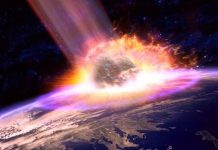
Let’s be clear what a hit from Apophis would mean. It’s not an extinction-level event like the dinosaur killer. It’s much smaller. But “smaller” is a relative term. The impact would release the energy equivalent of over 1,200 megatons of TNT. The largest nuclear bomb ever detonated, the Tsar Bomba, was 50 megatons. This is dozens of times more powerful.
If it hit the ocean, it would create unimaginable tsunamis that would wipe coastal cities off the map for hundreds of miles inland. If it hit land, it would vaporize a city the size of London in a fraction of a second, carving a crater miles wide and kicking enough dust into the atmosphere to trigger a “nuclear winter,” devastating global agriculture for years.
It would be the single worst catastrophe in human history. A reset button for civilization.
The APEX Predator: A Mission to Meet the Demon
Perhaps the biggest clue that the threat is being taken more seriously than the public statements let on is what NASA is doing next.
They are sending a spaceship to meet it.
The OSIRIS-REx spacecraft, fresh off its successful mission to collect a sample from the asteroid Bennu, is not being retired. It’s being given a new name and a new mission. It is now OSIRIS-APEX (Apophis Explorer). And its destination is Apophis itself.
Immediately after the 2029 flyby, the APEX spacecraft will rendezvous with the asteroid. It will get closer than we’ve ever been. It will map its surface, study its chemistry, and, most importantly, analyze exactly how Earth’s gravity mauled it during the flyby. It will measure the “asteroid-quakes.” It will look for changes in its spin. It will give us the ground-truth data to truly understand the Yarkovsky effect on this specific rock.
The official reason? To learn about asteroid composition and planetary defense for *future* threats.
The unofficial, more chilling possibility? To get a last, desperate look at the enemy. To see if the 2021 calculations were right, or if the God of Chaos was indeed nudged into a new, more dangerous keyhole during its flyby. It’s a reconnaissance mission before the real war begins.
We are taking the threat of asteroid impacts seriously. The DART mission, which successfully slammed a probe into the asteroid Dimorphos to change its orbit, proved the basic concept of kinetic impact works. It was a warning shot. A message to the cosmos that we won’t go down without a fight.
Apophis may have been downgraded from “imminent threat” to “object of scientific curiosity.” But the truth is, it remains the ultimate poster child for the silent, random death that lurks in the darkness between worlds. We dodged this bullet. For now. But there are thousands more like it out there, their orbits still unknown, their paths yet to be calculated.
The 2029 flyby will be a spectacle. A moment of awe for the whole world. But as you watch that tiny speck of light glide across the night sky, remember what it represents. It’s a reminder that our existence on this planet is fragile. That the universe is not a peaceful garden, but a cosmic shooting gallery.
And we are the target.