The Ocean Swallows Secrets: The Haunting Mystery of the Ghost Ship Nina
The ocean is not your friend. It is vast. It is indifferent. And sometimes, it takes things that it never intends to give back. We like to think that in our modern age of GPS, satellite phones, and constant surveillance, nothing truly disappears. We believe that if a 70-foot historic schooner vanishes, we will find it. We will track the beacon. We will scour the waves.
But we are wrong.
The case of the yacht Nina is one of those stories that keeps sailors awake at night. It starts with a dream of adventure and ends with a silence so loud it screams. Seven people. A legendary boat. A notorious stretch of water known as “The Ditch.” And then? Nothing. Until the internet sleuths started looking closer at the pixels.

A Glimmer in the Static: The Satellite Breakthrough
Just when the world was ready to write off the Nina as another tragedy of the deep, something shifted. Something appeared on the screen.
New satellite analysis has identified a vessel—or at least, an object that looks suspiciously like a vessel—drifting in the middle of nowhere. This isn’t just sea debris. This isn’t a whale. The dimensions match. The shape matches. And for the families of the seven missing crew members, this grainy image is the difference between mourning and fighting.
This development has reignited the fire. It has raised hopes of a resolution to a five-month-long Tasman Sea mystery that has baffled experts and broken hearts.
The “Ghost Ship” Theory
Satellite technology, specifically crowdsourced efforts where thousands of people scour maps tile by tile, captured images of what appears to be a boat drifting about 184 nautical miles west of Norfolk Island. The date was September 15. The ocean was calm in the photo. The object was distinct.
Think about that. 184 miles from help. Bobbing in the silence.
Raw images of the object were collected, cleaned up, and measured. According to the families who have turned into amateur investigators out of necessity, the math adds up. The pixel count indicates a vessel that is the exact same size and shape as the Nina. It’s floating. It’s right there.
But here is where the story gets frustrating. Here is where you want to punch a wall.
The families of the seven crew members are screaming from the rooftops. They say they are not giving up hope that their loved ones are still alive. They are calling on authorities to get planes in the air, to send ships to those coordinates. They want a rescue mission.
But the officials? The people with the budget and the boats? They are hesitant. They say they need “better-quality images” before risking assets on a search. They want certainty in a situation that is defined by chaos.
The Legend of the Nina: A Ship with a Soul
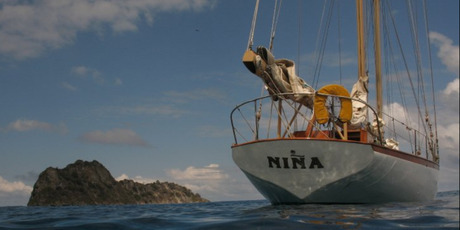
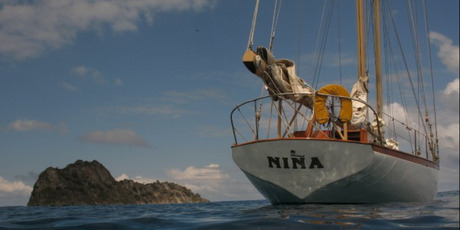
To understand why this loss hits so hard, you have to understand the boat. The Nina wasn’t just some fiberglass weekend warrior. She was a piece of history. Built in 1928. A wooden schooner. She was designed to win races, and she did. She won the New York to Spain race just a month after she was launched. She was royalty.
For decades, she sailed the world. She weathered storms that would snap modern boats in half. She had a soul. Sailors believe that wooden boats have memories. If that’s true, the Nina had seen it all.
So when she left the Bay of Islands in New Zealand in late May, bound for Newcastle, Australia, no one expected disaster. The boat was tough. The crew was capable.
The Crew: Who Are We Missing?
The Nina was carrying six Americans and one British man. They weren’t just passengers; they were adventurers.
- David Dyche: The captain. A man who knew the sea. He owned the boat. He loved the boat.
- Rosemary Dyche: His wife and partner in adventure.
- David Dyche Jr.: Their son. Only 17. He had his whole life ahead of him.
- Evi Nemeth: A legend in the tech world (author of the “Unix System Administration Handbook”). She was 69, proving adventure has no age limit.
- Danielle Wright: 19 years old. Young, vibrant, full of hope.
- Kyle Jackson: 27 years old.
- Matthew Wootton: 35, the British crew member.
They set sail in late May. They were last heard from in early June. And then the ocean turned off the lights.
The Tasman Sea: The “Ditch” That Eats Ships
Let’s talk about where they were. The Tasman Sea. Locals call it “The Ditch,” which makes it sound like a muddy puddle in your backyard. It is not. It is one of the most volatile, violent stretches of water on planet Earth.
It sits between Australia and New Zealand. Currents collide here. Weather systems roar up from Antarctica with zero warning. Waves can reach the height of a four-story building in minutes. It is a place where you do not make mistakes.
We know they hit weather. We know it got bad.
The last known communication was a text message sent via satellite phone on June 4th. It was short. It was chilling.
“THANKS STORM SAILS SHREDDED 110NM WEST PEGASUS… SAILS SHREDDED…”
That was it. “Sails shredded.” That means they were adrift. They had no propulsion from the wind. If the engine failed—or if they were trying to save fuel—they were at the mercy of the swell. And then the silence took over.
The Search That Stopped Too Soon
Official searches for the yacht were extensive at first. Planes flew grid patterns. Ships looked for debris. But the ocean is massive. It is a needle in a haystack, but the haystack is constantly moving and trying to kill you.
Eventually, the New Zealand Rescue Coordination Centre (RCCNZ) made the call. They suspended the search. They calculated the probabilities of survival. They looked at the temperature of the water. They looked at the lack of distress beacons. They did the cold, hard math.
They stopped.
But the families? You don’t stop. You can’t stop. When it’s your son, your daughter, your mother out there, you don’t care about probability. You care about possibility.
The families enlisted the help of a US-based search and rescue organization. They turned to private experts. They turned to the internet. They turned to Texas EquuSearch. They refused to accept the official “Game Over.”
Hope is a Dangerous Thing
Robin Wright, mother of 19-year-old crew member Danielle Wright, is the voice of this desperate hope. She said the new satellite images were exciting. But “exciting” is a heavy word here. It’s a mix of terror and adrenaline.
“We have never lost hope that the crew of Nina is alive and well and that they will be rescued, but seeing that boat image is very exciting,” she told reporters.
Imagine being her. Waking up every morning wondering if today is the day. Looking at the phone. Checking the email. And then, suddenly, there is a picture. It’s blurry. It’s distant. But it looks like a boat.
Analysis: Could They Still Be Alive?
This is the question that haunts this entire story. Is it possible? Really?
Let’s look at history. People have survived incredible drifts at sea. In 2014, Jose Salvador Alvarenga washed ashore in the Marshall Islands. He had been adrift for 438 days. He survived on raw fish, turtle blood, and rainwater. He traveled 6,700 miles across the Pacific in a small fishing boat.
If the Nina didn’t sink… if the hull is intact… it is a floating fortress. It is a large wooden boat. It offers shelter. It has cabins. If they had fishing gear? If they had a watermaker (a device that turns seawater into drinking water) or could catch rain? Survival is not impossible.
The Life Raft Theory: Even if the Nina sank, the crew had a life raft. But the satellite image shows a boat shape, not a raft shape. This suggests the schooner itself might still be afloat.
This leads to the “Ghost Ship” scenario. A vessel drifting aimlessly with no one at the wheel. But is there anyone inside?
The Failure of Technology
Why didn’t the EPIRB go off? The Emergency Position Indicating Radio Beacon. Every modern boat has one. If it touches water, or if you flip a switch, it screams at satellites: “I AM HERE.”
The Nina’s EPIRB never signaled.
Why? Did it malfunction? Was it trapped inside the sinking ship? Or did the ship never sink? If the boat stays afloat, the hydrostatic release on the beacon won’t trigger. If the crew was incapacitated or the device was damaged in the storm, silence follows.
This silence is what fuels the theories. If the boat exploded, or broke apart instantly, we might expect debris. But no debris field was ever found during the initial search. No life jackets. No wreckage. Just… nothing.
The Internet Detectives vs. The Government
This story highlights a massive shift in how we handle missing persons in the 21st century. It used to be that you relied solely on the Coast Guard or the Navy. If they said “we can’t find them,” that was it.
Now? We have TomNod (the platform used at the time). We have DigitalGlobe. We have thousands of people sitting in their basements in Ohio or London or Tokyo, staring at satellite maps.
This crowdsourced search covered hundreds of thousands of square miles. The image in question—the one sparking this renewed call for action—didn’t come from a military spy satellite. It came from regular people paying attention.
The families argue that this evidence is solid. The object is the right length. It has the right beam (width). It is in an area where the drift modeling suggests the boat would be.
The officials argue that waves can look like boats. That shadows play tricks on the eyes. That a satellite photo from 400 miles up is not the same as a photograph from a plane.
Who is right? Is the government being too cautious with their budget? Or are the families seeing what they desperately want to see?
What If It Is The Nina?
Let’s play out the scenario. Let’s say that image is the Nina. It is drifting west of Norfolk Island.
If the boat is upright, the chances of survival skyrocket. However, months have passed. The psychological toll of being adrift for five months is unimaginable. The physical toll is worse.
But the alternative is that the boat is a tomb. A derelict vessel carrying the remains of seven adventurers, drifting endlessly across the Pacific, perhaps eventually getting caught in the Great Pacific Garbage Patch, swirling around in a vortex of plastic and lost things forever.
That thought is horrifying. And it is exactly why the families cannot stop fighting.
Modern Theories and The Unexplained
In the years since the Nina vanished, theories have run wild on the internet.
- The Rogue Wave: The Tasman Sea is famous for them. Walls of water that appear out of nowhere. A 30-meter wave could roll the Nina, strip her masts, and knock out her electronics in seconds, leaving the crew alive but helpless.
- Collision: Did they hit a shipping container? Thousands of containers fall off cargo ships every year. They float just below the surface. Striking one at speed is like hitting an iceberg.
- The “High Jacking” (Highly Unlikely): Some corners of the web speculated about pirates or drug runners. In the Tasman Sea? It’s virtually unheard of. This isn’t the coast of Somalia. This is the deep, cold south. The ocean is the killer here, not men with guns.
The Last Stand
The parents, the siblings, the friends—they are stuck in a purgatory that most of us cannot comprehend. “Ambiguous loss” is the psychological term. Without a body, without wreckage, the brain cannot process the death. It refuses to shut the door.
They look at that satellite photo and they see a miracle. They see a chance.
They are asking for one thing: Look. Just go look. If it’s a log, it’s a log. If it’s a trick of the light, fine. But what if it’s them?
What if seven people are sitting on a battered wooden deck, looking at the sky, waiting for a plane that the government decided not to send?
That question is the nightmare. And until someone goes to those coordinates, the nightmare doesn’t end.
The Nina is out there. Somewhere. Deep down in the dark, or bobbing on the surface under the southern stars. She is keeping her secrets. For now.
Read More: Ghost Ship Mystery New Zealand Herald