The Perfect Crime in a Land of Convicts
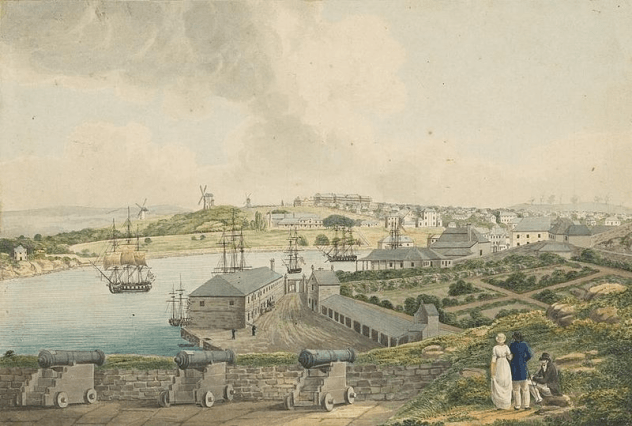
Imagine a prison without walls. A continent-sized cage surrounded by shark-infested oceans and endless, burning deserts. That was Australia in the early 19th century. It wasn’t a holiday destination. It was the British Empire’s dumping ground.
New South Wales was teeming with them. Thieves. Forgers. Political dissidents. By the 1820s, over 165,000 convicts had been shipped off to the bottom of the world. But here is the thing about shipping all your smartest criminals to one place: eventually, they start getting ideas. Big ideas.
They didn’t just want freedom. They wanted payback. And they wanted to get rich.
In this chaotic mix of chains and whips, one heist stands out. It wasn’t a smash-and-grab. It wasn’t a gunfight. It was a masterpiece of engineering, patience, and absolute nerve. This is the story of the 1828 Bank of Australia robbery. A crime so brazen, so impossible, that it still baffles historians today. And the best part? The money is still missing.
The Mastermind: A Fox in the Henhouse
Meet Thomas Turner. To the upper-class snobs of Sydney, he was just a laborer. A pair of dirty hands. But Turner was a genius.
He was arguably the finest stonemason in the entire colony. When the wealthy bankers of Sydney decided they needed a fortress to store their growing piles of cash, who did they call? Turner. They wanted a vault that no man could break into. A stone box. Impenetrable. Solid.
Turner smiled. He took the job.
He built them exactly what they asked for. Thick walls. Heavy doors. A monument to security. But while the bankers were patting themselves on the back, Turner was playing 4D chess. He knew something they didn’t. He knew the city’s anatomy better than the surveyors.
Years prior, Turner had been contracted to build a sewage drain. A massive, dark artery of filth that ran right through the city and emptied into Sydney Cove. And guess where that drain ran? Directly underneath the new bank vault. Not near it. Under it.
Was it a coincidence? Or did Turner plan this years in advance, waiting for the bank to be built on top of his secret highway? History is fuzzy on that detail, but if you look at the precision of the heist, it feels premeditated. Cold. Calculated.
Assembling the Sewer Rat Crew
Turner couldn’t do it alone. He needed muscle. He needed desperation.
It was 1828. Turner scouted the local pubs and shadows. He found two Irishmen: James Dingle and George Farrell. These weren’t soft men. They were hard. Brutalized by the system. Dingle was a free man, but Farrell was still a convict, a man owned by the state.
But they needed a specialist. Someone who could handle metal, locks, and heavy tools in the dark. Enter William Blackstone. A blacksmith. A convict with a grudge and a talent for breaking things.
The crew was set. But the logistics were a nightmare. Farrell and Blackstone were still serving sentences. They had to report for work six days a week. They were watched. Accounted for. The only time they had to themselves was Sunday. But you can’t rob a bank on a Sunday without prep work.
So, they sacrificed their Saturdays. Their one day of rest. While the rest of Sydney was drinking or sleeping, these men were underground. Literally.
The Nightmare Tunnel
Let’s talk about the digging. This wasn’t a movie montage. This was hell.
They entered through the sewage output at Sydney Cove. Imagine the smell. The heat. This is pre-modern plumbing. They were crawling through the waste of an entire city. Rats the size of cats. Darkness so thick you could taste it. And they had to be quiet.
They crawled up the drain, hundreds of feet, until Turner signaled the stop. “Here,” he probably whispered. “Directly above us.”
They started to breach the foundation. This wasn’t dirt. This was stone and brick. They were 40 feet underground, hacking away at the ceiling of a sewer, with 19th-century hand tools. One slip, and the tunnel collapses. One loud noise, and the guards above hear a phantom banging beneath the floorboards.
It was slow. Agonizingly slow. They worked in shifts, covered in filth, lungs burning from the methane gas. Week after week. Inch by inch. Turner directed the angle, ensuring they came up exactly inside the vault, not on the street outside where a patrolling guard might spot a head popping out of the cobblestones.
The tension must have been unbearable. Dingle eventually brought in two more men just to speed up the digging. They were racing against time. Every day they spent digging was another day they could get caught.
Sunday, September 14th: The Breakthrough
The plan was set for a Sunday. The bank was closed. The streets were quiet. But there was a problem. Farrell and Blackstone, the convicts, were supposed to be in their barracks or at church muster. If they were missing during the head count, the alarm would be raised before they even reached the gold.
This is where the corruption of the colony came in handy. Everyone had a price.
They bribed the muster clerk. A few coins to look the other way. To mark “Present” next to the names of two men who were currently wading through sewage with sledgehammers. It was a risk. A massive paper trail. But they had no choice.
They went in. They reached the end of their tunnel. The final layer of stone gave way.
Silence.
They pushed up. They were in. The smell of the sewer mixed with the smell of money. Paper notes. Bags of coins. They were standing inside the holy of holies. The Bank of Australia vault.
The Haul
They didn’t take everything. They couldn’t carry it. But they took enough to live like kings for ten lifetimes. £14,000.
To put that in perspective, in 1828, a skilled worker might earn £50 a year. This was millions in today’s purchasing power. It was astronomical. They stuffed their sacks with British pounds, Spanish dollars (which were common currency then), and gold sovereigns. They lowered the loot back down into the stinking darkness of the drain.
They sealed the hole. They vanished back into the muck, dragging a fortune through the slime.
By Monday morning, the bank opened as usual. The tellers walked in. They opened the vault. It looked normal at first glance. Then they saw the floor. Then they checked the cash boxes.
Panic. Absolute, sheer panic.
The Investigation: Clueless Coppers
The authorities were baffled. How? The doors were locked. The windows were barred. It was as if a ghost had floated in, grabbed the loot, and floated out.
Suspicion immediately fell on the employees. It had to be an inside job, they thought. They grilled the tellers. They harassed the managers. Meanwhile, Turner and his crew were likely sitting in a pub, trying not to look like men who had just pulled off the heist of the century.
But criminals are their own worst enemies. Paranoia set in. You have five or six men sharing a secret worth a fortune. How long until one of them cracks? How long until one gets greedy?
The police found nothing for weeks. The trail was cold. The sewage drain exit at Sydney Cove was tidal; the water washed away footprints every day. It was the perfect getaway route.
But remember that muster clerk? The one they bribed?
Investigators started looking at the convict records. They noticed discrepancies. “Wait,” a detective probably said. “Blackstone and Farrell were marked present, but nobody saw them at church. And they’ve been spending a lot of money lately.”
The heat was turning up.
Honor Among Thieves? No Chance.
The group began to fracture. It wasn’t the police that broke them. It was greed. Pure, ugly greed.
James Dingle and Thomas Woodward (one of the extra men recruited later) decided that sharing was for suckers. They looked at Blackstone—the blacksmith who had sweated and bled in that tunnel—and decided he didn’t deserve his cut. They conned him. They short-changed him.
Bad move.
You do not rip off a convict blacksmith who breaks into bank vaults for fun. Blackstone was furious. He was seething. But he couldn’t go to the police without implicating himself. So he waited. He stewed in his anger.
Two years passed. The money was still missing. The case was becoming a legend.
Then, in 1831, Blackstone slipped up. He got arrested for something totally unrelated—a minor theft or a drunken brawl. He was facing hard time. Maybe the gallows, maybe a trip to Norfolk Island (which was basically a death sentence). The police had him in a cell.
Blackstone looked at the walls of his cage. He thought about Dingle. He thought about the money he never got. He thought about the men living the high life while he rotted.
“I have information,” he told the guards.
He didn’t just want a plea deal. He wanted revenge. He demanded a full pardon, a ticket to leave the colony, and—get this—a cash reward. He wanted to get paid to rat out the men who stole the money he helped steal.
The authorities agreed. They wanted the case closed.
Blackstone sang like a bird. He named everyone. Turner. Dingle. Farrell. He described the tunnel. He described the bribe. He laid it all out.
The Mystery of the Missing Gold
Here is where the story gets truly wild. The police raided everything. They arrested the crew. They dug up floors. They tore apart houses.
They found… almost nothing.
A little bit was recovered here and there, small amounts that couldn’t be definitively tied to the bank. But the vast majority of the £14,000? Gone. Vanished into the ether.
So, where is it?
This has fueled conspiracy theories in Australia for nearly 200 years. Let’s look at the possibilities.
Theory 1: The Burial
The most common theory is that Dingle and Turner buried the bulk of the loot in the bushland surrounding Sydney. Back then, “the bush” was only a few miles from the city center. Today, those spots are suburbs. There could be a pot of Spanish gold sitting under a dentist’s office in Surry Hills right now. People have spent decades looking for it with metal detectors.
Theory 2: The Melt Down
Did they melt the gold down? Possibly. But that requires intense heat and equipment, which attracts attention. And what about the paper notes? You can’t melt paper. You have to launder it. Did they manage to ship it out of the colony? Did they pay off a sea captain to take it to England?
Theory 3: The Secret Society
Some modern historians suggest the money never left the circle of the wealthy. Did Turner pay off high-ranking officials to keep quiet? Was the robbery used to pay debts owed by the colony’s elite? It sounds like tinfoil-hat territory, but corruption in New South Wales was endemic. If the Chief of Police gets a cut, nobody finds the money.
The Legacy of the Drain
The Bank of Australia robbery changed everything. It embarrassed the government. It forced banks to rethink security entirely. It wasn’t enough to just build a strong door anymore; you had to check the floor. You had to check the sewers.
Thomas Turner, the genius stonemason, faded into history, his reputation as a builder forever shadowed by his reputation as a master thief. Blackstone got his pardon and disappeared, likely looking over his shoulder for the rest of his life, waiting for an Irishman with a knife.
Today, if you walk through the streets of Sydney, you are walking over a labyrinth of old tunnels. The “Tank Stream”—the water source that became the sewer used in the heist—is still there, encased in concrete, flowing silently beneath the skyscrapers and the luxury shops.
And somewhere, perhaps rotted by time or hidden in a rusted iron box, lies the fortune that five men crawled through hell to steal. They outsmarted the British Empire. They built the vault, and then they broke it.
The perfect crime? Almost. If only they had paid the blacksmith.
Originally posted 2016-04-21 17:27:03. Republished by Blog Post Promoter