The Forbidden City of Varosha: A Paradise Lost, Frozen in Time
Picture it. The Mediterranean sun glinting off the turquoise water. The softest, whitest sand you’ve ever seen, stretching for miles. Luxury hotels tower over the beach, their balconies filled with the rich, the famous, the beautiful. Elizabeth Taylor is here. Richard Burton. Brigitte Bardot sips a cocktail by the pool. The streets are alive with the buzz of expensive cars, the windows of high-fashion boutiques displaying the latest styles from Paris and Milan. This isn’t a dream. This was Varosha.
The crown jewel of Cyprus. The playground of billionaires and movie stars. The number one tourist destination on the entire island.
And then, in the blink of an eye, it was gone.
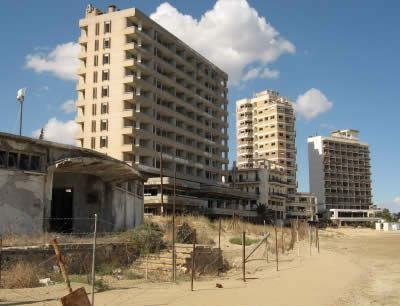
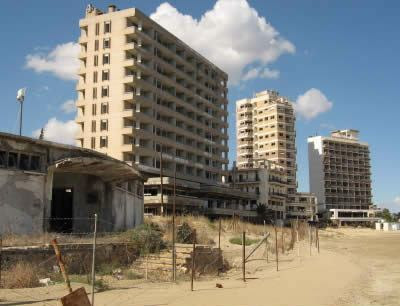
Today, Varosha is a ghost town. A haunting, silent ruin sealed behind miles of barbed wire and guarded by soldiers with orders to shoot on sight. A city frozen in the summer of 1974, left to rot for nearly half a century. What happened? Why was a paradise deliberately turned into a post-apocalyptic wasteland? And the biggest question of all… what secrets are they still hiding behind that fence?
A Glimpse of Paradise: The Golden Age of Varosha
To understand the tragedy, you first have to understand the dream. Before 1974, Varosha wasn’t just a place. It was *the* place. It was the pulsing, vibrant heart of Famagusta, a city on the eastern coast of Cyprus that was quickly becoming a global hotspot.
Think Monte Carlo, but with better beaches. Think the French Riviera, but with a unique Cypriot charm.
This was the result of a massive construction boom. Investors poured money into Varosha, and gleaming white hotels shot up into the sky. The King George Hotel. The Asterias. The Grecian Hotel. These were temples of luxury, offering world-class service to a clientele that expected nothing less. The Argo Hotel, on JFK Avenue, was a favorite of Elizabeth Taylor’s, a place of unbelievable opulence.
But it wasn’t just for the ultra-wealthy. Varosha was a city for everyone. It had a thriving arts scene, bustling commercial streets, and residential areas filled with gorgeous modern homes. It represented the future. A bright, prosperous, modern Cyprus.
Imagine walking down Leonida, the main street. You’d pass a brand-new Toyota dealership, the latest models gleaming under the showroom lights. You’d see chic boutiques with mannequins dressed in the bell-bottoms and vibrant patterns of the early 70s. Bakeries with fresh pastries in the window, bars echoing with laughter and music, families enjoying a day at the beach. It was perfect. A postcard of a life well-lived.
No one had any idea it was all about to end.
The Day the World Ended: August 1974
Everything changed on July 20th, 1974. A coup d’état in Cyprus, aiming to unite the island with Greece, triggered a massive military invasion from Turkey. The first wave of the invasion hit other parts of the island, but the fighting crept closer and closer to Famagusta.
For weeks, the residents of Varosha lived in fear. The sound of distant planes became the sound of nearby bombs. Finally, on August 14th, Turkish tanks were on the horizon.
The city emptied in hours. Not days. Hours.
Panic. Pure, unadulterated panic. People grabbed what they could carry and fled. They left dinner cooking on the stove. They left laundry hanging on the line. Shopkeepers locked their doors, expecting to be back in a few days once the fighting stopped. Families jumped in their cars and headed west, away from the advancing army, thinking it was a temporary evacuation.
They never came back.
The Turkish army rolled into a nearly empty city. They quickly fenced off the entire Varosha district, from coast to coast. They declared it a military zone. And for the next 46 years, the gates slammed shut. The paradise was now a prison, and its only inmates were ghosts and memories.

Behind the Barbed Wire: A City Frozen in Time
What does a city look like after being abandoned for almost half a century? The stories that have leaked out from behind the fence are the stuff of nightmares and urban legends.
Varosha became a time capsule of 1974. Everything was exactly as it was left on that frantic August day. For decades, through the barbed wire, you could see clothes still hanging in shop windows, their colors faded to grey by the relentless sun. You could see pots and pans still sitting on stoves in the high-rise apartments.
A car dealership, untouched. Inside, pristine 1974 Toyota Corollas gather dust, a silent showroom for a world that no longer exists. A chilling snapshot of commerce interrupted by war.
This situation was cemented by politics. In 1984, the United Nations Security Council passed Resolution 550. It stated, in no uncertain terms, that Varosha could not be resettled by anyone other than its original inhabitants. Since the area was under Turkish military control and those inhabitants were Greek Cypriots who had fled, a permanent stalemate was born. Turkey couldn’t legally do anything with the city, and the original residents couldn’t return. So it sat there. And rotted.
Nature’s Slow, Brutal Reclamation
Without people to maintain it, the city began to die. Slowly at first, then all at once. The salt air from the sea ate away at metal. The sun baked paint into dust. Windows, shattered by the initial conflict or simply by time, allowed the elements to pour in.
Nature began to fight back.
Aggressive bougainvillea vines crawled up the sides of once-luxurious hotels, their bright flowers a bizarre splash of life against the decay. Trees grew up through the floors of living rooms. Their roots buckled the asphalt of the streets, turning boulevards into cracked and broken trails. The entire city became an unwilling botanical garden, a massive experiment in what happens when humanity just… disappears.
But life found a way. In the ultimate irony, the deserted beaches of Varosha, once crowded with tourists, became a sanctuary. Endangered Green and Loggerhead sea turtles, finding the shores empty and undisturbed, began to nest there in huge numbers. A tragic, beautiful accident. A slice of nature thriving in a man-made apocalypse.
The Conspiracy Corner: What’s Really Going On In Varosha?
For decades, Varosha has been a political bargaining chip. A piece on a geopolitical chessboard. But is that all it is? The internet, of course, has other ideas. When you seal off an entire city for 50 years, you create a vacuum, and conspiracies rush in to fill the void.
Let’s look at some of the whispers that echo from the web’s darker corners.
Theory #1: The Lost Fortunes
This is the most straightforward theory. Varosha was a city of extreme wealth. When its residents fled, they took only what they could carry. What about everything else? Rumors persist that bank vaults were never emptied. That personal safes in the luxury hotel rooms and apartments are still filled with cash, jewelry, and gold. Could the Turkish military have conducted a secret, decades-long looting operation? Or, more tantalizingly, could those fortunes still be there, waiting in silent, dusty rooms, a treasure map with no access?
Theory #2: The Ghost Fleet
Remember that car dealership? It’s a verified fact. But some theories expand on this. They claim that it’s not just one dealership. They say that entire underground parking garages of the grand hotels are filled with the classic cars of the era, owned by wealthy guests who fled and could never return. A priceless collection of vintage automobiles, slowly rusting away in the dark. Is the fence there to protect a political situation, or is it guarding the world’s most inaccessible classic car collection?
Theory #3: The Secret Base
This one is a bit wilder. The official line is that the fence is just to keep people out. But what if it’s really to keep people from seeing what’s *in*? Some online sleuths suggest that the decaying city is the perfect cover. Could the empty hotel basements and sprawling infrastructure be used as a clandestine military base? A listening post? A training ground? The perfect hiding spot is often right out in the open, and you can’t get more “out in the open” than an entire abandoned city.
A Crack in the Wall: The Partial Reopening
For 46 years, the story was the same. Varosha was sealed. Forbidden. A ghost. Then, in October 2020, the impossible happened. The fences, in a small area, came down.
Under the authority of the Turkish and Northern Cypriot governments, a section of the beachfront and a couple of main roads were opened to the public for the first time since 1974. It was a shocking development that sent ripples through the international community.
Crews went in, cleared some roads of debris, and set up checkpoints. Now, tourists and curious locals can walk or rent a bike and ride down streets that were, for nearly five decades, the exclusive domain of ghosts and UN patrols.
The experience is surreal. You can walk along a pristine beach, looking up at the skeletal remains of giant hotels, their empty window sockets like a thousand vacant eyes staring down at you. You can see the 1970s architecture, the faded advertisements, the sheer scale of the decay, all up close.
But this opening is controversial. The original Greek Cypriot inhabitants see it as a political stunt, a violation of the UN resolutions. They see strangers walking through their stolen memories, taking selfies in front of their ruined homes. For them, it is a new layer of pain on an old wound.
Is this the first step toward a true resolution? Or is it a cynical move to change the facts on the ground, to erase the city’s past and build something new on its bones?
The mystery of Varosha is not over. It has just entered a strange, new chapter.
The city is no longer just a ghost. It’s a wound that has been reopened. It is a scar on the map, a memory frozen in amber, and a question that still hangs heavy in the Mediterranean air. Will the people of Varosha ever truly go home? Or will their city forever remain a monument to a paradise lost in a single, chaotic, world-ending day?