The Secret of Imber: The UK Ghost Village Swallowed by War and Conspiracy
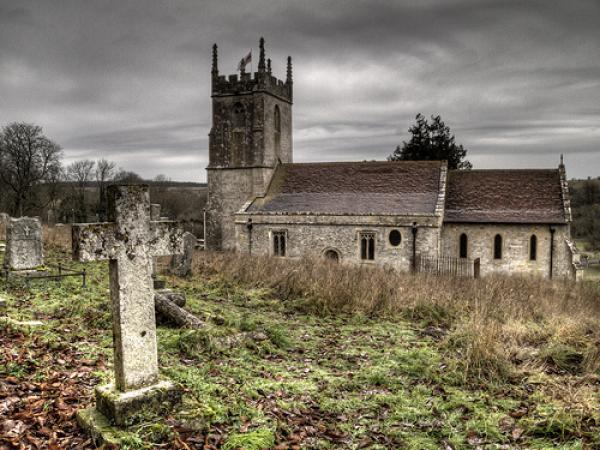
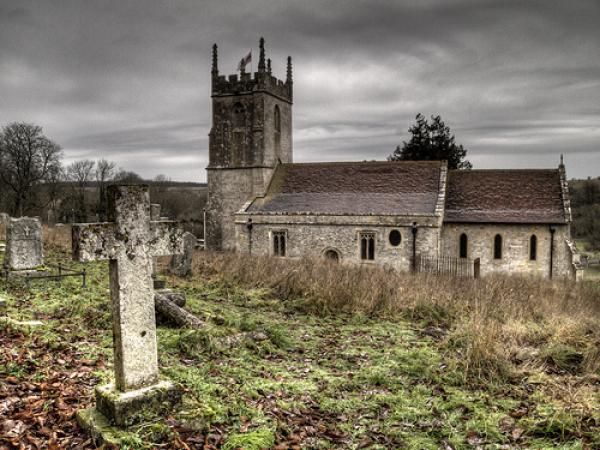
Look at that picture. It seems quiet, doesn’t it? Almost peaceful. A church, some old buildings, nestled in the rolling green of the English countryside. But don’t let the silence fool you. This is Imber. And Imber has a dark secret. This isn’t just an abandoned village. This is a place that was stolen from its people, a place where a promise was shattered, and a place that now sits at the very heart of one of Britain’s most secretive and mysterious landscapes.
They say it was for the war. A necessary sacrifice. But what if that was only part of the story? What if the real reason Imber remains empty has nothing to do with the past, and everything to do with something they don’t want us to see?
A Living Village, Erased from the Map
Before the soldiers came, Imber was alive. It wasn’t just a place on a map; it was a community, a web of lives stretching back over a thousand years. The Domesday Book of 1086 mentions it. Think about that. A place with a history so deep it was recorded by the Normans.
Life revolved around the seasons. The village had its own pub, The Bell Inn, where locals would gather after a long day. It had a post office. A schoolhouse filled with the sound of children’s laughter. St. Giles Church stood as the stone heart of the community, its bells marking baptisms, weddings, and funerals for generations. And there was Albert Nash, the village blacksmith. His hammer rang out across the fields, a constant, reassuring rhythm of daily life. Remember his name. It will come back to haunt this story.
This wasn’t a bustling city. It was a quiet, isolated place on the vast, empty expanse of Salisbury Plain. But it was home. And in 1943, that home was ripped away.
The 47-Day Notice: A Promise That Would Be Broken
The letter arrived in November 1943. Official. Cold. It said the entire village was being evacuated. Every man, woman, and child. They had just 47 days to pack up their entire lives and leave. Forever.
Why?
The war, they said. American GIs were flooding into Britain, preparing for the D-Day landings, the great invasion of Europe. They needed space to train. A lot of space. And Imber, unfortunately, was in the perfect spot. The villagers were told it was their patriotic duty. A temporary sacrifice to help win the war against Hitler.
The Ministry of Defence left a letter pinned to the church door. A solemn vow. It promised the villagers they could return to their homes as soon as the war was over. They packed their belongings, locked their doors, and left, believing that promise. They believed they would be back.
They were wrong.

Welcome to Salisbury Plain: A Landscape of Ancient Power and Modern Secrets
To understand what happened to Imber, you have to understand where it is. Salisbury Plain is not normal countryside. It’s… different. It’s an ancient, mystical landscape, home to the world-famous stones of Stonehenge and Avebury. For thousands of years, people have seen this place as special, a center of power. Strange lights, unusual energy fields, ancient ley lines—you name the theory, it’s connected to Salisbury Plain.
But today, that ancient power shares the land with a modern, more secretive one. The Ministry of Defence (MoD). The Plain is one of the UK’s most important military training areas. It’s vast, restricted, and crawling with activity. And just a stone’s throw from Imber is another, even more infamous facility: Porton Down. The UK’s top-secret chemical and biological weapons research center. A place where whispered stories of human experiments and unimaginable science have echoed for decades.
So Imber wasn’t just an isolated village. It was a civilian island in the middle of a sea of military secrets and ancient mystery. Was it really just a convenient spot for target practice? Or was its location the real prize?
The Americans Arrive: Shells Fall on English Homes
The villagers were gone. The US Army moved in. The quiet streets of Imber, once filled with the sounds of farm animals and neighbors chatting, now echoed with the rumble of tanks and the crack of rifle fire. The houses where people had been born, had raised families, were now targets. They became props in a dress rehearsal for the invasion of Normandy.
Soldiers practiced kicking in the doors of the post office. They threw dummy grenades into the windows of The Bell Inn. The entire area became a live-fire zone. The war ended in 1945. The villagers, who had scattered across the country, waited for the letter telling them they could come home. It never came.
Why Couldn’t They Go Home? The Great Betrayal
This is where the official story starts to fall apart. The war was over. The GIs went home. So why was Imber still off-limits? The MoD backtracked on its promise. They claimed the land was still essential for modern military training. The dangers were too great. Unexploded ordnance, they said. The area was “saturated” with it.
The villagers were furious. They had done their patriotic duty. They had given up everything. Now they were being locked out of their own homes by a lie. They formed committees. They protested. They wrote letters to politicians. In 1961, over 2,000 people marched in a demonstration demanding the right to return. The government refused. Every single time.
Was it really about unexploded bombs? Or was that just the perfect excuse? Keeping the public out of such a massive, centrally located area on Salisbury Plain gave the military a completely private kingdom. A place where they could do whatever they wanted, far from prying eyes.
Imber Reborn: A Simulated Warzone for a New Era
The village of Imber didn’t just die. It was transformed. It became a laboratory for warfare. The MoD began to modify it, to sculpt it into the perfect enemy. A place called FIBUA, for “Fighting In a Built-Up Area.” Urban combat.
From German Streets to Middle Eastern Souqs
During the Cold War, the military needed a place to practice fighting the Soviets in Germany. So, what did they do? In the 1970s and 80s, they built new houses in Imber. Purpose-built enemy houses, designed to look like a Bavarian village. Soldiers trained for a war in Europe that never came, running through the streets of a fake German town built on the bones of a real English one.
Then, as the world changed, so did Imber. After 2001, the focus shifted to the conflicts in Iraq and Afghanistan. The German village wasn’t right anymore. So they built again. This time, they constructed a sprawling “Shanty Town” out of stacked shipping containers, designed to mimic the tight, confusing alleyways of a Middle Eastern market. Imber became a stage, constantly redressed for the next war, its own history buried under layers of concrete and steel.
Whispers on the Plain: The Ghosts and Theories of Imber
When a place suffers a trauma like this, stories begin to grow in the silence. And Imber has more than its share.
The Blacksmith’s Curse
Remember Albert Nash, the blacksmith? The story goes that when the eviction notice came, he was utterly heartbroken. He couldn’t bear to leave the place his family had lived and worked for centuries. Within weeks of being forced out, he collapsed and died, some say of a broken heart. His one wish was to be buried in the churchyard of St. Giles in his beloved Imber. The military, in a rare moment of compassion, allowed it.
But soldiers on late-night exercises have reported strange things near the old blacksmith’s shop. The sound of a hammer striking an anvil in the dead of night. A shadowy figure seen standing in the doorway, watching the troops, before vanishing into thin air. Is it the ghost of Albert Nash, still watching over his stolen home?
Sounds in the Silence
Other troops have told stories of hearing children’s laughter near the derelict schoolhouse. Or smelling the scent of baking bread wafting from the cold, empty ovens of the village bakery. Are these just tricks of the wind on a lonely plain? Or is it something more? A psychic echo of the life that was violently cut short?
What Are They Really Hiding at Imber?
This is the question that keeps conspiracy forums buzzing late at night. The official reason—that it’s a unique and vital training facility—just doesn’t seem to satisfy everyone. The theories get wild.
Theory 1: The Porton Down Connection. Is Imber used as a safe, isolated area for testing things from the nearby Porton Down labs? Things they wouldn’t dare test anywhere else? The idea of testing chemical or biological agents in an open, contained area, far from civilian populations, is terrifying. But is it impossible?
Theory 2: The UFO Stronghold. Salisbury Plain is one of the biggest UFO hotspots in the world. The famous “Warminster Thing” phenomenon of the 60s and 70s happened right next door. The area is littered with reports of strange lights, silent black triangles, and other unexplained aerial phenomena. Is the military keeping Imber and the surrounding area locked down not to keep us out, but to keep *something else* in? Some have suggested the area is a base for reverse-engineered alien technology, and Imber is simply part of the massive security buffer zone.
Theory 3: The Underground Secret. What if the most important part of Imber isn’t the village itself, but what’s *underneath* it? The chalky ground of Salisbury Plain is easy to tunnel. Rumors have persisted for years of a vast network of underground tunnels and bunkers connecting the various military installations. Is Imber an entry point? A nerve center for a secret underground complex hidden from the world?
A Fleeting Glimpse: Visiting the Forbidden Village
For most of the year, Imber is a ghost. A warzone. Strictly off-limits. But for a few days—usually around Easter and Christmas—the guns fall silent. The MoD opens the single road into the village, and the public is allowed a brief, strange pilgrimage.
What you find is haunting. The original houses are mostly gone or are hollowed-out shells, pockmarked by decades of simulated warfare. But St. Giles Church, cared for by a preservation trust, still stands. It’s the only whole thing left. You can go inside, see the memorials to the families who lived here. You can even attend a service, a bizarre and moving experience, surrounded by the ghosts of the past and the machinery of modern war.
Visiting Imber is like stepping into another dimension. You drive through a heavily militarized zone, past signs warning of sudden explosions and unexploded bombs, to find this wounded, silent piece of old England. It’s a powerful, unsettling experience that leaves you with more questions than answers.
The Imber Legacy: A Permanent Wound
The story of Imber is a story of power. The power of a government to take, and the powerlessness of ordinary people to resist. It was a promise made in the heat of war, and a promise broken in the cold light of peace. The original villagers are almost all gone now, having died in exile, their dream of returning home buried with them.
Is Imber a necessary tool for national defense? Or is it a permanent wound on the English landscape? A chilling reminder that sometimes, the needs of the state can simply erase your entire world. The next time you see a quiet, forgotten place, look a little closer. You never know what secrets, what broken promises, might be hiding in plain sight.