Home Weird World Space ‘Mini’ black holes could power the entire world

‘Mini’ black holes could power the entire world

0
82

The Ultimate Power Source is Hiding in Plain Sight

Stop what you’re doing. Look around you. The lights, the screen you’re reading this on, the phone in your pocket—it’s all powered by a system that feels ancient. We burn things. We split atoms. We chase the sun and wind. But what if the ultimate power source, a source of almost unimaginable energy, has been staring us in the face all along?

What if the most destructive force in the cosmos could be our salvation?

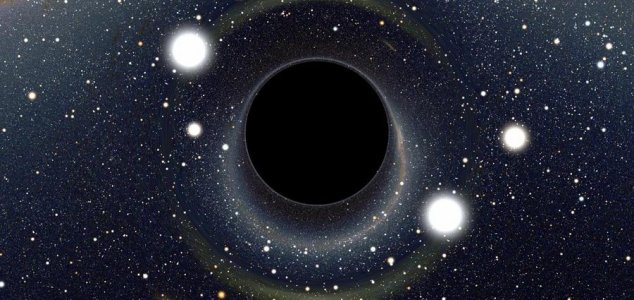
Black holes. The very name sends a shiver down the spine. They are the universe’s monsters. Points of no return where gravity is so intense, so ridiculously powerful, that nothing—not even light itself—can escape. They are cosmic vacuum cleaners, swallowing stars and planets for breakfast. We see them as voids. Endings. The ultimate cosmic dead end.

But one man dared to look into that darkness and see a fire.

A fire that could power our entire world.

That man was Stephen Hawking. And his idea wasn’t just revolutionary; it was terrifying, brilliant, and might just be the most important “what if” in human history.

Stephen Hawking’s Most Dangerous Idea

Back in 2016, during his Reith lectures for BBC Radio 4, the legendary physicist dropped a bombshell that rippled through the scientific community and the public imagination. He presented a concept so audacious it sounded like it was ripped straight from the pages of a science fiction epic.

Hawking suggested that a single, tiny black hole could solve all of humanity’s energy needs. Forever.

Forget solar panels covering deserts. Forget wind farms cluttering the horizon. Forget the terrifying risks of nuclear fission. This was something else entirely. This was tapping the very fabric of reality for juice.

black holes

His words were precise and mind-bending. “A mountain-sized black hole would give off X-rays and gamma rays, at a rate of about 10 million megawatts, enough to power the world’s electricity supply,” he stated, with the calm confidence only a genius of his stature could possess.

Ten million megawatts. Let that sink in. That’s a flood of energy so immense it’s hard to even conceptualize. All our cities, all our factories, all our homes, all our devices, powered by a single object no bigger than Mount Everest, compressed into a space smaller than an atom.

But how? How can something famous for *taking* energy be the universe’s most powerful generator?

The answer lies in one of Hawking’s own greatest discoveries. A ghostly, paradoxical process that proves the universe is far stranger than we ever imagined.

Deep Dive: The Ghost in the Machine is Called Hawking Radiation

To understand the power plant, you have to understand the engine. And that engine is Hawking Radiation.

For decades, scientists believed the rule was simple: what goes into a black hole, stays in a black hole. It was a one-way street to oblivion. But Hawking, using the bizarre rules of quantum mechanics, turned this idea on its head.

Here’s the simple version. The “empty” space of the universe isn’t actually empty. It’s a seething, chaotic foam of “virtual particles” that pop into existence and then annihilate each other in the blink of an eye. They exist for such a short time they’re almost ghosts.

Now, imagine this happening right on the razor’s edge of a black hole’s event horizon—the point of no return.

A pair of virtual particles pops into existence. A particle and its anti-particle. But before they can cancel each other out, disaster strikes. One particle gets pulled across the event horizon, lost forever. The other one, its partner now gone, is suddenly very real. And it flies away into space.

From an outsider’s perspective, it looks like the black hole just spat out a particle. It looks like it’s… glowing.

This escaping particle carries energy away from the black hole. And where does that energy come from? It comes from the black hole’s own mass. In other words, this process causes the black hole to slowly, painstakingly, evaporate.

Here’s the kicker. The smaller the black hole, the more violently it radiates. A supermassive black hole at the center of a galaxy will take trillions upon trillions of years to evaporate. But a tiny one? A “primordial” black hole born in the furnace of the Big Bang? It would shine with the intensity of a star. A black hole with the mass of a mountain would be a cosmic blowtorch, blasting out stupendous amounts of high-energy gamma rays and X-rays.

That is the fire Hawking wanted to harness. Not a fire of burning fuel, but a fire born from the very nature of spacetime itself.

The Nightmare Engineering of a Black Hole Power Plant

Okay, so the physics works. In theory. But how in the world would you actually build this thing? This is where the sheer, terrifying reality of the proposal slams home.

You can’t just build a concrete dome over it.

Hawking himself laid out the primary, almost comical, problem. “‘It wouldn’t be easy however, to harness a mini black hole. You couldn’t keep it in a power station, because it would drop through the floor and end up at the centre of the Earth.”

Think about that. This power source is an object of unimaginable density. It doesn’t interact with matter in the way we’re used to. It wouldn’t sit on a pedestal. It would simply… fall. Gravity would pull it straight down. It would pass through the floor, through the bedrock, through the planet’s mantle and core as if they were nothing more than smoke, oscillating back and forth through the center of the Earth until it finally came to rest there, slowly and calmly consuming our world from the inside out.

Disaster doesn’t even begin to cover it.

So, How Do You Hold a Caged God?

Hawking had a solution. A chillingly simple, impossibly complex solution.

“If we had such a black hole, about the only way to keep hold of it would be to have it in orbit.”

The power station wouldn’t be on Earth. It would be in space. We would have to capture this mountain-sized black hole and place it in a stable orbit around our planet, like a second, terrifying moon. The power plant itself would be a vast satellite—a Dyson-sphere-like structure of collectors and converters—that would orbit the black hole itself, soaking up the torrent of gamma rays and X-rays it spewed out, turning that raw cosmic fury into clean, usable electricity, and beaming it down to Earth.

The engineering challenges are staggering. How do you move an object with the mass of a mountain? How do you build a structure capable of withstanding a constant bombardment of high-energy radiation? What happens if the orbit decays? A single miscalculation, one tiny error in the station-keeping thrusters, and you send a planet-killing bullet careening through the solar system. Or worse, directly towards us.

It would be the ultimate high-wire act. Humanity’s entire existence would depend on a single, orbital machine functioning perfectly. Forever.

The Hunt for the Universe’s Missing Monsters

This all sounds great, right? A terrifying, but potentially world-saving, plan. There’s just one tiny problem.

We’ve never actually seen one.

Despite decades of searching the heavens, we have yet to find a single primordial black hole. The big ones, the stellar-mass black holes formed from collapsed giant stars, we can find. The supermassive beasts at the hearts of galaxies, we’ve even taken pictures of. But the little ones? The mountain-sized, car-sized, or even atom-sized relics from the Big Bang?

They remain completely elusive. Ghosts.

This was a source of some professional frustration for Hawking, who quipped, “This is a pity, because if they had I would have got a Nobel Prize.”

Could Dark Matter Just Be… Black Holes?

The search for these missing monsters has led to one of the most compelling and controversial theories in modern cosmology. What if we *have* been seeing them all along, but just didn’t realize it?

Scientists know that about 85% of the matter in the universe is “dark matter.” We can’t see it. It doesn’t interact with light. But we can feel its gravity. It’s the invisible cosmic glue holding galaxies together. We have no idea what it is.

But what if dark matter is just… a vast, swarming cloud of primordial black holes? Trillions upon trillions of them, ranging from the mass of asteroids to the mass of mountains, drifting silently through the cosmos. This theory elegantly solves two of the biggest mysteries in science at once: the nature of dark matter and the location of the missing primordial black holes.

If this is true, then space isn’t empty. It’s filled with these tiny, city-killing singularities. They could be passing through our solar system right now. Passing through the Earth. Passing through *you*. We would never even know it.

Unless one was just the right size. The size that glows.

The Conspiracy Corner: Tunnels, Telescopes, and Forbidden Tech

Naturally, an idea this big attracts a fringe. While mainstream science scans the skies with radio telescopes and looks for gravitational lensing events, some corners of the internet are buzzing with darker possibilities.

The most persistent theory targets CERN and the Large Hadron Collider. The story goes that they aren’t just smashing particles to see what comes out. They’re trying to concentrate enough energy in a small enough space to create a microscopic, artificial black hole right here on Earth. Officials have repeatedly denied this, explaining that the energies involved are nowhere near high enough, and even if they could create one, it would evaporate via Hawking radiation almost instantly.

But the whispers persist. Is it a secret energy project? A weapons program? An attempt to open a gateway to another dimension?

Then there are the whispers about “black projects.” That governments aren’t just looking for these objects, but have already found one. That somewhere, in a deep underground base or a shielded orbital facility, the world’s greatest minds are already trying to solve the engineering nightmare of containing and harnessing one. Could this explain some of the UFO phenomena or the strange energy signatures detected from deep space? It’s a tantalizing thought: the greatest secret in human history isn’t alien life, but a captured cosmic engine.

A Future of Infinite Light or Instant Annihilation?

Let’s step back from the speculation and just imagine for a moment. What if we did it? What if we succeeded?

We find a primordial black hole. We manage the impossible feat of capturing it and placing it in a stable orbit. We build the great celestial machine around it. And we flip the switch.

The result would be a golden age unlike any in human history. Energy becomes effectively free and limitless. The fights over oil and gas vanish overnight. Climate change could be reversed. We could desalinate the oceans, turn deserts green, and power starships to explore the galaxy. Poverty, scarcity, and want could become relics of a forgotten, primitive past.

It would be utopia.

But it would be a utopia with a gun to its head. Every single day, humanity would wake up knowing that our prosperity, our very existence, is tethered to that caged monster in the sky. Every solar flare would be a potential catastrophe. Every computer glitch a possible apocalypse. Every political disagreement on Earth would carry the terrifying threat of being weaponized against the orbital power station.

It’s the ultimate cosmic gamble. The universe offering us the keys to the kingdom, but hanging a Sword of Damocles over the throne.

Stephen Hawking didn’t just give us a wild idea for a power plant. He gave us a profound choice. He showed us a path to becoming a true planetary civilization, but also revealed the immense responsibility and terrifying risk that comes with that power. The question is no longer just “could we do it?” The real question, the one we may one day have to answer, is…

Should we?

Originally posted 2016-03-14 21:10:09. Republished by Blog Post Promoter