Gone: The Ghost Flights That Slipped Through Reality’s Cracks
There’s a specific kind of cold that crawls up your spine when you think about it.
It’s not the cold of winter. It’s the cold of the void.
The chilling, absolute truth that a massive, 200-ton machine made of metal and wire, filled with hundreds of living, breathing people, can just… stop existing. One moment it’s a pinpoint of light on a radar screen, a routine voice in a controller’s ear. The next? Nothing. Utter, deafening silence. A ghost.
This isn’t ancient history. This isn’t a sailor’s yarn from the 1700s. This is our world. The modern world.
And it keeps happening.
The Day the Sky Went Silent: Malaysia Airlines Flight 370
March 8, 2014. A date that became a wound. A question mark burned into the global consciousness.
Malaysia Airlines Flight 370 was supposed to be a milk run. A routine red-eye from Kuala Lumpur to Beijing. The plane, a Boeing 777, was a workhorse of the skies with an impeccable safety record. The pilots were seasoned. The weather was clear. Everything was normal. Painfully normal.
A Routine Flight Becomes a Global Nightmare
Just under an hour into the flight, as it prepared to cross from Malaysian to Vietnamese airspace over the South China Sea, the cockpit made its final, hauntingly casual transmission. “Good night, Malaysian three seven zero.”
Five words. Then, static.
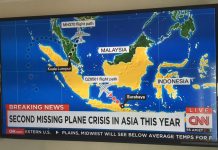
Seconds later, the plane’s transponder—the device that screams its identity, altitude, and speed to air traffic control—was switched off. MH370 vanished from civilian radar screens. It didn’t crash. It didn’t send a distress signal. It just blinked out of existence.
But it wasn’t gone. Not yet.
The Phantom on the Radar
This is where the story twists from a tragedy into something far, far stranger. Military radar, more powerful than its civilian counterpart, kept tracking an unidentified blip. A ghost. This ghost, believed to be MH370, suddenly abandoned its flight path to Beijing. It made a sharp, deliberate turn back across the Malaysian Peninsula, flying a bizarre, winding course as if trying to avoid detection.
It flew on for hours. Silently. Darkly.
The only reason we know this is because of a series of faint, automated “pings.” Once an hour, the plane’s satellite communications system sent a brief, robotic handshake to a satellite owned by the British company Inmarsat. It was the equivalent of a phone checking for a signal, a digital whisper from a dead plane. These pings contained no data, no location, no hint of what was happening on board. But they proved the plane was still powered up. Still flying. For nearly seven hours after it disappeared.
The final ping placed it somewhere in a vast, lonely arc of the southern Indian Ocean. One of the most remote places on Earth. A watery graveyard the size of a continent. And then, the pings stopped. The fuel, presumably, had run out.
Theories That Defy Logic (Or Do They?)
What happened in that cockpit? The world has been guessing ever since, and the theories range from the plausible to the outright terrifying.
Was it a mass murder-suicide? The flight path was erratic, yet controlled. Someone was flying that plane. Suspicion fell on the pilot, Zaharie Ahmad Shah, especially after investigators found similar flight paths programmed into his home flight simulator. Was he a hero who tried to save the plane, or a monster who doomed it? We may never know.
Could it have been a remote hijacking? Modern theories, whispered on internet forums and in security circles, suggest the possibility of a cyber-attack. Could someone have hacked the plane’s fly-by-wire system, locking the pilots out and turning the 777 into a giant, remote-controlled drone? It sounds like science fiction, but in an age of cyber warfare, can we really rule it out?
Or was it a more mundane horror? A sudden decompression event, a fire, or a mechanical failure that released toxic fumes into the cockpit, silently killing the pilots and crew. This “ghost flight” scenario is chilling. A plane full of unconscious souls, flying on autopilot for hours until its engines starved and it spiraled into the unforgiving ocean below. A silent, automated coffin.
Before Satellites Watched Us: Flying Tiger Line 739
Long before MH370, when the world felt bigger and the oceans deeper, another flight vanished under even more mysterious circumstances. This wasn’t a passenger jet. It was a military mission, shrouded in the paranoia of the Cold War.
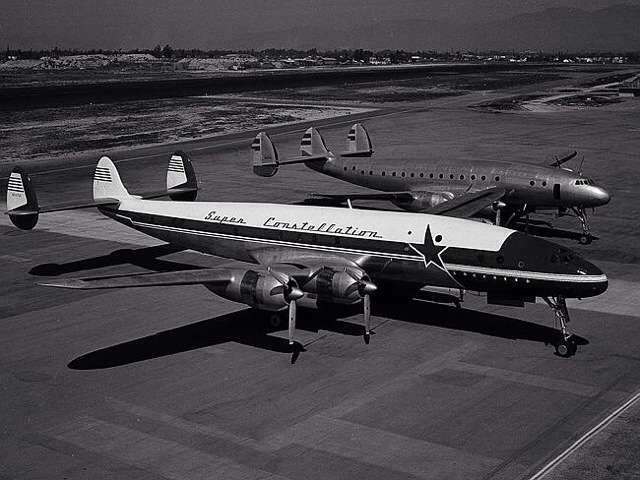
March 16, 1962. Flying Tiger Line Flight 739, a Lockheed Super Constellation, lifted off from Guam. Onboard were 93 U.S. Army soldiers and 3 South Vietnamese personnel, all heading towards the simmering conflict in Vietnam. It was a secret flight for a secret war.
It never arrived.

An Explosion in the Dark
Just like MH370, there was no distress call. No warning. The plane simply disappeared from the world. A massive search operation was launched, involving 1,300 people, ships, and aircraft from four branches of the U.S. military. They scoured 200,000 square miles of the Pacific Ocean.
They found nothing. Not a seat cushion. Not an oil slick. Not a single piece of wreckage.
But there was a witness. Or so they thought.
The crew of a Liberian tanker ship, the S.S. T.L. Linzen, reported seeing something extraordinary that night, right around the time and place where Flight 739 would have been. They described an “intensely luminous” light in the sky, a sudden, brilliant flash that was brighter than a star. It was followed by two flaming objects falling from the heavens, plummeting into the sea at different speeds.
It was a textbook description of a mid-air explosion.
What the Official Report *Doesn’t* Say
Despite this compelling eyewitness account, the Civil Aeronautics Board, the precursor to the NTSB, closed the case with a shrug. Their final report is a masterclass in saying nothing at all: they were “unable to determine the probable cause of the incident.”
Unable? Or unwilling?
Think about it. A military flight carrying soldiers to a warzone explodes in mid-air for no apparent reason. Could it have been sabotage? An explosive device smuggled on board? Was it shot down by an unknown enemy, an act of aggression the U.S. government couldn’t admit to during the tense standoff of the Cold War? The “official” story leaves a vacuum, and into that vacuum rushes every dark possibility you can imagine.
The Bermuda Triangle’s Ghost Fleet of the Sky
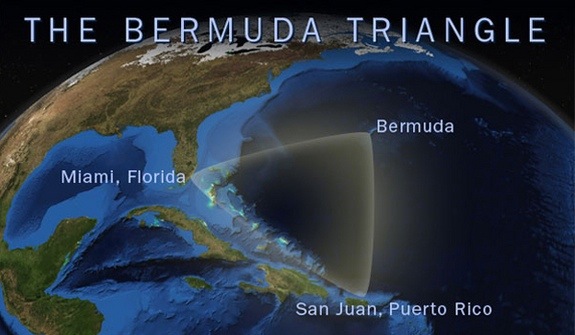
And then there is the Triangle. That infamous stretch of the Atlantic where the laws of physics seem to bend and break. Long before it became a pop culture phenomenon, it was earning its reputation one vanished vessel at a time. In the late 1940s, it claimed two sister planes in nearly identical fashion.
They were Avro Tudor IVs, operated by British South American Airways. Their names: the Star Tiger and the Star Ariel.
The Star Tiger: A Routine Hop into Oblivion
On January 30, 1948, the Star Tiger was flying from the Azores to Bermuda with 31 people on board. It was a heavy, lumbering post-war plane fighting strong headwinds. The pilot radioed in a routine position report. Everything seemed fine. Then, silence.
The plane, the crew, the passengers—all gone. A massive search found absolutely nothing.
The official UK investigation was stunning in its honesty. The chief investigator confessed they were completely “baffled.” His final report reads like a page from a horror novel. “It may truly be said that no more baffling problem has ever been presented,” he wrote. “What happened in this case will never be known and the fate of Star Tiger must remain an unsolved mystery.”
It just vanished.
Decoding the Enigma: “Some External Cause”
But the report contained one more, truly bone-chilling line. The investigators suggested the disappearance could have been caused by a simple mechanical failure, or, more ominously, “some external cause (that) may overwhelm both man and machine.”
Read that again. *Overwhelm both man and machine.*
What could do that? What force of nature or technology could instantly silence a crew and destroy a plane so completely that not a single shred of it is ever seen again? The investigators had no answer. They were leaving the door open to the unknown.
The Star Ariel: A Disturbing Déjà Vu
Almost exactly one year later, on January 17, 1949, it happened again. The Star Ariel, sister ship to the Tiger, was flying from Bermuda to Jamaica. The weather was perfect. The pilot radioed in, “I am over the south coast of Jamaica… I will be changing to Kingston frequency. Good morning.”
It was the last anyone ever heard from the flight. 20 people disappeared without a trace.
This time, a communications blunder meant a rescue mission wasn’t even launched for over seven hours. By then, any hope of finding floating wreckage was gone. It had been swallowed by the sea. Two sister ships, two nearly identical disappearances, in the same patch of ocean, just 12 months apart.
Coincidence? Or a pattern?
Connecting the Dots: A Pattern of Absolute Silence
A Cold War military transport. A pair of post-war British airliners. A cutting-edge Boeing 777. Decades and oceans separate these events, but they are bound by a terrifying common thread.
Absolute, deafening silence.
In none of these cases was a distress call ever received. No “Mayday.” No panicked report of fire or engine failure. The transition from routine flight to oblivion was instantaneous. Complete. It’s a silence that speaks volumes. It points to an event so sudden and so catastrophic that it rips away any chance for the crew to even press a button. A massive explosion? A total, instantaneous electrical failure that kills every system at once? Or something else?
Technology Isn’t the Answer We Think It Is
It’s easy to dismiss the vanishings of the 1940s and 60s as relics of a primitive age. An era of less reliable engines, no GPS, no constant satellite tracking. We tell ourselves it couldn’t happen today.
MH370 is the horrifying proof that we are wrong.
We live in a world blanketed by surveillance. We have satellites that can read a license plate from space. Our phones track our every move. And yet, a 209-foot-long airliner carrying 239 people managed to fly for seven hours as a ghost, completely undetected, before plunging into an ocean we still haven’t fully mapped.
Our grip on technology, our sense of control, is an illusion. The world is still vast, the skies are still deep, and there are still dark corners where things can simply… disappear.
The Void Stares Back
We look for answers in black boxes and satellite data. We hunt for scraps of metal on distant shores. We want a logical explanation. Mechanical failure. Pilot error. A terrorist act. We need a tidy story to close the book and calm our nerves before our next flight.
But what if there isn’t one? What if these ghost flights are reminders that we are small, fragile beings in a world that is far bigger, and far stranger, than we are comfortable admitting?
The sky is not empty. It’s full of ghosts. And every so often, it opens up and takes another one, leaving us on the ground to stare up at the clouds and wonder.
What really happened up there, in the cold and the dark? And who will be next?