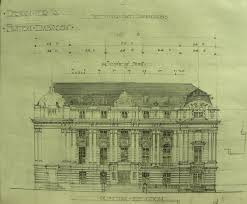
The famous mystery of The Lady who vanished!

    0
    54

    The famous mystery of The Lady who vanished!

    Imagine this. It’s 1889. Paris.

    The air is thick with heat, dust, and the smell of expensive perfume mixed with horse manure. The Eiffel Tower, brand new and controversial, scrapes the sky, a metallic finger pointing at the future. The Great Exposition is about to open. The world is watching. Millions of tourists are flooding the city. Every hotel is booked solid. Every room is a goldmine.

    Enter a young Englishwoman and her frail mother. They are exhausted. They’ve just traveled all the way from India, a grueling journey by steamship and rail. They are desperate for rest. They manage, through sheer luck, to snag two single rooms in a luxurious hotel. The mother takes Room 342. It’s distinctive. Memorable. Heavy plum-colored velvet curtains block out the Paris sun. The wallpaper is patterned with pink roses. It’s a room you wouldn’t forget.

    The mother collapses on the bed. She doesn’t wake up.

    This is the start of a story that has terrified people for over a century. It is the “Vanishing Lady” legend. It’s a story about gaslighting before the word even existed. It’s a nightmare about losing your mind. And some people swear every word of it is true.

    The Nightmare Begins

    Panic sets in immediately. The daughter, terrified, calls for help. The hotel manager arrives, sweating in his suit. A house doctor is summoned. He enters Room 342, examines the unconscious woman, and his face goes pale. He pulls the manager into the hallway. They whisper. Urgent, hushed French. The daughter catches none of it.

    Finally, the doctor turns to her. “Your mother is ill,” he says. “Seriously ill. She needs a specific medicine. My supply is out. You must go to my home. My wife has it. Go. Now.”

    He scribbles a note. He shoves her toward a carriage waiting outside.

    She doesn’t want to leave her mother. But she has no choice. She climbs into the carriage. This is where the nightmare shifts gears. The ride should have taken thirty minutes. Maybe forty. Instead, it takes four hours.

    The driver moves at a crawl. He takes wrong turns. He stops for no reason. When she finally reaches the doctor’s house, the wife is confused. She takes forever to find the medicine. She makes tea. She stalls. The daughter is screaming inside, but she is polite. She is British. She waits.

    Clutching the medicine, she finally races back to the hotel. She runs through the lobby, breathless, sweating, her heart hammering against her ribs. She runs up the stairs to Room 342.

    She knocks. No answer.

    She tries the handle. Locked.

    She runs back to the front desk. “My mother,” she gasps. “Room 342. I have the medicine.”

    The manager looks up. His face is a mask of stone. “Mademoiselle? Who are you?”

    The Erasure of Room 342

    The daughter freezes. “I am the woman who checked in four hours ago. With my mother. Room 342.”

    The manager shakes his head. “You are mistaken. You arrived alone. We have no record of a mother. We have no record of a Room 342 being occupied.”

    This is the moment the ground falls out. The moment reality snaps. She screams. She argues. She demands to see the doctor. The doctor appears—the same man who sent her on the errand. He looks her in the eye, cold and clinical.

    “I have never seen you before in my life,” he says.

    She is hysterical now. She demands to see the room. They let her go up, perhaps just to shut her up. She throws open the door to Room 342. She expects to see the rose-strewn wallpaper. She expects to see the heavy plum curtains. She expects to see her mother’s trunk.

    The room is empty.

    The wallpaper is different. It’s blue. Not roses. Blue stripes. The curtains are gone, replaced by cheap lace. The furniture is rearranged. There is no luggage. There is no mother. The room is occupied by the luggage of total strangers—French tourists who look at her like she is insane.

    She runs to the British Embassy. She tells her story. She cries. She begs. The officials listen politely. They check the hotel register. There is her signature. Alone. There is no second signature. They check the hospitals. No admission. They check the morgues. Nothing.

    The conclusion is inevitable. The heat of India, the stress of travel, the excitement of Paris… it was too much for her. She made it up. She imagined a mother who didn’t exist, or who had died years ago. She was mad.

    The young woman spent the rest of her life in a mental institution in England, screaming that they had stolen her mother.

    Deep Dive: The “Plague” Theory

    So, what happened? Was she crazy? Or was something much darker at play?

    For decades, conspiracy theorists and historians have obsessed over this story. The most prevailing theory—the one that makes your skin crawl—is the Bubonic Plague theory.

    Here is the “What If” scenario:

    The mother didn’t just faint. She showed signs of the Black Death. The plague. In 1889, this was the ultimate terror. Paris was hosting the Great Exposition. Millions of Francs were on the line. If word got out that the Plague was in a major Paris hotel, the Exposition would collapse. The economy would crash. Panic would destroy the city.

    The theory goes that the doctor recognized the symptoms immediately. He told the manager. A cold, hard calculation was made. The needs of the many outweigh the life of the one.

    They needed time to scrub the scene. So, they sent the daughter on a wild goose chase. Four hours. That was all they needed.

    The Clean-Up Crew

    While the daughter was trapped in that slow-moving carriage, a team went to work. They didn’t just remove the body. They removed the evidence.

    • The Body: Likely wrapped in chemically treated sheets and smuggled out the back, destined for a lime pit or an incinerator. No death certificate. No name. Just ash.
    • The Room: Plague germs stick to fabric. So, they ripped it all out. The plum velvet curtains? Burned. The rose wallpaper? Stripped off the walls in a frenzy.
    • The Cover-Up: They didn’t have time to re-paper the walls with the same pattern, so they slapped up whatever paper they had in the basement. Blue stripes. They dragged in different furniture. They forged the guest book.

    By the time the daughter returned, the crime scene was sterile. The staff were briefed: “She came alone. Stick to the story, or you lose your job. Or worse.”

    It wasn’t magic. It was a conspiracy of silence. A cover-up so complete, so brutal, that it drove the only witness insane. It is the ultimate gaslighting operation. The perfect crime.

    Origin of the Legend: Fact or Fiction?

    Is this history? Or is it folklore? This is where things get murky.

    The story first appeared in print in the Detroit Free Press in 1889, written by a journalist named Karl Keith. He claimed it was a true story told to him by a police officer. It spread like wildfire. Other papers picked it up. It crossed the ocean. It became the talk of London tea rooms.

    But years later, when researchers tried to verify it, they hit a wall. No records in the British Foreign Office. No police reports in Paris matching the description. When pressed, Karl Keith allegedly admitted he might have… embellished. Or maybe he just invented it on a slow news day. The “journalist who couldn’t remember” became part of the mystery itself.

    However, folklore rarely springs from nothing. Similar stories date back to the 1860s. There are versions set in Naples during a cholera outbreak. Versions set in Brussels. The location changes, but the horror remains the same: a loved one vanishes, and the world denies they ever existed.

    Pop Culture and The Hitchcock Connection

    This story is so compelling that it refused to die. It bled into our culture.

    Most famous is the connection to Alfred Hitchcock. The master of suspense loved this concept. His movie, The Lady Vanishes, takes the core idea—a woman disappears on a train, and everyone claims she wasn’t there—and spins it into a spy thriller. But in Hitchcock’s version, there’s a happy ending. The hero proves he isn’t crazy.

    In the original urban legend, there is no happy ending. There is only the padded cell.

    Another famous adaptation is the film So Long at the Fair (1950). In this movie, the brother vanishes during the Paris Expo. The ending reveals the plague cover-up explicitly. It cemented the “medical conspiracy” explanation in the public mind.

    Even modern horror stories, like Scary Stories to Tell in the Dark, feature a variation of this tale called “The Maybe-Eegh-Be.” It taps into a primal fear: the fear of isolation. The fear that our reality is fragile, held together only by the agreement of others. If everyone around you says the sky is green, how long until you stop believing it’s blue?

    Strange Twists and Modern Theories

    Let’s look at this through a modern lens. Today, we wouldn’t just call this a conspiracy. We’d call it a “Glitch in the Matrix.”

    Internet theorists love the Vanishing Lady story because it sounds like a timeline shift. One minute the daughter is in Timeline A (Mother is alive). She takes a carriage ride and slips into Timeline B (Mother never came to Paris). It aligns with the “Mandela Effect,” where large groups of people remember history differently.

    Consider the variations in the ending:

    • Ending A: The daughter goes mad and dies in an asylum. (The Tragedy)
    • Ending B: The daughter finds a loose strip of rose wallpaper behind a heavy wardrobe, proving she was right, but is still ignored. (The Psychological Horror)
    • Ending C: The daughter tracks down the doctor’s wife, who cracks under pressure and confesses the truth about the medicine. (The Detective Story)

    But the most chilling version is the one where the daughter returns to the hotel and finds the people are different. Not just lying—literally different people. That pushes the story from conspiracy into the supernatural. It suggests the hotel itself is a trap, a living entity that swallows people whole.

    Why We Are Obsessed

    Why does this story stick with us 130 years later? Because it could happen to you.

    You are in a foreign country. You don’t speak the language well. You lose your passport. You lose your phone. Suddenly, you are nobody. If the authorities decide to erase you, could they? If a massive corporation or a government needed to make you disappear to save their stock price, would they hesitate?

    The Paris Exposition was the 1889 equivalent of the Super Bowl or the Olympics. It was Too Big To Fail. The idea that a single human life is disposable in the face of massive economic interests is not a ghost story. It’s a reality we see on the news every day.

    Maybe there was no plague. Maybe the mother was murdered for her jewelry. Maybe she was kidnapped. Or maybe, just maybe, she never existed at all.

    The Detroit Free Press journalist who first reported this vanishing story eventually shrugged it off. He treated it like a piece of fiction. But did he silence himself? Was he pressured to retract the truth? We will never know.

    The records are gone. The hotel is likely demolished or renovated beyond recognition. The grave of the young woman in the asylum is unmarked. All that is left is the story. A whisper of rose-patterned wallpaper and a mother who vanished into thin air.

    So, the next time you check into a hotel and the clerk can’t find your reservation… take a deep breath. And make sure someone knows you’re there.

    Originally posted 2016-08-24 14:12:50. Republished by Blog Post Promoter

    Originally posted 2016-08-24 14:12:50. Republished by Blog Post Promoter