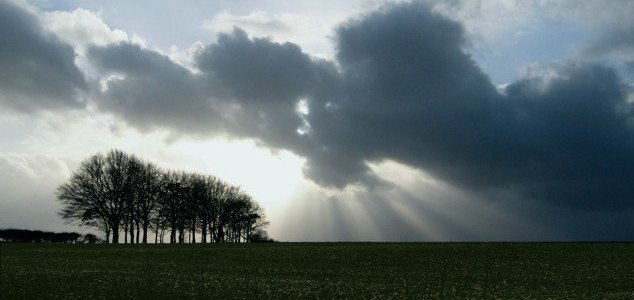
It’s Raining Worms: The Unexplained Deluge Over Norway
Picture this. You’re high in the mountains of Norway. The air is crisp, biting, and pure. All around you is a blanket of pristine, untouched snow. It’s quiet. Almost silent. Then you see them.
At first, it’s just one. A dark squiggle on the white canvas. Then another. And another. Soon, you realize the snow is littered with them. Thousands upon thousands of them. Earthworms. Alive and writhing on a frozen landscape miles from any thawed soil.
This isn’t the opening scene of a horror movie. This really happened.
Reports from across Norway have described this exact, baffling event—peculiar deluges of worms cascading from the heavens. It’s a phenomenon that stretches the limits of our understanding and forces us to ask a simple, yet profound question: What is going on in our skies?
A Skier’s Nightmare on the Slopes of Bergen
Karstein Erstad, a biology teacher, was just trying to enjoy the slopes. Skiing near Bergen, on a mountain deep with snow, he stumbled into the heart of the mystery. It was a sight that defied his scientific training.
“I saw thousands of earthworms on the surface of the snow,” he reported, his voice filled with the kind of disbelief that only comes from seeing the impossible. The snowpack was nearly two feet thick. There was no conceivable way for them to have burrowed up. They had to have come from above.
His scientific curiosity took over. He bent down, expecting to find them frozen solid, casualties of a bizarre weather event. But he was wrong.
“When I found them on the snow they seemed to be dead,” Erstad explained, “but when I put them in my hand I found that they were alive.”
Alive. Think about that for a second. These fragile creatures had apparently fallen from a great height, into freezing temperatures, onto a bed of snow… and they were still moving. This wasn’t an isolated incident, either. Soon, similar reports poured in from all over the southern part of the country. From LindÃ¥s to Suldal, people were finding the same impossible sight: carpets of living worms on the snow.
The Official Story: A Weather Anomaly or Hot Air?
So, you call the experts. The meteorologists. The scientists. They listen patiently and then offer you the explanation they’ve been giving for centuries.
The wind did it.
Yes, the official theory is that a powerful weather event, like a tornadic waterspout or a strong updraft, acted like a giant atmospheric vacuum cleaner. It supposedly roared over a patch of land, sucking up the topsoil and everything in it, including a massive population of earthworms. It then carried these poor creatures high into the sky, transported them for miles, and eventually dropped them over the Norwegian mountains.
“There have been reports of lots of types of living creatures falling from the sky,” said Liz Bentley of the Royal Meteorology Society, trying to normalize the event. “They get drawn up in huge drafts. For example fish, frogs and things like that have been reported to fall from clouds. It’s happened for hundreds of years.”

Case closed, right? A simple, if rare, act of nature. Nothing to see here.
But… does that really make sense?
Deep Dive: Can a Whirlwind Really Throw Worms?
Let’s get into the mechanics. A waterspout is a spinning column of air and water mist. The most powerful ones, tornadic waterspouts, can have wind speeds exceeding 100 miles per hour. When they move over a body of water, they can suck the water and any nearby fish or frogs right up into the vortex. These animals are then carried up into the parent cloud system, where they can be transported for miles before the updraft weakens and gravity takes over.
On land, a similar whirlwind could theoretically do the same to loose soil and the creatures within it. It sounds plausible. It sounds scientific. But the moment you start to really examine it, the whole theory begins to feel… thin.
Poking Holes in the “Wind” Theory
The official explanation is tidy, but it leaves a mess of unanswered questions. Questions that poke serious holes in the neat and tidy “wind” story.
First, there’s the **Sorting Problem**. If a violent tornado ripped through the countryside, why would it only pick up worms? Where were the leaves, the twigs, the pebbles, the dirt, the beetles, and all the other bits of debris you’d expect? Reports of animal rains consistently describe deluges of a *single species*. A rain of fish. A rain of frogs. A rain of worms. Nature’s vacuums are never that picky. It’s like a magical fisherman’s net that only catches one type of fish and lets everything else pass through. It doesn’t add up.
Second, we have the **Survival Problem**. An earthworm is a soft, delicate organism. Can it truly survive being sucked into a vortex with winds over 100 mph, launched thousands of feet into the freezing upper atmosphere where temperatures can be 50 below zero, and then airdropped onto a mountain? The trauma of the ascent, the freezing temperatures, and the impact of the fall should, by all rights, turn them into a shower of lifeless, frozen mush. Yet, Karstein Erstad found them very much alive.
Finally, there’s the **Geographic Problem**. The Norwegian worm falls weren’t in one single location. They were reported across a wide, mountainous region. Are we supposed to believe that one massive, continent-spanning storm system performed a series of coordinated, selective worm-abductions from various low-lying areas and then decided to dump them all, gently, over several different mountain ranges? The statistical odds are staggering.
The official story just doesn’t feel right. It feels too simple, too clean. A convenient explanation for something that might be far, far stranger.
A History of Impossible Rains
This isn’t a new puzzle. For as long as we’ve been writing things down, we’ve been writing about weird stuff falling from the sky. The Roman naturalist Pliny the Elder wrote of rains of frogs and fish in the first century AD. These weren’t just legends; they were recorded as historical events.
For centuries, these accounts were dismissed as myths or divine omens. But the reports kept coming. From all over the world. The same impossible details, repeated again and again.
It’s a phenomenon so persistent that it gave rise to its own field of study, pioneered by the American writer and researcher Charles Fort. He spent his life cataloging what he called “damned data”—all the strange events that science couldn’t, or wouldn’t, explain.
These animal rains were his bread and butter. Events that simply should not happen, yet do.
The Kentucky Meat Shower: You Read That Right
Perhaps the most bizarre case in American history occurred on March 3, 1876, in Bath County, Kentucky. For several minutes, over a clear and cloudless sky, pieces of what appeared to be fresh meat rained down over a 100-by-50-yard area. Witnesses described the chunks as being two to four inches square. Two brave men actually tasted it, reporting that it resembled mutton or venison.
The official explanation that eventually emerged was… vultures. The theory was that a flock of vultures, known as a “kettle,” had gorged themselves and then, flying overhead, had a moment of simultaneous, projectile vomiting. Yes, that is the actual scientific theory.
Seriously?
A coordinated, sky-blanketing vomit-storm from a flock of birds? Just like the wind theory for the worms, it feels like a desperate attempt to explain away the unexplainable with the first half-plausible idea that comes to mind, no matter how ridiculous it sounds.
Then there’s the Lluvia de Peces in Yoro, Honduras. Every year, sometime between May and July, a massive storm rolls in. After it passes, the ground is covered in thousands of live fish. It happens so regularly that the locals hold a festival to celebrate it. Scientists try to explain it away with waterspouts from the Atlantic, over 100 miles away. But every year? Like clockwork? It defies the random nature of weather.
And the Louisiana worm incident in 2007? An employee of the Jennings Police Department was crossing the street when she was suddenly covered in large, tangled clumps of worms falling from the sky. There were no tall buildings nearby, no planes overhead. Just a clear sky and a sudden, slimy downpour.
Every case is different, yet every case is the same. An impossible event. A tidy, but flimsy, official explanation. And a lingering sense that we are missing a huge piece of the puzzle.
Beyond the Weather: The Wildest Theories
When the mainstream explanation fails to satisfy, that’s when things get interesting. On the forums and subreddits of the web, where no idea is too strange, the theories about these animal rains go much deeper than a strong gust of wind.
Glitch in the Matrix: Are Portals Opening in Our Skies?
What if our reality isn’t as stable as we think? One popular fringe theory suggests that these events are the result of temporary rips or portals in the fabric of space-time. A wormhole could momentarily open, connecting two distant points on Earth. One end opens over a lake in Honduras, the other over the town of Yoro, and thousands of fish make an instantaneous, unwanted journey. Another portal connects a patch of Norwegian farmland to a mountain slope miles away, and the worms are simply dumped out the other side. It explains the selectivity (only things at the portal’s origin point get transported) and the survival of the animals (they aren’t being violently blasted into the stratosphere). It’s a wild idea, but in a world of raining worms, what isn’t?
Are UFOs Emptying Their Ballast Tanks?
You knew we had to go here. For decades, ufologists have documented strange aerial phenomena that coincide with these downpours. The theory is as simple as it is unsettling: what if these aren’t natural events at all? What if extraterrestrial craft use water, and the life within it, as some sort of ballast or for biological sample collection? When they’re done, they just… empty the tanks. A rain of fish in one location, a cascade of frogs in another. The worms in Norway? Maybe it was just the refuse from a long journey, biological waste jettisoned before making a jump to lightspeed. It’s an out-there idea, but is it any more absurd than a synchronized flock of vomiting vultures?
Atmospheric Lifeforms and Sky Beasts
This is one of the oldest and strangest explanations. What if our atmosphere isn’t empty? What if it’s home to massive, largely invisible biological entities? Cryptozoologists have long speculated about giant, gelatinous “sky beasts” that float unseen in the upper atmosphere. Perhaps these animal rains are a byproduct of their existence. Are they feeding, and this is their waste product? Is it a form of reproduction, raining down spawn that we mistake for common earthly animals? It sounds like science fiction, but it would neatly explain the sudden appearance of tons of biological matter from a seemingly clear sky.
The Final Verdict That Isn’t One
So where does that leave us? With a pile of living worms on a frozen mountain and a list of explanations that range from the improbable to the seemingly impossible.
The truth is, we don’t know. The phenomenon of animal rain is a perfect mystery because it’s fleeting. By the time scientists can get to the scene, the evidence has often melted, been eaten by predators, or been cleaned up. There are no lab conditions to replicate, no patterns to reliably predict. There are only the stories. The eyewitness accounts. The baffling photographs.
The “wind” theory will remain the official story because it’s comfortable. It uses known forces to explain the unknown. It keeps our world looking neat and tidy and understandable.
But for those who have stood under a sky that dropped something other than rain, that explanation will never be enough. It doesn’t account for the strangeness, the specificity, the sheer impossibility of it all.
The next time you see a dark cloud on the horizon, don’t just reach for an umbrella. Look closer. Pay attention. You never know what might be about to fall. The sky is not as empty as we think.