The Impossible Puzzle: A Deep Dive into the Voynich Manuscript
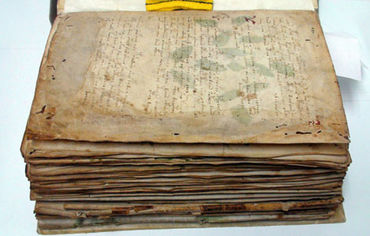
Imagine a book that nobody can read. Not a single word. It sits inside a vault at Yale University, buried deep within the Beinecke Rare Book and Manuscript Library. It is silent. It is maddening. It is arguably the most dangerous object in the world of linguistics because it breaks every rule we know about human communication.
Welcome to the rabbit hole of the Voynich Manuscript.
This isn’t just some dusty old tome. This is the Mount Everest of uncracked codes. We have broken the Enigma machine. We have deciphered Egyptian hieroglyphs. We have translated linear B. But this? This small, ugly book, roughly the size of a modern paperback, has defeated the greatest minds of the last century. World War II codebreakers? Failed. Supercomputers? Failed. Artificial Intelligence? Confused.
It screams for attention. It begs to be understood. But it keeps its secrets tight.
For over a hundred years, people have looked at its 240 pages and asked the same question: Is this the lost wisdom of a forgotten civilization, a medieval medical guide, a message from extraterrestrials, or simply the greatest practical joke ever told? Buckle up. We are going to tear this mystery apart, page by bizarre page.
The Discovery: A Chest of Secrets in a Jesuit Villa
Let’s set the scene. It’s 1912. The location is the Villa Mondragone, a massive palace near Rome. The Jesuits are broke. They need cash, fast, so they decide to quietly sell off a chunk of their rare book collection. Enter Wilfrid Voynich.
Voynich wasn’t your average librarian. He was a Polish revolutionary, an ex-prisoner who had escaped Siberian exile, and a rare book dealer with a sharp eye for hidden treasures. While digging through a chest of books being offered for sale, he froze.
He pulled out a vellum codex. It didn’t look right. It was full of drawings that made no sense. Plants that didn’t exist on Earth. Naked women bathing in green tubes. And the text… the text was a flowing, loopy script that looked like handwriting but read like nothing. No Latin. No Greek. No Hebrew.
Voynich bought it instantly. He spent the rest of his life trying to crack it. He failed. But he gave the book his name, and he gave the world an obsession that hasn’t faded since.
The “Ghost” History
Inside the cover, Voynich found a letter dated 1666. It was from a man named Johannes Marcus Marci, the official doctor to the Holy Roman Emperor. The letter claimed the book once belonged to Emperor Rudolf II, a guy obsessed with alchemy and the occult. Rudolf apparently paid 600 ducats for it—a fortune in gold—believing it was written by the famous English friar and wizard, Roger Bacon.
Was it Bacon? Probably not. But that letter proves one thing: even in the 1600s, nobody knew what the heck this book was. It was a mystery even then. It has been a ghost story for 600 years.
The Science: What We Know For Sure
Let’s strip away the myths for a second. What does hard science say? For decades, skeptics screamed that Wilfrid Voynich faked the whole thing. They claimed he forged it in 1912 to make a quick buck. It was a solid theory. Voynich was a dealer, after all.
But in 2011, a team from the University of Arizona silenced the skeptics. They took tiny samples of the vellum (the animal skin pages) and performed high-precision radiocarbon dating.
The result? Boom.
The skin of the animals used to make the book lived sometime between 1404 and 1438. The Early Renaissance. This isn’t a modern forgery. It isn’t a Victorian hoax. The physical materials are undeniably medieval. Unless Voynich found a stack of unused, blank parchment from the 15th century and managed to create ink that perfectly matched the chemical composition of the era, the book is authentic.
The McCrone Research Institute in Chicago analyzed the ink. It contains iron, carbon, and no synthetic ingredients. It matches the recipes used in the 1400s. The provenance is rock solid. The book is old. The mystery is real.
A Walk Through a madman’s Dream
Open the book. What do you see? It isn’t a novel. It looks more like a field guide for a planet that doesn’t exist. The manuscript is divided into distinct sections, each weirder than the last. We aren’t looking at random doodles here. We are looking at a structured, organized attempt to explain… something.
1. The Herbal Section: Flowers from Nowhere
The first section is the largest. It features 113 drawings of plants. At first glance, you think, “Okay, it’s a botany book.” But look closer. These plants are wrong. They are Frankenstein monsters. One drawing shows a root system that looks like a bird’s nest attached to a flower that resembles a sunflower, with leaves from a completely different species.
Botanists have spent a century trying to identify them. They have managed to guess maybe two or three (like a wild pansy or maidenhair fern). The rest? They don’t exist in nature. Are they extinct species? Or did the artist invent them?
2. The Biological Section: The Green Goo
This is where things get disturbing. This section features page after page of naked women. They aren’t posing. They are bathing. They sit in complex systems of tubes, pipes, and pools filled with a dark green liquid. Some of the tubes look like intestines; others look like industrial plumbing.
The women have swollen bellies. Is it about pregnancy? Hygiene? A bizarre spa ritual? Some conspiracy theorists think it depicts the creation of life—or genetic engineering. The water flows from one pool to another in a way that defies physics.
3. The Cosmological Section
Here, we find fold-out pages—massive diagrams that pull out from the book. They depict circular maps, stars, and zodiac signs. But the zodiacs are off. The months don’t quite line up. There are drawings of the sun and moon with faces. It looks like astrology, but not as we know it.
4. The Pharmaceutical Section
If you thought the plants were weird, wait until you see the medicine. This section shows jars—rows of apothecary jars labeled with the mysterious text. Inside the jars? Roots. Tiny pieces of plants. It looks like a recipe book for potions. But again, we can’t read the labels. We don’t know what the potions do. Do they cure the plague? Or do they cause it?
The Language: “Voynichese”
Let’s talk about the text. It has a name: Voynichese. It is written from left to right. It has paragraphs. It has bullet points. It looks astonishingly confident.
When you write a code or gibberish, you pause. You make mistakes. You scratch things out. The Voynich Manuscript has almost zero corrections. The scribe wrote this 200-page book in a steady, rhythmic flow. It looks like they were copying something they knew by heart, or simply writing in their native tongue.
The alphabet consists of about 20 to 30 characters. There are loops, gallows-like shapes, and squiggles. But here is the kicker: It follows the laws of language.
The Zipf’s Law Smoking Gun
This is the strongest evidence that the book contains a real message. Zipf’s Law is a linguistic rule that states in any human language, the most common word appears twice as often as the second most common, three times as often as the third, and so on. It’s a mathematical fingerprint of human speech.
Random gibberish does not follow Zipf’s Law. A made-up code usually doesn’t either.
The Voynich Manuscript follows Zipf’s Law perfectly.
Computer analysis confirms the text has a structure. Words repeat in patterns that match languages like English, Latin, or Arabic. The word entropy (the randomness of the characters) is similar to human language. This tells us one terrifying thing: It is not nonsense. It is saying something. We just aren’t smart enough to hear it.
The Suspects: Who Wrote It?
If we know when it was made, and we know it’s a real language, who held the pen? The list of suspects reads like a “Who’s Who” of history’s weirdest characters.
Suspect 1: The Con Men (Dee and Kelley)
John Dee was Queen Elizabeth I’s court astrologer. Edward Kelley was his partner, a self-proclaimed medium who claimed he could talk to angels using a crystal ball. They traveled Europe, scamming royalty. The theory? They created the book to swindle Emperor Rudolf II. Kelley was known for “speaking in tongues” (Enochian language). Did he invent Voynichese to sell a fake magical book for a pile of gold? It fits their M.O. perfectly.
Suspect 2: The Aliens (The Fringe Theory)
We have to address it. The star charts. The unknown plants. The biological tubes. Some believe this is a record left by a visitor. Why map stars that don’t match our sky? Why draw plants that don’t grow in our soil? It’s unlikely, but in the absence of truth, the imagination runs wild.
Suspect 3: The Forgotten Culture
A more grounded theory suggests the book is a survivor. Perhaps it was written by a small, isolated culture in Northern Italy or Eastern Europe that was wiped out. A dialect that died. A tradition of herbal medicine that the Church suppressed. The author wasn’t hiding the information; they were simply writing in a language that nobody else survived to read.
Modern Theories: The Internet Detectives
You would think that in the age of the internet, we would have solved this. We are trying. Every few years, a headline pops up: “Voynich Manuscript Solved!”
Don’t believe them.
- The “Proto-Romance” Theory: In 2019, a researcher claimed it was written in a lost “proto-Romance” language spoken by commoners. He translated a few words. The academic community tore him apart within days. His translation required too many leaps of logic.
- The Hebrew Cipher: An AI program recently analyzed the text and suggested it was Hebrew written in a complex anagram code. It produced a sentence: “She made recommendations to the priest, man of the house and me and people.” It’s a start, but it’s mostly word salad.
- The “Meaningless Hoax” Theory: Researcher Gordon Rugg used a “Cardan Grille” (a stencil used to create codes) to show that you could generate Voynich-like text manually. He argues the book is a hoax, but a very complex one designed to look real. He calls it “gibberish with a structure.”
Why It Matters
Why do we obsess over this thing? Why does a 600-year-old book about fake plants drive people crazy?
Because we hate not knowing. In a world where Google answers every question in 0.4 seconds, the Voynich Manuscript is a black hole. It is a reminder that we are not omniscient. It represents the ultimate secret.
Is it a medical guide that could cure diseases? Is it a magical grimoire? Or is it the ramblings of a madman who sat in a room by candlelight, inventing a world that only he could see?
Until someone cracks the code, the book sits in the dark at Yale, mocking us. It is the book that can’t be read. And maybe, just maybe, it was never meant to be.
Video Deep Dive
Want to see the pages turning? Want to feel the creepy vibe of this object? Check out this documentary clip below.
Originally posted 2016-05-01 04:28:00. Republished by Blog Post Promoter
![The-Book-That-Cant-Be-Read[1]](https://coolinterestingnews.com/wp-content/uploads/2013/03/the-book-that-cant-be-read1.webp)