The Forbidden Timeline: How One Documentary Shattered History
It stands guard at the edge of the Giza Plateau. Silent. Watchful. The Great Sphinx. For centuries, we have been told a very specific story about this massive limestone statue. We were told it was built around 2500 BC. We were told it was commissioned by the Pharaoh Khafre. We were told it is merely a tomb ornament.
But what if that story is a lie?
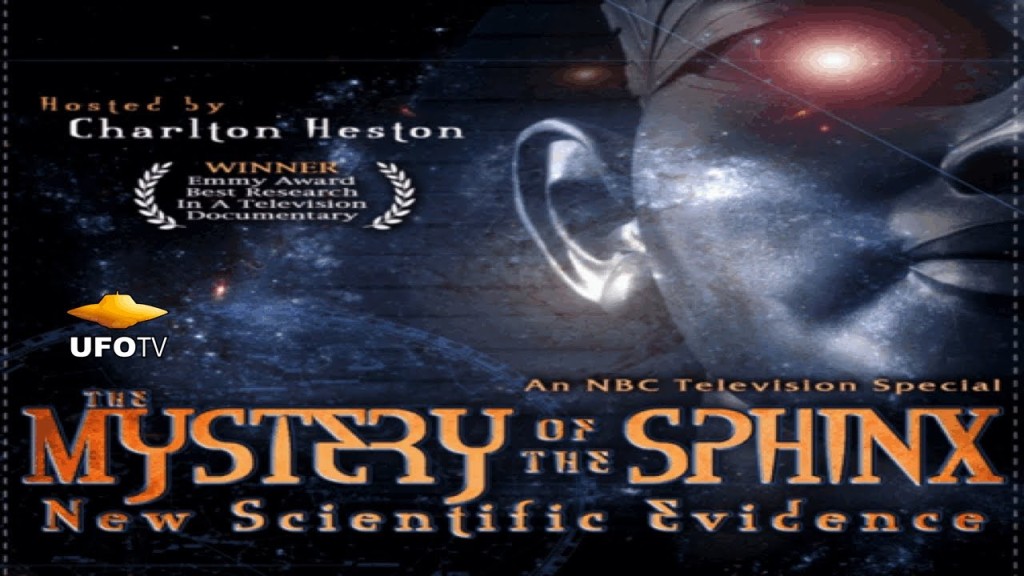
In 1993, a television event aired that didn’t just question the history books—it threw a stick of dynamite into the foundation of Egyptology. The documentary was titled Mystery of the Sphinx. It didn’t just present a theory; it presented hard, physical evidence that the timeline of human civilization is wrong. Wrong by thousands of years.
Hosted by the legendary Charlton Heston, this wasn’t some late-night fringe conspiracy show. This was a prime-time investigation that brought together a rogue Egyptologist and a hard-nosed geologist to ask a simple, terrifying question: How old is the Sphinx, really?
The Night Television Broke Archaeology
Imagine the scene. It’s the early 90s. The internet is barely a thing. People got their truth from the evening news and encyclopedias. Then, NBC airs a special that suggests everything we know about the origins of civilization is incorrect.
Mystery of the Sphinx deals mainly with a brutal, academic cage match. On one side: the Egyptologists. They rely on texts, pottery shards, and established timelines. They are the gatekeepers. On the other side: the geologists. They look at rocks. They look at erosion. They don’t care about what a textbook says; they care about what the stone says.
The documentary suggests the Sphinx water erosion hypothesis. It sounds technical, but it’s actually incredibly simple. And that simplicity is what makes it so dangerous to the mainstream narrative.
Hollywood Star Power Meets Hard Science
Charlton Heston is the host of the documentary, bringing a gravity to the subject that few others could. When Moses himself tells you to look at the rocks, you look. But Heston was just the narrator. The real stars were the men risking their reputations.
The film features the late, great John Anthony West, a self-taught Egyptologist who refused to bow to the academic elite. He is the one who first noticed the weird weathering patterns on the Sphinx. He realized that the damage didn’t look like wind erosion. It looked like something else entirely.
To prove it, he brought in Dr. Robert M. Schoch, a geologist from Boston University with credentials miles long. He also brought in writer Richard C. Hoagland to discuss the astronomical implications. Together, they formed a team that would become the nightmare of traditional historians.
The Smoking Gun: Rain in a Desert?
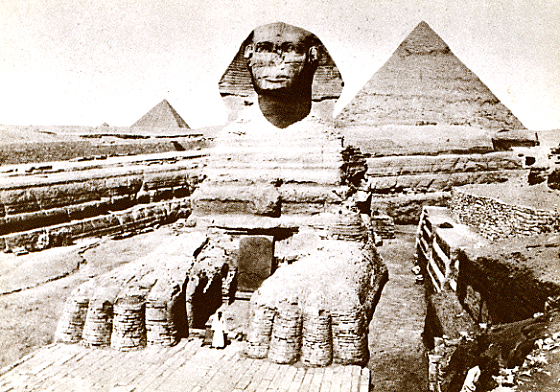
Here is the core of the mystery. Look closely at the body of the Sphinx. Look at the walls of the enclosure it sits in. You see deep, vertical fissures. You see a rolling, undulating pattern on the limestone.
According to Dr. Schoch, this is textbook precipitation-induced weathering. That’s fancy talk for rain damage. Heavy, pounding, continuous rain. Not for a week. Not for a year. But for centuries.
Here is the problem. The Giza Plateau is a desert. It is bone dry. It has been a desert since the end of the last Ice Age. To find a climate in Egypt wet enough to cause that kind of deep erosion, you have to go back in time. Far back.
You have to go back to at least 5000 BC, perhaps even 7000 BC or 10,000 BC. This was a time when the Sahara was green (the Neolithic Subpluvial). But wait. Mainstream history tells us that in 7000 BC, humans were primitive hunter-gatherers. We were chipping flint tools. We weren’t carving 200-ton blocks of limestone into the shape of a lion.
If the water erosion theory is true, then civilization is thousands of years older than we think. It implies a “lost chapter” of human history. A time of high technology and organization that was wiped out and forgotten.
The Forbidden Search: What Lies Beneath?
If the Sphinx is older, what was its purpose? Was it just a statue? or was it a marker? A guardian?
In the documentary, CIS crews explore a mysterious cavity at the rear of The Great Sphinx. This isn’t just a crack in the rock. It looks intentional. But the real secret might not be in the Sphinx itself, but under it.
The legends say the entrance to the Hall of Records is beneath the monument. This is the Holy Grail of alternative archaeology. The “Hall of Records” is a legendary library, supposedly left behind by the survivors of a lost civilization (some say Atlantis) to preserve their knowledge before a global cataclysm.
Edgar Cayce, the famous “Sleeping Prophet” of the early 20th century, predicted decades ago that a chamber would be found under the right paw of the Sphinx. He claimed it contained the history of the world from the beginning of time. For years, this was dismissed as psychic nonsense.
Science Meets Prophecy
But then, technology caught up. The documentary shows sub-surface passageways that lead to secret chambers within The Great Pyramid and under the Sphinx. Underground readings with a seismograph have revealed the existence of such passageways. These aren’t hunches. These are data points.
In the early 90s, Thomas Dobecki, a geophysicist, ran seismic surveys around the Sphinx. What did he find? He found anomalies. He found a rectangular chamber right where Cayce said it would be—under the right paw. Nature does not create perfect rectangles deep underground. Humans do.
So, did they start digging? Did they lower cameras? Did they open the library of the ancients?
No.
Permission from the Egyptian Government to investigate has been denied, so far. Every time a researcher gets close, the permits are pulled. The site is locked down. A wall is built. Silence falls.

The Great Denial: Why Are They Scared?
Why? That is the question that keeps independent researchers awake at night.
If the Sphinx is just a rock, let us dig. If there is nothing under the paw, let us prove it. But the reaction from the archaeological establishment has been aggressive. It has been fearful.
However, it is very strange that some famous archeologists have refused to investigate these pyramids and claimed that it’s just a natural hill turned into a hoax. There is a pattern here. A pattern of ignoring evidence that doesn’t fit the “safe” timeline.
Consider the recent internet theories regarding the Bosnian Pyramids. In Visoko, Bosnia, massive structures exist that look suspiciously like pyramids. They are covered in vegetation, looking like hills. Preliminary excavations have found concrete harder than anything we make today. They have found tunnels. They have found energy beams measured at the summit.
And what does mainstream archaeology say? “It’s a hoax.” “It’s a natural formation.”
Claiming that it’s just a natural hill turned into a hoax by the Bosnian government to attract tourism is the standard dismissal. However, how could they know what’s really there if they haven’t even been there? Many critics wrote their takedowns from offices in London or New York without ever setting foot in Bosnia.
A Global Cover-Up?
And since when does archaeologists refuse to explore a possible discovery? Science is supposed to be about curiosity. It’s supposed to be about turning over every stone. But when it comes to the Sphinx, the Pyramids, and sites like Bosnia or Gobekli Tepe, the door is slammed shut.
It’s as if they were threatened by their governments or something not to explore the Bosnian pyramids and it would make a lot of sense, it would reshape our world history entirely.
Think about the consequences. If we prove the Sphinx is 12,000 years old, every history book is trash. Every university lecture on “the cradle of civilization” is wrong. The timeline of human evolution—from hunter-gatherer to city-builder—is shattered.
Perhaps that is why the permits are denied. Perhaps that is why Zahi Hawass, the former Minister of Antiquities in Egypt, famously shouted down researchers and banned them from the plateau. They aren’t protecting the stones. They are protecting the narrative.
The Evidence is in the Stone
Let’s circle back to the Sphinx. The water erosion is visible to the naked eye. You don’t need a PhD to see it. You just need to look at the photos from the 1993 documentary.
The head of the Sphinx is small. Disproportionately small compared to the body. This has led many, including Robert Schoch, to suggest the head was re-carved. Perhaps the original monument was a lion—a massive lion meant to mark the Age of Leo (around 10,500 BC). When the Pharaohs came along thousands of years later, they found this ancient, eroded monument and decided to put their own face on it.
They re-carved the lion’s head into a human head. That’s why it looks so fresh compared to the body. That’s why the head is too small. It all fits.
But the “experts” won’t hear it.
Conclusion: The Mystery Deepens
Decades have passed since Mystery of the Sphinx first aired. Has the debate been settled? Far from it. The battle lines are dug deeper than ever.
Modern scans continue to show anomalies. LIDAR technology and ground-penetrating radar are making it harder and harder to hide the truth. We know there are voids. We know there are tunnels. We know the geology screams “Ice Age.”
The Sphinx sits there, smiling its enigmatic smile. It has seen civilizations rise and fall. It has seen the rains turn to sand. It knows the truth. And maybe, just maybe, deep beneath its limestone paws, inside a chamber that the government forbids us from opening, the written history of that lost time is waiting for us.
Until then, we keep asking questions. We keep watching the documentaries. And we keep looking at the rocks. Because the rocks don’t lie. People do.
Originally posted 2016-03-01 04:27:51. Republished by Blog Post Promoter