Home Unexplained Mysteries Ancient Mysteries Dinosaur and Man Footprints – Mystery

Dinosaur and Man Footprints – Mystery

0
96
Dinosaur footprint
Dinosaur footprint
                                                                                               Dinosaur footprint

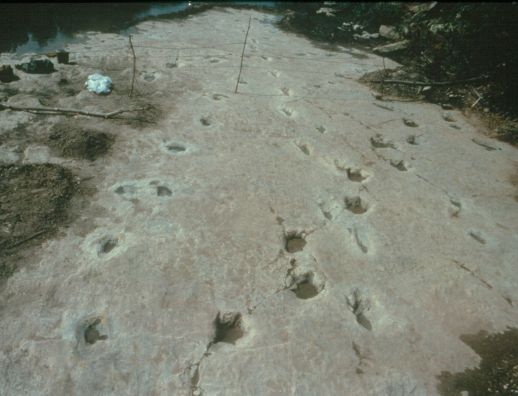
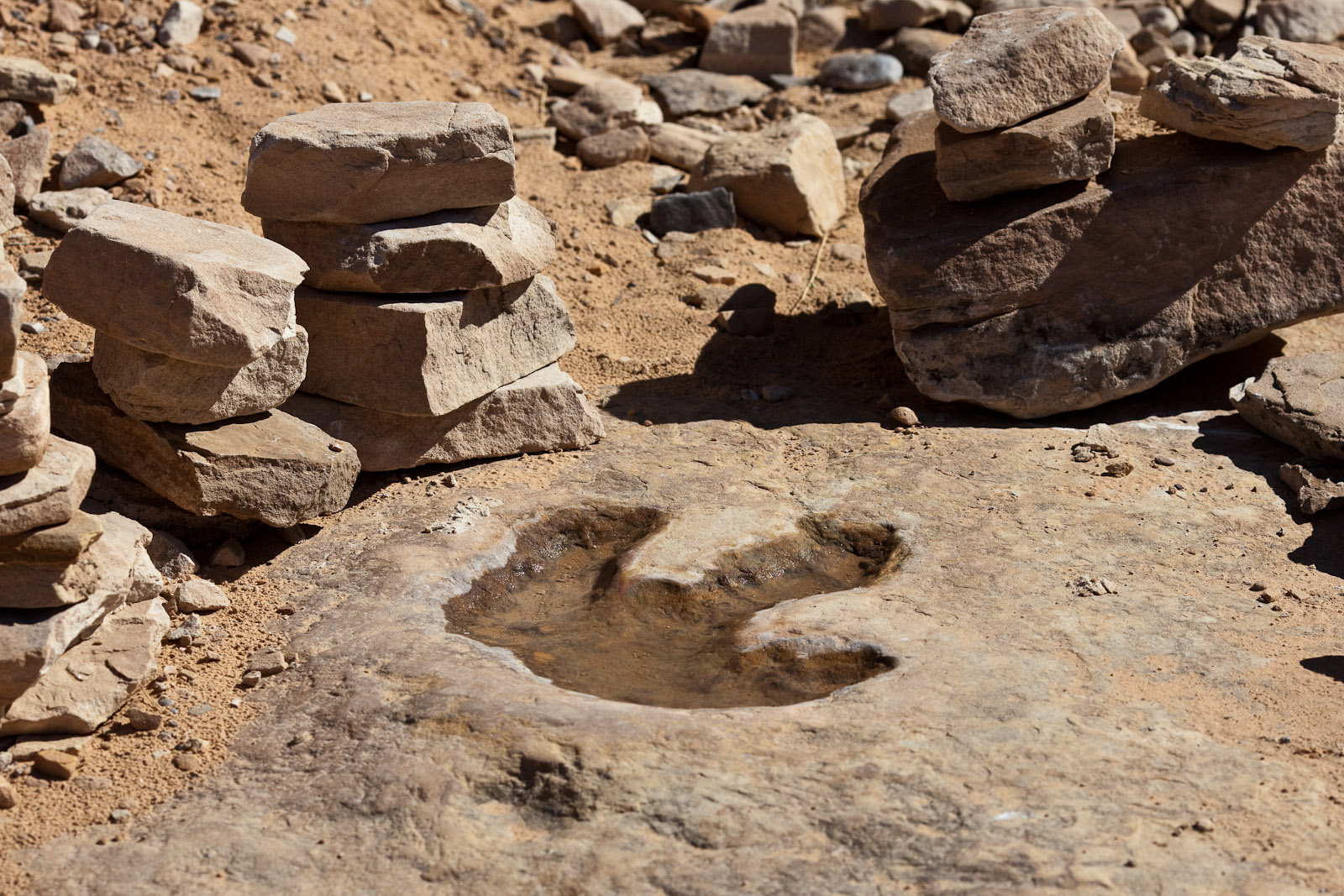
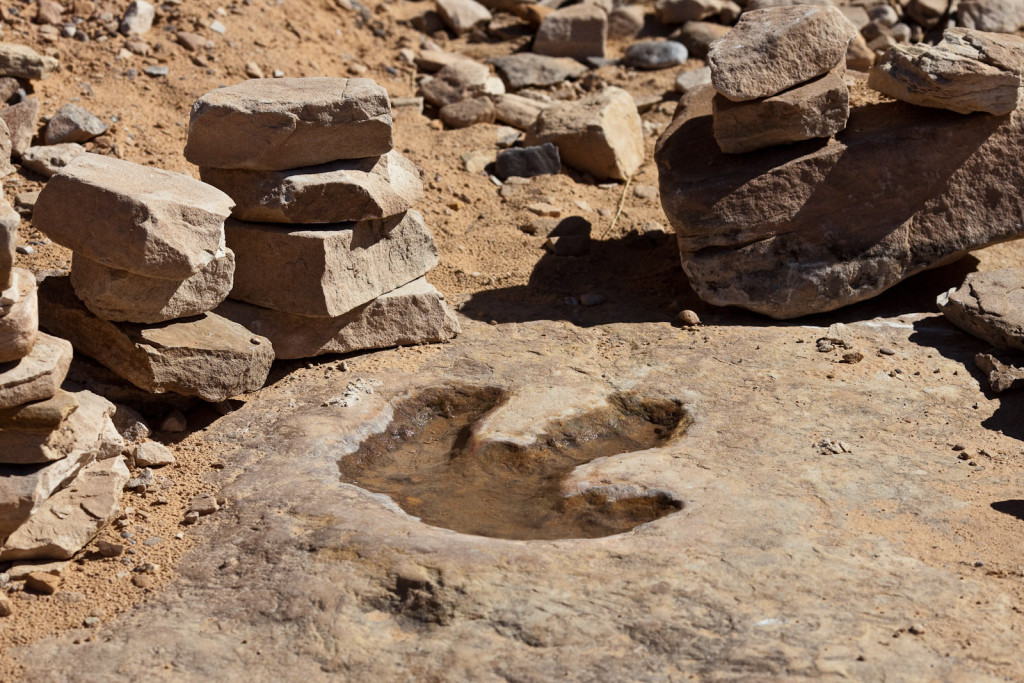
Imagine this for a second. You are walking along a dry, dusty riverbed in Texas. The sun is beating down. You look at the ground. There, embedded in solid limestone, is the unmistakable three-toed print of a dinosaur. A massive beast that stalked this land over 100 million years ago. Incredible, right? But then you look about two feet to the left.

Your heart stops.

There, right next to the monster’s track, is something that shouldn’t exist. Something impossible. It looks like a human footprint. A bare foot. A giant foot. Deeply pressed into the same ancient rock layer as the dinosaur.

Boom. History shattered.

This isn’t the plot of a sci-fi movie. This is the story of the “Paluxy River Man Tracks.” For decades, this site in Glen Rose, Texas, was Ground Zero for one of the most heated debates in geological history. It was the smoking gun. The “Oopart” (Out-of-Place Artifact) that promised to flip the evolutionary timeline upside down. If humans walked with dinosaurs, everything we know is wrong. Textbooks? Trash. Museums? Lies.

Or is it?

Let’s take a deep dive into this muddy mystery. We are going to look at the evidence, the rumors, the hoaxes, and the strange behavior of mud itself. Buckle up. It gets weird.

The 60-Million-Year Glitch

Here is the problem. It is a big one. According to the standard geological timetable—the one backed by radiometric dating, fossil stratification, and basic physics—non-avian dinosaurs were wiped out about 66 million years ago. That is a long time. Humans? We are the new kids on the block. Anatomically modern humans have only been around for maybe 300,000 years. Give or take.

The math does not add up. There is a gap. A massive, gaping, 60-plus million-year canyon of time separating T-Rex from the guy who invented the wheel.

So, when people started whispering about “giant man tracks” appearing in the Cretaceous limestone of the Paluxy River, the world took notice. This wasn’t just a curiosity. It was a weapon. For strict creationists and alternative history theorists, this was the evidence they had been praying for. It suggested a young Earth. It suggested that humans and dinosaurs co-existed, perhaps even fleeing the same biblical flood waters together.

The tracks were dubbed the “Mantracks.” And for a while, they looked convincing. Really convincing.

The Discovery That Shook Texas

It started in the early 20th century. Locals in Glen Rose knew about the tracks. They called them giant turkey tracks (the dinos) and giant man tracks. During the Great Depression, the story went viral before “viral” was a thing. Why? Because people were hungry. They were broke. And mysteries sell.

Families would dig up slabs of rock from the riverbed and sell them to tourists. “Come see the footprint of a giant!” they’d shout. It was a roadside attraction. But then, serious researchers started looking closer. In the 1960s and 70s, films and books exploded onto the scene, claiming these prints were absolute, undeniable proof of a geologic anomaly.

One specific trail, known as the “Taylor Trail,” became famous. It showed a sequence of left-right-left steps. They didn’t look like three-toed dinosaur steps. They were oblong. They had “heels.” They had “toes.”

Was it a giant? A Nephilim from the Bible? An ancient astronaut taking a stroll? The internet—and the rumor mill before it—went wild.

The “What If” Scenario: Giants in the Mud

Let’s play devil’s advocate for a moment. Let’s pause reality. If these tracks were genuine human footprints, what would that mean?

It would mean that our entire understanding of biology is wrong. It would imply that mammals of massive size evolved hundreds of millions of years earlier than the fossil record shows. Or, it would mean dinosaurs survived until very recently. It opens the door to wild theories. Did humans hunt Triceratops? Did we domesticate Raptors? It sounds like The Flintstones, but if the rock doesn’t lie, the implications are staggering.

But here is the catch. Rock doesn’t lie. But rock changes. And rock can be misinterpreted.

The Investigation: CSI Glen Rose

Mainstream scientists ignored the claims for a long time. They thought it was too silly to debunk. That was a mistake. By ignoring it, they let the legend grow. Finally, in the 1980s, a group of paleontologists and astute researchers decided to get their boots dirty. They went to the river.

They brought brooms. They brought water. They brought oil. And they brought a skepticism sharp enough to cut stone.

What they found was not a conspiracy of silence, but a conspiracy of mud. The “Man Tracks” were real features in the rock. They weren’t hallucinations. They were there. You could touch them. But they weren’t human.

The Metatarsal Mistake

This is where it gets technical, but stick with me. It’s fascinating.

Most carnivorous dinosaurs (theropods) are digitigrade. That means they walk on their toes. Like a cat or a bird. They keep their heels off the ground. When they walk normally, they leave that classic three-toed print.

However, dinosaurs didn’t always walk normally. Sometimes they crouched. Sometimes they were stalking prey. Sometimes the mud was just deep and sticky.

When a dinosaur drops its weight down, it sometimes plants its full foot—the metatarsus—on the ground. It walks “flat-footed,” similar to how a human walks (plantigrade). When a dinosaur does this, the print changes shape dramatically. It becomes long. Elongated.

The three toes? They squish together. The heel? It leaves a deep impression. The result looks shockingly like a distorted, giant human foot.

But the researchers went further. They noticed that some of the “toes” on the “man tracks” were just coloring. So, they used a technique that should be in every mystery hunter’s toolkit. They waited for the river to be low, cleaned the tracks, and watched them dry.

As the rock dried, the subtle differences in the sediment became visible. Faint, ghostly claw marks appeared at the end of the “human” toes. The “human big toe” was actually the middle toe of a dinosaur. The side toes were there, just filled in with sediment.

They weren’t men. They were dinosaurs walking funny.

 Footprints

The “Mud Collapse” Theory

Think about walking in deep, wet beach sand. You take a step. What happens when you lift your foot? The wet sand rushes back in. The hole gets smaller. The distinct shape of your toes disappears. You are left with a vague, oblong depression.

Now, scale that up to a 4-ton reptile stepping in ancient lime-mud.

The mud at Paluxy was a special kind of goo. When the dinosaurs pulled their feet out, the suction was intense. The walls of the footprint would collapse inward. The distinct side toes would vanish as the mud oozed back. The shape that remained was a long, narrow slot.

Millions of years later, erosion took over. Water smoothed the edges. Wind polished the stone. What was once a fierce predator’s track was softened into something that looked vaguely like a size 22 shoe.

It is a classic case of pareidolia. That is the psychological phenomenon where your brain forces random patterns into recognizable images. You see a face in the clouds. You see a man on the moon. You see a human footprint in a dinosaur track.

The Darker Side: The Hoax of the Century

Not all the “Man Tracks” were natural accidents, though. Some were straight-up lies. And this is where the story gets gritty.

Remember the Great Depression? People were desperate. A local man named George Adams (and likely others) realized that tourists paid better for “human” tracks than boring old dinosaur tracks. So, he grabbed a chisel.

He found loose blocks of limestone and carved toes into them. He deepened the “instep.” He sold them to passersby. We aren’t guessing about this. His family later admitted it. In fact, some of these “loose block” tracks show anatomical errors that nature wouldn’t make. The toes were too long. The arch was in the wrong place. They were caricatures of feet.

The carved tracks were the ones that often ended up in creationist museums or traveling shows. They looked “perfect” because they were manufactured to look perfect. But under a microscope? The evidence of carving tools was obvious. Sub-surface algal lines (tiny layers in the rock) were cut through. If the print was made by pressure, those lines would be bent, not sliced.

Busted.

The Verdict: Why the Myth Won’t Die

So, we have three categories of “Man Tracks”:

  • Eroded Dinosaur Tracks: Weathered beyond recognition.
  • Metatarsal Tracks: Dinosaurs walking on their heels.
  • Fakes: Carved by desperate locals for cash.

The evidence became so overwhelming that even the biggest organizations promoting the “Man Track” theory had to back down. In the mid-1980s, major creationist ministries issued statements advising their followers to stop using the Paluxy tracks as evidence. They admitted the tracks were likely misinterpreted dinosaur prints.

That is huge. It is rare for a group to publicly retire their “star witness.” But the geology was just too solid to argue with.

Yet, if you go online today, you will still find forums and videos claiming the tracks are real. Why? Because the idea is too exciting to let go. We want mystery. We want the world to be stranger than it is. The image of a human fleeing a T-Rex is burned into our cultural brain.

A Modern Look at Ancient History

Today, Dinosaur Valley State Park is a fantastic place to visit. Not because of a false history of giants, but because of the real history of monsters.

When the water level in the Paluxy River drops, you can walk out onto the limestone ledge. You can put your own small foot inside the massive impression of an Acrocanthosaurus (a predator similar to T-Rex) or the saucer-sized print of a Sauroposeidon (a massive long-neck).

The reality is actually cooler than the myth. Think about it. You are standing in the exact spot where a 50-foot animal stood. You are touching the same earth. The “Man Track” legend adds a layer of human folklore to the site, but the true stars of the show are the dinosaurs.

The “Bird” Connection

We need to address one technical point for the nerds in the room (and I say that with love). When we talk about dinosaurs here, we mean “non-avian” dinosaurs. Science has moved forward. We now know that birds are technically living dinosaurs. They are the descendants of the theropods that left these tracks.

So, in a weird, poetic way, humans do walk with dinosaurs every day. We just call them chickens, pigeons, and eagles. But back in the Cretaceous? No. The only mammals running around Glen Rose were tiny, shrew-like creatures trying desperately not to get squashed.

Deep Time and the Human Imagination

The Paluxy River mystery serves as a powerful lesson. It teaches us about confirmation bias. If you go looking for something hard enough, you will find it—even if you have to squint and tilt your head to see it.

The “Man Tracks” were a perfect storm. You had ambiguous shapes in the rock. You had a public eager for a shake-up of the status quo. You had financial motivation to fake it. And you had a lack of rigorous scientific tools at the start.

Modern technology, like 3D scanning and chemical analysis, has put the final nail in the coffin. We can now map these tracks with lasers. We can see the stress distribution in the rock. We can prove, without a shadow of a doubt, that these prints were made by reptilian feet.

But don’t let that ruin the magic. The Paluxy River is still a time machine. It is one of the few places on Earth where the veil of time is thin. You can sit on the bank, close your eyes, and almost hear the thudding footsteps of giants.

Visitor Note: If you plan to visit Glen Rose, respect the river. Many of the tracks are on private land. Do not trespass. In Dinosaur Valley State Park, look but don’t touch—or at least, don’t damage. No casting, no carving, no digging. Let’s keep these 113-million-year-old postcards safe for the next generation.

The mystery of the “Man Tracks” might be solved, but the wonder of the dinosaur age? That never gets old.