Home Weird World Strange Places Lost Treasure – The Oak Island Money Pit

Lost Treasure – The Oak Island Money Pit

0
67

It starts with a hole. Just a simple depression in the earth. But this isn’t just any hole. It is a puzzle that has devoured fortunes, ruined reputations, and claimed lives. It is the Money Pit. For over two centuries, men have scratched at the surface of a small island in Nova Scotia, driven by gold fever and a desperate need to know the truth. Is it pirate loot? The lost jewels of Marie Antoinette? The Holy Grail? Or is it nature playing a cruel, geological joke on us all?

Welcome to the obsession. Welcome to Oak Island.

The Oak Island Money Pit

The Discovery: A Teenager, A Tackle Block, and a Hunch

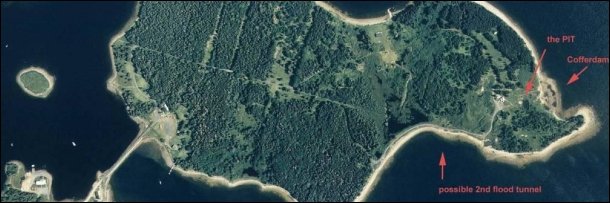
The year was 1795. A young man named Daniel McGinnis was wandering across a small, wooded island in Mahone Bay, Nova Scotia. Oak Island. It wasn’t particularly special. Just 140 acres of trees and scrub. But then, he saw it.

A clearing. An unnatural break in the forest canopy. Standing there, McGinnis noticed a massive, ancient oak tree. One of its heavy branches had been sawed off. Hanging from that limb—according to the oldest legends—was a ship’s tackle block. Directly beneath it? A circular depression in the soil. The earth had settled.

McGinnis didn’t just see a hole. He saw a story. He saw treasure.

The Golden Age of Piracy wasn’t ancient history to him; it was practically yesterday’s news. Captain Kidd. Blackbeard. These weren’t fairytale villains. They were real men who buried real gold. McGinnis ran back to the mainland. He grabbed two friends, John Smith and Anthony Vaughan. They returned with picks and shovels. They thought they would be rich by the weekend.

They had no idea they were starting a mystery that would outlive them by hundreds of years.

The Dig: Down the Rabbit Hole

The boys started digging. The soil was loose. It had been moved before. That much was obvious. They hit ten feet. Thud.

Shovels struck wood. They cleared the dirt and found a solid platform of oak logs embedded into the walls of the pit. They ripped the logs out. Just dirt underneath. They kept going. At twenty feet? Another platform of logs. At thirty feet? Another one.

This was no random hole. This was engineering. Someone—some group with massive resources and incredible knowledge—had built this.

As the digging continued over the years, the layers got stranger. It wasn’t just oak logs anymore. Searchers found layers of charcoal. Patches of waterproof ship’s putty. And then, something that made no sense at all: coconut fiber.

The Coconut Fiber Clue

Stop and think about that. Coconut fiber. In Nova Scotia. In the late 1700s and early 1800s. Coconuts do not grow in Canada. This fiber was used as dunnage (packing material) on long-voyage ships. Large amounts of it were found lining the pit. Carbon dating in the modern era has placed some of this organic material as far back as the 1200s or 1400s. This evidence screams one thing: whoever built this came from a long, long way away.

The 90-Foot Stone: The Message in the Mud

The obsession truly took hold around the 90-foot mark. By now, the original boys were men, and professional syndicates had taken over the dig. At 90 feet down, they pulled up a large, flat stone tablet. It was olive-grey wacke stone, foreign to the area.

On the face of the stone were strange symbols. Not English. Not French. A cipher. A code.

The stone is gone now—lost to history, likely used as a doorstep by a bookbinder in Halifax or cemented into a fireplace (yes, really). But the translation recorded at the time has haunted treasure hunters forever. It reportedly read:

“Forty feet below, two million pounds lie buried.”

Two. Million. Pounds. In the 1800s, that was enough money to buy a country. The workers went into a frenzy. They were close. They dug deeper. They hit 98 feet. They probed with a metal rod and hit something hard—maybe a chest, maybe a vault. They went home for the night, planning to bring up the treasure the next morning.

They came back at sunrise. The pit was filled with water. It wasn’t just damp. It was flooded to sea level.

The Trap: Engineering Genius or Madness?

This is where the story shifts from “pirate treasure” to “impossible engineering marvel.” The searchers bailed the water with buckets. It didn’t drop an inch. They brought in pumps. The pumps failed. The water level stayed perfectly constant with the ocean tide.

Why?

Because it was a trap. A booby trap designed to drown anyone who got too close.

Years later, researchers discovered the “finger drains” at Smith’s Cove. Whoever built the Money Pit had dug five distinct tunnels leading from the ocean to the pit. They filled these tunnels with rocks and coconut fiber to act as a filter, preventing the tunnels from clogging with silt (sand). When the searchers dug past the 90-foot mark, they unwittingly popped the cork.

They triggered the pressure release. The ocean rushed in. You cannot bail out the Atlantic Ocean. The moment you dig too deep, the pit floods. It is a hydraulic system so brilliant, so perfect, that it has baffled engineers for 200 years.

This level of sophistication rules out your average pirate. Blackbeard didn’t have a degree in hydraulic engineering. Captain Kidd buried gold in shallow sand, not 100 feet down behind a water trap. This was the work of a government. A military order. Or a secret society.

The Curse: Seven Must Die

You can’t have a treasure hunt without a curse. And Oak Island has a dark one. The legend says: “Seven people will die before the treasure is found.”

So far, the island has claimed six lives.

The first tragedy struck in 1861 when a pump boiler exploded, killing a worker. In 1965, the Restall tragedy occurred. Robert Restall, a dedicated treasure hunter, passed out from noxious fumes in a shaft. His son jumped in to save him. Then two other workers jumped in to save them. All four died within minutes. The count stands at six. According to the legend, the island demands one more sacrifice before it gives up its gold.

The Suspects: Who Built It?

If not pirates, then who? The theories range from plausible to absolutely insane. Let’s look at the lineup.

1. The Knights Templar

This is the big one. When the Templar order was crushed by the King of France and the Pope in 1307, their legendary treasure disappeared. The fleet vanished. Some theories suggest they sailed to Scotland, and then… west. Did they bring the Holy Grail or the Ark of the Covenant to Nova Scotia? The stone cross found on the island and the medieval lead cross discovered recently point to this possibility.

2. The Spanish Empire

A shipwreck full of gold? A place to hide the plunder of the New World before shipping it back to Spain? It makes practical sense. The Spanish had the engineering know-how.

3. Francis Bacon and Shakespeare

A wild theory, but a popular one. Did Sir Francis Bacon write Shakespeare’s plays? Did he hide the original manuscripts (which would be priceless) in a vault filled with liquid mercury to preserve them? Traces of mercury have been found on the island.

4. The French Crown Jewels

During the French Revolution, the jewels of Marie Antoinette went missing. A lady-in-waiting fled. Did she make it to Nova Scotia? Is the Money Pit a royal safe deposit box?

FDR and the Presidential Search

It sounds like fiction, but it’s a fact. Before he was the leader of the free world, Franklin D. Roosevelt was an Oak Island treasure hunter. In 1909, a young FDR joined the Old Gold Salvage and Wrecking Company. He spent time on the island. He walked the ground. He monitored the drills.

Even though he never found the gold, he kept up with the news from Oak Island for the rest of his life. He even planned to return as President, but World War II got in the way. If a future President believed there was something there, maybe we shouldn’t dismiss it so easily.

The Modern Era: High-Tech Hunting

Today, the shovels are gone. Now we use sonic drilling, seismic scanning, and muon tomography. The search is currently led by Rick and Marty Lagina, brothers from Michigan who have poured millions of dollars into the mystery. Their show, The Curse of Oak Island, has brought the mystery to millions.

And they are finding things.

Not just wood. They have found:

  • Gold coins: Actual Spanish gold.
  • The Lead Cross: A medieval cross from Southern France (Templar origin?).
  • Human Bone: Bone fragments from deep underground that date to European and Middle Eastern ancestry.
  • Parchment: A tiny scrap of book binding found deep in the money pit.

Every time they think the mystery is dead, the island throws up another clue. A coin. A button. A piece of old wood that carbon dates to the Romans. It keeps pulling us back in.

The Skeptic’s View: Is It All Natural?

We have to ask the hard question. Is the Money Pit just a sinkhole? The geology of Oak Island is full of limestone and anhydrite. These rocks dissolve in water. Natural underground caverns form. Sinkholes open up on the surface. Logs and debris fall in over centuries. The “flood tunnels” could be natural fissures in the rock.

It is the most logical explanation. It explains the flooding. It explains the mixed soil layers.

But it doesn’t explain the gold coins. It doesn’t explain the parchment. It doesn’t explain the coconut fiber or the sawed lumber found 100 feet underground. Nature creates sinkholes; nature does not create lead crosses from the 1300s.

Why We Can’t Look Away

Why do we care? Why do we watch grown men dig in the mud for years on end? Because Oak Island represents the ultimate “What If.”

In a world where everything has been mapped, tracked, and Googled, Oak Island remains a dark spot. A question mark. It is defiance against the modern world. It tells us that history still has secrets. It tells us that not everything is found.

The Money Pit has been excavated, bombed, drilled, and flooded. It has been abused by bulldozers and dynamite. Yet, it holds its secrets tight. The island fights back. It breaks equipment. It confuses sensors. It misleads searchers.

Is there two million pounds forty feet below? Or is there something much more valuable? Perhaps the real treasure is the mystery itself—the story that refuses to end.

Digging continues. The curse waits for its seventh victim. And somewhere in the dark, cold water at the bottom of the pit, the truth lies buried, waiting for someone brave enough—or crazy enough—to find it.

Originally posted 2016-03-14 20:27:51. Republished by Blog Post Promoter

Originally posted 2016-03-14 20:27:51. Republished by Blog Post Promoter