Saturday, July 11, 2026

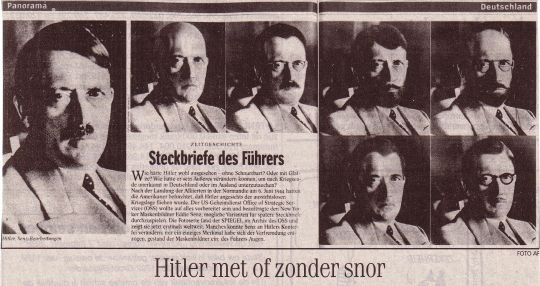
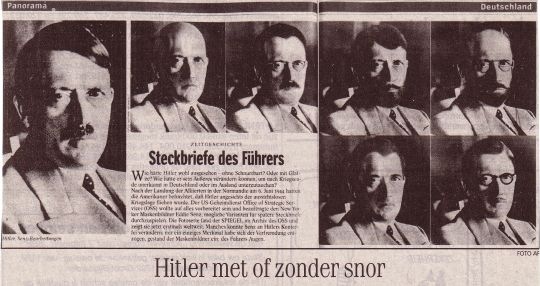
Did Hitler escape to Spain?

The Spanish Deception: Did Hitler Die in a Madrid Palace, Not a Berlin Bunker?

The history books tell a neat, tidy story. April 30, 1945. Berlin is a smoldering ruin, the thunder of Soviet artillery a constant drumbeat of doom. Deep below the surface, in the suffocating concrete confines of the Führerbunker, Adolf Hitler, the architect of a world war and the Holocaust, bites a cyanide capsule and shoots himself in the head. His body, along with that of his new wife, Eva Braun, is hastily burned in a shallow crater. End of story. End of a monster.

It’s a story we all know. A story we’ve been told a thousand times.

But what if it’s a lie?

What if the most infamous death of the 20th century was a carefully staged illusion? A final, desperate act of misdirection to cover the ultimate escape. For decades, whispers of U-boats and secret Nazi colonies in Argentina have fueled the popular imagination. But the real escape route, the real sanctuary, might have been much closer, hidden in plain sight under the protection of Europe’s last-standing fascist dictator.

New evidence, stitched together from dusty archives, forgotten diaries, and deathbed confessions, points not to the jungles of South America, but to the sun-drenched plazas of Spain. It suggests that Hitler didn’t die in a bunker. He died in a palace, under an assumed name, two and a half years later.

The Midnight Flight from a Burning Berlin

Our story doesn’t begin in the rubble of Berlin. It begins on a dark, tense airfield in Madrid. The night of April 30, 1945. The very same night Hitler supposedly took his own life.

The witness? A man named Senor Stefan Aceituna. He wasn’t a general or a spy. He was a driver. But not just any driver. He was one of the personal drivers for Generalissimo Francisco Franco, the iron-fisted ruler of Spain.

According to Aceituna’s later accounts, he was given a strange and urgent order that night. Drive to the Madrid airport. Wait for a special arrival. Tell no one.

He described the plane that landed as being “of German origin,” its engines sputtering to a halt long after midnight, when the airport was shrouded in secrecy. He remembered the tension in the air, the hushed commands of Franco’s security men. A single passenger disembarked. No luggage. No entourage. Just a gaunt, stooped figure who was rushed from the tarmac and into Aceituna’s car. The orders were explicit: “Directly to the Palace.”

Who was this mysterious passenger? A high-ranking Nazi official fleeing the fall of the Reich? A scientist with secrets to trade? Or was it someone far more important? Someone whose survival had to be protected at all costs?

Fortress Franco: Building a Gilded Cage

The plot thickens almost immediately. In the weeks that followed, a strange transformation began at General Franco’s official residence in Madrid. In May of 1945, with Europe still reeling from the war, an entire wing of the palace—the East wing—was abruptly sealed off.

This wasn’t just a locked door. This was a fortress within a fortress.

A massive, fourteen-foot-high wall was constructed, cutting the wing off from the rest of the palace grounds. Armed guards patrolled its perimeter day and night. No official explanation was ever offered for this sudden, expensive construction project. It simply happened.

And then there was the staff. A new, hand-picked team of servants and aides was assigned to the isolated wing. They had one thing in common. Every single one of them was fluent in German.

Why? Why create a hermetically sealed, German-speaking bubble inside the heart of the Spanish government? Franco was walking a razor’s edge. He owed Hitler for his support during the Spanish Civil War, but he also had to appease the victorious Allies, who were already suspicious of his fascist regime. Openly harboring Hitler would have been political suicide. But hiding him, controlling him, perhaps even using him as a future bargaining chip… that was a move straight out of a dictator’s playbook.

A Prescription for a Führer

Some of the most compelling clues don’t come from eyewitnesses, but from something far more mundane. A pharmacist’s ledger.

In May 1945, the same month the palace wing was sealed, Franco’s own medical staff placed an unusual and very specific order with Spain’s largest pharmaceutical company. They requested a carton of 144 bottles of “Doctor Koster’s Anti-Gas pills.”

One carton wasn’t enough. The order was repeated. Every single month. Like clockwork. This continued, unabated, for two and a half years, until October of 1947.

This wasn’t aspirin. This was a highly specialized, German-made medication. And it just so happened to be the exact same concoction that Adolf Hitler was notoriously addicted to.

Let’s dive deeper. Hitler’s health was a wreck. He suffered from crippling stomach cramps and uncontrollable flatulence, problems exacerbated by his bizarre vegetarian diet. His personal physician, the infamous Dr. Theo Morell, prescribed Dr. Koster’s pills to manage the symptoms. Hitler became so dependent on the strychnine and belladonna base of these pills that he was known to swallow them by the handful, far exceeding the recommended dose.

Now, think about the timing. The Third Reich collapses. Hitler supposedly dies. And suddenly, in neutral Spain, General Franco’s palace develops a massive, recurring, two-and-a-half-year-long need for the Führer’s favorite stomach pills. It’s more than a coincidence. It’s a breadcrumb trail.

The Gardener and the World’s Best Heart Doctor

The trail of pills abruptly stops in October 1947. And just a few days later, on the afternoon of Wednesday, November 1, 1947, the mystery deepens.

A telephone rang at the Clinico San Carlos, a medical establishment about thirteen miles from the Presidential Palace. The call was for its director, a man named Dr. Victor Vega Diaz. This was no ordinary doctor. Diaz was the “President of the International Association of Cardiologists.” In simple terms, he was arguably the world’s foremost heart specialist.

The call came from the Palace. But according to the doctor’s own personal diary, this wasn’t from a secretary or an aide. The entry is very specific, with the words boldly underlined for emphasis: **”From Generalisimmo Franco.”**

The dictator himself was on the line. And he had an urgent request. He needed the world’s greatest cardiologist to come to the palace immediately to examine a sick patient.

Who was this patient of such immense importance? A member of the royal family? Franco himself? No. The patient was described as a “member of Franco’s gardening staff.”

Let that sink in. A gardener. The most powerful man in Spain calls the most famous heart doctor on the planet for a sick gardener. It’s illogical. It’s absurd. It’s a cover story, and a flimsy one at that.

Why not use the massive, modern, state-of-the-art hospital that was much closer to the palace—the ‘Hospital Francisco Franco,’ which was literally named in his honor? All of Franco’s previous medical needs, and those of his inner circle, were handled there. The answer is simple: to go off the books. A visit to his own hospital would create a record, a paper trail. This visit had to be deniable.

Unmasking ‘Señor Adi Lupus’

Dr. Diaz’s diary provides a chillingly precise account of what happened next. He arrived at the palace and was taken to see the patient. He described him as being “between fifty and sixty years of age… in an emaciated condition.” Hitler, had he lived, would have been fifty-eight years and six months old.

The doctor’s notes are brief. He examined the patient. At 3:32 p.m., he certified the death. The cause was listed as “Cardio Myopathy”—a basic heart attack. No autopsy was performed. The matter was closed.

But at the top of the page, next to the words “Patient Identification,” the world-renowned doctor had written down a name. A name that, at first glance, means nothing. A name that appears nowhere else in any Spanish record.

The name was “Señor Adi Lupus.”

This is not a random name. This is the key. This is the smoking gun. Let’s break it down.

  • Adi: This wasn’t a common Spanish name. It was, however, the intimate nickname used for Adolf by his closest confidants, most notably his partner, Eva Braun. It was a name spoken only within the walls of the Berghof, a name of familiarity and affection.
  • Lupus: This is the clincher. Lupus is the Latin word for “wolf.” The wolf was Hitler’s obsession, his power symbol, his alter ego. He used the pseudonym “Herr Wolf” in his early days. He named his most famous military headquarters the “Wolf’s Lair” (Wolfsschanze). Another was the “Wolf’s Den.” His personal plane was the “Flying Wolf.” His yacht was the “Sea Wolf.”

This isn’t a coincidence. This is a signature. “Adi Lupus” translates to “Adi the Wolf.” It was a final, arrogant nod to his own identity, hidden in a language few would bother to translate. It was Hitler signing his own death certificate under a code name only he would have chosen.

A Ghost in the State Machine

So, a man named Adi Lupus died on November 1, 1947. What happened next?

Nothing.

Absolutely nothing. Researchers, historians, and conspiracy theorists have torn Spain’s archives apart for decades. They have found no birth certificate for an Adi Lupus. No marriage record. No tax file, no employment history, no registration on an electoral roll.

He is a ghost. A man who seemingly did not exist until the day he died. There is no record of his burial. No document of his cremation. After Dr. Diaz wrote the name in his private notebook, Señor Adi Lupus vanished from the face of the earth, his only footprint an entry in a doctor’s diary and an empty space in a Madrid cemetery.

And what of the hospital records from the Clinico San Carlos? The official file that would surely contain more details? Conveniently, they are gone. The clinic relocated years ago, and in the shuffle, the records from that specific time period were “lost forever.” Another dead end. Another layer of deniability.

What Really Happened?

The official story is sealed. But the evidence trail tells a different one. A story that goes like this:

In the final, chaotic hours of the Third Reich, a plan is enacted. A body double, perhaps one of Hitler’s many, is killed in the bunker. The scene is staged. The getaway plane, waiting at a hidden airstrip, takes off under the cover of the battle’s confusion and flies the real Hitler to the safety of Franco’s Spain.

He is given a new home in a sealed-off palace wing, attended by loyal German-speaking staff. His medical needs, specifically his addiction to his anti-gas pills, are met through secret, monthly orders. For two and a half years, he lives as a prisoner in a gilded cage, a political hot potato for Franco, until his failing health finally catches up with him.

When his heart gives out, Franco can’t risk a public incident. He calls in the best doctor in the world, someone whose reputation is beyond question, to certify the death under a coded name. The body is then disposed of secretly, without a trace, and all official records are “lost.” The secret dies with the patient.

The history books call it a conspiracy theory. They point to dental records and Soviet reports. But those reports were contradictory for years, with Stalin himself publicly stating he believed Hitler had escaped. The dental evidence has been questioned repeatedly. What if it all—the burned bodies, the dental fragments—was part of the deception?

The story of Adi Lupus, the phantom gardener of Madrid, may never be proven. But the questions it raises are too powerful to ignore. The flight, the wall, the pills, the doctor, and the impossible name. It’s a chain of coincidences so perfect, so aligned, that it defies probability.

History is written by the victors. But sometimes, the truth is hidden in the margins, in the underlined words of a doctor’s diary, telling a story of the dictator who got away.

Amit Ghosh
Amit Ghoshhttps://coolinterestingnews.com
Aloha, I'm Amit Ghosh, a web entrepreneur and avid blogger. Bitten by entrepreneurial bug, I got kicked out from college and ended up being millionaire and running a digital media company named Aeron7 headquartered at Lithuania.
RELATED ARTICLES
- Advertisment -

Most Popular

Recent Comments

Warren Pan Abbott on The legend of the Devil Monkey !
chris davies on The McPherson Tape Mystery
Reed Reedly on ET has Internet!
Bea Houseoffashion on Proof Of Time Travellers – Gallery
Marcus2012 on ET has Internet!
Reed Reedly on ET has Internet!
LaughsAtConspiracyNuts on The 9/11 Conspiracy – Myths and Facts
Alex Sliverman on Did the ancients fly?
Doctor Wholigan on Time Traveler in 1938 film
chris davies on The McPherson Tape Mystery
Archie1954 on 10 secret UFO hideouts
chris davies on Ghosts of flight 401
Marcus2012 on ET has Internet!
jason Macdonald on Proof of Time Travel? – China
chris davies on Long-Lost Pyramids Found?
Reed Reedly on ET has Internet!
Milkman on Connected Universe
Tenmiles on Baigong Pipes Mystery
Simon Foster on Sirius – The Documentary
From the 1st April on 2013 – Alien Contact date ?
SkyWatcher on Is ET ignoring us?
I Come From The Future on Obama to make UFO Alien disclouser soon ?
ÛñK?øWn on 2013 – Alien Contact date ?
Just another person on 2013 – Alien Contact date ?
Malcolm Windowcleaner on The strange case of Rudolph Fentz
Mason Servio on Strange Things on Mars
Marke Wisdom Seeker on What will we find as arctic melts?
Andrea A Elisabeth Levyne on Aliens Captured in Varginha, Brazil
Mitch Grouyeki on Amazing Space Shuttle pictures