Remember 2012? The Mayan prophecies. The doomsday countdowns. The world held its breath, expecting fire from the sky. And then… nothing. January 1st, 2013 rolled around, and we all let out a collective, slightly embarrassed sigh of relief. We thought the danger had passed. We thought we were safe.
What a mistake.
The silence that followed was deceptive. The threats didn’t vanish. They just changed their masks. They burrowed deeper, became smarter, and wove themselves into the very fabric of our modern world. The apocalyptic predictions of 2013 weren’t wrong; they were just early. They were the warning shots we all chose to ignore.
Today, those same whispers of doom have become a roar. The scenarios that seemed like fringe theories back then are now playing out on our news feeds every single day. We’re living in the slow-burn apocalypse, and most people haven’t even noticed. Let’s pull back the curtain on the top five existential threats that were supposed to get us in 2013—and see how they’re doing a much better job of it now.
Alien Invasion: The Slow Disclosure is Already Happening
They’re not coming. They’re here.
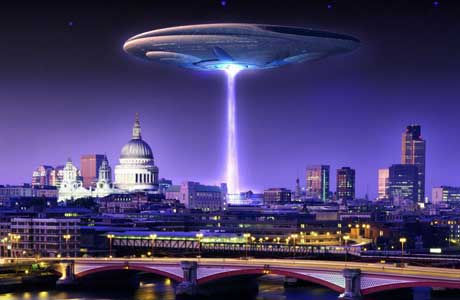
Forget the Hollywood fantasy of city-sized ships blotting out the sun. That’s crude. Inefficient. The real takeover, if it’s happening, is far more subtle. It’s a quiet infiltration, a slow acclimation. It’s a drip-feed of information designed to prepare us, to make the unbelievable, believable. And it’s been going on for years.

Back in 2013, the evidence was a collection of grainy photos, hushed stories from Roswell, and abductee testimonials that were easy to dismiss. It was a subculture. A joke to the mainstream. But look at where we are now.
Deep Dive: The Pentagon’s Reluctant Confession
In 2017, the world changed. The New York Times—the paper of record, not some back-alley blog—published a bombshell. It confirmed the existence of a secret Pentagon program: The Advanced Aerospace Threat Identification Program (AATIP). For years, our own government was studying what its pilots were seeing. And what were they seeing?
They saw the Tic Tac. That now-infamous white, oblong object, tracked off the coast of San Diego by the USS Nimitz carrier strike group. It had no wings. No visible propulsion. It moved in ways that seemed to mock our understanding of physics, dropping from 80,000 feet to sea level in less than a second. It outmaneuvered our best fighter jets with contemptuous ease. Commander David Fravor, a decorated F/A-18 pilot, described it best: “I have no idea what I saw… It was impressive, it had incredible performance.”
This wasn’t a blurry photo from a farmhouse. This was multi-sensor data from the most advanced military hardware on the planet. Radar. Infrared. Eyewitness accounts from top-gun pilots. And it wasn’t a one-off. The Pentagon has since released more videos. The “Gimbal.” The “GoFast.” They’ve even established a new office, the All-domain Anomaly Resolution Office (AARO), to investigate these Unidentified Anomalous Phenomena (UAPs).
The government has officially admitted, “There are things in our skies, and we don’t know what they are.” Think about that. The greatest military power on Earth is powerless.
What if The “Threat” Isn’t an Attack?
The 2013 fear was of a war. A blitzkrieg from the stars. But what if the real danger is more insidious? The theory of “slow disclosure” suggests that the powers-that-be are gradually releasing this information to avoid mass panic. To get us used to the idea before the big reveal.
But why? Why now? Is it because they can no longer hide it? Or is it because contact is imminent, and they need to control the narrative? What if they’ve been here all along, operating in the shadows, influencing our technology, our politics, our very evolution? From ancient astronaut theories pointing to impossible structures like Puma Punku to modern claims from whistleblowers like David Grusch about crashed craft retrieval programs, the story is consistent: a non-human intelligence is, and has been, engaged with our world.
The true doomsday scenario isn’t necessarily an invasion. It could be the revelation itself. A truth so profound it shatters every religion, every government, every sense of our place in the cosmos. Humanity might not survive the shock.
Magnetic Pole Shift: The Compass is Spinning Wildly
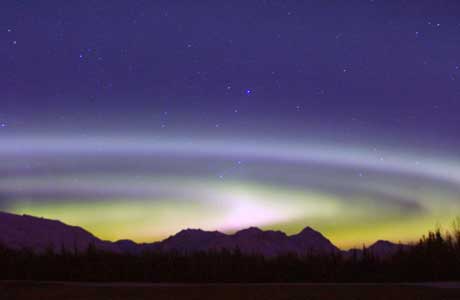
Our planet has a shield. A force field. Generated by the churning liquid iron in its core, this magnetic field deflects deadly solar winds and cosmic radiation that would otherwise strip our atmosphere away and cook us alive. It’s the silent, invisible guardian of all life on Earth.
And it’s failing.
The 2013 prediction was that the magnetic poles could suddenly and catastrophically flip. North would become South. South would become North. The consequences would be biblical.
This isn’t science fiction. The geological record, etched into ancient lava flows, proves it’s happened hundreds of times in Earth’s history. The only questions are when, and how fast.

Deep Dive: The Field is Weakening, and Fast
Scientists have been monitoring the Earth’s magnetic field for centuries. For the longest time, it was stable. But not anymore. In the last 200 years, it has weakened by about 10-15%. And the rate of decay is accelerating. A massive anomaly, known as the South Atlantic Anomaly, has formed, stretching from Africa to South America. Here, the field is so weak that satellites passing through it have to be shut down to protect them from radiation.
Even more alarming is the movement of the magnetic north pole. For decades, it drifted lazily. But in the 1990s, it started moving. Fast. It broke out of its Canadian home and is now racing across the Arctic towards Siberia at a speed of over 30 miles per year. It’s moving so quickly that the world’s geological societies have had to issue emergency updates to navigation models—the ones used by every airplane and every smartphone on the planet.
This isn’t just a quirky scientific fact. This is a symptom of a massive change happening deep within the Earth’s core. The system is becoming unstable.
The Lights-Out Scenario
A full reversal could take centuries. But during that transition, the magnetic field could weaken dramatically, or even break into multiple, chaotic poles. For our tech-dependent civilization, that’s the kill switch.
Imagine this. First, the satellites go. GPS, dead. Global communications, gone. The internet, fractured. Then the power grids fail. The intense solar radiation bombarding the planet would induce massive currents in our power lines, blowing transformers on a continental scale. Not a blackout for a few hours. A blackout for a decade.
Without electricity, society grinds to a halt. No clean water. No refrigeration. No transport. No medicine. It would be a regression to the dark ages, but with eight billion people who have forgotten how to survive. The 2013 fear was a sudden flip. The modern reality is a slow, agonizing decay of the one thing that protects us from the void.
World War III: The Digital Battlefield is Live
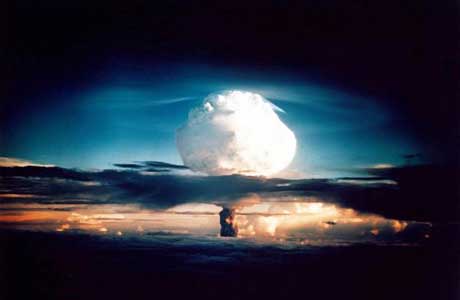
The old fear was of mushroom clouds. Of sirens wailing as nuclear warheads screamed across continents. The Cuban Missile Crisis showed us how close we could get to the edge. The Cold War was a standoff between two giants, a terrifying but strangely stable balance of mutually assured destruction.
That world is gone.
The 2013 prediction, focused on North Korea, was quaint. Today, the flashpoints are everywhere. The conflict in Ukraine. The simmering tensions over Taiwan. The proxy wars in the Middle East. But the true nature of World War III has changed. The first shots won’t be fired by cannons; they’ll be fired by keyboards.

Deep Dive: War by Other Means
We are already in a state of constant, low-grade global conflict. It’s happening right now, on battlefields you can’t see.
The first is the cyber battlefield. State-sponsored hackers are not just stealing data; they are probing critical infrastructure. Power grids. Water treatment plants. Financial systems. They are planting digital time bombs, waiting for the command to turn the lights off on an entire nation. An attack that cripples a country’s economy or causes a nationwide blackout could be more devastating than a limited military strike, and it could be done with plausible deniability.
The second is the information battlefield. Disinformation campaigns, powered by AI and bot farms, are no longer just about influencing elections. They are about destroying social cohesion. They amplify division, erode trust in institutions, and pit citizen against citizen until a country is too busy tearing itself apart to fight a foreign enemy. It’s a way to conquer a nation without ever setting foot on its soil.
And then there’s the rise of autonomous weapons. AI-powered drones that can identify and eliminate targets without a human in the loop. Swarms of them, capable of overwhelming any defense. The ethical debate is over. The arms race has begun. What happens when one of these systems makes a mistake? When a glitch in the code starts a war that humans can’t stop?
The world is more interconnected and more fragile than ever. A single spark in the South China Sea, a cyberattack on Wall Street, or a mistaken drone strike could trigger a chain reaction that engulfs the globe. The doomsday clock is ticking louder than it has in decades.
Peak Oil: The Energy Cliff is Real
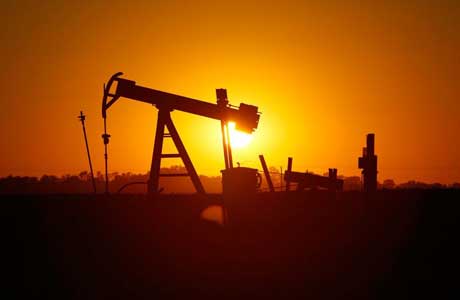
The 2013 theory of “peak oil” was simple: one day, we would reach the maximum rate of oil extraction, and after that, production would enter a terminal decline. Demand would outstrip supply, prices would skyrocket, and the global economy would collapse.
Many declared this theory dead. Fracking and new discoveries seemed to grant us a reprieve. But they missed the point. It was never just about the quantity of oil. It was about the energy it takes to get it.

Deep Dive: EROI and the Great Unraveling
Meet the most important acronym you’ve never heard of: EROI. Energy Return on Investment. In the early days of oil, for every one barrel of oil’s worth of energy you spent on drilling, you got 100 barrels back. An EROI of 100:1. This cheap, abundant energy built the modern world.
Today? We’ve picked all the low-hanging fruit. We’re drilling miles under the ocean floor, blasting rock with high-pressure water (fracking), and cooking tar sands. The EROI for these unconventional sources is plummeting. For tar sands, it’s as low as 3:1. For some biofuels, it’s nearly 1:1, meaning you get almost no net energy gain.
This is the “Energy Cliff.” When the EROI of our primary energy sources drops below a certain point, our complex society becomes unsustainable. You can’t run a global civilization on an energy source that takes nearly as much energy to produce as it provides. It’s like trying to run up a down escalator that’s speeding up.
Our entire economic system is based on the assumption of perpetual growth. But perpetual growth requires perpetually increasing amounts of cheap energy. That era is over. The financial instability, the inflation, the supply chain chaos—these are not isolated problems. They are symptoms of a system running on fumes. Our economy is a house of cards built on an energy source that is getting harder and more expensive to find every single day.
The collapse won’t be a single event. It will be a slow unraveling. A gradual decline in living standards, a series of rolling crises, as the energy that powers everything becomes a luxury few can afford.
Environmental Collapse: We’re Crossing the Tipping Points
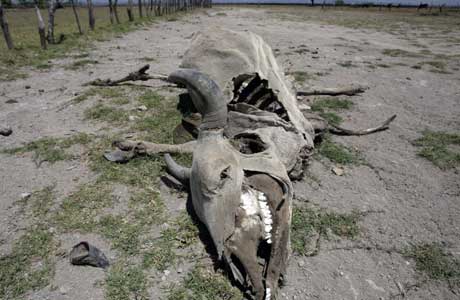
Of all the threats from 2013, this is the one we can see with our own eyes. It’s no longer a computer model or a future prediction. It’s the smoke from wildfires choking our cities. It’s the “once-in-a-century” floods that now happen every year. It’s the unbearable heat domes that bake entire continents.
But what we see on the surface is only a fraction of the problem. The real danger lies in the planetary tipping points—thresholds that, once crossed, trigger irreversible, runaway changes to the Earth’s systems.

Deep Dive: The Dominoes Are Falling
Scientists have identified several of these critical tipping points. And the evidence suggests we are terrifyingly close to crossing them—or already have.
Consider the Amazon rainforest. It generates its own rainfall. But widespread deforestation and fires are weakening this cycle. Cross the tipping point, and the rainforest begins to die off, transforming into a dry savanna. This would release a “carbon bomb” of billions of tons of CO2 into the atmosphere, massively accelerating global warming.
Or look at the permafrost in the Arctic. This frozen ground contains twice as much carbon as the entire atmosphere. As it thaws, it releases that carbon as methane, a greenhouse gas 80 times more potent than CO2 over the short term. This creates a feedback loop: more warming thaws more permafrost, which causes more warming. We can’t turn it off.
And then there’s the ocean. The AMOC, a massive system of currents that includes the Gulf Stream, acts like a planetary circulatory system, distributing heat around the globe. It keeps Europe temperate. Scientists have found “early-warning signals” that this current system is weakening and approaching a critical transition. If it collapses, it could plunge Europe into a deep freeze and cause catastrophic weather disruptions worldwide.
We are not just warming the planet. We are breaking the planet. We are pushing the complex, interconnected systems that support life into a new, hostile state. The 2013 fear of ecological disaster has become our daily reality. We are the architects of our own doomsday, and the clock is just about to strike midnight.