Sunday, June 7, 2026
HomeWeird WorldStrange StoriesDid Count Dracula originally come from Devon?

Did Count Dracula originally come from Devon?

The Dracula Conspiracy: Was Vlad the Impaler a Century-Long Lie?

Everything you think you know about Dracula is wrong.

Seriously. Stop and think about it. The dark castle perched on a Transylvanian cliff. The cruel, bloodthirsty prince with a penchant for impaling his enemies. The historical figure so monstrous, he inspired the most famous vampire in history.

It’s a story we all know. It’s a story we’ve been told for generations.

It’s a lie.

For over a century, the legend has been gospel: Bram Stoker’s 1897 masterpiece of gothic horror, Dracula, was directly inspired by the 15th-century Wallachian ruler, Vlad III. Vlad the Impaler. The son of the dragon.

But what if that connection, the very foundation of the Dracula mythos, is nothing more than a historical accident? A coincidence blown wildly out of proportion? What if the real inspiration for the Count wasn’t a brutal prince from Wallachia, but a character hidden in the forgotten works of an English priest? Prepare yourself. We’re about to pull the stake out of a long-accepted truth and watch it crumble to dust.

The Blood-Soaked Prince: Forging the Legend of Vlad

Before we tear down the castle, let’s explore its foundations. Why did the world so eagerly accept Vlad the Impaler as the blueprint for Count Dracula? The answer is simple. The man’s life was pure, unadulterated horror.

Who Was Vlad III Dracula?

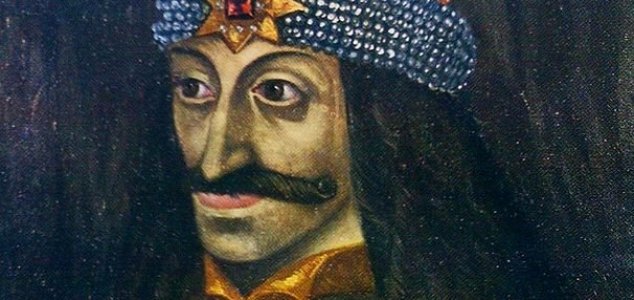
Born in 1431, Vlad III was the Prince of Wallachia, a region in modern-day Romania. His life was one of constant, savage warfare. He was a man caught between two titanic empires: the Kingdom of Hungary and the ever-expanding Ottoman Empire. His father, Vlad II, was a member of the Order of the Dragon, a chivalric order dedicated to fighting the Ottomans. This earned him the nickname “Dracul,” which meant “The Dragon.” Vlad III, as his son, was thus “Dracula”—the “Son of the Dragon.”

Sounds familiar, right?

But it was his methods that etched his name into the darkest pages of history. Vlad’s favorite tool of political enforcement and psychological warfare was impalement. He didn’t just execute his enemies; he made gruesome, theatrical displays of their suffering. His most infamous act was the “Forest of the Impaled,” where he allegedly had tens of thousands of captured Ottoman soldiers and political rivals impaled on massive stakes outside the city of Târgoviște. The sight was so horrific that the invading Sultan, a man who had seen every brutality of medieval warfare, reportedly turned back in disgust and retreated.

This was no fictional monster. This was a real man who used terror as a weapon of state. A cruel, calculating ruler who bathed his land in blood to maintain his power. Surely, *this* had to be Stoker’s man.

Stoker’s Notes: The “Proof” in the Pudding?

The smoking gun, for decades, was believed to be Bram Stoker’s own research notes. Scholars pointed to the fact that Stoker stumbled upon the name “Dracula” in a book he borrowed from the Whitby library in 1890. The book, William Wilkinson’s An Account of the Principalities of Wallachia and Moldavia, contained a small footnote about a ruthless 15th-century voivode named Dracula who fought the Turks.

Case closed, right? He found the name. He found the history.

Not so fast. This is where the official story starts to unravel. Because while Stoker jotted down the name “Dracula” and noted that it meant “devil” in the Wallachian language, that’s almost *all* he wrote down about Vlad III. His notes are conspicuously empty of the juicy, horrifying details. There’s no mention of the Forest of the Impaled. No mention of his legendary cruelty. Nothing about drinking the blood of his enemies—a myth that was largely fabricated centuries later anyway.

Stoker had a name. And that’s it. So where did the *character* of the Count come from? The hypnotic aristocrat, the shape-shifter, the predator hiding behind a veil of old-world charm?

Cracks in the Castle Walls: Unraveling the Vlad Theory

The idea that Vlad the Impaler is Count Dracula is a modern invention, a myth retroactively applied to Stoker’s novel long after he was dead. It was largely popularized by a 1972 book, In Search of Dracula, which cemented the connection in the public’s mind. It was a fantastic marketing move, but as historical detective work, it’s full of holes.

A Geographic Mess

Let’s start with a simple geography lesson. Jonathan Harker, in the novel, travels to Castle Dracula in Transylvania, specifically at the Borgo Pass in the Carpathian Mountains. The Count consistently identifies himself as a Transylvanian nobleman, a Szekely, a proud descendant of Attila the Hun.

But Vlad the Impaler wasn’t Transylvanian. He was Wallachian. These were two distinct and separate regions with different histories and cultures. It’s like confusing a Texan with a New Yorker. For Stoker, a man known for his meticulous research into the locations of his stories, this seems like a bizarre and unforgivable error. Unless, of course, he wasn’t writing about Vlad at all.

A Monster of a Different Breed

Beyond the map, the characters themselves just don’t align. Vlad III, for all his brutality, was seen by many of his countrymen as a national hero. A brutal protector who did what was necessary to save his people from a foreign invader. His violence was political, a tool for power and defense.

Count Dracula is something else entirely. He is a parasite. A supernatural predator who despises humanity and sees it only as cattle. He is an ancient evil, driven by a curse and an insatiable hunger. He represents the decay of the old aristocracy, a monster preying on the vibrant life of the modern world. One was a military commander; the other is a super-predator. The only thing they truly share is a name Stoker happened to like the sound of.

A New Suspect Enters the Shadows: The Baring-Gould Connection

If not Vlad, then who? The answer might lie not in the blood-soaked fields of Wallachia, but in the dusty, ink-stained pages of a Victorian English writer you’ve probably never heard of. This is the bombshell theory dropped by author Andy Struthers in his book, Dracula Incarnate: Unearthing The Definitive Dracula.

Struthers argues that the real inspiration, the true blueprint for Count Dracula, was the work of one Sabine Baring-Gould.

Who Was This Mysterious Priest and Novelist?

Sabine Baring-Gould was a true Victorian polymath. An Anglican priest, a folklorist, a prolific novelist, and a scholar of the strange and macabre. He was a contemporary of Bram Stoker, and his work was widely read in the literary circles of the day. And, critically, he was obsessed with the very same dark folklore that would come to define Stoker’s Count.

Struthers claims that Stoker didn’t just read Baring-Gould’s work; he devoured it. He alleges that Stoker lifted key themes, character traits, and even narrative elements directly from two of Baring-Gould’s books: a non-fiction study called The Book of Werewolves and a vampire story titled “Margery of Quether.”

The Book of Werewolves: Stoker’s Real Blueprint?

Forget impalement. The real horror in Stoker’s novel is transformation. The Count can command wolves, turn into a bat, and dissolve into mist. This shapeshifting is central to his power. Where did this come from? Struthers points directly to Baring-Gould’s exhaustive study of lycanthropy. The book explored ancient legends of men who became beasts, aristocratic families cursed with monstrous bloodlines, and the deep, primal connection between humanity and the wolf. It provided a framework for a monster that was more than just a man—it was a force of nature, an ancient predator in human form.

Margery of Quether: The Vampire You’ve Never Heard Of

This is where the theory gets truly compelling. “Margery of Quether” is Baring-Gould’s own vampire tale. And according to Struthers, it contains shocking parallels to Dracula. Struthers even puts forward the mind-bending idea that the very *voice* of Stoker’s Count might have been based on Baring-Gould’s female vampire.

Think about it. The Count is often described with feminine, seductive language. He has a strange intimacy, a hypnotic charm that is both alluring and terrifying. Is it possible that Stoker took the predatory essence of Margery and cloaked it in the form of a male Transylvanian aristocrat? Struthers argues that the character traits—the ancient lineage, the specific type of vampirism, the way the monster interacts with its victims—are far closer to Baring-Gould’s fiction than they are to anything in Vlad the Impaler’s history.

“The book of werewolves and the vampire tale provided Stoker with elements of his story, and virtually everything he needed for the creation of his vampire Count, possibly including the voice of his vampire, which was female,” Struthers has stated.

The Exeter Clue: A Deliberate Hat-Tip?

The final piece of the puzzle is a breadcrumb, a subtle nod left by Stoker for those in the know. In the opening chapters of Dracula, Jonathan Harker begins his journey from Exeter. Specifically, he mentions leaving from Cathedral Close in Exeter.

Why Exeter? It’s a seemingly random detail. But it wasn’t random at all. Sabine Baring-Gould had deep family connections to Exeter. For Stoker to place the origin of his hero’s fateful journey in a location so intimately tied to Baring-Gould feels… deliberate. It’s what Struthers calls a “tip of the hat.”

“Stoker was fond of tipping his hat to friends and acquaintances who had either helped him in researching his novel, or perhaps, even inspired the characters within its pages,” Struthers explains. This wasn’t just a setting; it was an acknowledgement. A hidden credit to the man who truly inspired the monster.

Digital Ghosts and Modern Conspiracies

This theory, while shocking, opens up a fascinating new perspective. It reframes Dracula not as a retelling of a historical monster, but as a brilliant synthesis of Victorian-era anxieties and gothic literary traditions, heavily influenced by a forgotten contemporary.

So why did the Vlad myth stick? The truth is, it’s just a better story. It’s sexier. A real-life bloodthirsty prince is far more marketable than a fictional vampire from an obscure English short story. Once the connection was made in the 1970s, it took on a life of its own, fueled by movies, documentaries, and even the Romanian tourism industry, which eagerly capitalized on its newfound gothic celebrity.

Perhaps the truth is a blend of both theories. Maybe Stoker plucked the terrifying, exotic-sounding name “Dracula” from a dusty history book but found it to be an empty vessel. To fill it, to give his monster a soul and a method, he turned to the works of Sabine Baring-Gould, a master of the macabre who was exploring the same dark corners of folklore.

The debate rages on in the darkest corners of the internet and in the halls of academia. Struthers himself promises that his full findings will shock the world. “People will be surprised and sometimes shocked by my findings, as most of what they now hold true will be proven to be false,” he said. “It’s a bit like finding out who Father Christmas really is.”

So, the next time you see the dark silhouette of Count Dracula, ask yourself: are you looking at the face of a 15th-century Wallachian prince? Or are you seeing the ghost of a forgotten English author, a secret hidden in plain sight for over 120 years? The truth, like the Count himself, may be hiding in the shadows, waiting for us to find it.

Arindam Mukherjee
Arindam Mukherjee
Arindam loves aliens, mysteries and pursing his interest in the area of hacking as a technical writer at 'Planet wank'. You can catch him at his social profiles anytime.
RELATED ARTICLES
- Advertisment -

Most Popular

Recent Comments

Warren Pan Abbott on The legend of the Devil Monkey !
chris davies on The McPherson Tape Mystery
Reed Reedly on ET has Internet!
Bea Houseoffashion on Proof Of Time Travellers – Gallery
Marcus2012 on ET has Internet!
Reed Reedly on ET has Internet!
LaughsAtConspiracyNuts on The 9/11 Conspiracy – Myths and Facts
Alex Sliverman on Did the ancients fly?
Doctor Wholigan on Time Traveler in 1938 film
chris davies on The McPherson Tape Mystery
Archie1954 on 10 secret UFO hideouts
chris davies on Ghosts of flight 401
Marcus2012 on ET has Internet!
jason Macdonald on Proof of Time Travel? – China
chris davies on Long-Lost Pyramids Found?
Reed Reedly on ET has Internet!
Milkman on Connected Universe
Tenmiles on Baigong Pipes Mystery
Simon Foster on Sirius – The Documentary
From the 1st April on 2013 – Alien Contact date ?
SkyWatcher on Is ET ignoring us?
I Come From The Future on Obama to make UFO Alien disclouser soon ?
Just another person on 2013 – Alien Contact date ?
Malcolm Windowcleaner on The strange case of Rudolph Fentz
Mason Servio on Strange Things on Mars
Marke Wisdom Seeker on What will we find as arctic melts?
Andrea A Elisabeth Levyne on Aliens Captured in Varginha, Brazil
Mitch Grouyeki on Amazing Space Shuttle pictures