Saturday, June 6, 2026
HomeFilms & DocumentariesAre Anonymous Working For The US Government?

Are Anonymous Working For The US Government?

The Ultimate Deception? The Case for Anonymous Being a Secret Government Psyop

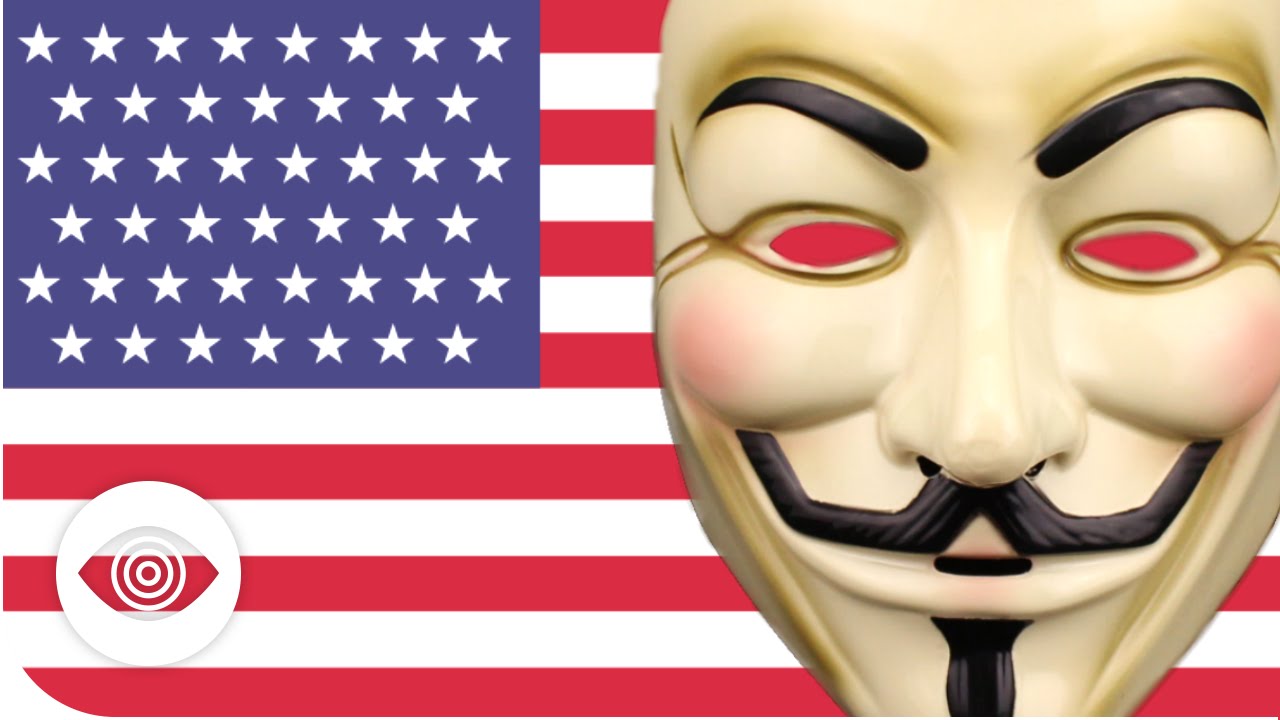
You know the mask. That smiling, unsettling Guy Fawkes face. It became the symbol of a revolution. A digital uprising. Anonymous. They were the bogeyman of the powerful, the vigilante heroes of the downtrodden. A leaderless legion of hackers, trolls, and activists who could bring corporations to their knees and topple dictatorships with a few keystrokes. They were everyone and no one. A force of nature born from the chaotic depths of the internet.

But what if it was all a lie?

What if the greatest trick the devil ever pulled wasn’t convincing the world he didn’t exist, but convincing the world he was a rebellious teenager in a hoodie, when he was actually a man in a suit sitting in a government office in Virginia?

The question is so jarring, so completely upside-down, that most people dismiss it instantly. But the whispers have persisted for over a decade, growing louder with every strange coincidence and declassified document. Could the most famous anti-establishment hacktivist collective in history actually be a sophisticated tool of the establishment itself? A government-run honeypot? A false flag operation on a global scale?

Strap in. Because the evidence is far more disturbing than you can imagine.

Deep Dive: Forging a Legend in the Fires of Chaos

To understand the conspiracy, you first have to understand the legend. Anonymous wasn’t born in a smoky backroom of political intrigue. It crawled out of the primordial soup of the internet’s most anarchic message board: 4chan. In the mid-2000s, it wasn’t a movement. It was a joke. A meme. “Anonymous” was simply the default username for posts, and users began acting collectively as a single, chaotic entity for the “lulz”—for the laughs.

Their first real target wasn’t a government. It was the Church of Scientology.

In 2008, after the Church tried to scrub an embarrassing internal video of Tom Cruise from the web, Anonymous declared war. This was “Project Chanology.” Suddenly, the formless mob of trolls had a purpose. They crashed Scientology websites. They faxed black pages to their offices to drain their ink. They organized real-world protests, with thousands of people showing up in Guy Fawkes masks—a nod to the film V for Vendetta—to protect their identities.

It was electric. It was world-changing. For the first time, a decentralized, leaderless internet group had successfully organized a global protest movement and dealt a significant blow to a powerful and secretive organization. They tasted blood. And they wanted more.

The “Golden Age” of Anonymous had begun. They evolved. Their operations became more political. They launched “Operation Avenge Assange” in 2010, attacking the websites of PayPal, MasterCard, and Visa for cutting off services to WikiLeaks. During the Arab Spring in 2011, they offered technical support to protestors, took down government websites in Tunisia and Egypt, and became folk heroes for a generation yearning for change.

They were David, and their slingshot was a denial-of-service attack. The world saw a righteous army of digital ghosts fighting for freedom. But was someone else quietly directing their aim?

The Crack in the Mask: The Betrayal of Sabu

The whole glorious image of an untouchable digital phantom army came crashing down in 2012. And it all centered on one man: Hector Xavier Monsegur. Online, he was known as “Sabu.”

Sabu wasn’t just another hacker. He was a rockstar. A charismatic, influential, and highly skilled figurehead for LulzSec, one of the most feared and effective offshoots of Anonymous. LulzSec went on a 50-day hacking rampage, hitting targets like Sony, Fox News, the CIA, and the UK’s Serious Organised Crime Agency. They were brazen. They were unstoppable.

Until they weren’t.

In June 2011, the FBI quietly arrested Monsegur in his New York apartment. He was facing a mountain of charges that could have sent him to prison for the rest of his life. The feds had him. They cornered the fox. But instead of putting him in a cage, they did something far more clever. Far more sinister.

They put a leash on him and sent him back into the henhouse.

For the next ten months, Sabu, the celebrated leader of LulzSec, was a secret FBI informant. He continued to lead hacks. He directed operations. He identified other key hackers and guided them into digital traps, all while his FBI handlers watched over his shoulder. He wasn’t just feeding them information; he was an active agent, a puppet master whose strings were being pulled from the highest levels of federal law enforcement.

Is Anonymous a Government Honeypot?

The Sabu case is the smoking gun. It’s not a theory. It’s a documented fact that the FBI successfully took control of a major Anonymous-affiliated cell and used its leader to direct its actions. The question then becomes terrifyingly simple: if they did it once, why wouldn’t they do it again?

Could the *entire* Anonymous phenomenon, or at least its most “productive” cells, be a form of controlled opposition?

Theory 1: The Controlled Opposition Playbook

Governments have used this tactic for centuries. If you can’t crush a rebellion, you lead it. By creating or co-opting an “enemy” like Anonymous, a government accomplishes several goals at once.

First, you control the narrative. You get to decide who the “bad guys” are. Notice how Anonymous’s major targets were often corporations (Sony, PayPal), foreign governments sometimes at odds with the U.S. (Iran, Russia), or organizations that were already public punching bags (Scientology, Westboro Baptist Church). They rarely, if ever, inflicted truly catastrophic damage on the core infrastructure of the U.S. military-industrial complex or its intelligence agencies. The CIA website was defaced—an embarrassment, but hardly a critical blow.

Second, you justify your own power grab. Every time Anonymous launched a high-profile attack, politicians and media outlets would scream for more cybersecurity, more surveillance, and stricter laws. The “threat” of Anonymous was the perfect excuse to pass legislation that expanded government spying powers over ordinary citizens. They created the disease so they could sell you the cure.

Theory 2: The Stratfor Anomaly

One of the biggest hacks Sabu orchestrated while under FBI control was the 2011 attack on Stratfor, a private global intelligence firm often called the “Shadow CIA.” The hacker who did the heavy lifting was Jeremy Hammond, who was personally guided by Sabu. The massive trove of internal emails was then handed over to WikiLeaks.

Think about that for a second. The FBI *actively facilitated* a massive hack that resulted in a huge dump of intelligence documents to WikiLeaks, one of their primary antagonists. Why?

It makes no sense… unless it was a trap. Was the goal to see how WikiLeaks operated from the inside? To trace the flow of information? To gather intelligence on Julian Assange’s network? Or perhaps the information in the Stratfor leaks was meant to cause specific damage to certain individuals or foreign entities, a kind of surgical strike laundered through a “hacktivist” group to give the U.S. plausible deniability. It was a bank shot on a global, geopolitical pool table.

Following the Digital Breadcrumbs

Once you start looking for it, the pattern seems to appear everywhere.

The Convenient Enemies List

Time and again, Anonymous’s “declarations of war” have aligned almost perfectly with U.S. foreign policy objectives. When tensions flared with Russia, Anonymous cells would suddenly target Russian government websites. When Iran was in the news, Iranian state-run media sites would go down. When China was rattling its sabers, Chinese corporate servers were hit. Are we to believe that a scattered, international group of idealists just happens to have the exact same enemy list as the U.S. State Department? It’s a remarkable coincidence. Or it’s not a coincidence at all.

Where Did They Go? The Great Disappearance

For a few years, Anonymous was everywhere. A constant presence in the news cycle. Then, after the big arrests of 2012 and 2013, the high-profile, earth-shaking hacks seemed to dry up. The movement fractured and faded from the public eye.

Did thousands of hacktivists all just decide to retire at the same time? Or was the “project” simply wound down once it had served its purpose? The laws were passed. The surveillance tools were in place. The main players were either in jail or turned into assets. Mission accomplished.

The Skeptic’s Corner: A Storm of Chaos, Not a Conspiracy

Of course, there’s a much simpler explanation. And it’s only fair to present it.

The counter-argument is that Anonymous was never a single “thing” to be controlled. It was an idea. A banner that anyone could fly. There was no headquarters, no CEO, no chain of command. It was a true swarm, and a swarm cannot be directed. The Sabu case wasn’t the FBI controlling Anonymous; it was the FBI cleverly dismantling one dangerous cell within a much larger, chaotic ecosystem.

The targets they chose weren’t part of a grand strategy; they were simply the easiest or most satisfying. Hacking Sony is a lot easier than hacking the NSA. Attacking the Westboro Baptist Church gets you good press. It wasn’t geopolitics; it was a mix of teenage rebellion, low-hanging fruit, and populist anger.

The movement faded not because a puppet master pulled the plug, but because of infighting, paranoia after the arrests, and the simple fact that movements lose steam. The world moved on.

The Ghost Returns: A Modern Resurgence?

But did they ever truly go away? The mask has reappeared in recent years. During the 2020 George Floyd protests, accounts claiming to be Anonymous re-emerged, promising to expose the crimes of police departments. They declared “cyber war” on Russia after the 2022 invasion of Ukraine, claiming to have hacked Russian state TV and government agencies.

And once again, their stated goals align perfectly with mainstream Western sentiment and geopolitical objectives.

Is it the original spirit of Anonymous being rekindled? Or is it something else? Is it possible that the old network, the old *asset*, is being reactivated for a new purpose? It’s a chilling thought. The idea that a symbol of rebellion could be used to manufacture consent, to guide public outrage, and to fight shadow wars on behalf of the very powers it claims to oppose.

We may never know the full truth. The very nature of Anonymous—its leaderless, faceless structure—makes it the perfect vehicle for infiltration and manipulation. They were ghosts. Digital phantoms. And that’s exactly what a good intelligence asset is supposed to be.

So the next time you see that smiling mask, ask yourself: Who is really behind it? The revolutionary in the basement? Or the spook in the boardroom? The line between the two may be far blurrier than we ever dared to believe.

Arindam Mukherjee
Arindam Mukherjee
Arindam loves aliens, mysteries and pursing his interest in the area of hacking as a technical writer at 'Planet wank'. You can catch him at his social profiles anytime.
RELATED ARTICLES

20 COMMENTS

- Advertisment -

Most Popular

Recent Comments

Warren Pan Abbott on The legend of the Devil Monkey !
chris davies on The McPherson Tape Mystery
Reed Reedly on ET has Internet!
Bea Houseoffashion on Proof Of Time Travellers – Gallery
Marcus2012 on ET has Internet!
Reed Reedly on ET has Internet!
LaughsAtConspiracyNuts on The 9/11 Conspiracy – Myths and Facts
Alex Sliverman on Did the ancients fly?
Doctor Wholigan on Time Traveler in 1938 film
chris davies on The McPherson Tape Mystery
Archie1954 on 10 secret UFO hideouts
chris davies on Ghosts of flight 401
Marcus2012 on ET has Internet!
jason Macdonald on Proof of Time Travel? – China
chris davies on Long-Lost Pyramids Found?
Reed Reedly on ET has Internet!
Milkman on Connected Universe
Tenmiles on Baigong Pipes Mystery
Simon Foster on Sirius – The Documentary
From the 1st April on 2013 – Alien Contact date ?
SkyWatcher on Is ET ignoring us?
I Come From The Future on Obama to make UFO Alien disclouser soon ?
ÛñK?øWn on 2013 – Alien Contact date ?
Just another person on 2013 – Alien Contact date ?
Malcolm Windowcleaner on The strange case of Rudolph Fentz
Mason Servio on Strange Things on Mars
Marke Wisdom Seeker on What will we find as arctic melts?
Andrea A Elisabeth Levyne on Aliens Captured in Varginha, Brazil
Mitch Grouyeki on Amazing Space Shuttle pictures