
It was the spring of 1946. World War II was over. The boys were back home. The economy was booming, and a sense of safety had returned to the American psyche. But in the twin cities of Texarkana—straddling the dusty line between Texas and Arkansas—that safety was about to be shattered. A darkness was creeping in from the back roads. A darkness that wore a mask.
We like to think of the “serial killer” as a modern invention, something from the 1970s or the Netflix era. But Texarkana holds the dark distinction of hosting one of America’s first, and most terrifying, unsolved sprees. This wasn’t just a crime; it was a total siege.

The Phantom of the Back Roads
For ten weeks, the people of Texarkana didn’t sleep. They bought guns. They nailed their windows shut. They set traps. Why? Because something was hunting them. The attacks didn’t happen in dark alleys or city centers. They happened in the places people felt safe. In their cars. On quiet lovers’ lanes. In their own homes.
The twin cities of Texarkana, Texas, and Texarkana, Arkansas, have only had one reported case of serial murder in their history. But it was a case so brutal, so bizarre, and so utterly baffling that it gripped the region in absolute terror for several months in 1946. Today, we call them the Texarkana Moonlight Murders. But back then? They just called him The Phantom.
Five people dead. Three severely injured. A town paralyzed. And the scariest part? He just… stopped. And walked away into history.
Attack #1: The Face of Fear
It started on February 22, 1946. Jimmy Hollis and Mary Jeanne Larey. Just two young people parked on a secluded road known as Lovers’ Lane. It sounds like a clichĂ© from a horror movie now, but back then, it was just life. They were talking. Maybe listening to the radio.
Then, a flashlight beam cut through the darkness. Blinded them.
A man approached the driver’s side. Jimmy Hollis probably thought it was a cop. He rolled down the window, ready to explain. But the voice that came out of the dark wasn’t asking for a license and registration. It was a command. “I don’t want to kill you,” the figure said, confusingly. “I’m a fellow that’s done it before.”
Hollis and Larey were the only victims to get a good look at the attacker and live to tell the tale. And what they described is fuel for nightmares. It wasn’t a stocking mask. It wasn’t a ski mask.
They described a six-foot-tall man wearing a plain white sack over his head. A pillowcase, maybe. He had cut crude holes out for the eyes and mouth. Just imagine that for a second. The blank, white face staring at you in the moonlight. It isn’t known whether or not the killer wore this mask during the subsequent attacks; the only other survivor didn’t get a look. But that image—the Sack Man—stuck.
The night devolved into chaos. The killer didn’t just rob them. He beat Hollis into a coma with the butt of a pistol. He chased Larey. He sexually assaulted her with the barrel of his gun. Then, inexplicably, he let her run. He let them live. Why? Was he practicing? Or did he just enjoy the fear more than the killing?
The Escalation: Blood on the Leaves
If the town was nervous after the first attack, they were about to become hysterical. The Phantom wasn’t done. He was just warming up. The killer used a .32 caliber pistol, nearly always struck three weeks apart, and always carried out his murders in the dead of night.
March 24, 1946. Three weeks later. Richard Griffin and Polly Ann Moore. They were found dead in their parked sedan on a dirt road. This time, there were no survivors. No descriptions. Just two bodies found the next morning by a passing motorist.
The brutality had ramped up significantly. Both were shot in the back of the head. It was an execution. The killer had seemingly waited, watched, and then struck with military precision. The local police were baffled. They were dealing with two state jurisdictions, city cops, county sheriffs, and eventually, the FBI and the Texas Rangers. It was a mess.
The “Three Week” Pattern
Humans look for patterns in chaos. It’s how we cope. The people of Texarkana noticed something terrifying. The attacks were happening on weekends. And they seemed to be spaced roughly three weeks apart. It was a grim schedule. As the third week approached after the Griffin/Moore murders, the tension in the air was thick enough to choke on.
April 13. A Sunday. The pattern held. Paul Martin and Betty Jo Booker. Betty Jo was a popular girl, a musician who had just played a gig at the VFW hall. Paul was her friend, picking her up. They were found miles apart. Paul’s body was by the road. Betty Jo was found later, deep in the woods behind a tree. Her saxophone was missing for days, eventually found in the underbrush. A haunting detail.
This broke the town. Curfews were enacted. Liquor stores closed early. People started buying guard dogs. You couldn’t buy a lock or a deadbolt in Texarkana for love or money; every hardware store was sold out.
The Final Strike: Invasion
The pattern changed. The killer changed. Maybe he knew the police were staking out the lovers’ lanes. Maybe he wanted a new challenge. On May 3, Virgil and Katy Starks were in their farmhouse. Not parked in a car. Not in the woods. In their own living room, listening to the radio.
The Phantom shot Virgil Starks through the closed window. Two shots to the back of the head. Dead instantly.
Katy Starks heard the glass break. She saw her husband slump forward. She ran to the phone to call the police, and the killer shot her through the window, hitting her in the face. Despite the bullet tearing through her cheek and jaw, she managed to crawl out of the house and run to a neighbor’s farm for help. She survived.
This was different. This was a home invasion. It proved that no one was safe, anywhere. The police found tire tracks. They found footprints. But the man in the moonlight was gone.
The Investigation: Chasing a Ghost
After one of the murders, Sheriff William Presley exclaimed to the press, “This killer is the luckiest person I have ever known. No one sees him, hears him in time, or can identify him in any way.” This quote ran in papers across the country. This led the press to dub him the Phantom Killer, and the hysteria went national.
Enter Captain Manuel “Lone Wolf” Gonzaullas of the Texas Rangers. A legendary figure in law enforcement, he rolled into town like a movie star. He promised to hunt this animal down. He recruited teenagers to act as decoys, parking in lovers’ lanes with guns hidden under the seats, waiting for the Phantom to tap on the glass.
It was a dangerous game. But the Phantom never took the bait. After the Starks murder, the killings simply stopped. The three-week cycle came and went. The summer passed. The Phantom had vanished.
The Suspect: Youell Swinney
So, who was he? Did he die? Did he move? Or was he locked up for something else?
The strongest suspect was a man named Youell Swinney. A career criminal. A car thief. A counterfeiter. In 1947, police arrested Swinney for car theft. But the investigation took a dark turn when his wife, Peggy Swinney, started talking.
She gave the police details. Too many details. She claimed she was with him. She claimed she saw things. Her stories were messy, inconsistent, and fueled by fear, but they pointed a finger directly at her husband. The police were sure they had their man.
But there was a problem. A legal loophole the size of Texas. under the law at the time, a wife could not be compelled to testify against her husband. Without her testimony in court, the physical evidence was circumstantial. They couldn’t risk a murder trial and have him walk free.
So, they got him on what they could. One suspect, Youell Swinney, was imprisoned as a repeat car theft offender in 1947. The judge, knowing Swinney was likely the Phantom, threw the book at him. He was sentenced to life (though he was eventually released in 1973). He was never charged with the crimes. He died in a nursing home, taking his secrets to the grave.
Modern Theories: Was it the Zodiac?
Here is where things get really strange. The internet loves a good crossover theory. Though some in law enforcement and the press have speculated that the murders may have been the early work of the Zodiac Killer, this has never been proven in any way.
Think about it. The Zodiac operated in California in the late 60s. Texarkana was 1946. The timeline is a stretch, but not impossible. The Zodiac would have been young in 1946, perhaps just starting out.
The similarities are chilling:
- Both attacked couples in secluded areas.
- Both used a flashlight to blind victims.
- Both used a gun (though Zodiac also used a knife).
- The most striking parallel: The Costume.
In the Zodiac’s famous Lake Berryessa attack, he wore a hooded executioner-style mask with a symbol on the chest. The Phantom wore a white sack mask with eye holes. Both killers seemed to need a persona. They needed to be “The Character.”
However, the differences are massive. The Zodiac taunted police with letters and ciphers. The Phantom was silent. The Zodiac craved the spotlight; the Phantom seemed to only want the kill. Most profilers believe they are two different men, separated by time and geography. But the theory refuses to die.
The Legacy of The Town That Dreaded Sundown
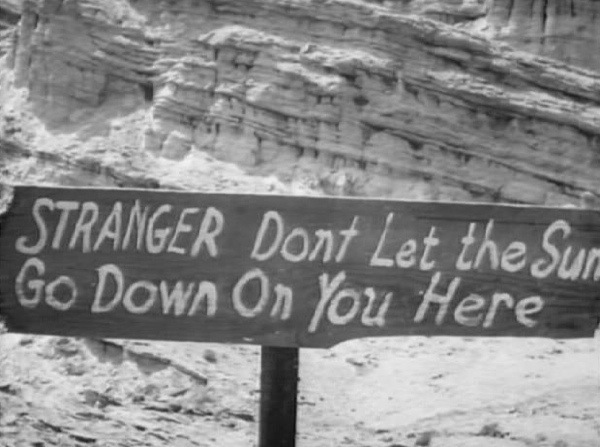
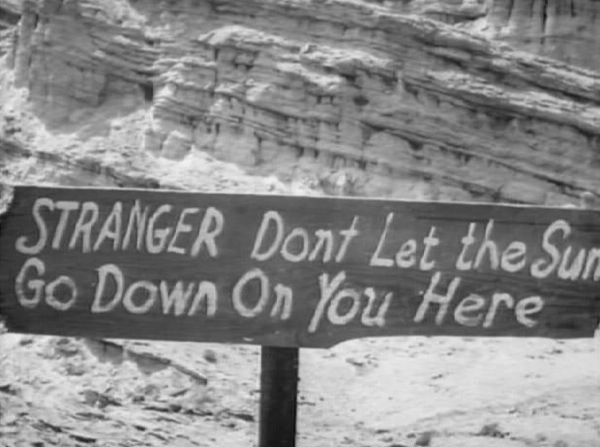
The case so captured the public imagination that thirty years later, it inspired the horror film The Town That Dreaded Sundown. Released in 1976, the movie is a cult classic. It blurs the line between fact and fiction. It uses a documentary style narration but adds Hollywood flair (and a much more violent ending than real life).
Every Halloween, the movie is screened in a park in Texarkana. It’s a bizarre tradition. The town watches a movie about its own worst trauma, projected on a big screen near the very spots where people died. It’s a way of reclaiming the history, perhaps. Or maybe it’s just proof that we are all fascinated by the monsters in the dark.
Unsolved but Not Forgotten
The Texarkana Moonlight Murders remain officially unsolved. The files are still open. Every few years, someone claims to have found the gun, or a deathbed confession surfaces. But nothing sticks.
Was it Youell Swinney? Probably. The evidence, while circumstantial, paints a damning picture. But until there is DNA or a smoking gun, the Phantom remains a ghost.
If you drive through Texarkana tonight, stick to the main roads. Lock your doors. And if you see a car parked on the side of a lonely dirt road, don’t stop. The Phantom hasn’t been seen in nearly 80 years, but on a moonlit night, with the wind blowing through the pines, it’s easy to feel like he’s still out there. Watching. Waiting.









