Home Weird World Photo Galleries Circus Freaks Gallery – Strange Pictures

Circus Freaks Gallery – Strange Pictures

1
66

Step Right Up: The Dark Truth Behind the Curtain

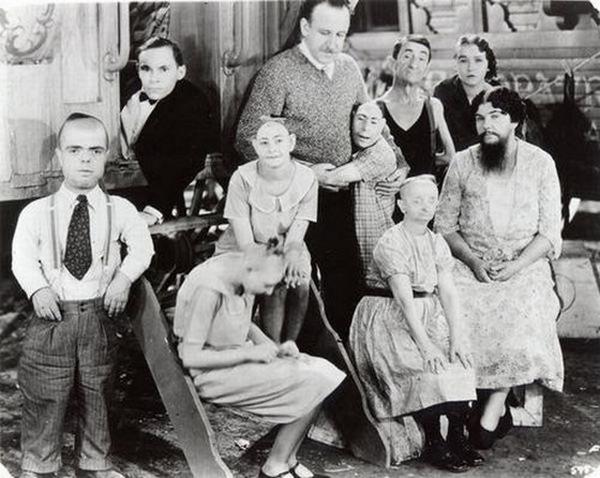
Stop. Look closer at that image above. Really look at it. What do you see?

Sadness? Pride? A family portrait? Or do you see something that makes you want to look away, yet forces you to stare? That is the paradox of the “Freak Show.” It’s a term we whisper now, a relic of a less polite time. But for over a century, this was the biggest show on Earth. It was the internet before the internet. It was where the world came to stare at the impossible.

They called themselves freaks. But they were so much more than a label slapped on a poster by a greedy showman in a top hat. They were the outliers. The biological glitches in the matrix. They were people, first and foremost, but they were people who defied the laws of physics and biology just by drawing breath.

We are going to go deep today. Forget the polite history books. We are ripping the tarp off the sideshow tent to expose the gritty, uncomfortable, and absolutely fascinating reality of the human oddities industry. Was it exploitation? Absolutely. Was it a sanctuary for those who would have been cast out by society? Surprisingly, yes.

Grab your popcorn. It’s going to get weird.

The Golden Age of the Grotesque

Picture the late 1800s. No TV. No movies. No Instagram. Your world is small. It ends at the edge of your village. Then, the train rolls in. The calliope music starts pumping like a mechanical heartbeat. And there, on canvas banners painted in screaming colors, are promises of the impossible.

The Dog-Faced Boy. The Four-Legged Woman. The Living Skeleton.

You’d pay a nickel. Maybe a dime. And you’d walk into the smell of sawdust and unwashed bodies to see things that your preacher told you didn’t exist. This was the “Ten-in-One.” Ten acts in one tent.

P.T. Barnum, the king of the hustle, knew something fundamental about human nature: We are addicted to the strange. He didn’t just sell tickets; he sold mystery. He knew that if he put a man with a skin condition in a suit and gave him a backstory about being a “Wild Man from Borneo,” people would lose their minds.

But here is the twist. While the crowds gawked, many of these performers were making money hand over fist. We’re talking about salaries that dwarfed what the average factory worker made in a year. Some of them retired rich. Some of them supported entire families who had previously shunned them. It was a bizarre economy where your “curse” became your greatest asset.

The Science (or Lack Thereof)

Back then, medical science was… let’s just say, “creative.” If a baby was born with a deformity, it wasn’t chromosomes or genetics. Oh no. The prevailing theory was “Maternal Impression.”

The idea was that if a pregnant woman looked at something scary, her baby would come out looking like it. Did the mother look at an elephant? Boom. Elephant Man. Did she get scared by a lobster? Lobster Boy. It sounds ridiculous now, but people believed this with their whole hearts. It added a layer of supernatural fear to the exhibits. These weren’t just medical conditions; they were cautionary tales made flesh.

The Legends: More Than Just a Photo

Let’s move past the generalities. To understand this world, you have to know the players. These aren’t just characters in a horror movie. They were real flesh and blood.

Grady Stiles: The Lobster Boy

This story? It’s pure noir. Grady Stiles Jr. was born with ectrodactyly. His hands and feet were fused into claw-like shapes. For generations, the Stiles family had this condition. They were sideshow royalty.

But Grady wasn’t a gentle soul. He was a mean drunk. A tyrant. He used his upper body strength—which was massive from dragging himself around—to terrorize his family. The story goes that he killed his daughter’s fiancé on the eve of their wedding. He got off with probation because no prison could handle his disability. He thought he was untouchable.

He was wrong. In a twist straight out of a crime thriller, his family eventually hired a hitman to take him out. The “Freak Show” wasn’t just on the stage; his living room was a war zone. It’s a stark reminder that physical deformity doesn’t define your morality. You can be unique on the outside and a monster on the inside.

Joseph Merrick: The Elephant Man

If Stiles was the villain, Merrick was the saint. You’ve seen the movie. You’ve seen the photos. But do you understand the isolation? Joseph Merrick didn’t just have a “skin condition.” His body was growing out of control. His head was so heavy that sleeping lying down would snap his neck. He had to sleep sitting up, every single night.

He was beaten. Starved. Paraded around like an animal in the back alleys of London. But when a doctor finally took him in, they found a man of intelligence, sensitivity, and faith. He famously built a cathedral out of card stock with one working hand. His skeleton remains in a hospital in London today—a controversial topic. Should he be buried? Or is he still on display, even in death?

The Conspiracy: Were They All “Natural”?

Here is where we put on our tin foil hats. Stick with me. We are told these were random genetic mutations. Accidents of nature.

But look at the timelines. The explosion of “human oddities” coincides perfectly with the rise of the Industrial Revolution and early chemical experimentation. Were we seeing the first waves of pollution-based mutations?

And then there are the Giants. The “Tallest Men in the World.” We are taught that gigantism is a pituitary gland issue. A tumor. But dig into the old newspaper archives from the 1800s—not the tabloids, the actual local papers. You find reports of entire skeletons found in burial mounds across North America. Seven feet tall. Eight feet tall. With double rows of teeth.

Were the circus giants of the 1900s actually the last descendants of a different sub-species of human? The Smithsonian has been accused for decades of suppressing these finds to keep the timeline of human evolution “clean.” Was the circus the only place these remnant giants could live openly, hiding in plain sight as “freaks”?

Think about it. The best place to hide a truth is to make it a joke. Make it a spectacle. If you put a real giant on a stage and charge a nickel, no scientist takes it seriously. It’s just “show business.”

The Modern Sideshow: Where Did They Go?

You don’t see traveling tent shows anymore. Laws changed. Morality shifted. We decided it was cruel to stare.

But did the curiosity go away? No. It just moved.

Open your phone. Scroll through TikTok or Instagram. Look at the accounts dedicated to “pimple popping” or extreme body modifications. Look at the people who split their tongues, tattoo their eyeballs, and implant horns in their foreheads. The sideshow didn’t die. It evolved. It went digital.

Today, people choose to become the “freak.” They modify themselves to stand out in a world of 8 billion people. It’s a desperate scream for attention, echoing the same human need that drove P.T. Barnum’s ticket sales: “Look at me. I am different.”

And what about the medical marvels? They are still born every day. But now, they are hidden away in medical journals or “inspiring” documentaries on TLC. The context has changed, but the gaze—the staring—is exactly the same. We just pretend it’s for “educational purposes” now.

The Ethics of the Stare

This brings us to the uncomfortable question. The image above—the thumbnail of the group. When you clicked it, why did you do it?

Is it wrong to look? The performers of the past often said that the only time they felt powerful was when they were on stage. On the street, they were outcasts. On stage, they were stars. They controlled the room.

There is a story about the “Siamese Twins,” Chang and Eng Bunker. They were conjoined at the chest. They were brought to America essentially as slaves, but they bought out their contract. They became their own managers. They bought land. They got married—to two different sisters!—and fathered 21 children between them. They were wealthy, respected landowners in North Carolina.

If we had “saved” them from the sideshow, would they have had that life? Or would they have languished in an institution somewhere?

It’s not black and white. It’s gray. A murky, dusty gray.

The Final Curtain

The era of the circus freak is over. The banners are faded. The tents are folded. But the ghosts remain.

They remind us that “normal” is just a setting on a washing machine. The human genetic code is a chaotic, messy thing. It throws curveballs. It makes mistakes. And sometimes, it creates magic.

So the next time you see someone who doesn’t fit the mold—someone who looks “wrong” by society’s standards—don’t just stare. Wonder. What is their story? What battles have they fought just to walk down the street to buy milk? The sideshow is gone, but the people are still here. They are us.

And that is the scariest thought of all. We are all just one genetic mutation away from being the one on the poster.

What do you think? Was the sideshow a prison or a paradise for these people? And do you believe the theories about ancient giants hiding in plain sight? Leave a comment below. Let’s get a discussion going.

Originally posted 2016-04-09 00:29:07. Republished by Blog Post Promoter