Home Weird World Strange Places Hart Island – The Most Haunted Island!

Hart Island – The Most Haunted Island!

0
59

20140220-013413.webp

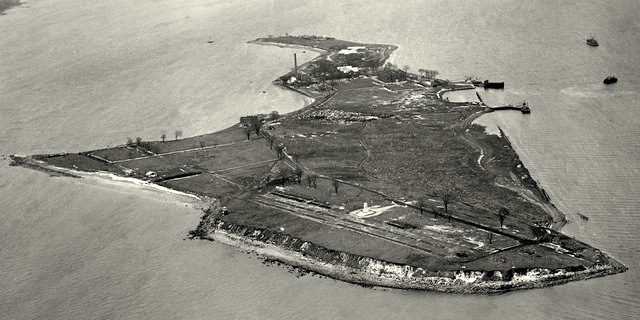
New York City. The city that never sleeps. Bright lights, Broadway, Wall Street billionaires, and $20 cocktails. But less than a mile away from the glitter of the Bronx, sits a place so dark, so secretive, and so terrifyingly silent that most New Yorkers don’t even know it exists.

Hart Island.

They call it the “Island of the Dead.” And for good reason. It isn’t a park. It isn’t a tourist trap. It’s a massive, churning machine of death that has been running non-stop for over 150 years.

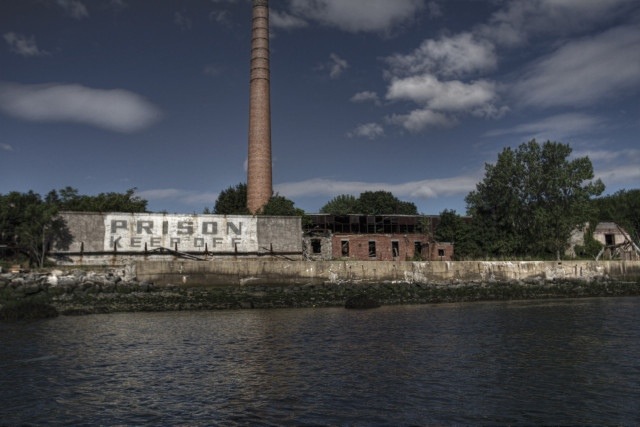
Here is the cold, hard truth: unless you are a convict, a grave digger, or a corpse, you are not welcome here. For decades, this strip of land was run with an iron fist by the NYS Department of Corrections. Think about that. A cemetery… run by the prison system. Why? What does a graveyard need with guard towers, razor wire, and armed patrols?

Even the press gets stonewalled. Over the years, journalists have fought tooth and nail just to get a glimpse of the dirt, usually restricted to tightly controlled, sanitized guided tours. If you’re a family member hoping to visit a lost loved one? Good luck. For a long time, you were allowed a brief, supervised moment inside a small gazebo near the dock. Nowhere near the actual grave. You stood there, looked at the grass, and were told to leave.

Trespassing? Don’t even think about it. It’s punishable by up to two years in prison. They take it seriously.

Why the extreme security? Why the secrecy? That’s the question that keeps conspiracy theorists and historians up at night. The strict lockdown doesn’t help dissipate the heavy fog of mystery surrounding this place. It only makes the shadows darker. This tiny island hosts one of the world’s largest mass graves, and yet, it hides in plain sight.

The Forbidden Zone: A Deep Dive into the Secrecy

Let’s look at the numbers. They are staggering. Over one million souls are estimated to be buried here. That is a population larger than San Francisco, all packed into a narrow strip of land in the Long Island Sound.

But it’s not just the dead that makes Hart Island creepy. It’s the living. Or rather, the lack of them.

For years, the only people allowed to tread on this soil were inmates from Rikers Island. They were bussed in, handed shovels, and told to dig. No names. No questions. Just digging. It creates a bizarre, dystopian feedback loop: prisoners burying the forgotten. The incarcerated burying the invisible.

Is the government hiding something specific? Internet sleuths have been buzzing about this for years. Some claim the strict no-camera policy (which was enforced for decades) was to hide the “undignified” manner of the burials. Others whisper about what else might be buried there. Hazardous waste? botched medical experiments from the old asylum days? When you lock the doors that tight, people’s imaginations start to run wild. And on Hart Island, reality is often stranger than fiction.

Haunted Graves! The Dark History Exposed

If you think Hart Island is just a cemetery, think again. The soil here is soaked in misery. It has been a dumping ground for everything New York City didn’t want to deal with.

The nightmare began during the American Civil War. In 1865, the island was transformed into a Prisoner of War camp. Imagine the scene. 3,413 captured Confederate soldiers. Ragged. Starving. Freezing in the bitter New York winter. They were crammed onto this windswept rock. In just four months, 235 of them dropped dead.

Did they leave? Physically, maybe. But paranormal researchers argue that sudden, traumatic death leaves a mark. A stain. Energy doesn’t just disappear.

The Yellow Fever Nightmare

Fast forward to 1870. Yellow fever hits New York. Panic in the streets. People bleeding from their eyes, skin turning jaundiced. The city needed a place to put the infected. A place where they couldn’t hurt the “decent” folk.

Hart Island became the quarantine station. It was a one-way ticket. If you were sent to the island in the 1870s, you probably weren’t coming back. You died in a cot, delirious with fever, miles from home.

The Asylum of Horrors

Then came the asylum. In 1885, they built “The Pavilion,” a lunatic asylum for women. Victorian-era mental health care wasn’t exactly compassionate. It was brutal. Cold baths. Restraints. Isolation. The building still stands today, rotting away, a hollow shell of brick and iron.

Urban explorers who have managed to fly drones over the island have captured footage of these ruins. They look like the set of a horror movie. Because they are a horror movie. Real women lived and died in those cages.

The list of misery goes on. A reformatory for delinquent boys (who were likely abused). A tubercularium (where people coughed their lungs out in isolation). A drug rehabilitation facility. And during World War II, the Navy took over. It became a disciplinary barracks for the Navy, Coast Guard, and Marines. 2,800 servicemen in custody. Hard men doing hard time.

But here is the kicker that most history books leave out: The Cold War Missiles.

That’s right. Between 1955 and 1961, Hart Island housed a Nike Ajax missile launch site. Nuclear-capable missiles pointing at the sky, sitting right next to mass graves. The juxtaposition is insane. Weapons of mass destruction sitting on top of a field of mass death.

20140220-013543.webp

The Industrial Complex of Death

“The Island of The Dead” lives up to its name. It has been used primarily as a disposal site for those not lucky enough to have a proper burial. Astonishingly, the counter hasn’t stopped. The trucks still run. The ferries still cross.

Let’s break down the process. It is mechanical. Cold. Efficient.

The vast majority of people buried here—dumped in trenches by inmates—died alone. Abandoned. Unclaimed. Maybe they outlived their families. Maybe they were homeless and froze to death on a park bench. Maybe they were mentally ill and slipped through the cracks. Some were simply too poor to afford a funeral. In NYC, if you can’t pay, you go to Hart Island.

Look at the image above. Those aren’t individual plots. Those are trenches. Long, deep scars in the earth.

The Trench System

This is where it gets heavy. Adults are buried in trenches that are three coffins deep. They are stacked. Pine boxes. Simple. Cheap. Writing on the side in marker. No headstones. Just a marker for the trench. “Trench 46.” That’s your legacy.

For babies, it’s even more heartbreaking. Small coffins. Thousands of them. Often, these were stillborns or infants who died in hospitals, and the parents—too poor or too grief-stricken—signed the papers to let the city handle it. Many parents didn’t even know “handling it” meant a mass grave on a prison island. Decades later, mothers have gone looking for their children, only to find out they are under four feet of dirt on Hart Island, inaccessible and lost in the crowd.

The AIDS Crisis: A Secret History

We need to talk about the 1980s. When the AIDS epidemic first exploded in New York, fear ruled the city. Funeral homes refused to take the bodies. They were scared. Ignorant. They thought the virus could jump from a corpse to a living person.

So, where did the bodies go?

Hart Island.

There is a specific section of the island, deep and isolated, where early AIDS victims were buried. And they weren’t just buried. They were buried deep. Fourteen feet down. Sealed. Treated like toxic waste. It was the only place in New York that would take them. The inmates who buried them had to wear hazmat suits (or what passed for them at the time). It remains one of the most tragic, lonely chapters in the city’s history. A mass grave for people who died of a disease that society was too terrified to even name.

Restless Souls and Paranormal Activity

Is Hart Island haunted? If you believe in ghosts, this is Ground Zero.

Many of the interred were children. Orphans. People who died in pain. No ceremonies. No “Rest in Peace.” Just disposed of, without much decency or dignity. There’s no doubt that this island houses many restless souls too bitter or angry to move on.

Think about the energy of a place where a million people were dumped against their will. It creates a psychic weight. Visitors (the few who have been allowed) often report a crushing sense of sadness. The air feels heavy. The silence is unnatural. It’s not the peaceful silence of a forest; it’s the suffocating silence of a waiting room.

With such a dark and gloomy history, it is no wonder many believe this island to be extremely haunted. Paranormal investigators view Hart Island as a “Holy Grail” location—a place they are desperate to investigate but can’t touch.

What If? The Conspiracy Angles

Let’s put on our tinfoil hats for a second. Why is the security still so tight? In the age of satellites and drones, what is left to hide?

  • Theory 1: The Numbers are Wrong. Some researchers suggest there are way more bodies than the official 1 million count. Could there be older, undocumented mass graves from the 1800s that the city destroyed records of?
  • Theory 2: The “Missing” People. New York has thousands of missing persons cases. Cold cases. Is it possible that victims of foul play, handled through bureaucratic negligence, ended up here without being properly identified? The “Doe” files on Hart Island are massive.
  • Theory 3: The Potters Field Experiment. There have been whispers that during the asylum era, the bodies of the unclaimed were used for medical anatomization before burial, a practice common in the 19th century but rarely discussed today.

Unfortunately, for 99.999% of us, we’ll never be able to set a foot on the island to really find out. Unless you become a Rikers Island inmate! It is them who bury the bodies on Hart Island – they are the only ones allowed there.
20140220-013800.webp

The Modern Era: Cracks in the Wall

Recently, things have started to shift. Slowly. Painfully slowly.

Internet activism and the relentless work of groups like “The Hart Island Project” have forced the city’s hand. They used modern technology—interactive maps, drone footage, and digital databases—to put names to the grave markers. They humanized the numbers.

Because of this pressure, control of the island is actually in the process of transferring from the Department of Corrections to the Parks Department. A massive victory. The goal? To turn it into a place people can actually visit. To tear down the razor wire and let the sunlight in.

But the transition is messy. The island is crumbling. The old asylum buildings are unstable. The shoreline is eroding, literally washing bones into the Long Island Sound after heavy storms. (Yes, that actually happens. Look it up. Bones on the beach.)

The Final Mystery

Even if they turn it into a park, the feeling will never leave. You can pave over the trenches, but you can’t erase the history. Hart Island stands as a monument to the people who fell through the cracks of the American Dream.

It asks us a hard question: How do we judge a society? By its skyscrapers? Its billionaires? Or by how it treats the people who have nothing left?

Next time you look at the NYC skyline, remember the dark shadow cast just a few miles away. The Island of the Dead is watching. And it is waiting.

Originally posted 2014-02-20 00:39:19. Republished by Blog Post Promoter