Friday, May 15, 2026
HomeUnexplained MysteriesHistorical MysteriesThe mystery of the Christmas scarecrow

The mystery of the Christmas scarecrow

The Real Hans Trapp: Unmasking the Cannibal Scarecrow of Christmas

Forget the Grinch. Forget Scrooge. The festive season has a shadow that’s far darker, far more terrifying, and chillingly real. It’s a story that doesn’t just steal presents, but snatches children from the roadside. A tale that ends not with a change of heart, but with a lightning strike from God to stop a cannibalistic feast.

We’re talking about Hans Trapp. The Black Scarecrow. Santa’s most monstrous helper.

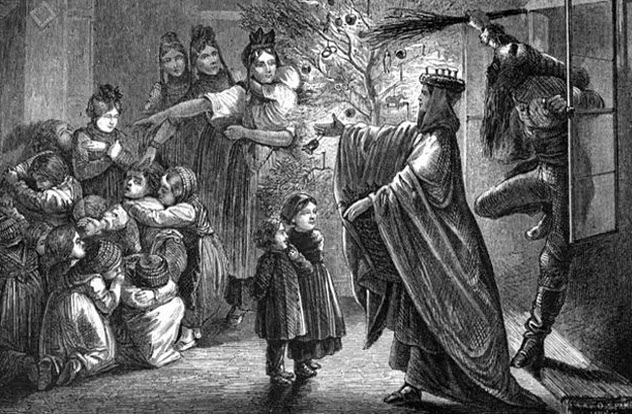
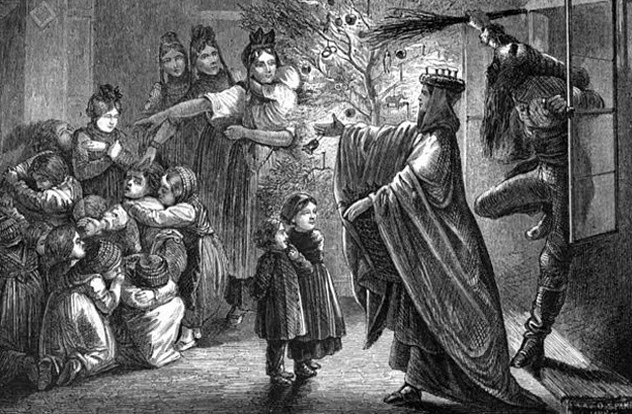
For centuries, parents in the Alsace-Lorraine regions of France and Germany have whispered his name to frighten naughty children into obedience. He’s the terrifying figure, dressed in straw and rags, who accompanies Saint Nicholas on his rounds. While the good saint gives gifts, Hans Trapp gives punishments. Beatings. Terror. He is the original nightmare before Christmas.

But this isn’t just a fairy tale. Not entirely.

The story you’ve been told is a sanitized version, a folk tale meant to scare you. The truth is infinitely more disturbing. Because Hans Trapp was a real man. A 15th-century German knight named Hans von Trotha. And the thin line separating the historical man from the cannibalistic monster is disappearing, as modern analysis and forgotten texts bring his horrific story back to life.

So, lock your doors. The nights are getting long. It’s time to meet the man who became a monster, and the monster who became a Christmas legend.

Deep Dive: The Iron Fist of Sir Hans von Trotha

Before the scarecrow disguise and the pacts with the devil, there was just the man. And he was already a force to be reckoned with.

Hans von Trotha was born around 1450 into an age of stone castles, brutal warfare, and shifting allegiances. This was the Holy Roman Empire, a patchwork of feuding territories where a man’s strength and ruthlessness were his most valuable assets. And Hans had both in spades. He wasn’t some backwater brute; he was a powerful, intelligent, and strategically brilliant knight who rose to become Marshal of the powerful Palatinate court. He was granted control of two formidable castles, Berwartstein and Dahn, fortresses that gave him command of the surrounding lands.

He was, for all intents and purposes, a medieval titan. A man of wealth, power, and influence. But he wanted more.

The War Against God’s House

His trouble began with a dispute that seems almost boring on the surface. It was about land. And water. Specifically, a conflict with the nearby Wissembourg Abbey, a powerful religious institution. Von Trotha decided to build a dam on the Wieslauter river to improve his castle’s water supply. Simple enough, right?

Wrong. This act cut off the water supply to the town of Wissembourg and the abbey itself. It was a power play, a medieval strong-arm tactic to show the Abbot, a man named Heinrich von Homburg, exactly who was in charge.

The Abbot protested. He pleaded. He sent messengers. How did Hans von Trotha respond? He didn’t just ignore them. He escalated. He unleashed a campaign of psychological and economic warfare against the church. He blockaded roads, seized abbey property, and harassed monks. He was a bully on an epic scale, a knight using his military might against men of the cloth.

This wasn’t just a squabble over a river. It was a direct challenge to the authority of the Church, one of the most powerful institutions on Earth at the time. And the Church does not take challenges lightly.

Excommunicated: A Soul Cast into Darkness

When local appeals failed, the Abbot of Wissembourg went over Hans’s head. Way over. He appealed directly to the top man himself: Pope Innocent VIII in Rome.

The Pope, hearing of this defiant knight’s actions, was furious. He summoned Hans von Trotha to Rome to answer for his crimes against the abbey. Did Hans go? Of course not. He sent a letter instead. A letter so filled with mockery and contempt for the Pope’s authority that it essentially sealed his fate. He was thumbing his nose at the Vicar of Christ.

The hammer fell swiftly. In 1485, Hans von Trotha was excommunicated. Now, in the 21st century, that might not sound so bad. But in the 15th century? It was a spiritual death sentence. It meant you were formally cut off from the church, denied sacraments, and your soul was condemned to Hell for eternity. It also made you a social pariah. An outlaw. Anyone could offer you harm without fear of legal reprisal. You were a ghost walking among the living.

Hans von Trotha, the powerful knight, was now an outcast. His wealth, his titles, his social standing… all poisoned by the Pope’s decree. He was driven from society, forced into the seclusion of his forest castle. And it is here, in the isolated, brooding woods of the Palatinate, that history begins to curdle into something much, much darker.

From Knight to Nightmare: The Birth of the Black Scarecrow

How does a disgraced political figure become a child-eating monster? Propaganda. Fear. And the fertile soil of folklore.

The church had every reason to paint von Trotha as an unholy terror. It served as a warning to any other nobles who might think of defying its authority. Stories began to spread. Whispers passed from village to village, growing more monstrous with each telling. The excommunicated knight wasn’t just a political enemy; he was a godless fiend.

image9

The stories claimed that, stripped of his earthly power, he sought a darker source of strength. He made a pact with the Devil himself, trading his already-damned soul for forbidden knowledge and riches. The forest, once his refuge, became his unholy laboratory.

But isolation and dark magic took their toll. The legend says he went mad. Utterly insane. His wealth meant nothing. All he craved was the one thing he couldn’t have. The one thing that was utterly forbidden.

He developed a hunger for human flesh.

This is where the legend takes its most famous, and most ghastly, turn. Driven by this unspeakable new appetite, Hans disguised himself. He stuffed his clothes with straw, donned a terrifying mask, and stood motionless in a field by a roadside. He became a scarecrow. A predator disguised as a protector. When a young shepherd boy wandered past, Hans lunged, stabbing the child with a sharpened stick. He then dragged the body back to his lair, carved it up, and began to roast the flesh over his fire.

But God, it seems, had seen enough. Just as Hans Trapp was about to take the first bite of his horrific meal, a bolt of lightning erupted from a clear sky, striking him dead on the spot. A final, divine act of retribution.

How a Cannibal Joined Santa’s Crew

So how in the world does a lightning-scorched, child-eating, excommunicated knight end up on the Christmas payroll?

It’s all about tradition. Throughout Germanic Europe, Saint Nicholas never traveled alone. He was the main event, the bringer of gifts and joy. But he always had a dark counterpart, a sidekick whose job was to handle the naughty list. These figures were the enforcers, the muscle. You’ve probably heard of Krampus, the horned demon who carries a bundle of birch branches and stuffs children into a sack. But there were others: Belsnickel in Southwestern Germany, Knecht Ruprecht in other regions.

They all served the same purpose: a figure of fear to balance the figure of hope. A stick to go with the carrot. It was a system of behavioral control, using folklore to keep children in line all year long.

In the Alsace-Lorraine region, the terrifying local legend of Hans von Trotha—now fully transformed into the monster Hans Trapp—was a perfect fit for the job. His story was already famous. He was already the local bogeyman. It was a simple, terrifying step to have him emerge from the woods not just at random, but specifically during the Christmas season, walking alongside Saint Nicholas to ask children if they had been good or bad. If you were good, you got a treat from the Saint. If you were bad… well, Hans Trapp and his sack were waiting.

New Theories Emerge: Was the Legend Hiding a Deeper Truth?

For a long time, historians neatly separated the two. Hans von Trotha was the real, political figure. Hans Trapp was the fictional, folkloric monster. The final sentence of the old post hinted at something more, and online researchers and alternative historians have been digging ever since.

Could the legend be more than just a smear campaign?

Recent re-examinations of local chronicles from the late 15th century, some of which have been digitized and made accessible online, have raised chilling questions. While they don’t explicitly mention cannibalism, the language used by the monks of Wissembourg to describe von Trotha is shockingly demonic. They don’t just call him a sinner; they call him a “feeder on despair,” a “shadow that consumes the light,” and a “man whose hunger cannot be sated by worldly bread.” Is this just religious hyperbole? Or were they alluding to something they dared not say outright?

Furthermore, archaeological surveys conducted near the ruins of Berwartstein castle in the late 20th century noted an unusual number of small, scorched pits located away from the main keep. The official reports label them as charcoal-burning pits. But some online sleuths have pointed out that their size and location are inconsistent with typical industrial use. They are small. Isolated. Almost secretive. What, they ask, was really being burned in those pits?

The threads on dark history forums are buzzing. Was Hans von Trotha a practitioner of dark arts? Did his isolation and rage truly drive him to madness? The idea that the legend contains a kernel of truth—that the knight’s cruelty wasn’t just political, but monstrously personal—is no longer being dismissed so easily.

What If? A Terrifying Thought Experiment

Let’s step away from the documented history for a moment. Let’s just ask… what if?

What if the core of the legend is true? Picture it. A man who had everything—power, respect, wealth—stripped of it all. Cast out by the one authority higher than his king. He is alone, stewing in his hatred, in a dark, imposing castle surrounded by a deep, ancient forest. The world has branded him a monster, so why not become one?

Perhaps it didn’t start with a deal with the Devil, but with a simple mental snap. Paranoia. Rage. A complete break from reality. He sees enemies everywhere. The villagers who now shun him. The monks who cursed his name. In his madness, he sees them as less than human. As… food.

The scarecrow disguise isn’t just a costume; it’s a symbol of his transformation. He has become a hollow man, a thing of straw and hate. He waits, patiently, for a traveler. Anyone. The shepherd boy is just the first. The kill is clumsy, brutal. And back in the cold stone of his castle, as he performs the ultimate act of defilement, he feels something he hasn’t felt in years. Power. Control. The lightning strike isn’t just divine retribution; it’s the only thing that could possibly stop a man who had cast aside every last shred of his humanity.

Is this what happened? We can’t know for sure. But the fact that the legend is tied so tightly to a real, documented man of incredible ruthlessness makes it impossible to forget.

The story of Hans Trapp isn’t just a spooky Christmas tale. It’s a terrifying glimpse into how a real man’s evil can become so profound, so extreme, that it bleeds into folklore and haunts the world for over 500 years. It’s a reminder that the shadows of history are long, and that the monsters in our stories sometimes have real names and real castles.

So this Christmas, when you hear the bells jingle, listen for another sound, too. The rustle of straw. A footstep in the dark. Because Saint Nicholas might be coming, but he might not be alone.

Arindam Mukherjee
Arindam Mukherjee
Arindam loves aliens, mysteries and pursing his interest in the area of hacking as a technical writer at 'Planet wank'. You can catch him at his social profiles anytime.
RELATED ARTICLES
- Advertisment -

Most Popular

Recent Comments

Warren Pan Abbott on The legend of the Devil Monkey !
chris davies on The McPherson Tape Mystery
Reed Reedly on ET has Internet!
Bea Houseoffashion on Proof Of Time Travellers – Gallery
Marcus2012 on ET has Internet!
Reed Reedly on ET has Internet!
LaughsAtConspiracyNuts on The 9/11 Conspiracy – Myths and Facts
Alex Sliverman on Did the ancients fly?
Doctor Wholigan on Time Traveler in 1938 film
chris davies on The McPherson Tape Mystery
Archie1954 on 10 secret UFO hideouts
chris davies on Ghosts of flight 401
Marcus2012 on ET has Internet!
jason Macdonald on Proof of Time Travel? – China
chris davies on Long-Lost Pyramids Found?
Reed Reedly on ET has Internet!
Milkman on Connected Universe
Tenmiles on Baigong Pipes Mystery
Simon Foster on Sirius – The Documentary
From the 1st April on 2013 – Alien Contact date ?
SkyWatcher on Is ET ignoring us?
I Come From The Future on Obama to make UFO Alien disclouser soon ?
Just another person on 2013 – Alien Contact date ?
Malcolm Windowcleaner on The strange case of Rudolph Fentz
Mason Servio on Strange Things on Mars
Marke Wisdom Seeker on What will we find as arctic melts?
Andrea A Elisabeth Levyne on Aliens Captured in Varginha, Brazil
Mitch Grouyeki on Amazing Space Shuttle pictures