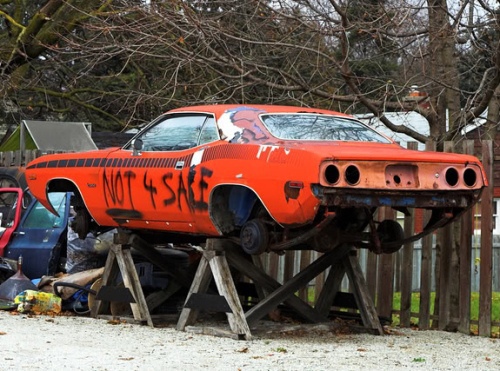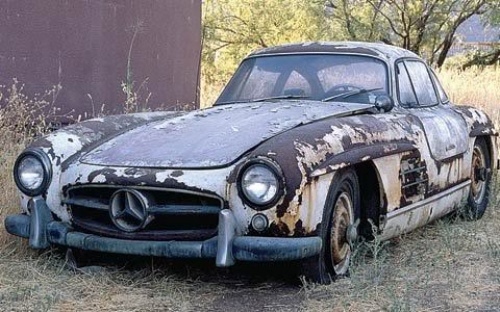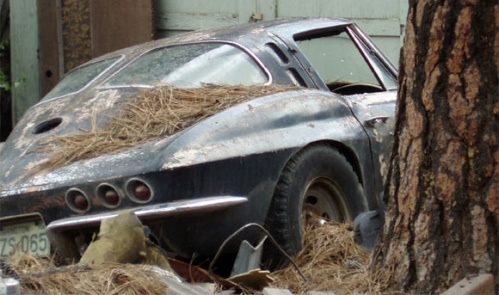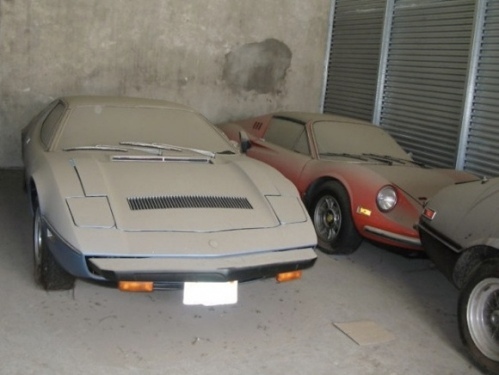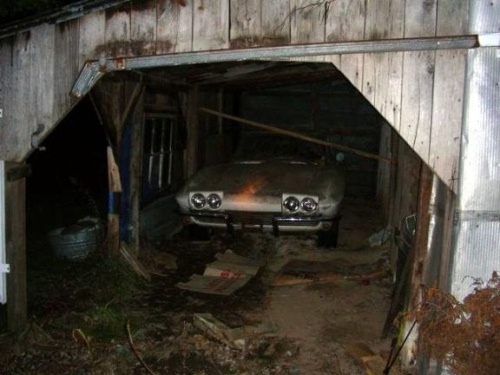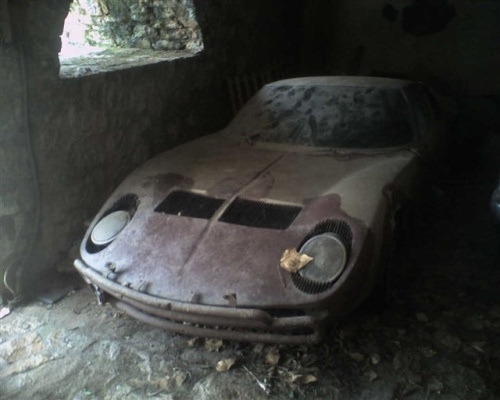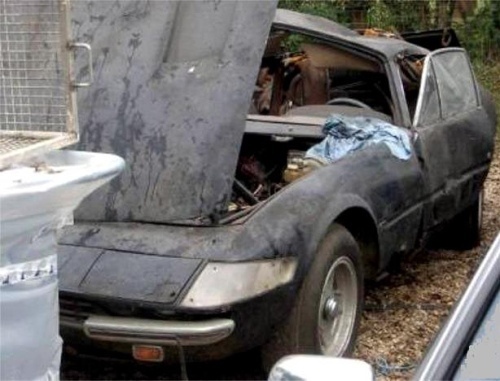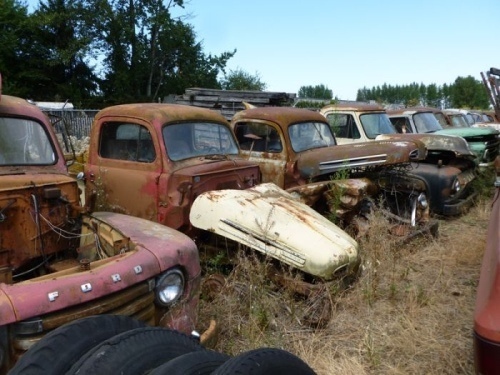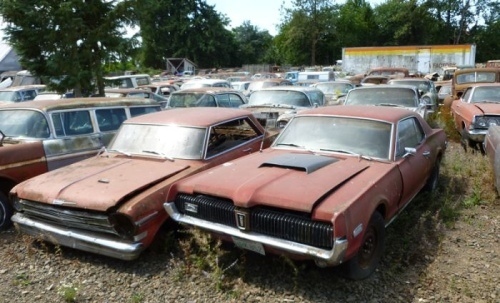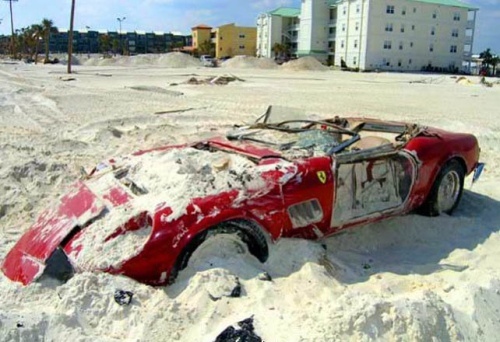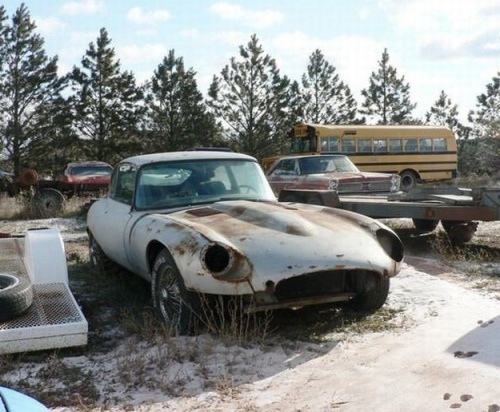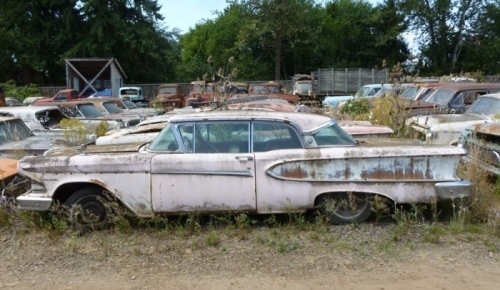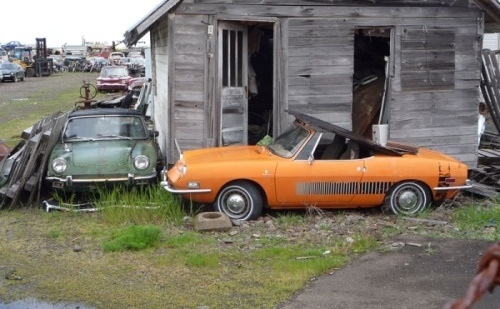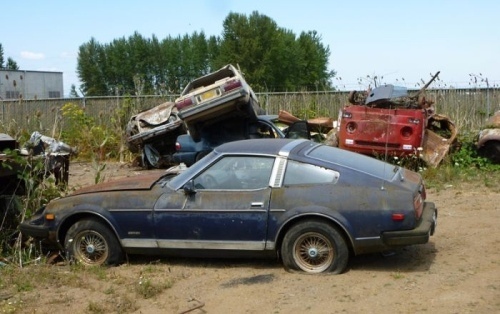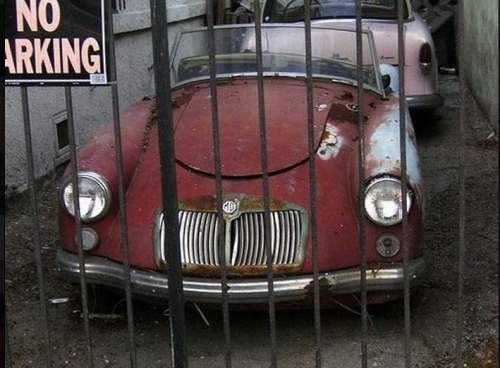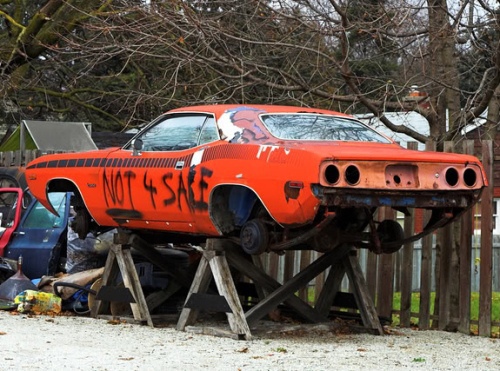
It creates a knot in your stomach. A physical reaction. You are looking at art, at history, at raw speed and power, all left to rot in the silence. It makes no sense. We are programmed to protect value. We hoard, we save, we insure. Yet, here lies a graveyard of automotive royalty. These aren’t just used Hondas. We are talking about the ghosts of the autobahn. The phantom queens of the racetrack.
How does this happen? What kind of chaotic event forces a person to walk away from a machine worth more than a typical house? The answers are darker, stranger, and more twisted than you might think.
This isn’t just a collection of rusty metal. It is a crime scene. It is a mystery waiting to be solved. Some of these beauties would be worth a fortune—an absolute life-changing amount of cash—if they were pulled from the grave and given a second heartbeat.
Let’s rip the cover off this mystery.

The Psychology of the Abandoned
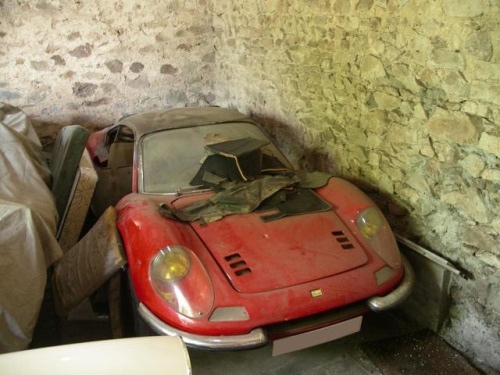
Stop and look at that image. Really look at it. The dust isn’t just dirt; it’s time. It’s measured in years, maybe decades. The silence in that garage is deafening. To understand why a car like this gets left behind, we have to get inside the head of the owner. Or rather, the former owner.
Most people think of car enthusiasts as meticulous obsessives. Guys with toothbrushes scrubbing the lug nuts. But there is a dark side to collecting. It’s the hoarding instinct. It starts with the thrill of the hunt. The purchase. The dopamine hit of owning a legend. But then reality sets in. The parts are rare. The mechanics are expensive. The restoration stalls.
One year becomes five. Five becomes twenty.
Suddenly, the owner is too old, or too broke, or too stubborn to admit defeat. They lock the doors. They tell themselves, “I’ll get to it next summer.” They never do. The car dies a slow death, suffocated by neglect.

The “Flight or Fight” Supercars
There is a more sinister theory that has exploded across internet forums in recent years. You might have heard of the “Supercar Graveyard” in Dubai. Thousands of high-end vehicles—Ferraris, Porsches, Bentleys—left baking in the desert sun at the airport. Why?
Debt.
In certain jurisdictions, unpaid debt isn’t just a civil matter. It’s a criminal offense. You go to prison. If the economy crashes and your real estate deal falls through, you don’t file for bankruptcy and move on. You panic. You drive your Italian masterpiece to the airport, leave the keys in the ignition, and hop on the first flight out of the country. You never look back. You can’t. If you return, you go to jail.
Could some of these cars be the remnants of a life left behind in a hurry? It’s entirely possible. A snapshot of a moment where freedom mattered more than horsepower.

The Barn Find Lottery: Myth vs. Reality
We all dream about it. The “Barn Find.” You’re driving down a back road in rural France or the American Midwest. You see a collapsing shed. You peek inside. There, under a tarp covered in chicken droppings, is a chassis number that makes your heart stop.
It happens. It actually happens.
Remember the Baillon Collection? It was discovered in western France a few years ago. Sixty rare cars, including a Ferrari 250 GT SWB California Spider that had been lost to history. It sat under a stack of old magazines for decades. It sold for over $18 million. $18 million! Just sitting there, rotting.
The cars in these images scream that same potential. Look at the lines on them. These aren’t mass-produced sedans. These are hand-built chariots of the gods.

But why is it so creepy? Because it represents a failure of stewardship. We feel a responsibility to these machines. They have faces. Headlights like eyes. Grilles like mouths. When we see them in this state, it feels like abuse. It feels personal.
It’s amazing how many top marque cars can be seen in this collection, just wasting away.

The Criminal Underworld Theory
Here is where things get really interesting. Let’s put on our conspiracy caps. Why would a government or a bank seize a car and then let it sit until it’s worthless? It happens more often than you think.
Picture a drug cartel bust. The Feds swoop in. They seize the mansion, the cash, the tigers, and the fleet of vintage cars. But then… the legal battle starts. The lawyers get involved. The assets are frozen. Not sold. Frozen.
The car sits in an impound lot. Or a government warehouse. Years pass. The rubber seals dry out. The fuel turns to varnish in the tank. The engine seizes. By the time the legal case is settled, the car is a shell. It’s a victim of bureaucracy.

There are rumors of massive warehouses in Europe and Asia filled with “grey market” vehicles—cars that were imported illegally to avoid taxes, then seized by customs. They can’t be sold because they aren’t road legal. They can’t be exported because of red tape. So they sit. In Purgatory.
Imagine walking through a warehouse of forbidden fruit that you aren’t allowed to taste. Torture. Pure torture.

Nature vs. Machine: The Slow War
Look at the way the rust attacks. It’s organic. It’s like a virus. There is a haunting beauty in the decay, a concept the Japanese call Wabi-sabi—the acceptance of transience and imperfection.
But for a car lover? It’s a horror movie.
When a car is left exposed, nature takes it back. First, the tires go flat, grounding the machine. Then the moisture gets into the electronics. The leather interior—once the skin of a living animal—begins to grow mold. It returns to the earth.

We are looking at a battle that the machine is losing. See that grille? It used to shine in the headlights of oncoming traffic. It used to intimidate. Now it looks like the teeth of a skull.
What’s fascinating is the “Time Capsule” effect. If you were to crack open the glove box of one of these rides, what would you find? A newspaper from 1985? A pack of cigarettes that hasn’t been manufactured in twenty years? A map with borders that no longer exist?

The “Ghost” Investment
There is another angle we haven’t touched on yet. The Eccentric Billionaire. We assume that if you have money, you care about your assets. That is a middle-class mindset.
To the ultra-wealthy, sometimes a car is just… stuff. I’ve read reports of sultans and tycoons who buy entire fleets of custom cars, drive them once, and park them in a damp underground garage. They forget they own them.
It’s not malice. It’s indifference. The ultimate flex isn’t driving a Ferrari; it’s letting a Ferrari rot because you simply can’t be bothered to sell it. It is a level of wealth that is incomprehensible to 99% of the population.

The Restoration Dilemma
So, you find one of these. You negotiate a price. You drag it home. Now what? The dream of restoration is romantic. The reality is a nightmare of finances.
Restoring a car in this condition is forensic archaeology. You aren’t just fixing it; you are reconstructing it. Every bolt is rusted frozen. The wiring harness has been eaten by mice. The engine block might be cracked.
Is it worth it? Financially? Often, no. You might spend $200,000 restoring a car that is worth $150,000 on the market. But that’s not why we do it. We do it to save the soul of the machine.

Look at the curves on this one. You can’t buy that design today. Modern cars are designed by wind tunnels and safety regulations. They all look like eggs. These? These were designed by artists with pencils. They have hips. They have attitude.
Saving one of these is an act of rebellion against the modern, disposable world.

The Nuclear Option
Here is a chilling thought. What if you can’t rescue them?
Following the Fukushima nuclear disaster in Japan, hundreds of cars were left in the exclusion zone. Rare JDM classics. Skylines. Supras. They are sitting there right now, perfectly preserved, but radioactive. You can’t touch them. You can’t export them. They are cursed.
They will sit there for hundreds, maybe thousands of years. A museum of the apocalypse. Are any of the cars in these photos radioactive? Probably not. But the concept is the same. Some things are just… out of reach.

The Mystery of the VIN
Every car has a fingerprint. The VIN (Vehicle Identification Number). If you could walk up to these cars and wipe the grime off the VIN plate, you could tell a story. You could trace it back to the dealer. To the first owner.
Maybe it belonged to a movie star in the 50s. Maybe it was the getaway car in a famous heist. Maybe it was a gift from a father to a son who died in a war, and the father couldn’t bear to look at it, so he walled it up.
Without those numbers, we are just guessing. And that is part of the allure. The mystery is better than the truth.

A Warning to the Future
These images serve as a warning. Nothing lasts. No matter how much chrome you polish, no matter how much horsepower you have under the hood, eventually, the engine stops.
It’s a reminder to drive them. Don’t park your dream car. Don’t save it for a special occasion. Tuesday is a special occasion. Drive it until the wheels fall off. Because if you don’t, this is the alternative. Silence. Dust. Regret.

There is a specific smell to old cars. Oil, gasoline, old carpet, and mustache wax. Even through the screen, looking at these photos, you can almost smell it. It’s the smell of a bygone era.
We are losing these connections to the past. Every time one of these cars is crushed into a cube, we lose a piece of design history. We lose the story of the hands that built it.

So, the next time you pass an old, overgrown garage with the door slightly ajar, take a look. Peer into the darkness. You might just see the glint of chrome. You might find a ghost.
And if you do? Save it. Before it’s too late.
Originally posted 2016-04-26 12:28:00. Republished by Blog Post Promoter
![20130217-150817[1]](https://coolinterestingnews.com/wp-content/uploads/2013/02/20130217-1508171.webp)