The Nightmare in Perugia: When a Student Exchange Turned into a Global Obsession
Perugia, Italy. It looks like a postcard. Think cobblestone streets, ancient archways, and the kind of chocolate that makes you forget your name. It’s a university town. A place for young people to drink wine, fall in love, and study art. But on November 1, 2007, that postcard was set on fire. The fog rolled in, and something dark happened behind the walls of a cottage on Via della Pergola.
This wasn’t just a crime. It became a circus. A global obsession. A battle between American media, the British press, and an Italian prosecutor with a taste for the theatrical. We are talking about the murder of Meredith Kercher and the trial of Amanda Knox.

You think you know this story? Maybe you watched the Netflix documentary. Maybe you remember the headlines screaming “Foxy Knoxy.” But dig deeper. The details are messier than a spilled bowl of pasta. The evidence? Questionable. The motives? Bizarre. Let’s rip this case open and look at the parts that don’t make sense.
The Morning After Halloween
November 1st is a holiday in Italy. The day after Halloween. Everyone is recovering. The town is quiet. But at the cottage shared by four young women, panic was setting in.
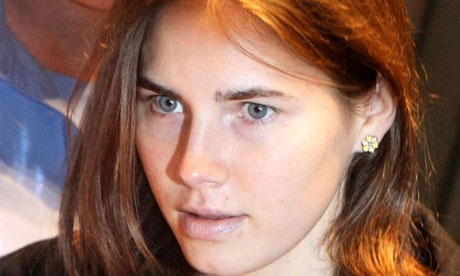
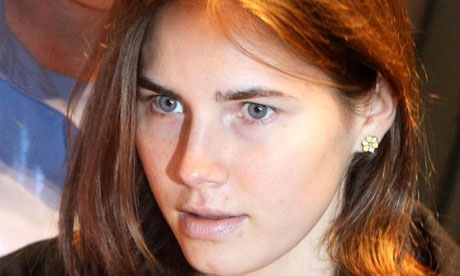
Amanda Knox, a 20-year-old from Seattle, returned to the house she shared with Meredith Kercher. She found the door open. Drops of blood in the sink. The toilet hadn’t been flushed. Weird? Yes. But Amanda thought maybe someone had a nosebleed. She took a shower. She went back to her boyfriend’s house. Raffaele Sollecito. A quiet Italian guy she had only been dating for a week.
When they went back to the cottage later, Meredith’s door was locked. They called the police. They broke down the door.
What they found inside changed everything. Meredith Kercher, a bright, beautiful 21-year-old student from London, was on the floor. Covered by a duvet. Her throat had been slashed. It was a scene of absolute horror. The window was broken. Glass was everywhere.
The Immediate Chaos
Police swarmed the place. But here is where the “CSI” fantasy falls apart. This wasn’t a sterile lab. It was a stampede. Officers walked through the scene without protective booties. Items were moved. The crime scene was contaminated almost instantly. Remember this. It matters later.
Within days, the police had a theory. But it wasn’t about a burglary gone wrong. They looked at Amanda. Why? Because of how she acted.
“Angel Face” with Ice in Her Eyes?
This is where the story shifts from a murder investigation to a character assassination. The Italian police didn’t like Amanda. She didn’t cry enough. She was seen kissing Raffaele outside the house while the police worked inside. She did cartwheels at the police station while waiting to be questioned.
Weird behavior? Sure. Proof of murder? Hardly. Everyone grieves differently. Some people shut down. Some people get hyperactive. But to the detectives, this was a sign. They saw a “she-devil.”
The 53-Hour Interrogation
Imagine this. You are 20 years old. You are in a foreign country. You speak the language okay, but not fluently. You are dragged into a room. No lawyer. No recording device. Just aggressive police officers yelling at you for hours. Days.
They told her she was lying. They hit her on the back of the head. They told her that Raffaele had turned on her. They broke her down.
At 5:45 AM, exhausted and confused, Amanda signed a statement. She implicated her boss, Patrick Lumumba, a local bar owner. She said she was in the house and covered her ears to block out Meredith’s screams.
It was a lie. A hallucination brought on by stress? A forced confession? Lumumba had an ironclad alibi. He was working at his bar all night. He was innocent. But the damage was done. Amanda had admitted to being at the scene. The police had their hook.
The Prosecutor’s Wild Theory: Satanic Rites?
Enter Giuliano Mignini. The prosecutor. This guy is a character straight out of a gothic novel. He didn’t just see a murder. He saw a ritual.
Mignini had a history. He had investigated the “Monster of Florence” case years earlier and was convinced that a satanic sect was behind it. He saw the world through a lens of dark conspiracies and secret orders. When he looked at the murder of Meredith Kercher, he didn’t see a break-in. He saw a sex game gone wrong. A sacrificial slaughter on Halloween night.
His theory? Amanda, Raffaele, and a third man forced Meredith into a drug-fueled orgy. When she refused, they killed her. It sounded insane. But the tabloids ate it up. “FOXY KNOXY’S SEX GAME KILLING.” It sold millions of papers.
The Forgotten Man: Rudy Guede
While the media focused on the American girl and her Italian boyfriend, the police found something actual. Fingerprints. DNA.
They didn’t belong to Amanda. They didn’t belong to Raffaele. They belonged to a local drifter named Rudy Guede.
Guede was known to police. He had been caught breaking into a nursery school a few days earlier, carrying a knife. His bloody handprint was on the wall near Meredith’s body. His DNA was inside the victim. He fled to Germany immediately after the murder.
You would think: “Case closed,” right? They found the guy. He was there. He did it.
But Mignini wouldn’t let go of his theory. He decided that Guede didn’t act alone. He spun a tale that Guede, Knox, and Sollecito—who barely knew Guede—teamed up for this horrific night. It defied logic. Why would a college couple invite a burglar they barely knew to a murder party?
The Magic DNA
The prosecution needed physical evidence to link Amanda and Raffaele to the crime. They didn’t have fingerprints. They didn’t have footprints in the blood (those were Guede’s). So they produced two items.
1. The Bra Clasp: This is the most infamous piece of evidence. Meredith’s bra clasp was found on the floor. The police said it had Raffaele’s DNA on it. Smoking gun? No.
Video footage showed the clasp sitting on the floor for six weeks before it was collected. In that time, people walked over it. Dust settled on it. When they finally picked it up, the forensic officer used dirty gloves. The DNA trace was microscopic. It could have been transferred from a door handle, a handshake, anything. It was textbook contamination.
2. The Kitchen Knife: Police raided Raffaele’s apartment. They found a large kitchen knife. They claimed it had Amanda’s DNA on the handle (she cooked there, so… obviously) and Meredith’s DNA on the blade.
But the “DNA” on the blade was so small it shouldn’t have even registered. It was “Low Copy Number” DNA. Independent experts later looked at the data and said it was just noise. Static. There was no blood on the knife. It didn’t match the wounds. It was a square peg smashed into a round hole.
The Trial of the Century
The trial took place in 2009. It was a spectacle. Mignini painted Amanda as a devil. He focused on her sex life. He read her diaries out loud. He made the jury hate her.
The defense tried to use science. They pointed to the contamination. They pointed to Rudy Guede, who had already been convicted in a fast-track trial. They asked, “Why are we here if you already have the killer?”
It didn’t matter. The jury, not sequestered and free to read the tabloids every night, found them guilty. Amanda got 26 years. Raffaele got 25.
The world gasped. In America, people were furious. In the UK, people nodded, believing the tabloids. In Italy, it was a national drama.
The Rollercoaster: Appeals and Acquittals
This is where the story gets exhausting. You can’t make this up.
2011: The First Appeal. Two independent experts reviewed the DNA evidence. They tore it apart. They called the police work a disaster. They said the bra clasp evidence was useless and the knife DNA didn’t exist. The jury acquitted them. Amanda and Raffaele were free. Amanda flew home to Seattle, crying on the tarmac.
2013: The Reversal. Italy’s highest court said, “Not so fast.” They threw out the acquittal. They ordered a new trial. Amanda stayed in the US, refusing to go back. Who could blame her?
2014: Guilty Again. The new court, ignoring the forensic disaster, found them guilty again. It felt like a nightmare loop.
2015: The Final Word. Finally, the Supreme Court of Cassation in Rome put an end to it. They exonerated Amanda and Raffaele completely. Not just “not guilty due to lack of evidence,” but a definitive statement that they did not commit the crime. The judges slammed the investigation, citing “stunning flaws” and a lack of logic.
Rudy Guede remained the only person convicted for the murder of Meredith Kercher.
Deep Dive: Why Did This Happen?
Why did the system fail so hard? Why did they chase a student for eight years while the real killer sat in jail?
1. The “Face” of Evil: Humans love a villain. Rudy Guede was a drifter. A petty thief. He was boring. Amanda Knox was pretty, American, and “weird.” She made for good TV. The narrative was too juicy to give up.
2. Cultural Clash: The Italian prosecution saw Amanda’s sexual freedom as suspicious. In 2007 Italy, a girl who brought boys home or bought lingerie was judged harshly. They equated promiscuity with violence. It was a moral panic disguised as a murder trial.
3. Saving Face: Once the police announced they had cracked the case in the first week, they couldn’t back down. To admit they were wrong would be a humiliation. They doubled down. They twisted facts to fit the conclusion they had already announced.
Modern Theories & Internet Sleuths
Even today, forums like Reddit and Websleuths burn with arguments. There is a camp of “Guilters” who still believe Amanda did it. They analyze her facial expressions in old videos. They obsess over the bathroom setup.
But the modern consensus leans heavily on the evidence. Or the lack of it. The “Double DNA” knife theory has been debunked by nearly every reputable forensic scientist in the world. The timeline doesn’t work. The phone records place Amanda and Raffaele at his apartment.
Then there is the Guede connection. Guede was released from prison in 2021 after serving only 13 years of a 16-year sentence (reduced from 30). He gave interviews. He still claims he is innocent, or that Amanda was there. But he is a proven liar. He told a friend in a Skype chat while on the run that Amanda had nothing to do with it, before changing his story to get a lighter sentence.
The Victim We Missed
In all this noise, Meredith Kercher often fades into the background. She shouldn’t. She was funny. She was smart. She loved Italy and was excited to be there. Her family has handled this nightmare with incredible dignity. While the cameras chased Amanda, the Kerchers quietly mourned a daughter who was stolen from them for no reason other than being home on the wrong night.
What If?
What if Amanda had gone out that night? What if the police had worn gloves? What if the prosecutor had been anyone other than Mignini?
History turns on these small hinges. If the forensics had been done right, Guede would have been identified in 48 hours. Amanda would have been just a witness. She would have finished her degree, gone home, and lived a normal life. Instead, she became a reluctant celebrity, a symbol of injustice, and a woman defined by a crime she didn’t commit.
The Amanda Knox saga is a warning. It warns us about the danger of rushing to judgment. It warns us about the power of the media to warp reality. And it reminds us that in the real world, unlike in mystery novels, the detectives don’t always get it right.
Amanda is now a mother, an author, and an advocate for the wrongfully convicted. She survived the Italian prison system and the global court of public opinion. But the shadow of Perugia never really goes away. It hangs over the cobblestones, a ghost story that is all too real.
Originally posted 2016-03-16 12:27:55. Republished by Blog Post Promoter
![The-Story-of-Amanda-Knox-Murder-of-Meredith-Kercher[1]](https://coolinterestingnews.com/wp-content/uploads/2012/07/the-story-of-amanda-knox-murder-of-meredith-kercher1.webp)