ANALYSIS: The Silent Invasion – Why Fleets Are Obsolete
Look up. What do you see? Stars? Empty blackness? Or are you waiting for the fire?
Ever since H.G. Wells dropped the absolute hammer that was The War of the Worlds back in 1898, we have been obsessed. Obsessed with the idea of tripods. Giant saucers. Laser beams turning cities to ash. From Independence Day to Halo, our pop culture has trained us to look for a physical enemy. We expect a armada. We expect noise.
But we are wrong.
The esteemed, late astrophysicist Stephen Hawking warned us. He told us to keep our heads down. He speculated that space invaders might come to conquer, much like Europeans arriving in the Americas. It didn’t end well for the locals. But here is the twist that modern theorists are starting to whisper about in the dark corners of the internet.
What if the aliens aren’t coming in ships? What if they are already here, traveling at the speed of light?
The Light-Speed Kill Switch
Imagine you want to destroy an anthill in another country. Do you walk there? Do you spend the money to build a plane, fly over, and drop a rock on it? No. That’s a waste of energy. Space is big. It is mind-numbingly, stupidly big. Moving physical objects—like massive warships—across light-years requires energy levels that border on the impossible.
So, how do you attack?
You send a signal.
In a fascinating breakdown on Discovery, contributor George Dvorsky asked the hard questions. He sat down with SETI (Search for Extraterrestrial Intelligence) scientists and asked: Could a radio transmission carry a weapon? Could a simple “Hello” from the stars actually be a digital virus designed to brick our global infrastructure?
The scientists shrugged. They said the odds were “pretty low.”
But they didn’t say zero. And that’s where the nightmare begins.
They admitted it was “not impossible.” In the world of the unknown, “not impossible” is basically a smoking gun. If the laws of physics allow it, someone, somewhere, has probably tried it.
Arthur C. Clarke and the Edge of Possibility
We have to look at this through the lens of Arthur C. Clarke. The man wasn’t just a sci-fi writer; he was a prophet of future tech. One of his three laws of prediction states: “When a distinguished but elderly scientist states that something is possible, he is almost certainly right. When he states that something is impossible, he is very probably wrong.”
Science is conservative. It likes to say “no” until it is forced to say “yes.”
So when experts say a cyber-invasion from the stars is unlikely, we need to take that with a massive grain of salt. Speculation about alien cyberwars takes gigantic leaps in logic, sure. It pushes the boundary of what seems plausible today. But fifty years ago, the internet was impossible. One hundred years ago, going to the moon was fantasy.
The “Trojan Horse” Signal
Let’s play a game of “What If.”
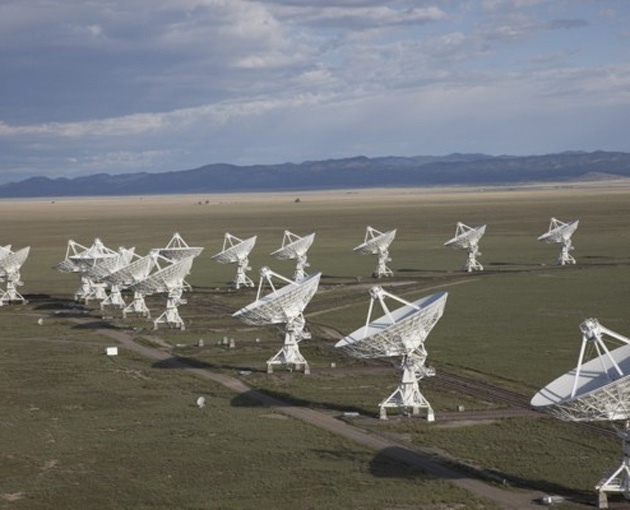
Scenario: We receive a signal. It’s a string of prime numbers. Patterns. It’s undeniable proof of intelligent life. The world celebrates. We throw parades. We build massive receiver dishes to capture the rest of the message.
The message contains code. Algorithms. Blueprints.
Curiosity is our defining human trait. It is also our fatal flaw. We wouldn’t just listen to the code; we would run it. We would want to know what the “gift” does. Maybe it promises a cure for cancer. Maybe it promises free energy. So, we load it into an isolated supercomputer. We think we are safe because we “air-gapped” the machine (disconnected it from the internet).
But this is alien tech. We are playing with fire while covered in gasoline.
This is the “Trojan Horse” theory. The code executes. It rewrites itself. It finds hardware flaws we didn’t even know existed. It jumps the air gap—maybe by manipulating the fan speeds to create audio signals, or fluctuations in the power grid. Suddenly, it’s out. It’s on the web.
It doesn’t need lasers. It just turns off the power grid. It scrambles banking data. It launches our own missiles while we watch, helpless. They defeat us without ever leaving their home planet.
The Compatibility Paradox: Why It Might Fail
Hold on. Let’s pump the brakes and look at the counter-argument. This is where the skeptics have a solid point.
For an alien virus to work, the aliens would need an intimate, granular knowledge of our tech. I’m talking about knowing how Windows handles memory allocation or how a Linux kernel operates.
That is no small trick.
Imagine you travel back in time to Ancient Rome. You hand Julius Caesar a USB drive containing the best military strategy in history. Can he use it? No. He doesn’t have a computer. He doesn’t have electricity. He doesn’t even know what plastic is. The data is useless because the interface is incompatible.
Unless the aliens can teleport one of our MacBooks to their home planet to reverse-engineer it, how would they write a virus for a chip architecture they have never seen? Our computers use binary—zeros and ones. Do theirs? Maybe they use quantum computing based on the spin of subatomic particles. Maybe they use biological computing using fungal networks.
However, there is a terrifying counter to this counter-argument. Math.
Math is the universal language. Logic is logic, everywhere in the universe. If a civilization is advanced enough to send a signal across the galaxy, they might not need to know we run Windows 11. They might send a “seed” AI. A small, simple program designed to learn. It arrives, analyzes our primitive systems, learns our language, and *then* writes the virus itself. It adapts. It evolves.
The 90 Light-Year Bubble: Who Is Watching?
Paranoia is fun, but physics is the law. Who could actually be targeting us right now?
The reality is, our “noise” hasn’t traveled very far. We have been leaking radio waves and TV signals into space for less than a century. The first major broadcast strong enough to really punch through the atmosphere happened around the 1936 Berlin Olympics. That means our “technological bubble” is only about radius of 90 light-years.
Space is vast. In the grand scheme of the Milky Way galaxy, 90 light-years is nothing. It’s a speck of dust on a beach.
Only civilizations orbiting stars within that tiny bubble would even suspect we have a SETI program. They are the only ones who know we have electronics. To everyone else further out? We are just silent, wet rock orbiting a yellow sun. We look like moss. Uninteresting. Primitive.
So, if an attack comes, it is coming from our neighbors.
Deep Dive: The “Dark Forest” Theory
This brings us to one of the most chilling concepts in modern sci-fi and philosophy: The Dark Forest Theory. Popularized by author Liu Cixin, this theory suggests that the universe is full of life, but everyone is hiding.
Why?
Because every civilization is a hunter. If you reveal your location, you die. Resources are finite. If a civilization sees another one rising up, the safest move—the *only* logical move—is to wipe them out before they become a threat. You don’t ask questions. You don’t make friends. You shoot first.
In this scenario, our radio broadcasts (like I Love Lucy and our military radar) are us screaming in a dark forest full of wolves. “Here we are! We are here!”
If the Dark Forest theory holds water, then the “virus signal” makes perfect sense. An advanced civilization hears us. They don’t want to risk sending a fleet (which reveals *their* location). So they send a “cleanup” signal. A data-bomb. It suppresses us. It knocks us back to the Stone Age. Threat neutralized. Their hands stay clean.
The “Berserker” Probe Scenario
There is another possibility that fits between the “Fleet” and the “Virus.” The Von Neumann Probe.
This is a self-replicating machine. Imagine a robot ship that flies to a star system, mines some asteroids, and builds two copies of itself. Those two fly to two more stars and build four. Then eight. Then sixteen.
Exponential growth is terrifying. Within a few million years—a blink of an eye in cosmic time—these probes would infest the entire galaxy.
Maybe the signal we receive isn’t a virus for our computers. Maybe it’s a wakeup call for a probe that has been burying in our Moon for a million years, waiting for us to invent radio. We turn on the radio, the probe wakes up and says, “Oh, the meat-bags are getting too smart. Time to reset the simulation.”
Why Would They Even Bother?
This is the ultimate question. Why invade? Why destroy?
Hollywood says: Water. Gold. Slaves.
Science says: Nonsense.
If you can travel between stars, you don’t need our water. Comets are made of ice; they are everywhere and nobody is guarding them. You don’t need our gold; you can mine asteroids that are solid platinum. You don’t need slaves; you have robots and AI that are infinitely more efficient than humans who need sleep and sandwiches.
So, the only reasons to attack Earth are ideological or preemptive.
1. Fear (Preemptive Strike)
As mentioned with the Dark Forest theory, they might kill us simply because we *might* become dangerous in 1,000 years. It’s weeding the garden.
2. Religion/Ideology
Maybe they are crusaders. Maybe their AI god demands that all biological life be converted into digital data. We can’t understand their motivation any more than an ant understands why a highway is being built over its hill.
3. The Zoo Hypothesis Gone Wrong
Maybe we are an experiment. And maybe the experiment is over. The scientists are done collecting data, so they are sterilizing the petri dish.
The AI Singularity: Our Best Defense?
Here is a modern twist to leave you thinking.
We are currently on the verge of creating our own Artificial General Intelligence (AGI). Computers that can think, create, and defend themselves.
If an alien signal hits us in 20 years, it might not find defenseless humans. It might find our own AI. Imagine an alien virus entering the internet, only to run into an Earth-born AI that views the web as its territory. A digital war between an alien intelligence and a human-made intelligence, fought in nanoseconds across our servers, while we go about our day completely unaware.
We might be the bystanders in a war for our own planet.
Conclusion: The Silence is Loud
The fact remains: We are shouting into the void. We are sending maps to our front door. We are beaming out our encyclopedias, our biology, and our weaknesses.
Stephen Hawking was right to be worried. If we receive a message from the stars, the most dangerous thing we could possibly do is read it.
But we will. We absolutely will. Because we are human, and we just can’t help ourselves.
So, keep watching the skies. But maybe, just maybe, keep an eye on your screen, too.
Originally posted 2013-03-23 09:28:54. Republished by Blog Post Promoter