The Extinction Paradox: Are We Too Successful to Survive?
We stand at the peak of creation. Or so we tell ourselves.
We build towers that scrape the heavens. We whisper to each other across oceans in an instant. Our machines think, our probes touch distant worlds, and we have bent the very forces of nature to our will. We are the undisputed masters of this planet. Nothing can touch us.
Right?
This feeling of invincibility is baked into our DNA. It’s the story we’ve told ourselves since we first harnessed fire and painted our triumphs on cave walls. When we think of apocalypse, of a world-ending catastrophe, we picture ourselves as the survivors. The scrappy band of heroes rebuilding from the ashes. We take it for granted that our species, with all its genius and technology, would find a way to go on.
But what if that’s the single biggest lie we’ve ever told ourselves?
What if our dominance isn’t a shield, but a target? A new, bone-chilling report from scientists has ripped the cover off our comfortable assumptions, and what it reveals is a truth so terrifying it will change the way you see humanity’s place in the universe forever. The evidence suggests we’re no more likely to survive a mass extinction than any other animal. In fact, our very success might be what seals our doom.
A Warning Written in Stone
The clue wasn’t found in a futuristic computer model or a top-secret government file. It was found in the dirt. In the fossil record. Scientists from the University of Leeds went digging into the deep past, looking at one of the most violent chapters in Earth’s history: the boundary between the Triassic and Jurassic periods.
This wasn’t a single bad day. It was a nightmare that stretched for thousands of years. It was an extinction event so profound it makes the dinosaur-killer look like a firecracker.
Deep Dive: The Hellscape of the End-Triassic Extinction
Forget the single, dramatic asteroid strike. The end of the Triassic period was a slow, grinding death. A planetary execution. The supercontinent of Pangaea was literally tearing itself apart at the seams. For an unimaginable length of time, massive fissures in the Earth’s crust bled lava. This wasn’t just a few volcanoes. This was a sustained, planet-wide eruption known as the Central Atlantic Magmatic Province (CAMP).
Rivers of molten rock the size of entire countries poured across the land. The air grew thick with choking carbon dioxide and sulfur. The oceans turned to acid, dissolving the shells of the creatures that lived within them. The sky was a permanent, toxic haze. The climate swung violently between scorching heat from greenhouse gases and sudden, deep freezes as dust and ash blocked out the sun.
It was, for all intents and purposes, hell on Earth. And in this brutal world, one group of animals reigned supreme.
The Rulers Who Vanished
They weren’t the dinosaurs. Not yet.
The dominant land animals were a diverse and terrifying group of crocodile-like reptiles called crurotarsans. They were everywhere. Some were hulking, armored herbivores. Others were fast, bipedal predators. Some, like the phytosaurs, looked almost identical to modern crocodiles and dominated the rivers and swamps across the entire globe.
They were geographically widespread. They were diverse. They were the undisputed kings. By every metric we use today, they were a “successful” group of animals. They had conquered the planet.
And the End-Triassic extinction wiped them out. Almost all of them. Gone.
Dr. Alex Dunhill, one of the researchers on the Leeds study, put it bluntly: “Many groups of crocodile-like animals become extinct after the mass extinction event at the end of the Triassic era, despite being really diverse and widespread beforehand.”
Their dominance meant nothing. Their numbers meant nothing. When the planet decided it was time for a reset, they were erased.
The Scrappy Survivors
So who made it through? Who inherited this smoldering, poisoned world?
The dinosaurs.
At the time, dinosaurs were the underdogs. They were “comparatively rare and not as widespread,” according to Dunhill. They weren’t the kings. They were a minor group, living in the shadows of the mighty crurotarsans. But they survived. Something about their biology—perhaps a more efficient respiratory system for the low-oxygen air, or their warm-blooded metabolism—gave them a razor-thin edge.
They didn’t survive because they were the strongest. They survived because the strongest died. They passed through the eye of the needle and emerged into a world emptied of their competition. The stage was set for them to rule for the next 150 million years.
Think about that. The most successful, widespread animals vanished. The rarer, more specialized ones took over. This isn’t a fluke. It’s a pattern.
When the Sky Came Crashing Down
Flash forward 150 million years. The dinosaurs are now the undisputed titans of Earth. From the colossal Tyrannosaurus Rex to the continent-spanning herds of titanosaurs, they are the definition of planetary dominance. They are bigger, stronger, and more widespread than anything that came before.
They must have felt invincible, too.
Then, another bad day came. This one was faster.
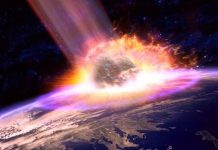
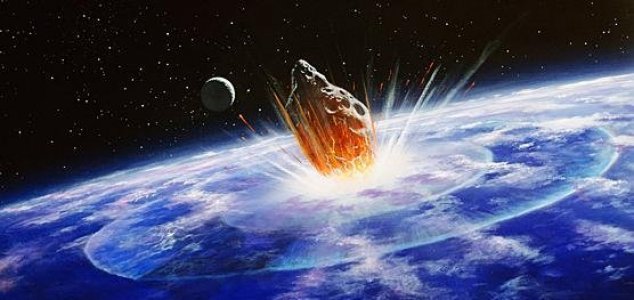
A six-mile-wide chunk of rock, screaming through space faster than a bullet, slammed into what is now the Yucatán Peninsula. The impact was more powerful than every nuclear weapon on Earth detonating at once. A flash of light brighter than the sun. A shockwave that flattened forests thousands of miles away. The impact kicked trillions of tons of superheated rock and dust into the atmosphere, which rained back down as fiery glass, igniting global firestorms.
The sun was blotted out. Not for a day, or a week, but for years. The planet plunged into a dark, freezing winter. Plants died. The herbivores that ate them starved. The carnivores that ate the herbivores starved next. The entire food chain collapsed from the bottom up.
The mighty dinosaurs, the very symbols of power and success, were annihilated. Their size, their strength, their global reign… it was all a liability. There was nowhere to hide.
So, who survived this apocalypse? Who inherited the ashes of the dinosaur’s world?
Again, it was the meek. The underdogs. Tiny, shrew-like mammals. They spent their lives hiding in burrows, scurrying in the shadows, eating insects and seeds. They were small enough to survive on scraps. Their underground homes protected them from the firestorm and the worst of the cold. They were not the strongest. They were just small enough and adaptable enough to weather the storm.
And from those terrified little fluffballs, a new dynasty would eventually rise. Us.
The Sixth Extinction: A Catastrophe of Our Own Making
Twice, the planet has shown us the same pattern. The most dominant, successful, and widespread group is wiped from the face of the Earth. A smaller, less significant group survives the cataclysm and inherits a vacant world.
Now, look around you. Who is the dominant, successful, widespread group today?
We are. And according to scientists like Dunhill, we are currently causing the planet’s Sixth Mass Extinction. “These results shed light on the likely outcome of the current biodiversity crisis caused by human activity,” he warns. “It appears a human-driven sixth mass extinction will affect all organisms, not just currently endangered and geographically restricted species.”
The chilling implication is that the rules still apply. We are not exempt. The very crisis we are creating could be the one that consumes us.
We are the new dinosaurs. We are the new crurotarsans. We are the big, obvious target.
What’s Our Asteroid? Exploring Humanity’s Apocalypse Triggers
The dinosaurs never saw their doom coming. We, on the other hand, can see threats everywhere. But are we looking in the right places? The thing that gets us might not be the obvious, explosive end.
The Slow Burn of Climate Collapse: This is the modern version of the End-Triassic event. Not a single impact, but a slow, grinding change. We are pumping the atmosphere full of CO2, acidifying the oceans, and changing the climate at a rate the planet hasn’t seen in millions of years. This isn’t a future problem. It’s happening now. Superstorms, mega-droughts, crop failures, rising seas… it’s a war of a thousand cuts that could unravel our civilization piece by piece.
The Super-Plague: We got a taste of this recently, and it was a wake-up call. Our globalized world of interconnected travel is the perfect breeding ground for a pandemic. A virus with a longer incubation period and a higher fatality rate could circle the globe before we even knew what hit us, bringing society to a grinding halt.
The Silent Killer from Space: Forget the asteroid. What about a Carrington Event? In 1859, a massive solar flare slammed into Earth. It was harmless back then, just setting telegraph offices on fire. If a flare of that magnitude hit us today, it would instantly fry satellites and overload power grids worldwide. No electricity. No internet. No communications. No pumps for water or fuel. No banking. No supply chains. Civilization would be thrown back to the 1800s in the blink of an eye, but with 8 billion hungry people who don’t know how to farm.
The Earth’s Fury: Beneath our feet, supervolcanoes like Yellowstone are ticking time bombs. An eruption would be a true extinction-level event, blanketing entire continents in ash, triggering a volcanic winter that would last for decades, and causing a total collapse of global agriculture. It’s not a matter of if, but when.
The Paradox: Our Greatest Strengths Are Our Deadliest Weaknesses
The truly terrifying part isn’t the list of threats. It’s the realization that the very things that make us feel safe are what make us so incredibly fragile.
Our global, interconnected civilization is a marvel of engineering. It’s also a house of cards. A single point of failure can trigger a cascading collapse that brings the whole thing down. The dinosaurs were spread out, living in countless separate ecosystems. We have built a single, global ecosystem. A monoculture. When a blight hits a monoculture crop, the entire harvest is lost. We are the harvest.
Our reliance on technology is our Achilles’ heel. We can’t survive without it. We need the grid for light, heat, water, and food. We need the internet for logistics, finance, and information. We have forgotten the basic skills of survival. We have outsourced our existence to a complex, fragile system that could be shattered by a single solar flare or a well-placed cyberattack.
Our success has made us complacent. We believe we can engineer our way out of any problem. But you can’t build a machine to stop a supervolcano. You can’t write a line of code that will stop a global famine when the power grid goes down for good.
The Final Question No One Wants to Ask
Could we actually survive? Not as a civilization, but as a species?
The popular fantasy is the billionaire’s bunker. A few chosen elites ride out the apocalypse in a high-tech hole in the ground, emerging later to “rebuild.” But this is a myth. A handful of survivors, no matter how wealthy, can’t restart a technological society. You lose the specialized knowledge. You lose the industrial base. Most critically, you lose the genetic diversity required to sustain a healthy population for generations.
The pattern from the fossil record is clear. When the dominant species falls, it falls hard. It vanishes completely.
The lesson written in stone, from the time of the crurotarsans to the age of the dinosaurs, is a brutal one. Being widespread doesn’t save you. Being powerful doesn’t save you. Being the master of your world doesn’t save you.
Maybe, just maybe, the real question isn’t *if* we’ll survive the next great extinction. The question is, when we are gone, what small, scurrying creature, hiding in the ruins of our cities, will inherit the Earth?