Home Weird World Science Breast milk can fight antibiotic resistance

Breast milk can fight antibiotic resistance

0
55

The Superbug Apocalypse is Coming. Is the Cure Hiding in Breast Milk?

Forget the zombies. Forget the asteroids. The real apocalypse isn’t coming with a bang. It’s a whisper. A silent, invisible invasion happening inside our own bodies. An enemy we created, we nurtured, and we can no longer control.

I’m talking about the end of antibiotics.

Sounds like a B-movie plot, doesn’t it? A wild conspiracy theory cooked up in the deep corners of the internet. But it’s not. It is the single greatest threat to modern medicine, and it is happening right now, under our noses. The golden age of medicine, the era where a simple pill could cure a deadly infection, is sputtering to a close. And what comes next is a world thrown back into the medical dark ages.

A world where a scraped knee could lead to an amputation. Where routine surgeries like a hip replacement become a life-or-death gamble. Where chemotherapy is impossible, organ transplants are a fantasy, and giving birth is once again one of the most dangerous things a woman can do.

This isn’t a distant future. It’s a mathematical certainty. Official reports, the ones that don’t make the front page news, tell a terrifying story. Right now, over 50,000 people in the US and Europe die from antibiotic-resistant infections every single year. A quiet, steady stream of casualties. But the projections? By 2050, that number is expected to explode to over 10 million deaths annually. That’s more than cancer. More than car accidents. A silent pandemic that will dwarf anything we’ve ever seen.

But what if the answer isn’t in some multi-billion dollar corporate lab? What if the solution has been with us all along, hidden in the most fundamental, most natural substance on Earth?

An Ancient Code Hidden in Plain Sight

We look to science for miracles. We expect sterile labs, glowing beakers, and computer-generated molecules to save us. We put our faith in pharmaceutical giants, with their endless budgets and armies of researchers. But maybe we’ve been looking in the wrong place.

Maybe we should have been looking at the source of life itself.

Think about it. For millions of years, mammals have been bringing new life into a world teeming with hostile bacteria and viruses. A newborn is essentially a sterile being, thrown into a germ-filled warzone with a completely undeveloped immune system. By all logic, they shouldn’t stand a chance. Yet, they do. They survive. They thrive.

How? The answer is breast milk. Not just food, but a complex, living fluid. It’s nature’s first vaccine, first antibiotic, and first super-food all rolled into one. It’s a biological datastream, passed from mother to child, containing millions of years of evolutionary wisdom on how to survive. An ancient code for life.

And deep within that code, scientists have found something extraordinary. A single protein. A microscopic warrior that could hold the key to defeating the superbugs and saving us from our own medical arrogance.

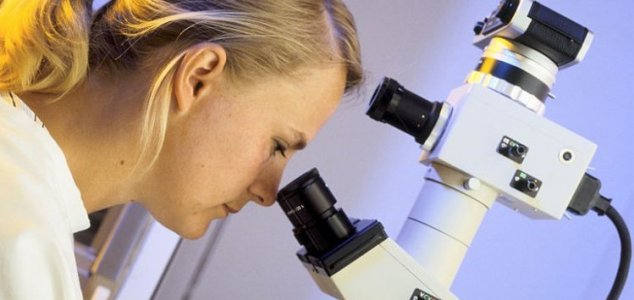
Breast milk under microscope

Deep Dive: Meet Lactoferrin, The Microscopic Bodyguard

The hero of this story has a name: lactoferrin. It doesn’t sound very exciting, does it? But this protein is one of the most powerful and versatile agents in the human body.

Its primary job in a newborn is to be a bodyguard. Found in high concentrations in a mother’s first milk, called colostrum, lactoferrin performs a kind of biological martial arts on invading pathogens. Its main trick is an obsession with iron.

You see, most of the nasty bacteria that want to cause an infection, from E. coli to Staphylococcus, are iron junkies. They absolutely need iron to multiply and to build the slimy “biofilms” that let them cling to surfaces inside our bodies. They need it to survive.

Lactoferrin knows this. So what does it do? It swoops in and snatches up all the free-floating iron atoms, locking them away. It essentially starves the bacteria to death before they can even get a foothold. It’s a simple, elegant, and brutally effective strategy. No iron, no infection.

But that’s not all. It gets weirder. Lactoferrin can also directly attack the outer membranes of certain bacteria, punching holes in their cellular walls and causing them to literally fall apart. It’s an antiviral, an antifungal, and an anti-inflammatory all in one. It’s a biological Swiss Army knife, perfected by nature over eons.

So, the question that should be screaming in your mind right now is: if we have this natural-born killer protein, why are we losing the war against bacteria so badly?

Rogues’ Gallery: The Superbugs Are Winning

To understand the stakes, you need to meet the enemy. These aren’t your garden-variety germs. These are the supervillains of the microbial world. Mutants. Killers.

  • MRSA (Methicillin-resistant Staphylococcus aureus): The infamous flesh-eating bacteria. Once confined to hospitals, it now lurks in gyms, schools, and locker rooms. It shrugs off some of our most powerful antibiotics.
  • CRE (Carbapenem-resistant Enterobacteriaceae): The “nightmare bacteria.” Found in the gut, it’s resistant to nearly all last-resort antibiotics. When it gets into the bloodstream, it can have a mortality rate of up to 50%.
  • Resistant Gonorrhea: That’s right. An STD is now a superbug. Strains have emerged that are untreatable, raising the terrifying prospect of a common infection becoming a lifelong, debilitating disease.

These monsters weren’t born. They were made. Every time we take an antibiotic, we’re essentially carpet-bombing our internal ecosystem. Most of the bacteria die, but a few, through random genetic mutation, survive. They are the tough ones. The resistant ones. And with their competition wiped out, they are free to multiply, passing on their resistance genes to the next generation. We’ve been running a global, decades-long evolutionary experiment, accidentally breeding the perfect microscopic killers.

And they are outsmarting us at every turn.

The Conspiracy: Is Big Pharma Hiding the Cure?

This is where the story takes a dark turn. A recent study, one that barely made a ripple in the mainstream media, took a closer look at that miracle protein, lactoferrin. Scientists at the UK’s National Physical Laboratory and University College London weren’t just content to know *that* it worked. They wanted to know *how*.

They discovered that a specific fragment of the lactoferrin protein, a tiny piece of the larger molecule, was responsible for the bacteria-killing action. And this tiny fragment worked at lightning speed, punching through bacterial defenses in a fraction of a second.

So they had an idea. An absolutely brilliant, world-changing idea.

What if they could turn this natural protein fragment into a weapon? What if they could use it not just to kill bacteria on its own, but to deliver our existing, failing antibiotics directly to the source?

Think about it. You can’t just synthesize a natural protein and sell it for a thousand dollars a pill. Breast milk is… well, it’s everywhere. It’s free. Where’s the profit in that? A novel, synthetic drug that you can patent for 20 years? Now you’re talking. The business model of modern medicine isn’t always about finding the best cure; it’s about finding the most profitable one.

Is it so crazy to think that a simple, natural solution to antibiotic resistance might be ignored, or even suppressed, because it doesn’t fit the business model? We are facing a global health catastrophe, and the solutions might be locked away not by scientific difficulty, but by corporate greed. It’s a question you have to ask.

Inside the Lab: Hacking a Biological Super-Weapon

Let’s go back to that UK lab. What those scientists did next is straight out of science fiction.

They figured out how to re-engineer that lactoferrin fragment. They engineered it to self-assemble into a tiny, hollow sphere. A microscopic capsule. A biological drone.

The genius of this design is two-fold. First, this “capsule” retains the natural bacteria-killing ability of the original protein. It’s like an armored vehicle that can also shoot. Second, and this is the game-changer, they could load this capsule up with our existing antibiotics.

The Trojan Horse Strategy

Here’s how the attack works. The lactoferrin capsules are deployed into the body. The superbugs, which have evolved defenses against our drugs, don’t recognize the protein capsule as a threat. To them, it just looks like a piece of food.

The capsule latches onto the bacteria’s outer wall. It does what it does best: it punches a hole straight through the membrane. And then, like a Trojan Horse, it dumps its payload—a concentrated dose of antibiotic—directly inside the bug. The bacteria has no time to activate its defense mechanisms. It’s killed from the inside out. Instantly.

This method is so precise and so effective that it could make antibiotics that were previously useless against superbugs effective again. It’s not a new drug; it’s a whole new way of delivering drugs. It’s a hack. A cheat code in the war against infection.

As England’s chief medical officer Dame Sally Davies stated, “We need on average 10 new antibiotics every decade. If others do not work with us, it’s not something we can sort on our own.” She’s right. It is a global problem. But the answer might not be in another new pill.

Dame Sally also said, “The science is crackable. It’s doable.” And this lactoferrin breakthrough proves it. But that was years ago. Where is this technology now? Why isn’t it in every hospital? Why are people still dying?

What If It’s Already Too Late?

This is the question that keeps me up at night. The lactoferrin capsule is a brilliant discovery. A beacon of hope. But the superbugs are evolving faster than our bureaucracy and our corporate-funded research models can keep up. Every day we delay, they get stronger.

We are in an arms race against an enemy that can produce a new generation in 20 minutes. They don’t hold board meetings or apply for grants. They just evolve. Relentlessly.

The optimistic view is that technologies like this will arrive just in the nick of time, saving us from the brink. But the realistic view is much grimmer. We’re running out of road. Our last-line-of-defense antibiotics are already failing. The pipeline for new ones is almost completely dry because they aren’t as profitable as lifelong medications for chronic diseases.

We have the knowledge. We have clues from nature that point the way. But do we have the will to act before the first major city has an outbreak of untreatable plague? Before the death toll starts to climb from millions to tens of millions?

The Battle for Our Future: Is Nature the Ultimate Arsenal?

The story of lactoferrin isn’t just about a single protein. It’s a massive wake-up call. It’s a reminder that nature is, and always has been, the most advanced laboratory in the universe.

For every problem, every disease, there is likely a solution that has already been perfected through millions of years of trial and error. From the antibiotic properties of honey, known since ancient Egypt, to the bacteria-hunting viruses known as phages that Soviet scientists used when the West became addicted to pills. The answers are out there.

But they are often ignored. They are un-patentable. They are unprofitable. They challenge the very foundation of the medical-industrial complex.

The superbug crisis was caused by our over-reliance on a single, simplistic solution. We thought we could conquer nature with a magic bullet. We were wrong. The way out won’t be another magic bullet. It will be a return to a more complex, more intelligent, and more humble way of thinking.

It will be about looking at the ancient codes written into our own biology. The solution to the coming apocalypse might not be found in a sterile lab. It might be found in the most human, most fundamental act of life there is. The secret isn’t out there in some distant galaxy. It’s right here. It always has been.

Originally posted 2016-01-31 13:30:12. Republished by Blog Post Promoter