Controlled Explosions: The Violence of Leaving Earth
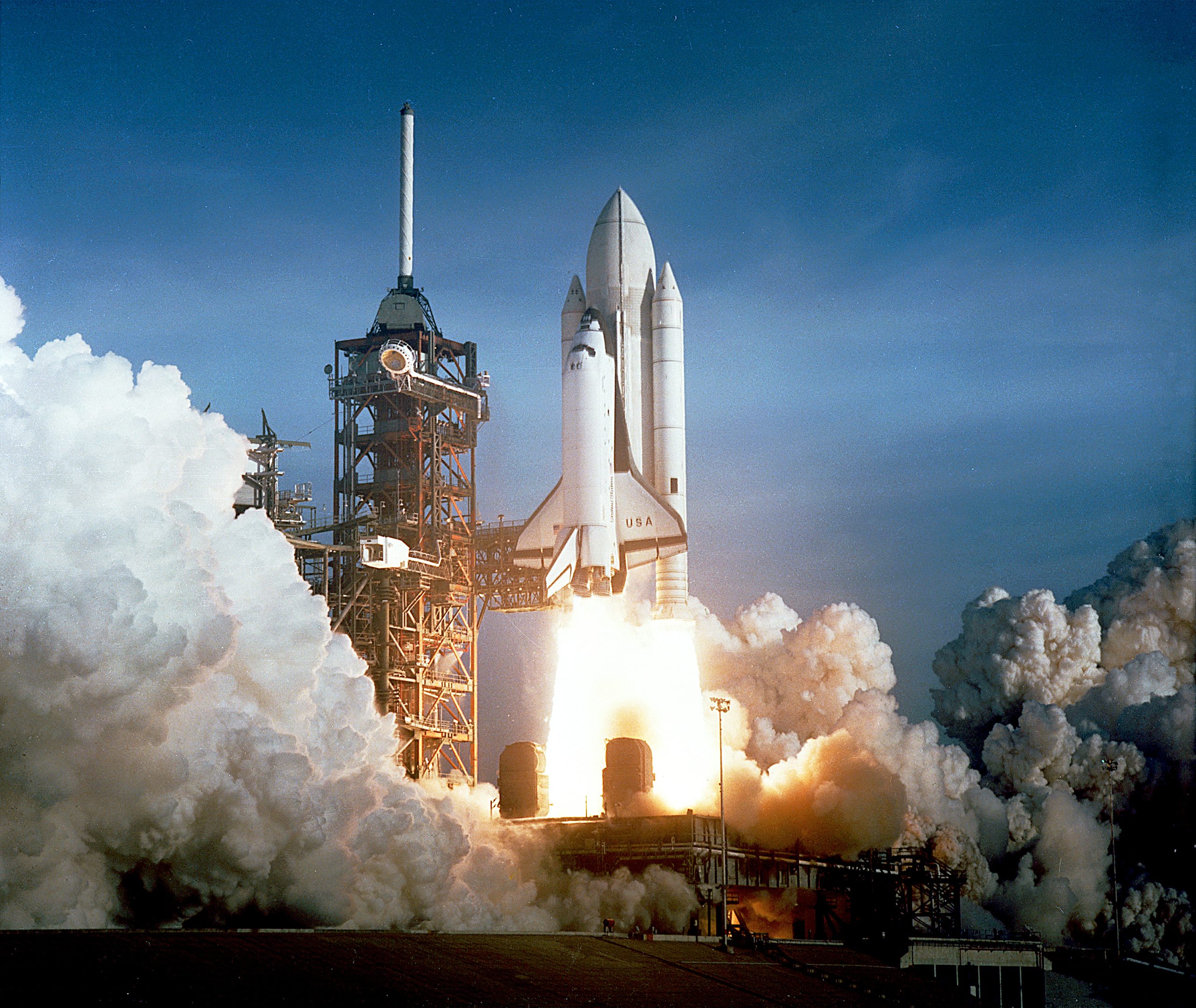
Look at that image. Really look at it. That isn’t just a machine. It’s a controlled bomb. A tower of fire and metal screaming against gravity.
A rocket is deceptively simple in concept but terrifying in execution. It is a missile, a spacecraft, a vehicle that doesn’t just ride the air—it beats the air into submission. It obtains thrust from a rocket engine, and that engine is a beast. The exhaust is formed entirely from propellant carried within the gut of the rocket before it even leaves the ground. It’s a closed loop of destruction and creation.
Newton’s Third Law. Action and reaction. High school physics tells us that for every action, there is an equal and opposite reaction. But seeing it happen? That’s different. Rocket engines push rockets forward simply by vomiting their exhaust in the opposite direction at hypersonic speeds. Because they carry their own oxidizer, they don’t need air. They don’t need an atmosphere. They can breathe fire in the vacuum of space where everything else freezes or suffocates.
But why now? Why does it feel like the sky is suddenly crowded?
For decades, space was a graveyard. A museum of the 1960s. We went to the Moon, played some golf, planted a flag, and then… we stopped. Why? The official story is budget cuts. The boring story is politics. But the alternative history theorists? They have a different idea. Maybe we were warned off. Maybe we found something up there that scared the governments back to Earth.
Until now.
The Billionaire Space Race: Salvation or Escape Plan?
Enter the new gods of the sky. Jeff Bezos. Elon Musk. The private sector has taken the torch from NASA, and they are running with it faster than any government bureaucracy ever could.
Back in 2016, a massive shift occurred. It was quiet at first. Then it got loud. Blue Origin, the secretive company founded by Amazon’s Jeff Bezos, dropped a bombshell announcement about a machine called New Glenn. This wasn’t a toy. This wasn’t a sub-orbital hopper for tourists to float around for three minutes. This was a monster.
The rockets were announced in two configurations. A two-stage version for reaching low-Earth orbit—the playground of satellites and the ISS. and a three-stage version. The three-stage beast. That’s the one that matters. That is the configuration for “ambitious missions.” That is code for deep space. That means the Moon. That means beyond.
“Our vision is millions of people living and working in space, and New Glenn is a very important step,” Bezos said in a statement that should send shivers down your spine.
Millions. Not a few astronauts. Not a specialized team of scientists. Millions.
A City in the Sky?
Pause for a second. Think about the logistics of moving the population of a major city off the surface of the Earth. Why is this the goal? Bezos talks about heavy industry moving to orbit to save the planet. A noble idea? Maybe. Or is it the beginning of a breakaway civilization? A separation of the elite from the rest of us stuck down here in the gravity well?
Bezos continued, dropping specs that made engineers sweat: “New Glenn is 23 feet in diameter and lifts off with 3.85 million pounds of thrust from seven BE-4 engines.”
3.85 million pounds. That is enough energy to level a city block in seconds if it goes wrong. It is raw, unadulterated power.
The Secret Sauce: Liquid Methane and the BE-4
Here is where the tech gets suspicious and fascinating. “Burning liquefied natural gas and liquid oxygen, these are the same BE-4 engines that will power United Launch Alliance’s new Vulcan rocket.”
Liquefied Natural Gas (LNG). Methane. Why does this matter? Why switch from the kerosene (RP-1) that took us to the Moon in the 60s?
Because you can find methane on Mars. You can find it on Titan. You can manufacture it. Kerosene? You need fossil fuels. You need dead dinosaurs and ancient swamps. If you use kerosene, you can go there, but you can’t come back unless you bring your own gas station. If you use methane, you can live off the land.
The switch to methane isn’t just about efficiency. It’s about colonization. It proves that the long-term goal isn’t just visiting. It’s staying.
The BE-4 engine is a marvel of modern engineering. It uses an oxygen-rich staged combustion cycle. In plain English? It squeezes every last drop of energy out of the fuel before spitting it out the back. It is highly efficient, cleaner burning, and reusable. That is the magic word. Reusable.
The Ghost of the Saturn V
History casts a long shadow. New Glenn is slated to be ready to launch within the next ten years (a timeline that has stretched and warped, as these things always do). However, it is likely to face some stiff competition from the likes of SpaceX which is also developing its own reusable rockets.
We have to talk about the elephant in the room. The ghost of 1969.
While Blue Origin’s rocket is much larger than the existing SpaceX Falcon 9 and Falcon Heavy rockets, both are still smaller than NASA’s Saturn V which sent Apollo 11 to the moon in 1969.
Think about that. Over fifty years ago, with slide rules and computers less powerful than a digital watch, we built the Saturn V. It remains the undisputed king of the hill. The most powerful machine ever successfully flown by man (until Starship fully comes online). Why have we struggled to match a machine built by our grandfathers?
Lost Technology or Hidden Agenda?
There is a persistent conspiracy theory that we “lost” the technology to go to the moon. NASA engineers have even been quoted saying they destroyed the tooling and the blueprints are incomplete. How do you lose the most important blueprints in human history?
Unless… we didn’t need them anymore. Unless we found a different way to travel. Anti-gravity? Electrogravitics? The “Black Projects” funded by trillions of missing Pentagon dollars? Some believe the public space program—these chemical rockets, fire, and smoke—is just a distraction. A cover story while the real action happens with propulsion systems we aren’t allowed to know about.
But let’s stick to the chemical rockets for a moment. Even if the exotic tech exists, the public race is heating up.
Blue Origin vs. SpaceX: The Clash of Titans
This is the wrestling match of the century. In the red corner, you have Elon Musk and SpaceX. They are loud. They blow things up. They iterate fast. They land rockets on boats in the middle of the ocean. Their goal? Mars. Making humanity multi-planetary to avoid extinction.
In the blue corner, you have Jeff Bezos and Blue Origin. They are quiet. Their mascot is a tortoise. “Gradatim Ferociter”—Step by Step, Ferociously. They want to build the infrastructure. The roads to space. They want O’Neill cylinders—giant spinning habitats orbiting Earth.
Which rockets will ultimately be the first to send mankind back there however remains to be seen.
It’s not just a friendly competition. It’s a war for the future of the human species. Whoever controls the logistics of space controls the economy of the next thousand years. Asteroid mining. Helium-3 from the Moon. Zero-gravity manufacturing. The riches are infinite.
The Deep Dive: Why The Silence?
Let’s get weird for a minute. Why was there such a long gap? We went to the moon in ’69, ’70, ’71, ’72… and then we quit. Cold turkey. We stayed in low Earth orbit for fifty years. The Space Shuttle was a bus that just went round and round.
Why didn’t we build a base in 1980? Why aren’t we on Mars already?
Theory A: It’s hard. Space is deadly. Radiation is a nightmare. The Van Allen Belts are like a wall of fire for electronics. The sheer cost was too much once the Soviet Union collapsed and the political motivation evaporated.
Theory B: We were told to leave. Many UFO researchers point to the transcripts of Apollo astronauts. Reports of “Santa Claus” being on the far side of the moon. Strange lights. Structures. Did we find someone else’s base? Did we trespass?
Now, suddenly, the private companies are pushing back. Are they bold enough to ignore the warnings? Or has a deal been made?
The Modern Battlefield
Fast forward to today. The “New Glenn” mentioned in those early reports has faced delays, but the hardware is becoming real. Meanwhile, SpaceX has launched the Starship. A stainless steel silo that looks like something out of a 1950s sci-fi comic. It explodes, it crashes, and it learns.
The stakes have never been higher. China is planning a moon base. Russia is making noise. The United States is scrambling to get Artemis off the ground. It feels like the Gold Rush all over again.
The “two-stage” and “three-stage” designs mentioned by Bezos are vital. A two-stage rocket is efficient for getting stuff to satellite orbit. But that third stage? That’s the kicker. That’s the “kick stage” that pushes you out of Earth’s gravity well and slingshots you toward the dark.
When you look at the exhaust plume of a rocket, you are looking at the only way we currently have to escape our prison. We live at the bottom of a deep gravity well. Every pound of payload requires nearly twenty pounds of fuel just to get off the ground. It is the tyranny of the rocket equation.
What If It Goes Wrong?
Imagine a scenario where the Kessler Syndrome becomes reality. That’s when one satellite hits another, creating debris. That debris hits more satellites. A chain reaction. Within days, low Earth orbit becomes a shredder of flying metal moving at 17,000 miles per hour.
If that happens, nobody leaves. We are trapped. No Mars. No Moon. No GPS. No internet. The dark ages return in an instant.
With Blue Origin planning to launch mega-constellations of satellites (Project Kuiper) and SpaceX launching thousands of Starlinks, the sky is getting crowded. Are they building a net around the planet? Or a bridge to the stars?
The Verdict
The rocket in the picture—Space Shuttle Columbia—is a tragic reminder. Space is hard. Space is unforgiving. Columbia disintegrated on re-entry in 2003. Seven souls lost. It reminds us that riding fire is never safe.
But the drive to explore is written in our DNA. We cannot stay here forever. Whether it’s Bezos’s slow and steady tortoise or Musk’s hare, someone is going to break the ceiling. The engines are igniting. The clamps are releasing.
Keep your eyes on the skies. The next ten years will define the next ten centuries. Will we become a star-faring species? or will we burn out down here, fighting over the scraps of a dying world?
The rockets are waiting.