Sunday, June 14, 2026
HomeUnexplained MysteriesThe strange Hall–Mills murder.

The strange Hall–Mills murder.

The Hall-Mills Murder: A Tale of Lust, Religion, and a Missing Tongue

It was the crime that defined the Roaring Twenties. Before O.J. Simpson, before the Lindbergh kidnapping, there was Hall-Mills. A scandal so dripping with salacious details, class warfare, and bizarre twists that it feels like it was written for a modern true-crime podcast. But this wasn’t fiction. This was blood, dirt, and money in New Jersey.

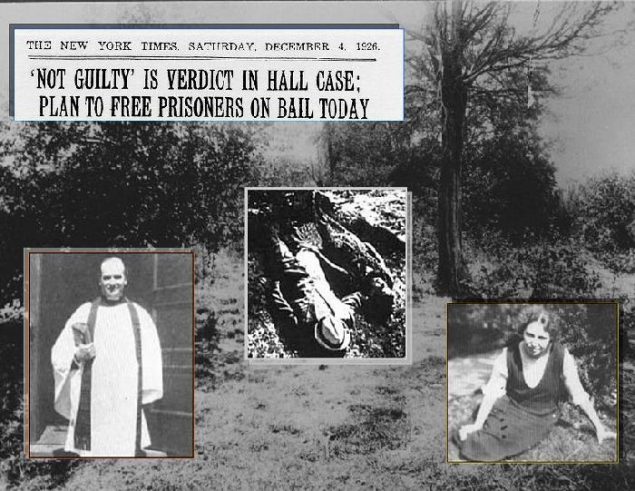
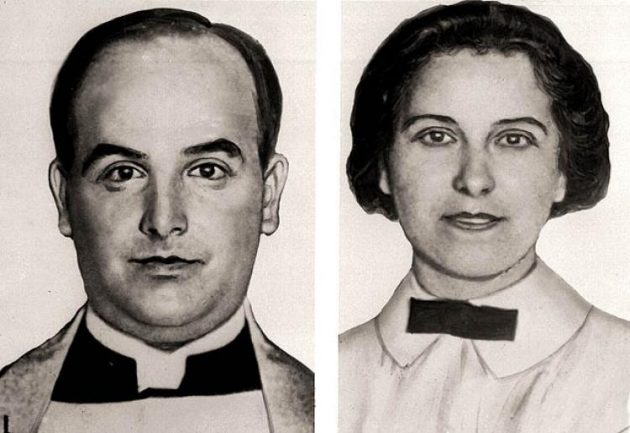
The Hall–Mills murder case didn’t just involve a killing. It involved an Episcopal priest, Edward Hall, and Eleanor Mills, a fiery member of his choir. They were lovers. They were found dead on September 14, 1922, in Somerset, New Jersey, arranged in a grotesque tableau that baffled police and fascinated the nation. The suspected killers? The priest’s wealthy, stoic wife and her eccentric brothers. They were acquitted in a 1926 trial that turned into a literal circus.

In the history of American journalism, this case is a titan. It birthed the tabloid frenzy. It was the first time the media truly went off the rails. It would take the Lindbergh kidnapping in the 1930s to even come close to the hysteria surrounding the Hall-Mills mystery.

Forbidden Love in the Choir Loft

Let’s set the stage. 1922. The Jazz Age is starting to swing, but in New Brunswick, New Jersey, things are still stiff and conservative. Edward Hall is a handsome, bespectacled Episcopal priest. He married into money. Serious money. His wife, Frances Noel Stevens, was a blue-blood heiress. She was older than him. Stern. Controlling. She held the purse strings.

Then there was Eleanor Mills. The complete opposite. She was the wife of the church sexton (the janitor). She was poor. She was vibrant. And she sang in the choir. The spark between the Reverend and the sexton’s wife wasn’t just a flirtation; it was a blazing fire. Everyone in town whispered about it. They were seen together constantly. But in 1922, divorce was a scandal that could ruin a priest. So, they met in secret. Or so they thought.

Edward Hall and Eleanor Mills were murdered on September 14, 1922, in a lonely spot known as De Russey’s Lane. A lover’s lane. The brutality of the crime shocked the world. The suspects—the priest’s wife and her brothers—walked free after a trial that featured a witness known only as the “Pig Woman.”

The case, being both strange and horrific, created immense media coverage. It was a collision of the sacred and the profane. The pulpit and the pistol.

The Discovery: A Staged Nightmare

Saturday morning. September 16, 1922. A young couple is walking through an orchard off De Russey’s Lane, looking for mushrooms. They spot something under a crab apple tree. At first, they think it’s a couple sleeping. A vagrant pair, perhaps? They get closer.

The flies were the first sign.

The bodies of a woman (Eleanor Mills) and a man (Edward Hall) were discovered lying on their backs. This wasn’t a frenzied struggle. It looked… posed. Both were shot in the head with a .32-calibre pistol. The Reverend Hall was shot once. Clean. The bullet entered over his right ear and exited through the back of his neck.

Eleanor? She took the brunt of the rage. Shot three times. Under the right eye, over the right temple, over the right ear. But the gunshots weren’t the worst part. A police officer at the scene noticed that the woman’s throat had been severed. Slashed ear to ear. Maggots were already in the wound, a gruesome clock ticking away, indicating the death occurred at least 24 hours earlier.

The Love Letter Tableau

This is where it gets psychological. This is where the profile of the killer starts to emerge.

The bodies appeared to have been positioned side by side after death. Meticulously arranged. Both had their feet pointing toward a crab apple tree. The man had a hat covering his face, as if to hide his shame. His calling card was placed at his feet—a bizarre signature. And then, the kicker: Torn up love letters were placed between the bodies.

Think about that. The killer didn’t just want them dead. They wanted to send a message. They scattered the evidence of the affair all over the corpses. It was a statement. “Here lie the sinners.” It screams of a crime of passion, of a moral judgment passed by someone who knew them intimately.

The Investigation: A Comedy of Errors

If you think modern police work can be sloppy, you haven’t seen anything yet. The Hall-Mills crime scene was a disaster from minute one. Why? Geography.

Initial confusion exploded because the bodies lay right near the border of Middlesex County and Somerset County. New Brunswick (Middlesex) police rushed in first. But technically? The bodies were in Franklin Township (Somerset). While the cops argued over who had to do the paperwork, the public moved in.

It was a free-for-all. Sunday sightseers arrived in droves. Families picnicked near the bloodstains. Curiosity-seekers trampled the grass, destroying footprints. They took souvenirs! People pocketed bloody dirt and twigs. Evidence was severely compromised. Hall’s calling card—a key piece of evidence—was passed around the crowd like a party favor. By the time detectives secured the scene, it was useless.

The Victim Profile

The woman was identified as Eleanor Reinhardt Mills (born 1888). She was dressed for a tryst. A blue dress with red polka dots. Black silk stockings. Brown shoes. Her blue velvet hat was on the ground. Her brown silk scarf was wrapped around her throat, hiding the slash. Her left hand had been positioned, after death, to touch the man’s right thigh. A final, mocking gesture of intimacy.

But the horror didn’t stop there. An autopsy performed four years later—yes, they dug her up—revealed a detail that had been missed or suppressed. Her tongue had been cut out.

Deep Dive: The Missing Tongue. Why cut out the tongue? In the lexicon of the underworld and secret societies, cutting out a tongue means one thing: “Stop talking.” Was Eleanor threatening to expose something? Or was this the vengeance of a jealous wife, silencing the “lying tongue” of the other woman? It’s a detail that turns a murder into a ritual.

The man was Edward Wheeler Hall (born 1881). He was found with his right arm positioned to touch the woman’s neck. His hat covered his face, concealing the bullet wound. He wore glasses. A small bruise on his ear. Abrasions on his fingers. His watch was missing (robbery? Unlikely, given the coins left in his pocket). This wasn’t about money. This was personal.

The Suspects: The Rich Widow and the Brothers

Who had the motive? The police looked immediately at Hall’s home. His wife, Frances Noel Stevens (1874–1942). She was part of the Stevens family—old money, powerful, connected. In 1922, people like the Stevenses didn’t go to jail.

Alongside her were her two brothers: Henry Hewgill Stevens and William “Willie” Carpender Stevens. Willie became a character of national fascination. He was described as “eccentric.” Today, we might view him as neurodivergent or on the autism spectrum, but in the 1920s, the press painted him as a strange, simple-minded man capable of sudden violence. He spent his days hanging around the local fire station, chasing fire trucks. He always carried a gun.

The original 1922 investigation by Joseph E. Stricker went nowhere. No indictments. Money talks, and the Stevens family had plenty of it. The case went cold. But the rumors? They never stopped. The New York Daily Mirror, a sensationalist tabloid, decided to reignite the fire. They found a man associated with one of Mrs. Hall’s housekeepers who claimed he had dirt. The pressure mounted. New Jersey Governor A. Harry Moore had no choice. In 1926, he ordered a second investigation.

This time, they cast a wider net. Henry de la Bruyere Carpender, a cousin, was named. He was cleared, but the main trio—Frances, Henry, and Willie—were hauled into court.

The Trial of the Century (Before OJ)

The trial began on November 3, 1926, in Somerville, New Jersey. It was insanity. The town was overrun. Journalists from every corner of the globe arrived. They rented out entire houses. They set up telegraph lines directly in the courthouse hallway. Hot dog vendors set up shop outside. It was a carnival.

The social dynamic was electric. On one side, the Stevens family: wealthy, aristocratic, nose-in-the-air. On the other side, the memory of the poor choir singer. It was the Haves vs. the Have-Nots.

The prosecuting attorney was Alexander Simpson, a bulldog of a lawyer who wanted to tear down the rich facade. The defense hired Robert H. McCarter, a former Attorney General. They brought in Joseph A. Faurot, a fingerprint expert. It was high stakes poker.

Enter the “Pig Woman”

Every great mystery has a wildcard. In the Hall-Mills case, her name was Jane Gibson. The press dubbed her “The Pig Woman.”

She was a hog farmer who lived near De Russey’s Lane. Her story was the prosecution’s golden ticket. She claimed that on the night of the murder, her dogs were barking like crazy. Suspecting someone was stealing her corn, she saddled up her mule (yes, a mule) and rode out into the darkness.

She testified that she saw four people in the lane. She heard voices.
“Explain yourself!” a woman’s voice screamed.
Then shots. Gunfire lighting up the dark.
She claimed she saw a woman who looked like Mrs. Hall. She claimed she stumbled upon the bodies.

The defense went to war on Jane Gibson. They portrayed her as uneducated, “crazy,” and unreliable. They dug up her past. They mocked her appearance. At the time of the trial, Gibson was dying of cancer. In one of the most dramatic moments in courtroom history, she was rolled into the court on a hospital bed. Between groans of pain, she pointed a trembling finger at the defendants. “I saw them,” she rasped.

Was she telling the truth? Or was she a fame-seeker hallucinating in the moonlight? Her testimony changed. It shifted between her police statement and her court appearance. The jury looked at this dying woman, then looked at the polished, wealthy defendants. They made their choice.

The Verdict and the Mystery Today

Frances Stevens Hall and her two brothers had the motive. They had the means. Willie owned a pistol of the same caliber (though ballistic science was primitive back then). The “love letter” staging screamed of a wife’s fury.

But there wasn’t enough hard proof. The botched crime scene meant there were no fingerprints, no footprints, no physical link. After 30 days of testimony, the jury acquitted them all. The Stevens family walked out of the courthouse and into history, never speaking of it again. They sued the newspapers for libel and won, adding to their fortune.

Who Really Did It?

So, who killed the preacher and the choir singer? Internet sleuths and historians have been arguing about this for a century.

  • The KKK Theory: A modern theory suggests the Ku Klux Klan was involved. They were active in New Jersey in the 1920s and preached strict morality. Did they punish the priest for his sins? It explains the bizarre ritualism, but lacks hard evidence.
  • The Hitman Theory: Did the wealthy Mrs. Hall hire professionals? This explains why she and her brothers looked so calm. But would a hitman bother with the love letters?
  • The Willie Theory: Many believe Willie Stevens, with his erratic behavior and gun obsession, did it to “protect” his sister, perhaps without her knowing until it was too late. His testimony on the stand was surprisingly sharp, leading some to think he was faking his simple-minded persona all along.

The Hall-Mills case remains unsolved. The De Russey’s Lane crime scene is now a suburban neighborhood. The crab apple tree is long gone. But the image of those two bodies, the scattered letters, and the missing tongue haunts New Jersey lore. It is a story that reminds us that money can scrub away blood, but it can’t scrub away the truth—whatever that truth may be.

Originally posted 2016-12-16 13:29:25. Republished by Blog Post Promoter

Amit Ghosh
Amit Ghoshhttps://coolinterestingnews.com
Aloha, I'm Amit Ghosh, a web entrepreneur and avid blogger. Bitten by entrepreneurial bug, I got kicked out from college and ended up being millionaire and running a digital media company named Aeron7 headquartered at Lithuania.
RELATED ARTICLES
- Advertisment -

Most Popular

Recent Comments

Warren Pan Abbott on The legend of the Devil Monkey !
chris davies on The McPherson Tape Mystery
Reed Reedly on ET has Internet!
Bea Houseoffashion on Proof Of Time Travellers – Gallery
Marcus2012 on ET has Internet!
Reed Reedly on ET has Internet!
LaughsAtConspiracyNuts on The 9/11 Conspiracy – Myths and Facts
Alex Sliverman on Did the ancients fly?
Doctor Wholigan on Time Traveler in 1938 film
chris davies on The McPherson Tape Mystery
Archie1954 on 10 secret UFO hideouts
chris davies on Ghosts of flight 401
Marcus2012 on ET has Internet!
jason Macdonald on Proof of Time Travel? – China
chris davies on Long-Lost Pyramids Found?
Reed Reedly on ET has Internet!
Milkman on Connected Universe
Tenmiles on Baigong Pipes Mystery
Simon Foster on Sirius – The Documentary
From the 1st April on 2013 – Alien Contact date ?
SkyWatcher on Is ET ignoring us?
I Come From The Future on Obama to make UFO Alien disclouser soon ?
Just another person on 2013 – Alien Contact date ?
Malcolm Windowcleaner on The strange case of Rudolph Fentz
Mason Servio on Strange Things on Mars
Marke Wisdom Seeker on What will we find as arctic melts?
Andrea A Elisabeth Levyne on Aliens Captured in Varginha, Brazil
Mitch Grouyeki on Amazing Space Shuttle pictures