The Harrogate Vanishing: North Yorkshire’s Bizarre Bermuda Triangle of Signs
Something is wrong in North Yorkshire.
Forget ghost stories and ancient legends. Forget tales of beasts on the moors. The mystery plaguing the quiet, winding roads of this picturesque English county is far stranger. More unsettling. It’s a phenomenon that strikes in broad daylight and under the cloak of darkness. It’s a silent, creeping purge.
Signs are disappearing.
Not just one or two. We’re talking about a systematic vanishing act. Banners for village fetes, posters for coffee mornings, A-boards for local cafes, signs for charity events. One day they’re there, tied to a lamppost or staked into a grassy verge, the vibrant lifeblood of a community. The next? Gone. Utterly and completely gone. No note. No explanation. Just an unnerving, empty space where a message used to be.
The locals started calling it the “Bermuda Triangle” for signs. A joke, at first. A bit of classic Yorkshire wit to explain the unexplainable. But the joke is wearing thin. The disappearances continue. The questions mount. And the official explanations feel like a bureaucratic fog designed to hide something far more peculiar.
Is this the work of overzealous council officials engaged in a turf war? Or is it something else? A phantom sign-snatcher with a bizarre motive? A secret war on small businesses? Strap in. Because we’re going deep into one of the weirdest, most frustrating local mysteries you’ve never heard of. The plot hasn’t just thickened. It’s congealed.
The First Whispers: A Pattern of Empty Posts
It started as a murmur. A low grumble in the pubs and post offices of Aldborough, Whixley, Marton cum Grafton, and Lower Dunsforth. Organizers of the annual summer fair would pin up their posters, only to find them stripped away hours later. The local theatre group would advertise their new play, and by morning, the signs would be history. It was maddening.
Who was doing it?
Everyone had a theory. The immediate finger of blame pointed squarely at “The Council.” But which one? In the beautifully confusing world of British local government, North Yorkshire is a patchwork of authorities. The first suspect was North Yorkshire County Council, the big dogs in charge of highways. The second was Harrogate Borough Council, responsible for more local matters like parks. Villagers pictured faceless bureaucrats in drab offices, dispatching minions to tear down any sign that offended their sense of order.
A few whispered about something stranger. A vigilante. A “Tidy Town” fanatic obsessed with pristine, ad-free landscapes. Maybe even kids, causing mischief for a laugh.
But the disappearances were too clean. Too efficient. This wasn’t random vandalism. This was a targeted operation. And it was about to escalate.
A Cafe on the Brink: The Rumbles Cafe Incident
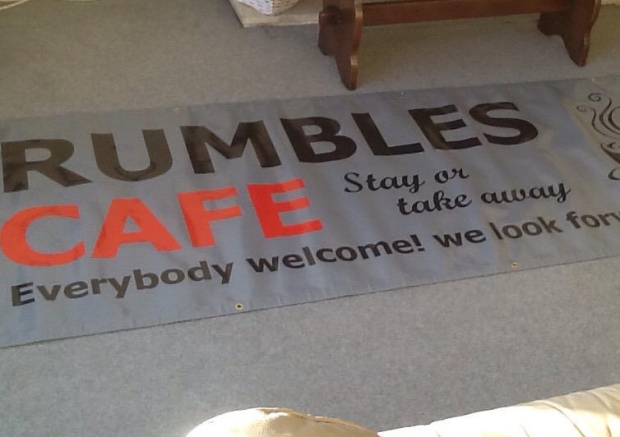
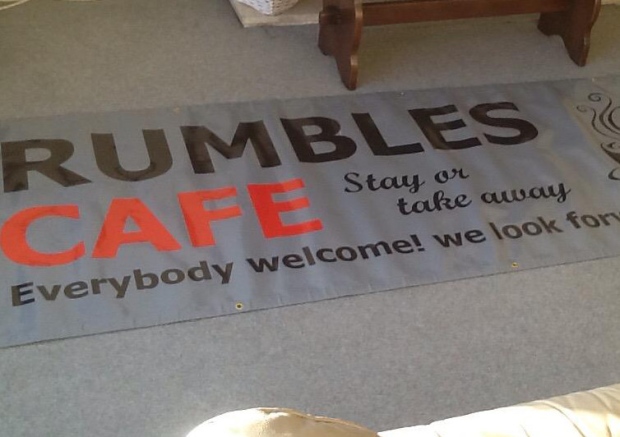
The mystery shifted from a community annoyance to a direct threat against people’s livelihoods. That’s when Rumbles Cafe in Pannal entered the picture. Rumbles isn’t on the high street. It’s tucked away on a business park, invisible to passing traffic. For a small, independent business like that, a simple sign on the main road isn’t just advertising; it’s a lifeline. It’s the difference between a busy lunch rush and an empty room.
And their signs started vanishing.
They put one up. It disappeared. They put up another. It vanished, too. Frustrated and fighting for survival, the owners took to Facebook. Their post was a raw, digital cry for help: “I am a small business hidden away on a business park and these signs help to bring public in off the main road.”

This wasn’t about a church bake sale anymore. This was economic warfare. But then, a breakthrough. A clue. The Rumbles post contained a shocking eyewitness account. They claimed that on the way home one evening, they saw it with their own eyes: a council worker actively removing swing signs from the roadside, including one of theirs.
The worker allegedly told them the signs were being confiscated. Taken to a municipal graveyard in Boroughbridge. A sign purgatory. And if you wanted your sign back? You had to pay a ransom.
The mystery suddenly had a face. A uniform. A van. It seemed the “council” theory was correct. Case closed? Not even close. This is where the story dives headfirst down the rabbit hole.
Deep Dive: The Bureaucratic Black Hole
To understand the madness, you have to understand the machine. In places like Harrogate, you have two main layers of local government: the Borough Council and the County Council. Think of it like two different sets of parents with overlapping rules for the same house.
- Harrogate Borough Council: They handle things like parks, rubbish collection, and local planning. They’re the ones you call if a tree falls in the park.
- North Yorkshire County Council: They’re the heavyweights. They manage the big stuff: schools, social services, and crucially, the highways. The roadsides, the lampposts, the verges—that’s their turf.
So, when a sign on a lamppost disappears, who do you call? The answer, it seems, is “good luck.”
When pressed, Harrogate Borough Council threw their hands up. A spokesman basically said, “Not us, mate.” Their official advice was crystal clear: “my advice would be to speak to staff at North Yorkshire County Council as they handle complaints regarding event signage within their responsibility as the leading highways authority.”
A classic pass-the-buck. So, all eyes turned to the County Council. Were they the phantom sign snatchers? Their response was… weird. A spokesman for North Yorkshire County Council almost sounded defensive, claiming they had a “relatively relaxed attitude” about community signs. He outlined a process: they’d contact the people involved, give them *three chances* to remove a sign, and usually let them stay up for a month anyway.
This directly contradicts the story from Rumbles Cafe. There were no warnings. No three chances. Just a swift, silent removal. The two official stories don’t line up. It’s a bureaucratic fog of war. Is this a simple case of the left hand not knowing what the right is doing? Or is this contradictory mess the perfect cover for an unofficial, off-the-books cleanup operation?
The Ghost in the Machine: Enter the Woman in the Yellow Van
Just when you think you have a handle on things, the mystery throws a curveball. The Rumbles incident wasn’t an isolated case of a small business being targeted. Ask Gordon Bryce. He was promoting a major commercial event, the AS Decorative Home & Salvage Show, in the village of Ripley. This wasn’t a small A-board; it was a professional advertising campaign.
And his signs were wiped out.
In a single sweep, all their signs in the area were taken down. All except one, a large banner on the main Ripley roundabout. Why leave that one? Was it too big? Too public? Or was it a message?
Here’s the chilling part. There was another witness. According to Bryce, the culprit was seen: “a lady driving a council van.” But when asked for more details, the story got murky. The witness, a man from Derby, wasn’t a local. He couldn’t say if it was a Borough or County council van. All he knew was this: it was a woman in a yellow van.
A yellow van. Not the standard white you might expect. This detail is electric. Suddenly, the image of a faceless council department is replaced by a specific, yet anonymous, operative. The Woman in the Yellow Van. Who is she? Does she even exist? Is she a rogue employee on a power trip? Or is the van a decoy, a clever disguise to lend an air of officialdom to an otherwise illegal act?
The waters surrounding the mystery of the missing signs were now muddier than ever.
Deep Dive: The Sign Snatcher – Three Chilling Theories
The official explanation is a mess of contradictions and denial. So, let’s explore the fringes. Let’s look at the alternative theories that bubble up when the mainstream narrative fails. Who is really stealing North Yorkshire’s signs?
Theory 1: The “Tidy Town” Tyrant
Imagine a person, or perhaps a small, secret committee of residents, utterly obsessed with their vision of a perfect, unspoiled English countryside. To them, these signs are not community notices; they are a visual blight. A cancer of commerce and clutter. They see themselves as guardians, not vandals. They likely operate at dawn or dusk, fueled by a righteous fury against what they see as the slow degradation of their home. The “woman in the yellow van” could be one of them, using a decommissioned vehicle to project an authority she doesn’t have. They are the silent warriors of aesthetic purity.
Theory 2: The Collector
This theory is far stranger. What if the thief isn’t destroying the signs? What if they’re *collecting* them? Criminologists have documented cases of people with bizarre hoarding compulsions, stealing everything from garden gnomes to traffic cones. Is it possible there’s a barn somewhere in the Yorkshire Dales, its walls lined with hundreds of stolen signs? A silent, captured history of a decade’s worth of village life. A museum of missing messages. Each sign—for a lost cat, a school play, a new cafe—is a trophy. It’s a deeply unsettling thought: the physical memories of a community, curated by a silent madman.
Theory 3: The Corporate Saboteur
Perhaps the most cynical and believable theory of all. This isn’t about tidiness or madness. It’s about money. Small businesses like Rumbles Cafe and independent events like the Salvage Show are competition for larger, more established players. Could a rival company or a chain restaurant be paying someone to conduct a low-level campaign of sabotage? It’s cheap, effective, and almost impossible to prove. The “council worker” story is the perfect cover. You hire someone with a van, give them a high-vis jacket, and tell them to clear out the competition’s advertising. No one questions a person in a uniform. It’s a silent, dirty war fought on the lampposts and roundabouts of North Yorkshire.
The Haunting Continues: Modern Echoes of the Vanishing
The original reports are from years ago. You might think the mystery has faded, a quirky footnote in local history. You’d be wrong. The phenomenon never truly stopped. The official confusion created the perfect environment for it to continue, bubbling under the surface. A quick scan of modern internet forums and local Facebook groups shows the ghost of the sign snatcher is alive and well.
A post on a local community group from just last year: “Has anyone seen the banner for the charity dog show? We put it up on the A59 roundabout on Tuesday, it was gone by Wednesday morning. So disheartening.”
A thread on Reddit’s r/yorkshire from eight months ago: “Weird question, but does anyone else have trouble with signs disappearing around Harrogate? We’re a new band and every time we poster for a gig, they get systematically stripped within 48 hours. Not just torn down, but completely gone.”
The pattern is identical. The methods are the same. The questions remain unanswered. The official channels are still a black hole of finger-pointing. The Woman in the Yellow Van may have retired, but her spirit, or her successor, clearly still patrols these roads.
It’s a story with so many strands. Should a sign for a multi-million-pound salvage show be treated the same as a hand-drawn poster for a lost kitten? Should signs on busy A-roads be subject to the same rules as those on a quiet residential street? The lack of a clear, single policy has created a vacuum. And in that vacuum, something strange is allowed to operate, unchecked.
So, the next time you drive through the beautiful, rolling hills of North Yorkshire, pay attention to the lampposts. Look at the fences and the roundabouts. If they seem a little too clean, a little too bare, don’t just assume it’s a tidy council at work.
Ask yourself: What was supposed to be there?
And who, or what, decided you weren’t allowed to see it?