The Beast of Bolton: When Yellow Eyes Stare Back from the Darkness
It’s just another Tuesday night. The kind of unremarkable evening that fades from memory before you’ve even woken up the next day. You’re driving home. The streetlights paint stripes of orange and black across your dashboard. The radio is low. Your mind is on dinner, or a show you want to watch, or the argument you had at work.
Then it happens.
A shadow detaches itself from the deeper shadows at the roadside. A fluid shape of impossible size. It’s in the road. Right in front of you. You slam on the brakes, your heart leaping into your throat as the tires screech on the cold tarmac.
And it just… stands there. Staring.
This isn’t a story. This isn’t a campfire tale. This is exactly what happened to Natalie Kay on a quiet stretch of Doe Hey Road in Farnworth, Bolton. One moment, she was returning from a shopping trip around 9:30 PM. The next, she was face-to-face with something that had no business existing in the suburbs of Greater Manchester.
“It just stopped dead right in the middle of the road and was staring at me,” she recounted, the shock still evident in her voice. This was no fox. It wasn’t a dog that had slipped its lead. The thing bathed in her headlights was utterly alien.
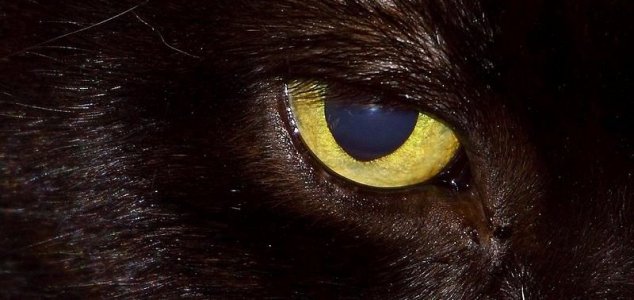
“I knew it wasn’t a dog. It looked like a cat but it wasn’t. It was much bigger and had a long tail, pointed ears and these greedy yellow eyes.”
Let that description sink in. “Greedy yellow eyes.” Not just bright or reflective. Greedy. As if they were consuming the light, and maybe sizing her up, too. And the size of it? Terrifying. She estimated it was as big as the bonnet of her car. A creature of pure muscle and midnight fur, holding its ground, unafraid.
For several seconds that must have felt like an eternity, human and beast were locked in a silent, roadside standoff. A moment ripped from time. Then, as quickly as it appeared, the creature broke the spell. It didn’t amble off. It didn’t trot away. It *dashed*. With explosive speed, the black shape vanished down a dirt track leading to a local reservoir, swallowed by the darkness it came from.
“It was really scary,” Kay said. “I haven’t seen anything like that before.”
She was left shaken, her car stalled in the middle of the road, her mind racing to process the impossible. What she didn’t know at the time was that she hadn’t just seen a strange animal. She had come face-to-face with a legend. She had woken the Beast of Bolton.
A Legend Reborn: Britain’s Phantom Cat Phenomenon
Locals and mystery-hunters immediately knew the significance of Natalie’s encounter. The “Beast of Bolton,” a whispered-about local cryptid, hadn’t been reported in the area for over five years. The beast was thought to be gone, a relic of old tales. But this sighting was fresh. It was raw. It was terrifyingly real.
But this isn’t just Bolton’s story. Oh no. This is a nationwide conspiracy. A secret that stalks the hedgerows and moors of the entire United Kingdom.
They are called Alien Big Cats, or ABCs. Phantom cats. The British Puma. They have dozens of names, but the descriptions are always chillingly similar: large, muscular felines, usually black like a panther or tawny like a puma, moving with silent, deadly grace through a country that says they don’t exist.
From the Beast of Bodmin Moor in Cornwall to the Surrey Puma, from the Kellas Cat of Scotland to the Fen Tiger of Cambridgeshire, the UK is crawling with these stories. For decades, farmers have found livestock savaged in ways that defy explanation. Hikers have found impossibly large paw prints pressed into the mud. And drivers, like Natalie Kay, have had their quiet evenings shattered by a glimpse of a predator that officially, scientifically, is a million miles away in a jungle or a mountain range.
So where on earth are they coming from?
Deep Dive: The Law That Unleashed the Beasts
To understand the most popular theory, we have to travel back in time. Not to some ancient, mystical age, but to the swinging seventies. The 1960s and 70s were a wild time. It became a bizarre status symbol for the rich and eccentric to own exotic pets. You could, if you had the cash, literally buy a lion, a tiger, or a panther. They were seen as the ultimate accessory.
Then, common sense finally kicked in. The government passed the Dangerous Wild Animals Act of 1976. This landmark piece of legislation was designed to control the chaos. It mandated that owners of these dangerous animals had to obtain a special, very expensive license. Their enclosures had to meet incredibly strict safety standards. The days of keeping a puma in your back garden were over.
The law was a success. For public safety, at least.
But it created a massive, unforeseen problem. What did all those owners do? Some complied. Some gave their animals to zoos. But many others, faced with a huge bill and the potential for prosecution, allegedly took the cheap and silent option. They drove their pets out to a quiet rural spot—a forest, a moor, a national park—and simply opened the car door.
They released them. Pumas, panthers, lynxes, and who knows what else, suddenly set free into the British countryside. It sounds insane, but this single act is believed by many to be the “patient zero” event for the UK’s Alien Big Cat phenomenon. It seeded the entire country with a breeding population of apex predators.
Could They Actually Survive Here?
The first question any skeptic asks is: could a big cat from a hot climate really survive a damp British winter? The answer is a resounding yes.
Pumas (also known as cougars or mountain lions) are incredibly adaptable. Their native range stretches from the Canadian Yukon to the southern Andes. They can handle deep snow and freezing temperatures far more extreme than anything the UK can throw at them. Black panthers aren’t a separate species; they are melanistic (black-coated) leopards or jaguars. Leopards, in particular, have a vast and varied range, from African savannas to the snowy forests of the Russian Far East.
The British climate isn’t a challenge. It’s a cakewalk.
What about food? The British countryside is an all-you-can-eat buffet. It is teeming with deer (several species, including red, roe, and muntjac), rabbits, foxes, badgers, and game birds. For a hungry predator, it’s paradise. There is more than enough prey to sustain not just a few individuals, but a thriving, breeding population hidden away from human eyes.
Analyzing the Unbelievable: What Did Natalie Kay Really See?
So, we have a credible origin story and a sustainable environment. But what about the actual evidence? Why, in a world full of smartphones and dashcams, don’t we have a crystal-clear picture of one?
The Problem with Eyewitnesses
The account from Natalie Kay is compelling. It feels real. But we have to consider the human factor. It was late. It was dark. She was shocked and scared. The human brain is notoriously unreliable under stress. It tries to fill in the gaps, to make sense of the unknown by comparing it to the known.
Could she have seen a very large black dog, like a Newfoundland or a Great Dane, and in her panic, her mind screamed “panther”? It’s possible. Could it have been an abnormally large domestic cat, its size magnified by the angle and the darkness? Some breeds, like the Maine Coon, can get impressively big.
But her description is so specific. The long tail—something many large dogs lack. The “pointed ears.” And the way it moved. The sheer speed. Most witnesses who see these creatures focus on their movement: a silent, fluid, feline gait that is completely different from that of a dog.
The Evidence That Isn’t There
The biggest hurdle for ABC researchers is the frustrating lack of hard, physical proof. We have blurry photos. We have grainy videos. We have plaster casts of paw prints that are often dismissed by experts as belonging to dogs. We never seem to get a body.
Or do we?
Over the years, several strange carcasses have turned up. In 1980, a puma was captured alive in Cannich, Scotland. Felicity the “Cannich Puma” lived out her days in a wildlife park, proving beyond all doubt that at least one puma was roaming free. In the early 90s, a farmer shot and killed a leopard cat in Devon. The Ministry of Agriculture tried to suppress the story, claiming it was a hoax before being forced to admit the truth. These are the confirmed cases. How many others have gone unconfirmed, their bodies quickly decaying or being quietly disposed of by officials who want to avoid a public panic?
Big cats are masters of stealth. They are elusive, largely nocturnal, and actively avoid humans. Finding a dead one in the vast British wilderness would be like finding a needle in a continent-sized haystack. The lack of a body doesn’t mean they aren’t there. It just means they’re very, very good at hiding.
What If It’s Not a Panther? The Weirder Possibilities
The escaped pet theory is neat. It’s logical. It’s the “official” unofficial explanation. But what if it’s wrong? What if the truth is something far stranger, far older, or far more sinister?
A Native Species Hiding in Plain Sight?
Let’s rewind the clock. Way back. Britain once had its own native big cats. The Eurasian Lynx roamed these lands until it was hunted to extinction around 1,300 years ago. Or was it?
Some theorists propose that a small, isolated population of these ghost cats survived, hidden away in the most remote parts of Scotland and Northern England. Could the “Beast of Bolton” and other phantom cats be the descendants of Britain’s last, true native predators? A species of living fossil, a biological ghost that refuses to disappear. It’s a romantic idea, but one that cryptozoologists find tantalizing.
The Paranormal Predator
Now, let’s take a step off the deep end. What if the Beast of Bolton isn’t a creature of flesh and blood at all?
Throughout British folklore, there are tales of spectral black dogs—the Black Shuck, the Gytrash—supernatural beasts with glowing eyes that are seen as omens of death. These creatures often appear and disappear in an instant, just like the creature Natalie Kay saw. Notice her description again: “greedy yellow eyes.” It’s a classic hallmark of a paranormal entity.
Some areas with frequent ABC sightings are also hotspots for other strange phenomena: UFOs, ghostly apparitions, and mysterious lights. Is it possible these “cats” are not animals but something else? Interdimensional beings briefly phasing into our reality? A psychic projection? The thought is unsettling, but in the world of high strangeness, all theories are on the table.
The Ultimate Cover-Up
There’s one final, chilling possibility. They know. The government. The Ministry of Defence. They know the cats are out there, and they are actively suppressing the truth.
Why? To prevent panic. Imagine the headlines: “Pumas Stalking London Suburbs!” The public would be terrified. It would be a logistical nightmare. But the motives might be deeper. What if there was a secret, illegal reintroduction program that went wrong? Or perhaps the animals are being used for some clandestine military purpose, and sightings are an unfortunate side effect? It sounds like a spy thriller, but for those who have looked into the official denials and the consistent debunking of every piece of evidence, a cover-up starts to feel less like fiction and more like a disturbing possibility.
The Hunt Continues: Bolton’s Beast in the 21st Century
Natalie Kay’s sighting in 2015 re-ignited the legend, but it didn’t end it. In the years since, the whispers have continued. A fleeting glimpse by a dog walker on the moors above the town. A blurry figure on a farmer’s security camera. A story shared in a pub of a large black animal crossing a road in the dead of night.
Today, the hunt for the Beast of Bolton has gone digital. Online forums, Reddit threads, and local Facebook groups are filled with people sharing their own stories, analyzing evidence, and trying to piece together the puzzle. A community of modern-day monster hunters, armed not with rifles, but with smartphones and a burning curiosity.
The fear Natalie Kay expressed for the local children is a real and valid concern. The area where she saw the creature is near playing fields and residential zones. While there has never been a confirmed attack on a human by an ABC in the UK, the possibility hangs in the air, unspoken and terrifying.
So the next time you’re out late, driving down one of those winding lanes on the edge of town, pay attention to the shadows. Watch the verges. If your headlights suddenly pick out a pair of glowing yellow eyes, and your blood runs cold… don’t be so quick to dismiss it.
It might not be a fox. It might not be a trick of the light. You might just have become the latest witness to an impossible predator. You might have just seen the Beast of Bolton.