Sunday, May 10, 2026

Baigong Pipes Mystery

Imagine stumbling across a rusty iron pipe. Nothing special, right? You see them in abandoned factories, old basements, or scrap yards. Now, imagine finding that same iron pipe sticking out of a solid rock face in a cave that hasn’t been touched by human hands for thousands of years. Imagine finding it in a place where no industry ever existed. A place so remote, so desolate, that the wind sounds like a warning.

Welcome to the Qaidam Basin.

This isn’t just a story about some weird rocks. This is a story that breaks the timeline of human history. We are talking about the Baigong Pipes. Anomalies. Glitches in the matrix. Artifacts that simply should not exist, yet there they are, fused into the geology of the Qinghai Province, mocking our textbooks.

baigong pipes mystery

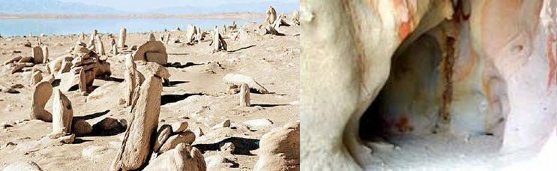
The Baigong Pipes are a series of pipe-like features found on and near Mount Baigong, about 40 km southwest of the city of Delingha, in the Haixi Mongol and Tibetan Autonomous Prefecture, Qinghai Province, China.

The Forbidden Zone: Where History Goes to Die

Let’s set the scene. You are in the high desert of China. It’s cold. It’s dry. The air is thin. This is not the place where you expect to find evidence of advanced engineering. The locals know this place well. For centuries, they have whispered about Mt. Baigong. They don’t call it a geological oddity. They call it the “Alien Ruins.”

Why? Because nature doesn’t build plumbing.

The Baigong Pipes are said to be a series of manufactured metal pipes buried in the ancient rock cave. An example of an “out of place artifact” (OOPArt) which is sometimes claimed as proof of ancient alien visitation. But “claimed” is a soft word. When you look at the physical reality of these things, “claimed” turns into “undeniable” very quickly.

The backdrop for this mystery is almost too perfect. Mount Baigong isn’t just a mountain. It looks sculpted. Near the summit, there is a structure that looks suspiciously like a pyramid. It stands about sixty meters high. Skeptics—those people who desperately want everything to be normal—will tell you it’s just erosion. Wind and sand, carving rock over eons.

Maybe. Or maybe that’s just what we tell ourselves to sleep at night.

Locals, residing forty kilometers southeast of Qinghai’s Delingha city, have known of the pipes for centuries. They credit aliens for their construction, and even have legends of extraterrestrial visitors to Mt. Baigong. Although the stories are met with predictable skepticism, they become harder to laugh off when one takes in the sixty-meter pyramid near the mountain’s summit. Superficially, the pyramid could be shrugged off as having been shaped by natural forces. For some reason, however, the structure has not been conclusively studied, at least officially.

Only discovered in 2002 the pipes are a real mystery.

The modern world slept on this for a long time. It wasn’t until 2002 that the news really broke out of China and hit the western internet, causing a firestorm in conspiracy forums and scientific circles alike. Before that, it was just local folklore. A spooky story to scare the kids.

But then, someone looked closer.

Near the foot of Mt. Baigong lie three caves. The two smaller ones have collapsed, buried under the weight of time and rock. But the middle one? It’s still there. It’s the largest and most accessible, standing some eight meters high by six meters deep. It’s like a garage. A hangar. A workshop.

Inside, spanning from the roof to the back end of the cave, runs a pipe 40 cm in diameter. Another one roughly the same size runs into the earth from the floor, with just the top protruding. It looks exactly like a drainage system or a ventilation shaft. It’s hollow. It’s round. It’s purposeful.

The 150,000-Year-Old Problem

Here is where the headache starts for mainstream historians. We know when the Iron Age started. We have a pretty good grip on when humans figured out how to smelt metal. It was roughly 1200 BC. That’s a long time ago.

But the rock these pipes are embedded in? The sediment that encases them? Geologists suggest it could be millions of years old. Even conservative estimates on the “pipes” themselves, using thermoluminescence dating (a technique that determines how long ago a mineral was heated), have suggested an age of 140,000 to 150,000 years.

Let that sink in.

150,000 years ago, humans were not building blast furnaces. We were trying to figure out how to sharpen sticks. We were nomads. Hunter-gatherers. We did not have industrial drills. We did not have casting molds. So, who built these? And more importantly, what were they pumping?

Real Alien Evidence?

tubi-baigong-pipes-04

The pipes, according to tests carried out at a local smeltery, are made chiefly of iron, but with an unusual thirty percent silicon dioxide in their matrix. This detail is massive. It’s the smoking gun.

Iron rusts. We all know this. If you leave a car in a field for fifty years, it turns to dust. So how do you have iron pipes surviving for millennia? You mix in silicon dioxide. You make a composite material. It’s chemically resistant. It strengthens the structure. It is exactly the kind of thing a smart engineer would do if they wanted their infrastructure to last.

They are also centuries old, if Xinhua and its source, Liu Shaolin, the engineer who carried out preliminary tests, are to be believed. Strange, but easily written off as a bizarre metallurgical operation by some nomads with too much time on their hands, assuming geological origins of the eerily symmetrical pyramid.

But nomads don’t build chemical labs. Nomads don’t drill deep into bedrock.

The Complexity Explodes

If it was just one big pipe, maybe you could dismiss it. A fluke. A weird rock formation. But it’s not just one.

However, dozens of pipe openings have been discovered in the mountains far above the caves. Now these nomads must be credited with some advanced system of drilling since forgotten, as there is no modern industry in the area nor record of such. It implies a network. A grid.

And it gets weirder.

Not far from the foot of Baigong sits Toson Lake. On its beach, you find many more iron pipes in unlikely patterns and in a variety of diameters. Some are huge. Others are tiny. We are talking toothpick-sized at the thinnest. Needles of metal sticking out of the rock.

Think about nature. Nature is chaotic. Nature makes blobs, layers, and crystals. Nature does not make hollow metal tubes the size of a toothpick. That requires precision. That requires manufacturing.

More pipes are in the lake, some protruding above the water surface, others buried beneath the lake’s bed. It looks like an intake system. Or a cooling system for a massive subterranean reactor. The proximity of water usually signals industry. You need water to cool machinery. You need water to process ore.

The “Radioactive” Twist

There is another detail that often gets left out of the polite scientific reports. Radiation. Some researchers visiting the site have reported that the rocks surrounding the pipes show anomalous radiation levels. Not lethal, but higher than the background noise.

Why is the rock hot? Did these pipes carry something radioactive? Was this a fuel depot? Or is the radiation a byproduct of the propulsion systems used by the craft that landed here?

The Skeptic’s Counter-Attack: Fossilized Trees?

We have to look at the other side. We have to be fair. What does “Mainstream Science” say about this?

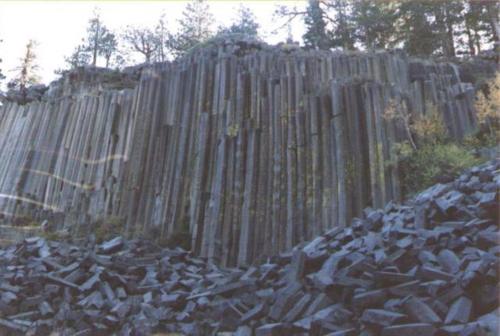
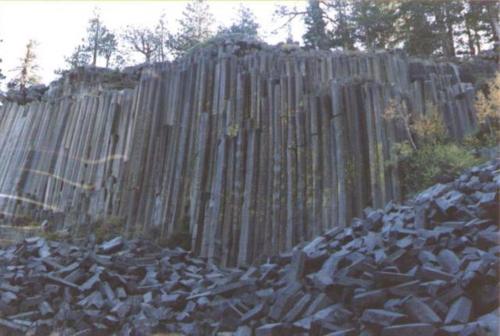
They have a theory. They call it “fossilized tree roots” or “calcified taproots.” The theory goes like this: millions of years ago, this area wasn’t a desert. It was a lush forest. Huge trees grew here. When the trees died, they were buried in sediment.

Over eons, the wood rotted away, leaving a hollow space. Water rich in iron flooded these hollows. The iron hardened into the shape of the roots. This is a known geological process called pseudomorphosis. It happens. We have seen it elsewhere.

It sounds plausible. It wraps everything up in a nice, safe little box. No aliens required. No lost civilizations.

But there are holes in this theory. Big ones.

  1. The Shape: Tree roots branch out. They taper. They twist. Many of the Baigong pipes are disturbingly straight and uniform in diameter.
  2. The Chemistry: The high silica content mixed with the iron is specific. While natural iron formations can contain silica, the distribution here feels engineered.
  3. The Location: Some pipes go horizontally into a cliff face. Trees don’t grow sideways into solid rock.
  4. The Needle Pipes: Have you ever seen a tree root the size of a toothpick that is perfectly straight and hollow? Neither have I.

The Silence of the Scientists

This is where the conspiracy deepens. In 2002, the initial buzz was huge. Xinhua, the state-run news agency in China, actually reported on the possibility of alien origins. That is rare. Usually, governments want to crush these stories.

Although nine Chinese scientists were reportedly dispatched to make a detailed analysis of the pipes in 2002, there has been no further information. The trail went cold. Why?
Did they find nothing? Or did they find something that they couldn’t explain? Or worse, something they were told not to explain?

Since that initial expedition, information has been sporadic. Tourists can visit the site—it’s actually become a bit of a roadside attraction—but deep, ground-breaking radar studies? Core samples? Comprehensive metallurgical breakdowns published in international journals? Nothing. Radio silence.

What Are We Looking At?

If we step back and look at the big picture, we are left with three possibilities.

Option 1: The Freak of Nature.
The earth is weird. Geology can do things that look artificial. Maybe this is just a one-in-a-billion chemical reaction that created perfect iron tubes.

Option 2: The Lost Civilization.
Before the Ice Age, before the flood myths, humans (or a cousin species) had technology. They built this. Then, a cataclysm wiped them out, resetting the clock. We are walking through the scrapyard of our ancestors, too arrogant to admit they were smarter than us.

Option 3: The Visitors.
The Baigong Pipes are exactly what the locals say they are. Remnants of a starport. A mining outpost. A refueling station for craft that ply the dark ocean between the stars. The silicon-iron mix was chosen because it withstands the harsh conditions of space or the intense heat of re-entry.

The Final Verdict?

We don’t have one. And that is what makes the Baigong Pipes so frustrating and so fascinating. They sit there, rusting in the high desert sun, daring us to figure them out.

They challenge our timeline. They insult our understanding of geology. And until someone goes back there with a drill, a Geiger counter, and an open mind, they will remain one of the greatest unsolved mysteries on the planet.

So, the next time you hear someone say that ancient history is “settled,” tell them to look up Mount Baigong. Tell them about the pipes in the rock. And ask them who the plumber was.

Originally posted 2013-04-13 20:36:28. Republished by Blog Post Promoter

Amit Ghosh
Amit Ghoshhttps://coolinterestingnews.com
Aloha, I'm Amit Ghosh, a web entrepreneur and avid blogger. Bitten by entrepreneurial bug, I got kicked out from college and ended up being millionaire and running a digital media company named Aeron7 headquartered at Lithuania.
RELATED ARTICLES

1 COMMENT

- Advertisment -

Most Popular

Recent Comments

Warren Pan Abbott on The legend of the Devil Monkey !
chris davies on The McPherson Tape Mystery
Reed Reedly on ET has Internet!
Bea Houseoffashion on Proof Of Time Travellers – Gallery
Marcus2012 on ET has Internet!
Reed Reedly on ET has Internet!
LaughsAtConspiracyNuts on The 9/11 Conspiracy – Myths and Facts
Alex Sliverman on Did the ancients fly?
Doctor Wholigan on Time Traveler in 1938 film
chris davies on The McPherson Tape Mystery
Archie1954 on 10 secret UFO hideouts
chris davies on Ghosts of flight 401
Marcus2012 on ET has Internet!
jason Macdonald on Proof of Time Travel? – China
chris davies on Long-Lost Pyramids Found?
Reed Reedly on ET has Internet!
Milkman on Connected Universe
Tenmiles on Baigong Pipes Mystery
Simon Foster on Sirius – The Documentary
From the 1st April on 2013 – Alien Contact date ?
SkyWatcher on Is ET ignoring us?
I Come From The Future on Obama to make UFO Alien disclouser soon ?
ÛñK?øWn on 2013 – Alien Contact date ?
Just another person on 2013 – Alien Contact date ?
Malcolm Windowcleaner on The strange case of Rudolph Fentz
Mason Servio on Strange Things on Mars
Marke Wisdom Seeker on What will we find as arctic melts?
Andrea A Elisabeth Levyne on Aliens Captured in Varginha, Brazil
Mitch Grouyeki on Amazing Space Shuttle pictures