Home Alien Life Are Alien Artifacts in Our Solar System?

Are Alien Artifacts in Our Solar System?

0
69

The Silent Flyby: Did an Alien Probe Just Buzz Earth?

They saw it on May 21st. A flicker. A ghost. A blip on a screen that shouldn’t have been there.

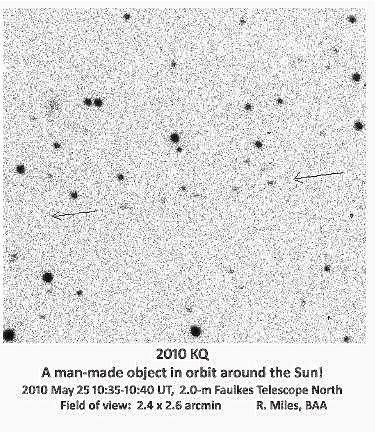
Something came out of the deep, dark void and screamed past our planet, closer than our own moon. It was small. Maybe the size of a delivery truck. It moved with a purpose that felt… unnatural. And when astronomers pointed their instruments at it, trying to get a fingerprint, they got back something that made the hair on their arms stand up.

Its spectral signature matched nothing. Not any known asteroid. Not any documented comet. Not any piece of our own orbital junk.

It was a complete and utter unknown.

And then, as quickly as it appeared, it was gone. Vanished back into the black from whence it came.

20140103-231315.webp

Most of the world never heard about it. It was just another near-Earth object, cataloged and forgotten. But for those in the know, a chilling question began to form. Are we so sure it was just a rock? At a feeble absolute magnitude of +28.9, this traveler was tiny. But its detection is a game-changer. It proves we can spot objects down to a few feet across, zipping through our cosmic neighborhood.

And that’s the exact scale you’d expect for an alien probe.

Forget the city-sized motherships from Hollywood blockbusters. The fuel costs to move something that massive between stars would be beyond astronomical. No, if a civilization wanted to explore the galaxy, they’d think smart. They’d think small. They’d send something stealthy. Something efficient. Something… exactly like what we just saw.

Not Your Average Space Rock: The Anomaly in the Data

So, what made this object so strange? It boils down to one word: light. How it reflected light. How it absorbed it. The very color of its soul, written in a language that astronomers have spent centuries learning to read.

A Spectrum of Silence

Think of spectroscopy as cosmic fingerprinting. Every element, every compound, every type of rock reflects light in a unique way. When we look at an asteroid, its light signature tells us if it’s made of iron, or carbon, or silicate rock. It’s a tried-and-true method. It’s how we know what distant stars are made of.

But this object? It didn’t have a fingerprint. It was a smudge. The light it reflected was bizarrely uniform, almost… muted. It lacked the specific, spiky data points that scream “I’m a carbonaceous chondrite!” or “I’m an iron-nickel alloy!” The data was flat. Eerily flat. Some analysts quietly suggested it was absorbing far more light than any natural object of its size should. It was unnaturally dark, a void against the void.

Was it a Comet? An Asteroid? Or Something Else Entirely?

The usual suspects were quickly ruled out. It wasn’t a comet. Comets are dirty snowballs. As they get close to the sun, they heat up and spew a cloud of gas and dust called a coma. This object had no coma. It was clean. Too clean.

It wasn’t a typical asteroid. As we’ve covered, the spectrum was all wrong. Plus, its trajectory was just a little too perfect. A little too precise. While it’s possible for a rock to have such an orbit, this one’s path felt less like a random tumble and more like a calculated pass.

That leaves us with… something else. Something manufactured. The strange, dark surface could be a form of radiation shielding. The clean, coma-free existence could be because it’s a solid, engineered object. The perfect flyby? That might have been the whole point.

The Bracewell Probe Hypothesis: Silent Sentinels Among the Stars

This isn’t just wild fantasy. This idea has a name. It’s been floating around in serious scientific circles for over sixty years. It’s called the “Bracewell Probe” hypothesis, and it’s one of the most compelling and terrifying explanations for the Great Silence.

Deep Dive: The Cosmic Lurker Theory

Back in 1960, a radio astronomer named Ronald Bracewell asked a brilliant question. If an advanced alien civilization wanted to find other life, would they really send living beings on a billion-year journey? Or would they send a machine? An autonomous, artificially intelligent robot designed for one purpose: find life and say hello.

But how would it work? A Bracewell probe wouldn’t just barrel into a solar system and start broadcasting. That’s clumsy. Inefficient. Instead, it would arrive, find a stable parking spot—maybe in the asteroid belt, or hiding in a distant orbit—and it would wait. It would go dormant, listening. For centuries. For millennia. A silent sentinel, waiting for the inhabitants of a promising planet to invent radio.

Once it heard our first primitive broadcasts, the probe would awaken. It might then try to establish contact, perhaps by beaming back our own signals to show it understood. Or, it might simply continue to watch, gathering data on our technological progress, our culture, our potential for peace or violence.

Was the May 21st object one of these lurkers? An ancient machine that finally woke up and decided to take a closer look at the noisy apes on the third planet?

The Great Silence and the Zoo Hypothesis: Are We Being Watched?

This brings us to the biggest question of all: If they’re out there, why haven’t we heard from them? This is the famous Fermi Paradox. The universe is ancient and vast; it should be teeming with life. So… where is everybody?

The Bracewell Probe concept offers one answer. But another, related idea is the Zoo Hypothesis. And it’s even more profound.

Is the Prime Directive Real?

The Zoo Hypothesis suggests that advanced civilizations are not only aware of us, but they’re deliberately hiding from us. They’ve placed our entire planet under a sort of cosmic quarantine. A preservation order. We are the wildlife in a vast, protected cosmic park.

Why? To allow us to develop naturally, without interference. Contact could contaminate our culture, disrupt our science, or cause mass panic that could wipe us out. So they watch. From a distance. They study us, perhaps fascinated by our primitive, violent, beautiful society.

If this is true, then a silent, stealthy flyby is exactly what you would expect. No grand greetings. No “Take me to your leader.” Just a quiet, data-gathering pass by an autonomous drone, ensuring the animals in the enclosure are behaving as expected. The object wouldn’t want to be seen. Its strange, light-absorbing surface might even be a form of stealth technology. We only spotted it because we finally got lucky.

20140103-231613.webp

Crumbs in the Void: Hunting for Alien Artifacts

So if they came long ago, could there be alien artifacts left behind? Could there be probes, dead or dormant, hiding in plain sight alongside our own space junk?

The legendary astronomer Carl Sagan thought so. In a paper published in the 1960s, he used the famous Drake Equation to estimate that Earth might be visited by an extraterrestrial civilization every few tens of thousands of years. If even a fraction of those visits left something behind, our solar system could be littered with relics.

We just have to know where to look.

Lagrange Points: The Solar System’s Junk Drawers

There are special places in our solar system where the gravity of the Sun and the Earth balance out perfectly. These are called Lagrange Points. Anything placed there tends to stay there. They are the perfect gravitational parking spots. If you wanted to park a probe for a few million years to observe Earth, a Lagrange point is where you’d put it. They are the ultimate cosmic hiding place. Are we looking there? Not nearly enough.

The Black Knight Satellite: An Enduring Myth?

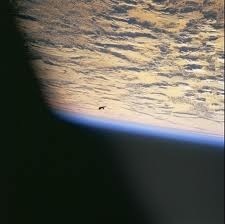
For decades, a powerful story has circulated in the conspiracy underground: the tale of the Black Knight Satellite. The story goes that there is an artificial satellite in a near-polar orbit of Earth that is thousands of years old. It has been transmitting strange signals and has been photographed by NASA astronauts. While most of the “evidence” for the Black Knight has been soundly debunked (often being misidentified space blankets or other debris), the myth endures for a reason. It taps into this deep-seated feeling that we are not alone, and that the evidence is right there, floating above our heads.

The story of the Black Knight, fact or fiction, shows us what we expect to find. A mysterious, ancient, non-human object in a peculiar orbit. Sound familiar?

Project Galileo and the Modern Search

This entire line of thinking is moving from the fringe to the forefront of science. Harvard astronomer Avi Loeb, famous for his work on the strange interstellar object ‘Oumuamua, has launched the Galileo Project. Its stated mission is to actively search for physical evidence of extraterrestrial technology. They aren’t just listening for radio signals anymore. They are hunting for probes. For artifacts. For the very objects we’ve been talking about. Mainstream science is finally catching up to the mystery.

What If? The Mind-Bending Scenarios

Let’s step back from the established theories and ask some truly mind-bending questions about the May 21st visitor. What if we’re not just looking at a simple rock or a passive observer?

What if the Flyby Was a Test?

Maybe the probe wasn’t just gathering data on us. Maybe it was gathering data on our *defenses*. It made a close, fast pass. It had a strange, hard-to-read signature. What if the whole point was to see if we would notice it? To gauge our level of planetary awareness? Did we pass the test by spotting it? Or did we fail by dismissing it as just another asteroid?

What if It’s a Cosmic Breadcrumb?

Consider this: what if the truck-sized object wasn’t the probe itself? What if it was just a marker? A tiny buoy ejected from a much larger, much more distant parent craft that we have no hope of detecting? A signpost in an invisible cosmic trail, marking our system as “interesting” or “quarantined” or “to be revisited later.” That small object could be a link in a galactic-wide network, and we just saw one tiny piece of it.

What if It’s a Von Neumann Probe?

This is perhaps the most awe-inspiring possibility. The legendary mathematician John von Neumann imagined a machine that could self-replicate. A Von Neumann Probe would be an interstellar craft that uses raw materials from an asteroid belt or moon to build perfect copies of itself. One probe becomes two. Two become four. Four become sixteen. In a shockingly short amount of cosmic time, a swarm of these probes could explore every single star system in the entire Milky Way galaxy.

If that’s true, then our visitor wasn’t a lone explorer. It was a single drone in a swarm of billions. A mechanical locust, patiently, efficiently, and relentlessly mapping everything. Not with malice, but with cold, calculating purpose. The mission isn’t to talk. The mission is to catalog. Earth has now been cataloged.

The object that flew past our planet in May is long gone, a whisper of data in a server farm. But it left a giant, gaping question mark hanging in the void above our heads. It reminds us that the skies are not empty. And that we have been looking for the wrong things.

We’ve been listening for a message in a bottle, when we should have been looking for the ship that threw it.

The next strange flicker in a telescope’s eye might not be a comet. It might not be an asteroid. It might be the answer we’ve been searching for. Or the one we should have been dreading.

Originally posted 2014-01-03 22:18:12. Republished by Blog Post Promoter