Home Weird World Archaeology Ancient code discovered

Ancient code discovered

0
52

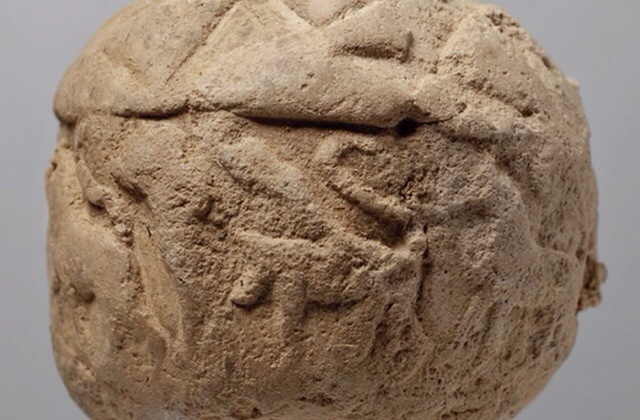
Ancient Mesopotamian Clay Envelope

The 5,500-Year-Old “Hard Drive” That Rewrites History

We think we invented the Information Age. We look at our solid-state drives, our cloud servers, and our smartphones, and we pat ourselves on the back for mastering the art of data storage. We are wrong.

Dead wrong.

Five and a half millennia ago—long before the first letter was scratched onto papyrus, long before the first stone tablet was chiseled—someone in ancient Mesopotamia picked up a handful of wet clay. They weren’t making a toy. They weren’t making a pot. They were building a machine.

A data machine.

Researchers studying mysterious clay balls from Mesopotamia have stumbled upon something that shouldn’t exist. They have found clues to a lost code, a system of record-keeping that predates the invention of writing by at least 200 years. This isn’t just a fun fact for history buffs. This changes the timeline of human intellect.

The clay balls may represent the world’s “very first data storage system,” at least the first that scientists know of. This startling claim comes from Christopher Woods, a professor at the University of Chicago’s Oriental Institute. In a lecture at Toronto’s Royal Ontario Museum, he dropped this bombshell findings on an audience expecting a standard archaeology talk.

What they got instead was a glimpse into a prehistoric encryption system.

The “Envelopes” of the Ancient World

These aren’t just lumps of mud. Researchers call them “envelopes.” And like any sealed envelope today, the contents are private. Hidden. Secret.

The balls were sealed shut thousands of years ago. Inside them? Tokens. Tiny geometric shapes made of stone or clay. The balls themselves vary wildly in size. Some are small, like a golf ball you could hide in your palm. Others are massive, baseball-sized chunks of weight and history. Only about 150 intact examples survive worldwide today.

Think about that scarcity. One hundred and fifty. That’s it.

If you break one open to see what’s inside, you destroy the artifact. You ruin the “envelope” to read the letter. For decades, this was the dilemma. Archaeologists were paralyzed. Do we smash history to understand it? Or do we let the mystery sit on a shelf, dusty and silent?

But technology finally caught up to the ancients.

X-Raying the Past: High-Tech Meets High-Antiquity

The researchers didn’t use hammers. They used high-resolution CT scans and 3D modeling. They blasted these ancient artifacts with X-rays to peer through the crust of time.

They looked inside more than 20 examples that were excavated at the site of Choga Mish, in western Iran, back in the late 1960s. These particular spheres were created about 5,500 years ago. This was a time when early cities were just starting to explode across Mesopotamia. Civilization was waking up.

What the scans revealed was mind-blowing.

Inside the shells were tokens in various geometric forms: cones, spheres, pyramids, lenses. But here is where it gets weird. Some of the balls contained channels—tiny tunnels criscrossing the interior. Were these for strings? Did they hold the tokens in a specific order? It looks like a circuit board made of mud.

The “Lost Code” of the Bureaucrats

Why go to all this trouble? Why hide shapes inside a clay ball?

Researchers have long believed these clay balls were used to record economic transactions. It sounds boring, right? “Economic transactions.” But think about what that actually means. It means trust. Or, more accurately, a lack of it.

You don’t need a receipt if you trust your neighbor. You don’t need a sealed contract if everyone tells the truth. These balls prove that 5,500 years ago, humans were already lying to each other, cheating each other, and demanding proof of payment.

The interpretation is based on an analysis of a much younger artifact—a 3,300-year-old clay ball found at a site in Mesopotamia named Nuzi. This object is the Rosetta Stone of clay balls.

The Nuzi ball was broken. Inside, there were 49 pebbles. But on the outside, there was a cuneiform text—actual writing. The text was a contract commanding a shepherd to care for 49 sheep and goats.

Boom.

49 pebbles. 49 animals. The connection was undeniable.

The Embezzlement Theory

Let’s paint a picture of the ancient crime scene. You are a wealthy livestock owner in ancient Iran. You have hundreds of sheep. You need a shepherd to take them to the mountains for grazing for three months.

But you don’t trust the shepherd. He might sell two sheep and tell you wolves ate them. He might keep the wool for himself.

So, you create a system. A contract.

You sit down with the shepherd. For every sheep he takes, you put one clay token into a ball. If he takes 49 sheep, you put in 49 tokens. Then, you seal the wet clay ball. You roll your personal seal over the wet clay, signing it like a signature.

The clay hardens. It is now a tamper-proof ledger.

The shepherd takes the flock. When he returns months later, you break the ball. You count the tokens. You count the sheep. If the numbers don’t match, the shepherd is in big trouble.

This is the “very first data storage system.” It’s a hard drive. It stores information physically. It prevents data corruption (cheating). It is a receipt, a contract, and a threat, all rolled into a ball of mud.

The Mystery Deepens: It’s Not Just Sheep

If it were only about counting sheep, the story would end there. But it doesn’t.

Professor Woods and his team found something odd in the Choga Mish balls. The tokens aren’t just simple pebbles. They are specific shapes. Pyramids. Ovoids. Cones.

Why different shapes?

If you are just counting animals, a pebble is fine. One pebble equals one sheep. Simple. But why use a pyramid? Why use a lens shape?

This suggests a much more complex code. Perhaps a pyramid stood for “10 sheep.” Maybe a sphere stood for “grain” instead of animals. Maybe a cone represented a specific amount of oil or honey.

We are looking at the prehistoric version of Excel spreadsheets.

The different shapes imply different values or different commodities. This is a massive leap in human cognitive development. It means these ancient people were capable of abstract thought. They could assign a physical object (a clay pyramid) to a conceptual number (10) or a specific good (barley).

This is the birth of math. This is the birth of accounting. And it happened 200 years before anyone figured out how to write the word “barley.”

The Pre-Writing Paradox

This discovery flips the script on how we understand the evolution of writing. We used to think writing was invented so poets could write epics or kings could boast about victories. No.

Writing was invented by accountants.

It was invented because people needed to keep track of their stuff. The clay balls (envelopes) were the Version 1.0 technology. They were clunky. You had to break them to read the data. That’s a terrible user interface. Imagine if you had to smash your laptop every time you wanted to read an email.

So, what happened?

Eventually, some genius bureaucrat realized something. “Why are we hiding the tokens inside? Why don’t we just press the shape of the token onto the outside of the wet clay?”

If you press a pyramid token into wet clay, it leaves a triangular wedge mark.

Wait for it.

Cuneiform.

The earliest form of writing, Cuneiform, is made of wedge-shaped marks. The theory is that these clay balls are the direct ancestors of writing. The tokens inside became the written symbols outside. The ball flattened out into a tablet. And history was born.

The Lost Metropolis of Choga Mish

To understand the artifact, you have to understand the place. Choga Mish wasn’t just a village. In 5,500 BC, it was a regional power center. It was a hub of trade, agriculture, and military might.

The excavations in the 1960s revealed a sophisticated society. They had massive architecture, complex pottery, and clearly, a headache-inducing amount of bureaucracy. The sheer number of these clay balls suggests a society obsessed with ownership.

These weren’t hunter-gatherers sharing the kill. These were city-dwellers dealing with property rights, taxes, and debt. The clay balls are the smoking gun of a complex economy.

But the CT scans revealed anomalies that still don’t fit the “sheep counter” theory.

Some of the balls from Choga Mish contain tokens made of a completely different material—a low-density material that the X-rays had trouble piercing. Is it bitumen? Is it wax? Why seal a liquid inside a clay ball?

And what about the fake tokens?

That’s right. Some of the “tokens” visible on the scans don’t look like the distinct geometric shapes found elsewhere. They look like random lumps. Were they “filler” noise? Or did they have a meaning we can’t even guess at? A token for “null”? A token for “void”?

A Blockchain Made of Mud?

In the modern world, we are obsessed with the “Blockchain.” The idea of an immutable ledger—a record that cannot be changed once it is written. We think it’s cutting-edge tech.

The Mesopotamians beat us to it.

The clay envelope was a blockchain. Once the clay was fired or dried, the record was sealed. You couldn’t take a token out without breaking the shell. If the shell was broken, everyone knew the contract was void. It was a trustless system. You didn’t need to trust the other party; you only had to trust the baked earth.

Christopher Woods and his team at the Oriental Institute are doing more than just scanning rocks. They are recovering the source code of civilization. By mapping the interior of these balls, they hope to crack the code of the geometric shapes.

If they can figure out that “Pyramid = 10” and “Sphere = 1” and “Cone = Wheat,” they can “read” these artifacts without ever opening them. They can reconstruct the economy of a lost world.

The Unanswered Questions

Despite the high-tech scans, the mystery hangs heavy in the air. We still don’t know the full story.

  • Why are there so few? If this was the standard way of doing business, shouldn’t there be millions of them? Why only 150? Were they recycled? Or was this a system reserved only for the elite, high-value transactions?
  • The “Rattle” Factor: Before they were scanned, museum curators noted that when you shook them, they rattled. The sound of 5,000-year-old data moving around. But some didn’t rattle. The tokens were stuck in the mud. Was that intentional?
  • The Transition: How long did the “Ball Era” last? Did it overlap with writing? Did old-school merchants refuse to use the new-fangled clay tablets (“I don’t trust these flat rocks, give me a good old-fashioned ball!”)?

Conclusion: The Data Endures

It is humbling. We look back at these people as primitive. We see their mud houses and stone tools and assume they were simple.

But they were dealing with the exact same problems we deal with today. Fraud. Memory. Data storage. The need to prove that you own what you say you own.

The clay balls of Choga Mish are a silent testament to human ingenuity. They took the dirt from the ground and turned it into a hard drive. They invented a code that kept their secrets safe for five thousand years. It took the most advanced medical scanners of the 21st century to finally peek inside.

What else is hiding in the museum basements of the world? What other “primitive” artifacts are actually sophisticated machines waiting for us to figure out how to turn them on?

The next time you save a file to the cloud, remember the Mesopotamians. They did it first. And honestly? Their hard drives lasted a lot longer than yours will.

The code is there. We are just starting to read it.

Originally posted 2013-10-18 22:02:31. Republished by Blog Post Promoter

Originally posted 2013-10-18 22:02:31. Republished by Blog Post Promoter