Is Mars Actually a Graveyard of Ancient Tech? The “Glass Tunnel” Enigma
Mars. The Red Planet. We look at it and see a dead, dusty rock floating in the cold void. NASA sends us high-resolution postcards of red dirt, red rocks, and more red dirt. But stop. Look closer. The official narrative is crumbling. For years, digital archaeologists and armchair astronomers have been scanning the archives, finding things that simply should not exist.
We aren’t talking about blurry Bigfoot photos here. We are talking about geometric precision. Massive structures. Things that look eerily industrial.
The rovers? They are staring at the ground, zapping pebbles, looking for microscopic microbes. But while Curiosity and Perseverance are busy with dust, the real story is looming in the background. It’s huge. It’s undeniable. And it looks like infrastructure.

The Arthur C. Clarke “Glass Worm” Theory
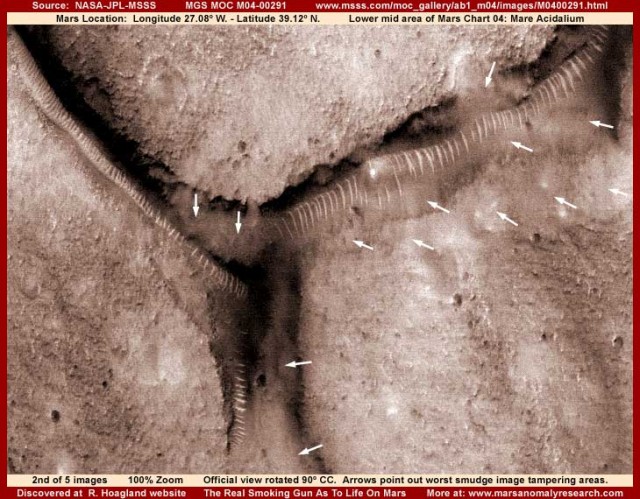
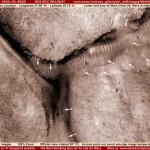
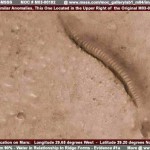
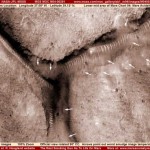
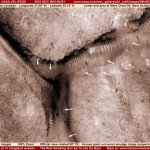
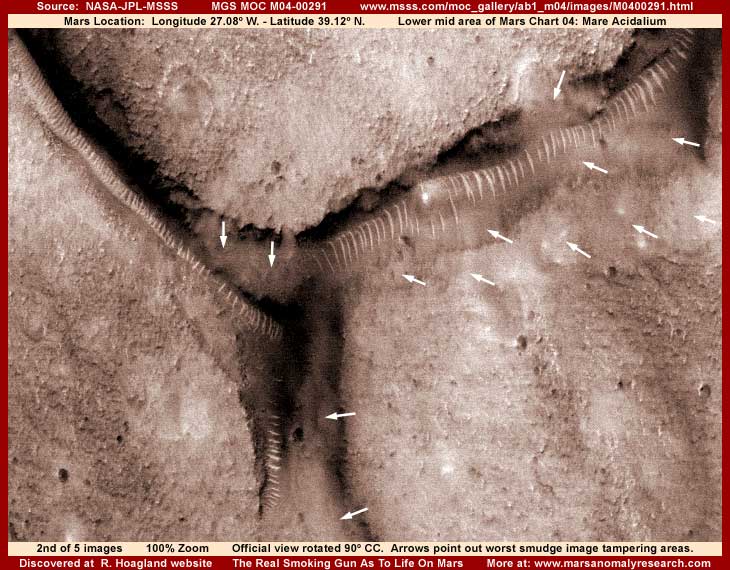
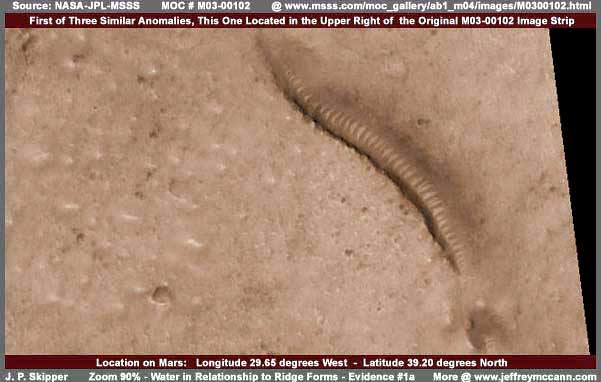
Look at the image above. Seriously, zoom in. Does that look like a rock formation to you? Nature creates chaos. Erosion creates smooth lumps or jagged edges. Nature does not create translucent, ribbed, tubular structures that wind across the landscape like a giant subway system.
This isn’t just internet hype. This anomaly caught the eye of the legendary Arthur C. Clarke. Yes, the man who wrote 2001: A Space Odyssey. He wasn’t a conspiracy theorist; he was a visionary. And when he saw these images from the survey missions, he didn’t stay quiet. He famously stated that he was “95% convinced” there was life on Mars based solely on these tube-like structures.
He called them “glass worms.”
But are they organic? Or are they something else?
The ribs on the tubes suggest structural integrity. Reinforcement. If you were building a transport system on a planet with a thin atmosphere and constant radiation bombardment, how would you do it? You would build tunnels. Glass or transparent alloy tunnels to let in light for agriculture while keeping the harsh vacuum out.
NASA dismisses these as “dunes” or geysers of CO2. But sand dunes don’t hold distinct, tubular shapes for miles. They don’t have translucent qualities. The “natural causes” story is wearing thin. It feels like a cover-up. A distraction.
Infrastructure from the Sky: The Satellite Evidence
When you get down on the ground, things can be confusing. Shadows play tricks. But from the air? Geometry doesn’t lie.
If these are not pictures of alien tunnels on Mars, then what are they? We are not convinced by the “wind and sand” explanation. Wind doesn’t build highways.

The “Inca City” Connection
Check out the overhead shot above. Look at the right angles. Look at the grid. This is what researchers call the “Inca City” anomaly. It looks like the ruined foundation of a massive complex.
Geologists try to say these are “magma dikes” that hardened underground before the surface eroded away. Nice try. But the intersections are too perfect. The spacing is too regular.
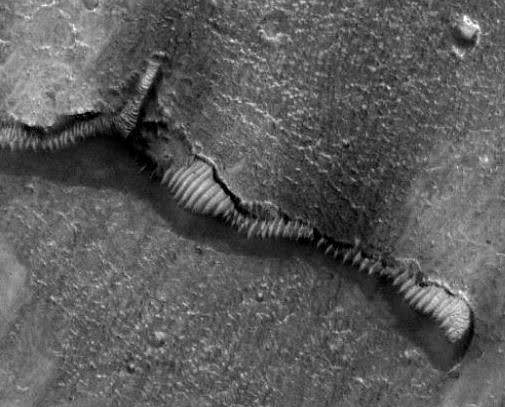
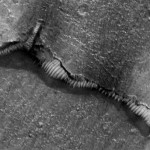
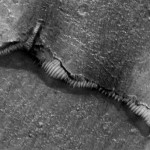
And what about this closer overhead shot below? This has to be a tunnel on Mars. It has depth. It has a convex shape. It winds through the terrain exactly like a pipeline.

Imagine the scale of this. If this is a tube, it’s hundreds of feet wide. Massive. Capable of moving armies, water, or entire populations beneath the surface.
Modern internet theories have pointed to the idea of a “Hollow Mars.” Not that the whole planet is empty, but that the civilization that lived there went underground eons ago. Why? Maybe a solar flare. Maybe a nuclear war. Dr. John Brandenburg, a plasma physicist, has published papers suggesting the isotopic signature of Mars’ atmosphere resembles that of a nuclear explosion.
If the surface was nuked, where do you go? You go down. You build tubes. You build domes. You survive.
Pareidolia or Paleontology? The Skull Enigma
So if they are tunnels, then who built them? Who walked these red sands before the atmosphere was stripped away?
Maybe the answer is staring us right in the face. Literally.
Skeptics love the word “Pareidolia.” It’s a psychological term. It means your brain is hardwired to see faces in random noise. You see a face in a cloud. You see Jesus on a piece of toast. NASA uses this word like a shield. Every time we find something weird, they scream “Pareidolia!” and shut down the conversation.
But sometimes, a skull is just a skull.
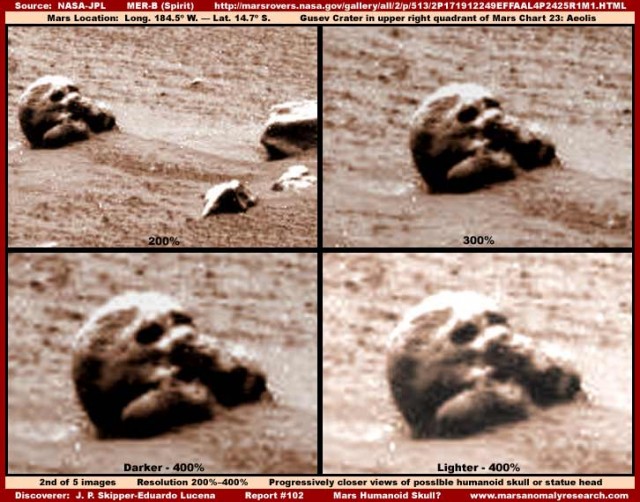
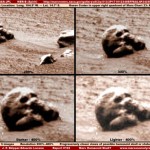
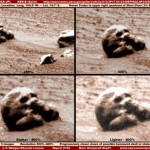
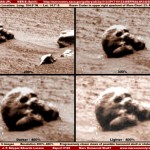
Take a look at this. This isn’t a blurry shadow. This is distinct. It’s another strange thing on Mars that demands an explanation.
The Mars Skull.

Anatomy of an Alien?
Let’s break this image down. You have a clear cranial dome. You have eye sockets. You have a nasal cavity. You have a jawline. The proportions are terrifyingly biological.
Rocks fracture along fault lines. They break into jagged shards. They do not naturally erode into perfect bilateral symmetry with a mouth and two eyes.
Is this a fossil?
If it is, the implications are world-shattering. It means we aren’t the first humanoids in this solar system. It means Mars wasn’t just a wet rock with some bacteria on it; it was home to complex, evolved life.
Compare this to the famous “Face on Mars” in the Cydonia region. NASA took a new photo years later and claimed it was just a mesa. But independent researchers have analyzed the 3D geometry and found that the “Face” has mathematical consistencies that align with ancient monuments on Earth.
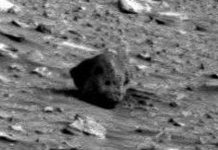
This skull? It’s small enough to be missed by a satellite, but the rover drove right past it.
The Great Filter: Why Is It All Broken?
This brings us to the most chilling question of all.
If these are glass tunnels, and if that is a skull, what happened? The tunnels are cracked. The skull is bleaching in the radiation. The “Inca City” is a ruin.
Everything is dead.
Are we looking at our own future? Elon Musk wants to colonize Mars. He wants to send Starships there to build a new civilization. But maybe we are just returning to the scene of the crime. Maybe we originated there, destroyed the planet, and fled to Earth, forgetting our history over thousands of years.
The evidence is scattered across the Martian surface like a jigsaw puzzle. NASA releases the pieces one by one, buried in gigabytes of raw data, hoping no one puts them together.
The Gallery of Anomalies
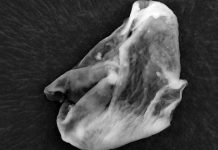
Don’t take our word for it. Look at the raw data. Look at the variations. We have compiled a gallery of the strangest, most inexplicable images beamed back from the Red Planet.
Scan them. Look for the patterns. Ask yourself: Does nature make ninety-degree angles? Does wind carve perfect spheres? Does dust form translucent tubes?
The truth is out there, sitting in the red dust, waiting for someone brave enough to admit what they are seeing.
Originally posted 2016-03-29. Updated for 2024.