Thursday, July 9, 2026
HomeWeird WorldStrange PlacesAmericas most haunted locations – Danvers State Hospital

Americas most haunted locations – Danvers State Hospital

The Danvers State Asylum: The Real-Life Nightmare That Inspired Arkham

There are some places on Earth where history feels heavy. Where the air is thick with memory and the very ground seems to cry out. Places where tragedy has seeped into the soil, staining it forever.

Hathorne Hill in Danvers, Massachusetts, is one of those places.

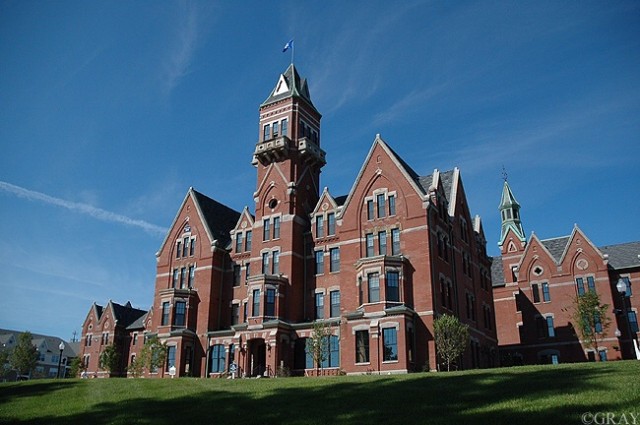
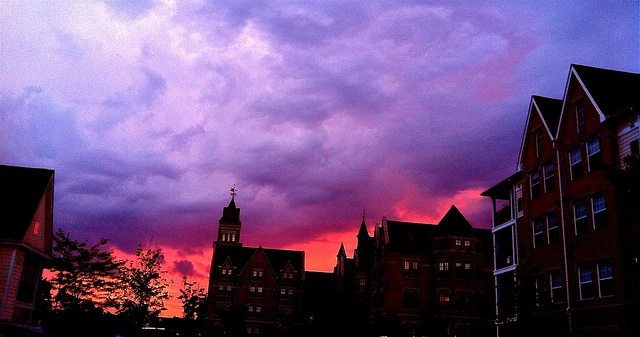
Looming over the countryside, a gothic monstrosity of brick and slate once stood, its spires clawing at the sky like skeletal fingers. This was the Danvers State Hospital for the Criminally Insane. A name that sounds like it was ripped straight from a penny dreadful. And in a way, it was. This building, this place of profound suffering, is widely believed to be the direct inspiration for one of the most terrifying locations in all of fiction: H.P. Lovecraft’s Arkham Sanatorium.

But the truth? The truth of what happened inside those walls is infinitely more disturbing than any story Lovecraft could ever dream up. This isn’t just a ghost story. It’s a cautionary tale of good intentions paving a literal road to hell.

So, turn down the lights. Lean in close. We’re going back to the beginning, to a dream that soured into America’s most infamous asylum.

A Palace for the Mad: The Utopian Dream of Dr. Kirkbride

It wasn’t supposed to be a place of fear. Just the opposite.

When construction began in 1874, the Danvers State Hospital was a symbol of hope. It was a rejection of the old ways of dealing with mental illness—of chaining people in dark, filthy basements and forgetting they existed. This was a new era. An enlightened era.

The entire facility was built according to the “Kirkbride Plan,” a revolutionary philosophy championed by Dr. Thomas Story Kirkbride. He believed that architecture itself could be a form of therapy. He imagined a place of beauty and tranquility. A place where patients could heal.

Deep Dive: The Kirkbride Plan

What was this plan, exactly? It was radical. Kirkbride envisioned enormous, stately buildings with a central administration hub and long, staggered wings branching off like a bat’s. This specific “bat-wing” layout ensured every single patient room had a window with direct access to sunlight and fresh air. No dark corners. No forgotten souls.

The interiors were to be grand. High ceilings, ornate woodwork, airy corridors, and private rooms. The grounds were to be sprawling, with farms, gardens, and workshops. The idea was “moral treatment”—that giving patients purpose, respect, and a beautiful environment could do more than any medicine of the day. It was a beautiful idea. A noble one. And for a short time, at Danvers, it almost worked.

But maybe the place was cursed from the start. The hospital was built on Hathorne Hill, land once owned by the infamous Judge John Hathorne, one of the most ruthless and unrepentant judges of the Salem Witch Trials. Bad blood in the soil, some might say.

The Dream Sours: A Rising Tide of Misery

The great promise of Danvers didn’t last. The beautiful palace on the hill soon became a warehouse for the unwanted.

The hospital was designed to comfortably house around 500 to 600 patients. It was a key part of the Kirkbride Plan—keep it manageable, keep it personal. But society had other ideas. As cities swelled and families found themselves unable to care for mentally ill relatives, they were shipped off to places like Danvers. The courts sent criminals deemed “insane.” The poor, the eccentric, the inconvenient… they all ended up at Danvers.

By the late 1930s, the population had exploded. We’re talking over 2,300 people crammed into a space built for a quarter of that number. Think about that. Patients were sleeping on floors, in hallways, in damp basements and sweltering attics. The private rooms became crowded dormitories. The staff, already overworked, was stretched to the breaking point. The ratio of doctors and nurses to patients was catastrophically low.

Neglect became the new standard of care. The ornate building began to rot. Paint peeled, windows broke, and the once-pristine halls filled with filth and the stench of human misery. Patients were left in their own waste. Sickness spread like wildfire. Sometimes, a patient would wander off into a forgotten room or closet and die, their body not discovered for days, or even weeks. The dream was dead. A new, nightmarish reality had taken its place.

image

Whispers from the Treatment Wards: The Age of Barbarism

With control lost, the staff resorted to more extreme measures. The era of “moral treatment” was a distant memory. The era of “medical torture” had begun.

Straitjackets, solitary confinement, and padded cells became commonplace. But that was just the beginning. The search for a “cure”—or at least a way to make patients more docile—led to a battery of horrifying experimental procedures.

From Ice Baths to Shock Boxes

Hydrotherapy sounds pleasant, doesn’t it? Like a spa treatment. At Danvers, it was anything but. It involved either mummy-wrapping patients in sheets soaked in ice-cold water for hours on end or blasting them with high-pressure hoses. Insulin coma therapy was another favorite, where patients were given massive overdoses of insulin to induce seizures and a multi-day coma. The hope was they’d wake up “reset.” Many woke up with brain damage. Or they didn’t wake up at all.

And then there was electroshock therapy. In its early days, it was a brutal procedure administered without anesthesia. High voltages of electricity were sent surging through the patient’s brain, causing violent, bone-breaking convulsions. It was used for everything from schizophrenia to depression, but more often than not, it was used as a threat. A punishment to keep unruly patients in line.

The Ice Pick Miracle: Danvers and the Lobotomy

Of all the horrors, one stands above the rest. The lobotomy.

Danvers is often whispered to be the “birthplace of the prefrontal lobotomy,” a place where the procedure was used with terrifying frequency. While Dr. Walter Freeman was the infamous traveling showman of the procedure, asylums like Danvers became his eager disciples. The transorbital lobotomy was shockingly simple. It required a tool that looked like an ice pick, called a leucotome, and a mallet.

The procedure was grim. The leucotome was inserted above the patient’s eyeball, through the thin bone of the eye socket. A few taps with the mallet drove it into the frontal lobes of the brain. The doctor would then swish the tool back and forth, severing the connections. The goal? To cut away the part of the brain responsible for emotion and complex thought, supposedly curing the patient.

What it really did was create zombies. Visitors to Danvers in the 1940s and 50s described what they saw. Hundreds of patients aimlessly shuffling through the corridors. People staring blankly at walls for hours on end, drooling. Their illness may have been gone, but so was their personality, their soul, their very essence. They were empty shells, made manageable by a spike through the brain.

The Pop Culture Infection: Danvers Becomes Arkham

A place this soaked in pain doesn’t stay secret. It starts to bleed into our stories, our nightmares. Danvers became a legend.

Horror author H.P. Lovecraft, a man plagued by his own anxieties about sanity and tainted bloodlines, saw Danvers State Hospital and was deeply affected. The towering, menacing Gothic architecture, the rumors of what went on inside… it was the perfect real-world anchor for his fictional horrors. The Danvers State Hospital became the Arkham Sanatorium, the terrifying asylum that housed the Joker, Scarecrow, and Batman’s other sanity-challenged foes.

But the hospital’s most chilling star turn came in 2001.

Session 9: When The Set Becomes The Monster

The horror film Session 9 wasn’t just *set* at Danvers. It was filmed inside the actual, abandoned, decaying hospital. The production crew didn’t need to build sets; they just pointed the camera. The peeling paint, the patient files scattered on the floor, the overturned wheelchairs, the creepy medical equipment left to rust… it was all real. The building itself is the most terrifying character in the movie. The cast and crew reported an overwhelming feeling of sadness and dread the entire time they were filming, with many claiming to have experienced unexplained whispers and apparitions.

The hospital’s malevolent energy was so strong, it became a part of the film’s DNA, creating one of the most genuinely unsettling horror movies ever made. The exterior even shows up in the video game Painkiller. Danvers had officially crossed over from historical tragedy to horror icon.

image

From Ruin to Residence: The Controversial Rebirth

The introduction of antipsychotic drugs in the 1950s began the long, slow death of asylums like Danvers. The hospital started closing wards in 1969, and by 1992, the last patient left. The doors were chained shut, and the great palace on Hathorne Hill was left to rot.

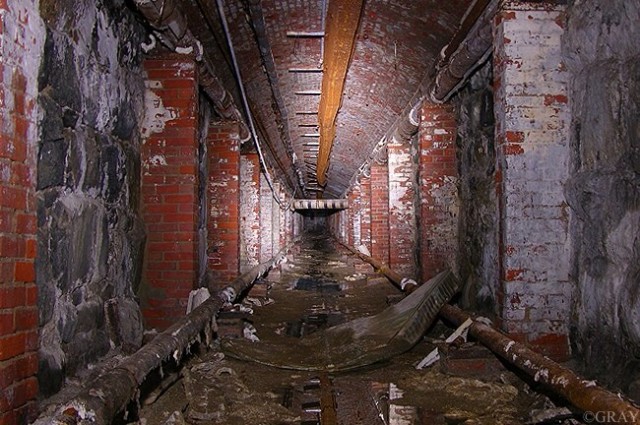
For over a decade, it sat abandoned. A magnet for urban explorers, photographers, and ghost hunters who documented its sad, beautiful decay. The images from this period are haunting, showing nature reclaiming the hallways where thousands had suffered.

Then, in 2005, a developer bought the property with a shocking plan: demolish most of the historic site and build luxury apartments.

A firestorm of controversy erupted. Preservationists fought to save the building, a powerful and grim monument to a dark chapter in our history. But money won out. Most of the legendary bat-wing structures were torn down. The network of underground tunnels used to move patients and supplies was sealed off. Much of the history was simply erased.

As a compromise, the developer, AvalonBay Communities, saved the iconic facade of the central Kirkbride building, gutting the interior and building the new apartment complex, Avalon at Danvers, behind and within it. People now live where lobotomies were performed. They cook dinner where patients were left in straitjackets. The cemeteries, filled with hundreds of graves marked only by small, numbered stones, still sit on the property.

And the stories haven’t stopped.

Modern internet forums and paranormal sites are filled with claims from residents and visitors of the new apartments. They report disembodied voices, doors opening and closing on their own, feelings of being watched, and shadowy figures seen in the new, sanitized hallways. It seems you can tear down the walls, but you can’t erase the psychic stain.

The story of Danvers is a tragedy on every level. A story of a dream of healing that curdled into a nightmare of confinement and torture. It’s a reminder of how easily we can dehumanize those we don’t understand. The original building is mostly gone now, a ghost of a memory. But the energy remains.

The walls may be new, but the land remembers. And on Hathorne Hill, the shadows are very, very long.

Arindam Mukherjee
Arindam Mukherjee
Arindam loves aliens, mysteries and pursing his interest in the area of hacking as a technical writer at 'Planet wank'. You can catch him at his social profiles anytime.
RELATED ARTICLES
- Advertisment -

Most Popular

Recent Comments

Warren Pan Abbott on The legend of the Devil Monkey !
chris davies on The McPherson Tape Mystery
Reed Reedly on ET has Internet!
Bea Houseoffashion on Proof Of Time Travellers – Gallery
Marcus2012 on ET has Internet!
Reed Reedly on ET has Internet!
LaughsAtConspiracyNuts on The 9/11 Conspiracy – Myths and Facts
Alex Sliverman on Did the ancients fly?
Doctor Wholigan on Time Traveler in 1938 film
chris davies on The McPherson Tape Mystery
Archie1954 on 10 secret UFO hideouts
chris davies on Ghosts of flight 401
Marcus2012 on ET has Internet!
jason Macdonald on Proof of Time Travel? – China
chris davies on Long-Lost Pyramids Found?
Reed Reedly on ET has Internet!
Milkman on Connected Universe
Tenmiles on Baigong Pipes Mystery
Simon Foster on Sirius – The Documentary
From the 1st April on 2013 – Alien Contact date ?
SkyWatcher on Is ET ignoring us?
I Come From The Future on Obama to make UFO Alien disclouser soon ?
Just another person on 2013 – Alien Contact date ?
Malcolm Windowcleaner on The strange case of Rudolph Fentz
Mason Servio on Strange Things on Mars
Marke Wisdom Seeker on What will we find as arctic melts?
Andrea A Elisabeth Levyne on Aliens Captured in Varginha, Brazil
Mitch Grouyeki on Amazing Space Shuttle pictures