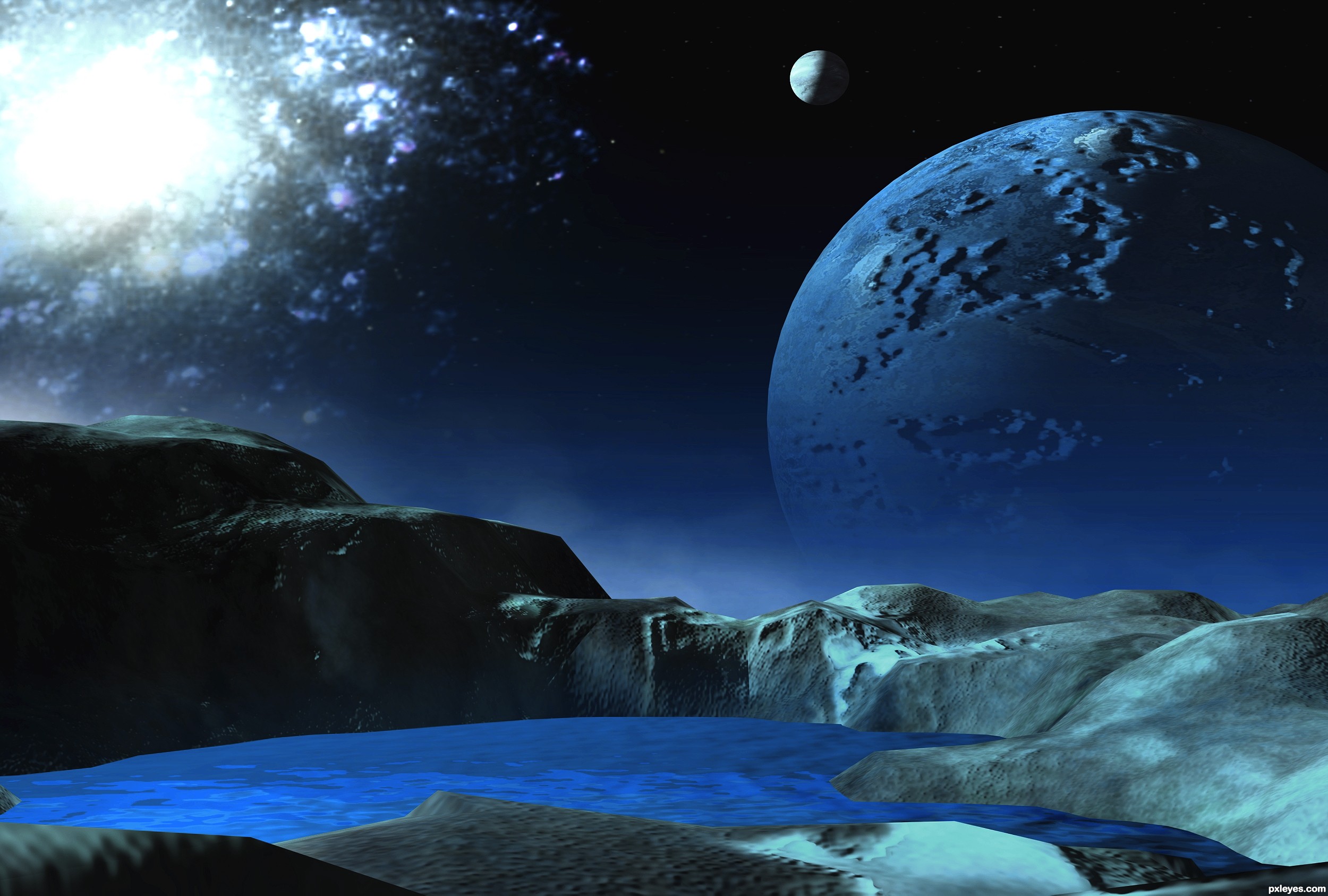
Space. It is the final frontier, right? That’s what they tell us. It’s a boundless black ocean dotted with diamonds, a place of infinite silence and terrifying beauty. We look up at the night sky and feel small. We feel insignificant. And then, we look at the pictures.
NASA feeds us these images. They drop them like breadcrumbs. High-resolution, technicolor masterpieces that look more like abstract art than scientific data. They tell us, “Look here. This is a nebula. This is a galaxy eating another galaxy. Isn’t it pretty?” And we nod. We share them on Facebook. We set them as our wallpapers. We say, “Wow, space is an amazing place.”
But stop for a second.
Zoom in. Look closer. What are you actually looking at? Are you seeing the raw, unadulterated reality of the cosmos? or are you looking at a construction? A painting made by data analysts and graphic designers?
The gallery we are talking about today—provided by NASA—features some of the most stunning space pictures ever released. But in this deep dive, we aren’t just going to ogle the pretty lights. We are going to rip apart the frame and see what’s hiding behind the canvas. Because in the world of space exploration, what they don’t show you is often far more important than what they do.
The Great “False Color” Controversy
Here is a cold, hard fact that might ruin your day: Space doesn’t look like that. If you were floating outside the airlock of the International Space Station, looking at the Eagle Nebula with your own naked eyes, it wouldn’t be a vibrant explosion of neon pinks, electric blues, and deep purples. It would likely be a faint, grayish smudge.
Disappointed? You should be.
NASA openly admits to using something called “False Color.” They take data—radio waves, infrared, ultraviolet—stuff your human eyes cannot physically see, and they map it to colors you can see. They assign red to sulfur, blue to oxygen, green to hydrogen. They say it’s to help scientists visualize the chemical makeup of gas clouds. It’s a tool. A utility.
But ask yourself this: At what point does data visualization become artistic manipulation? At what point does a photograph become a cartoon?
When the Hubble Space Telescope sends back raw data, it comes in black and white. Mono. Boring. NASA’s imaging team then steps in. They layer it. They saturation-boost it. They create a masterpiece. Critics and conspiracy theorists have argued for years that this isn’t just about science. It’s about funding. It’s about PR. If space looks like a gray void, nobody cares. If space looks like a psychedelic light show, Congress signs the checks.
Is it a lie? Maybe not a malicious one. But it filters our perception of reality. It makes space seem welcoming, magical, and full of life, rather than cold, radioactive, and hostile. It’s the Instagram filter of the universe.
The “Clean Room” Theory: What Gets Airbrushed Out?
Now, let’s get into the stuff that keeps me up at night. The colors are one thing. We can forgive them for making the universe look pretty. But what about the things they remove?
There is a persistent rumor, fueled by whistleblowers and former contractors, that NASA has a “cleaning” department. The most famous story comes from a woman named Donna Hare. She claimed she worked for a contractor, Philco Ford, in the early 1970s. She had high-level security clearance.
According to her testimony—which you can find floating around the darker corners of the internet—she walked into a photo lab and saw a NASA employee airbrushing a photo. Not just any photo. An aerial shot of the ground. And casting a shadow on that ground was a distinct, round, metallic craft.
She asked, “Is that a UFO?”
The employee allegedly smiled and said they had to smooth out the images before they could be released to the public. “We airbrush these out,” he reportedly told her.
Think about the implications. If this story holds even an ounce of water, it means every single “amazing space picture” we see in public galleries has been scrubbed. Sanitized. It means the photos are not a record of what is out there; they are a record of what they want us to think is out there.
The Case of the Missing Stars
Have you ever looked at photos from the Apollo moon landings? Or even some low-orbit shots? Look at the background. It is pitch black. Ink. Void.
Where are the stars?
Skeptics—the debunkers—have a standard answer. They scream “Exposure settings!” at anyone who asks. They say the camera is set to capture the bright surface of the moon, so the faint light of the stars doesn’t register. It sounds logical. It sounds scientific. It shuts people up.
But does it settle it? Not for everyone. There are photos taken in similar lighting conditions on Earth where background lights still show up. Why is the sky above the moon perfectly, suspiciously empty? Some theories suggest the stars were removed because the constellations would look “wrong” from that angle, giving away a studio location. Others think the sky was so full of activity—UFOs, debris, structures—that it was easier to paint the whole background black than to edit out a thousand individual anomalies.
When you browse through NASA galleries, pay attention to the black space. Is it empty because there’s nothing there? or is it empty because the truth was too crowded?
Pareidolia or Proof? The Mars Anomalies
Let’s talk about the Red Planet. Mars is the current darling of the space community. We have rovers crawling all over it right now, snapping high-def selfies and drilling into rocks. The images coming back from Mars are breathtaking. Desolate, red deserts. Towering mountains. Ancient riverbeds.
But the “Eagle Eyes” of the internet—the amateur anomaly hunters—have found things in these pictures that defy explanation.
The Face on Mars. We all know this one. Viking 1, 1976. It snapped a picture of the Cydonia region, and there, staring up at the camera, was a human face. A helmeted head. Shadows in the eyes. A mouth. NASA laughed it off. “It’s a trick of light and shadow,” they said. Years later, they released higher-resolution images showing it was just a mesa. Just a rock formation.
Did they? Or did they release a manipulated image to kill the story?
Even if you accept the Face was just a rock, what about the others? What about the “Mars Henge”? What about the perfectly spherical “blueberries” (hematite spheres) that look manufactured? What about the photo that appears to show a thigh bone? Or the one that looks like a crashed disc half-buried in the sand?
The official word is “Pareidolia.” That’s the psychological phenomenon where the human brain tries to make sense of random patterns. We see faces in clouds. We see Jesus in toast. We see statues on Mars.
But statistics are a stubborn thing. If you roll a dice a billion times, you’ll get some weird sequences. But if you keep rolling “ancient ruin” after “ancient ruin” in a specific sector of Mars, is it still just luck? Or are we looking at the dust-covered remains of a civilization that died while Earth was still cooling down?
The Black Knight Satellite: The Watcher in the Dark
While we are staring at distant galaxies, something might be staring back at us from right here in our own backyard. One of the most enduring legends involving space photography is the “Black Knight Satellite.”
The story goes like this: There is a dark, tumbling object in a polar orbit around Earth. It’s been there for 13,000 years. Nikola Tesla supposedly picked up radio signals from it in 1899. He said they were rhythmic. Mathematical. Not random noise from stars. He thought he was talking to Mars. Maybe he was talking to the Sentinel.
In 1998, during the STS-88 mission, the crew of the Space Shuttle Endeavour snapped photos of a weird, black, odd-shaped object floating near the craft. NASA called it “space debris.” specifically, a thermal blanket cover that had drifted away during an EVA (spacewalk). A blanket.
Look up the photo. It doesn’t look like a blanket. It looks solid. It looks structured. It looks predatory.
If the Black Knight is real, it changes everything about these “amazing space pictures.” It means that while we are pointing our lenses outward, trying to find life, an ancient probe has been sitting on our front porch, recording our history, waiting for us to be ready. Or maybe waiting for us to make a mistake.
The Moon: What Are They Hiding on the Dark Side?
We haven’t been back to the moon in half a century. Why? We have iPhones more powerful than the computers that ran Apollo 11. We have reusable rockets. We have trillion-dollar budgets. Yet, the Moon remains off-limits for human boots.
Maybe the pictures tell us why.
There are thousands of images from the Clementine mission and the Lunar Orbiter probes. But if you dig through the archives, you find sections that are blurred. Smudged. Pixelated blocks over specific craters.
Why blur a rock?
Theory: The Shard. An object captured in a photo from the Lunar Orbiter III. It rises miles up from the surface. It casts a shadow. It looks like a spire. A tower of glass or crystal. Nature doesn’t build mile-high towers on airless moons. Geometry doesn’t happen by accident.
Theory: The Castle. Another anomaly. A hovering structure, seemingly suspended miles above the surface. It defies gravity. It defies logic.
If these structures exist, then the photos we see are carefully curated to hide a mining operation, an alien forward base, or ancient technology that we are too scared to touch. We stopped going to the moon, the theory goes, because we were told to stop. We were warned off. And the pictures are the only evidence we have left.
The Hubble Legacy and the Webb Revolution
The images featured in galleries like this one usually come from the heavy hitters: Hubble and the new James Webb Space Telescope (JWST). These machines are time machines. They look back billions of years. They show us the universe as it was near the beginning.
But here is a mind-bending thought: The further out we look, the more anomalies we find that don’t fit our standard model of physics.
Recent data from the James Webb telescope is breaking cosmology. It’s finding galaxies that are too big, too bright, and too old to exist according to the Big Bang theory. They shouldn’t be there. It’s like finding a fully built skyscraper in a photo of a prehistoric jungle.
What does NASA do when the photos break the science? They scramble. They rewrite the equations. But for a brief moment, before the “fix” comes in, we get a glimpse of the chaos. We see that our understanding of the universe is held together with duct tape and wishful thinking.
These pictures are beautiful, yes. But they are also evidence of our ignorance. Every bright spot is a question mark. Every dark patch is a potential hiding spot.
The Psychological Impact of “The Void”
Why are we so obsessed with these pictures? Why do we need this gallery?
Because we are terrified of being alone. We scour these high-resolution JPEGs looking for a sign. A green pixel. A straight line. A pattern. We want to know that in all that violent, freezing vastness, someone else is looking back.
NASA knows this. They know that if they released a thousand photos of empty, black nothingness, funding would dry up. The public would lose interest. “Space is dead,” we’d say. “Let’s fix the roads instead.”
So, they give us the “Pillars of Creation.” They give us the “Eye of God.” They give us celestial candy. They curate the gallery to inspire awe, not existential dread. They are managing our collective psyche just as much as they are managing a space program.
The Digital filtering of Reality
In the age of AI and deepfakes, trust is at an all-time low. We can generate a photo of a person who never existed. We can create video of a president saying things they never said. How hard is it to generate a starfield?
I’m not saying the galaxy is fake. I’m not saying space isn’t real. But I am asking: How would you know? If the only window you have into the universe is a digital screen, and the image on that screen is provided by a government agency with a history of secrecy, can you trust your eyes?
Every image passes through a chain of custody. Satellite -> Receiver -> Databank -> Processing Software -> Editor -> Public Relations -> You. That is six steps where the truth can be altered. Six checkpoints where a UFO can be erased, a color can be changed, or a star can be deleted.
Final Thoughts: Keep Watching the Skies
So, go ahead. Scroll through the gallery. Marvel at the swirling gases of Jupiter. Stare into the heart of the Andromeda galaxy. Let your jaw drop at the sheer scale of it all. It is undeniably beautiful.
But keep your skepticism handy. Keep that little voice in the back of your head awake. The one that asks, “Is that real?” The one that notices the blurred patch in the corner. The one that wonders why the sky is so dark.
Space is an amazing place. It’s a place of monsters and miracles. It’s a place where the laws of physics might just be suggestions. And these pictures? They are the postcards sent home by the explorers.
Just remember that explorers sometimes exaggerate. They sometimes leave out the scary parts. And sometimes, they rewrite the map entirely to hide the treasure.
Enjoy the view. But don’t believe everything you see.
Originally posted 2016-05-04 12:27:56. Republished by Blog Post Promoter