The Alien Messenger: Did a Sri Lankan Meteorite Bring Proof of Extraterrestrial Life?
It started with a fireball. A screaming, incandescent tear in the fabric of the sky.
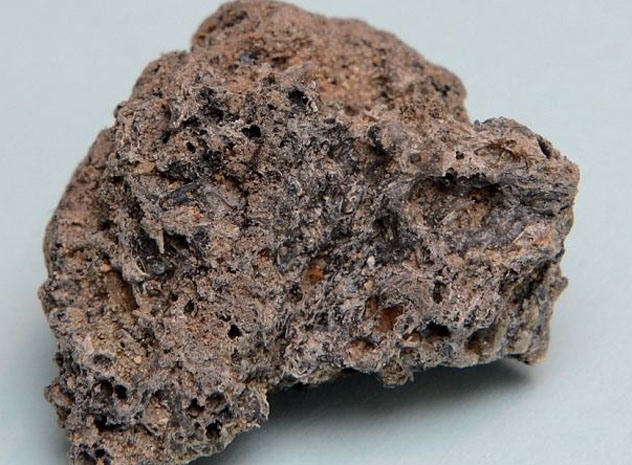
On December 29, 2012, villagers in Polonnaruwa, Sri Lanka, watched in awe and terror as something from beyond our world blazed a path through the atmosphere. It wasn’t just a light show. It was an arrival. After the spectacle, strange, porous, carbonaceous stones were found scattered across rice paddies and fields. They were light, almost fragile to the touch, and smelled faintly of burnt asphalt.
Most people would call them meteorites. Just chunks of space rock. End of story.
They would be wrong.
Because according to a handful of determined scientists, these weren’t just rocks. They were cargo. They were artifacts. And inside them, locked within the ancient, cosmic matrix, was something that could shatter our understanding of life itself.
Under the Microscope: A Bombshell in Stone
The fragments were quickly gathered and sent for analysis. One of the first to get his hands on them was Professor Chandra Wickramasinghe, director of the Buckingham Centre for Astrobiology. And what his team reported finding was nothing short of impossible.
Imagine the scene. A sterile lab. The hum of electronics. A technician places a sliver of the meteorite under a powerful scanning electron microscope. The lens pushes in, magnifying the alien rock a thousand, then ten thousand times. And then… something stares back.
It wasn’t a microbe. Not some simple, single-celled cosmic bacteria. It was something far more complex. Something elegant. Something that looked impossibly… familiar.

Inside the meteorite, Wickramasinghe’s team claimed to have found the fossilized remains of diatoms. These are a type of algae, microscopic lifeforms that build intricate, beautiful shells for themselves out of silica. They are, in essence, tiny living jewels. And they were supposedly fused into the very structure of a rock that had just traveled across the black void of space.
The announcement sent shockwaves through the scientific community. It was a claim of monumental proportions. This wasn’t a vague chemical signature or a weirdly shaped rock formation like the famous Mars meteorite. This was a direct, physical fossil. A complex lifeform. An alien. It was, if true, the smoking gun.
The Champion of Cosmic Life: Who is Chandra Wickramasinghe?
To understand the firestorm that followed, you have to understand the man at its center. Professor Wickramasinghe is no fringe amateur. He’s a brilliant, decorated mathematician and astronomer. For decades, he worked alongside the legendary Sir Fred Hoyle, one of the 20th century’s most important (and controversial) scientists.
Together, they championed a theory that most of their colleagues dismissed as science fiction.
They called it Panspermia.
Deep Dive: What is Panspermia?
Forget the primordial soup. Forget the lightning strike in a shallow pool of chemicals. The theory of Panspermia suggests that life didn’t start on Earth at all. It *arrived* here.
Think of it like this: The universe is a vast garden, and life is a hardy weed. Its seeds—microbes, spores, the fundamental building blocks—are constantly being blown from one world to another on the solar winds. They ride inside comets and get blasted off planets by asteroid impacts, traveling for eons inside rocky “lifeboats” until they crash-land on a new, fertile world like our own.
Life isn’t an Earth-based phenomenon. It’s a cosmic one. We are, in the most literal sense, the children of the stars.
For decades, Wickramasinghe has been the theory’s most vocal advocate. He’s claimed to find evidence of extraterrestrial biology in the stratospheric dust and in the red rain of Kerala. To his supporters, he is a visionary, a Galileo-figure fighting a dogmatic establishment. To his critics, he’s a man with a hammer, and every rock looks like an alien nail.
And the Polonnaruwa meteorite? To Wickramasinghe, this was it. This was the proof he had been searching for his entire life.
The Backlash: A Case of Dirty Water?
The scientific establishment did not cheer. They sharpened their knives.
The counter-arguments came fast and furious, and they all centered on one, damning word: Contamination.
Think about where the rocks were found. Rice paddies. Ponds. Ditches. These are places teeming with terrestrial life, especially freshwater diatoms. The critics painted a simple, devastatingly plausible picture. A sterile, porous meteorite from space crashes to Earth. It lands in a puddle. Like a sponge, it soaks up the local water, and along with it, all the tiny diatoms swimming around. When Wickramasinghe’s team looked at it under a microscope… voilà. They found exactly what you’d expect to find in a wet rock from a Sri Lankan field.
One paleontologist, Phil Plait, famously slammed the research, pointing out that the species of “alien” diatoms identified in the meteorite were, in fact, well-known freshwater species native to… Earth.
It was an embarrassing accusation. The smoking gun was starting to look like a water pistol. The scientific community, by and large, dismissed the findings. The case was closed. Another instance of wishful thinking.
But the story wasn’t over.
The Rebuttal: A Deeper Look at the Evidence
Wickramasinghe and his team refused to back down. They knew about the contamination argument. They had anticipated it. And they claimed to have proof it was wrong.
They published follow-up papers, presenting new lines of evidence they believed were irrefutable.
Clue #1: The Nitrogen Deficit
All life on Earth, from the smallest bacteria to the largest whale, is built with a specific recipe of elements. Nitrogen is a key ingredient. But when they analyzed the diatoms in the meteorite, they found them to have very low levels of nitrogen compared to their Earthly cousins. Their elemental makeup was subtly, but fundamentally, *different*. It suggested an origin in an environment with a different chemical balance than our own.
Clue #2: The Embedded Proof
The team argued forcefully that the fossils weren’t just sitting on the surface, which you’d expect from contamination. They presented images showing diatom shells deeply embedded within the rock’s mineral matrix. They were fused *into* the stone, broken and integrated in a way that suggested they were present when the rock itself formed, billions of years ago, somewhere out in the cosmos. How could a modern diatom from a pond get inside a solid rock?
Clue #3: The Oxygen Signature
Perhaps the most compelling argument came from stable isotope analysis. Think of it as a chemical fingerprint. Oxygen atoms come in different “weights” or isotopes. The ratio of these isotopes in living things on Earth is very consistent. According to a 2018 paper from Wickramasinghe’s camp, the oxygen isotope ratios in the meteorite fossils were wildly different from anything on Earth. They screamed of an off-world origin.
The battle lines were drawn. On one side, a simple, elegant explanation: contamination. On the other, a series of strange, technical anomalies that hinted at something far, far more profound.
The Chilling Question: What If It’s Real?
Let’s step away from the debate for a moment. Let’s engage in a thought experiment. Let’s assume Wickramasinghe is right.
What does it mean?
It means that everything we thought we knew about our own origins is wrong. Life is not unique to this planet. The universe is not a sterile, empty wasteland punctuated by our lonely blue marble. It’s a cosmic ocean, teeming with life. We are not a miracle. We are a statistic.
It validates the theory of Panspermia. The spark of life on Earth wasn’t homegrown; it was an immigrant. We are all, every plant, animal, and human, descended from alien ancestors who made a perilous journey across space. The implications are dizzying. Does this mean there are other worlds, like ours, seeded by the same cosmic dust? Are there cosmic cousins out there, lifeforms built from the same ancient star-stuff?
The Polonnaruwa meteorite would no longer be a scientific curiosity. It would be a holy relic. The first confirmed message in a bottle from the universe, telling us, simply: “You are not alone.”
The Mystery Today: Conspiracy or Just Bad Science?
So where does the story stand now? In the halls of mainstream academia, the Polonnaruwa meteorite is a footnote, a cautionary tale about extraordinary claims and the dangers of confirmation bias.
But on the internet, in forums and on late-night podcasts, the debate rages on.
Modern discoveries have only added fuel to the fire. We now know that microscopic creatures like tardigrades can survive the vacuum of space, radiation, and extreme temperatures. The idea of life hitching a ride on a meteorite is no longer pure fantasy. Scientists studying the famous Murchison meteorite found it contained complex organic compounds—the very building blocks of life.
Was the Sri Lankan stone a one-off mistake? Or was it a piece of a much larger puzzle we are being told to ignore? Is there a “scientific conspiracy” to suppress evidence that would overturn generations of established thinking? It’s an unsettling thought. It’s far easier to shout “contamination” than to re-write every biology textbook on Earth.
The truth remains buried, locked away in a piece of porous, unassuming rock.
Was it just a dirty stone from a local pond, analyzed by a man too eager to prove his pet theory?
Or was it something more?
A messenger. A seed. A fossilized ghost from another world, carrying the most profound secret in human history. A secret we may not have been ready to hear.
Originally posted 2013-12-12 00:10:40. Republished by Blog Post Promoter
![20131212-010642[1]](https://coolinterestingnews.com/wp-content/uploads/2013/12/20131212-0106421.webp)