Thursday, July 9, 2026
HomeWeird WorldPhoto GalleriesWorlds most haunting shipwrecks

Worlds most haunting shipwrecks

Ghost Ships: The Haunting Secrets of the World’s Most Famous Wrecks

The ocean doesn’t keep secrets. It swallows them whole.

Across the globe, skeletal remains of once-mighty vessels lie beached on forgotten shores or half-submerged in silent bays. They are not just rusting metal. They are monuments to disaster, to human error, to the terrifying power of nature. They are steel ghosts, each with a story to tell. Some stories are known, tales of heroism and survival. But others… others are whispers on the wind, hinting at darker truths, at mysteries that were never solved, and at secrets that were meant to sink to the bottom of the sea.

Forget what you think you know. We’re going on a journey to the graveyards of the giants. We’re prying open the waterlogged logs and listening to the echoes in their hollowed-out hulls. From the deserts of Uzbekistan to the pirate-haunted coasts of Greece, these are the world’s most chilling shipwrecks. And their stories are stranger than you can possibly imagine.

Nargin Island: Azerbaijan’s Forbidden Ghost Fleet

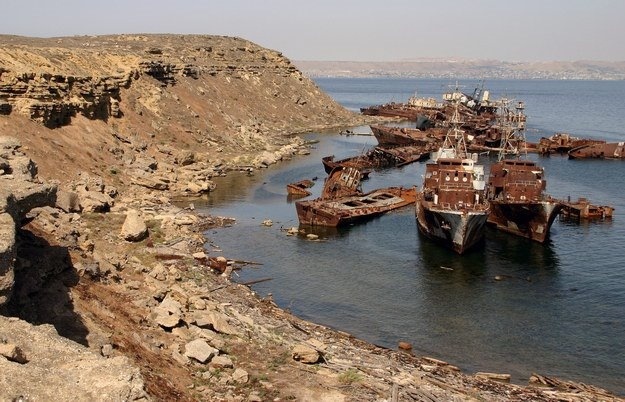
Just a stone’s throw from the glittering, modern skyline of Baku, Azerbaijan, lies an island shrouded in darkness. Nargin Island. Locals call it “Böyük ZirÉ™,” but its other name, the one whispered with a shiver, is “Snake Island.” It’s an uninhabited splinter of rock in the Caspian Sea, and it is littered with ghosts.

20140306-222946.webp

The official history is sparse. A lighthouse built in 1814. But the real history is etched into the crumbling buildings and the skeletons of more than twenty ships rusting away on its northern coast. During World War I, Nargin was a place of nightmares—a POW camp where thousands of Turkish and Russian soldiers perished from starvation and disease. Its soil is soaked in misery.

But what about the ships? The official line is that they are simply decommissioned Soviet-era naval vessels and cargo ships, towed here to die. A convenient dumping ground. Is that all? Or is this island a graveyard for vessels with stories the old Soviet regime wanted to disappear forever? Some researchers claim that among the decaying hulks are patrol boats that witnessed events they shouldn’t have, or even vessels involved in secret, Cold War-era operations in the Caspian Sea that went horribly wrong. They weren’t just scrapped. They were exiled. Erased.

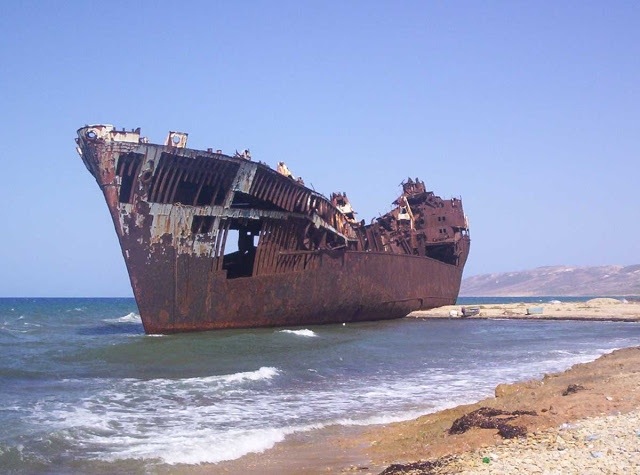
The Fiery End of the Ydra

Imagine it. The Mediterranean coast of Tunisia. The sun is setting, casting a golden glow on the water. And there, against the idyllic backdrop, a monster bleeds rust into the sea. A giant, ripped open and rotting.

20140306-223043.webp

This is the Ydra, a Greek cargo ship with a violent past. The story goes that on January 21st, 1983, a fire erupted in her engine room. An inferno. The blaze was so intense, the crew had no choice but to run her aground near Bizerte to save their own lives. They succeeded. They escaped. But the ship did not.

She was declared a total loss, too ravaged by the flames to ever sail again. So they left her there. A permanent, searing scar on the beautiful coastline. But a simple engine fire? Online forums and local dockworkers tell a different story. They speak of whispers of insurance fraud, a vessel that was already bleeding money for its owners, and a fire that was just a little too convenient. There’s no proof, of course. Just the gut feeling that a fire hot enough to condemn a massive steel ship to a watery grave doesn’t just… happen. The Ydra sits there today, her blackened, twisted metal a silent monument to a single, catastrophic night. Or a single, catastrophic decision.

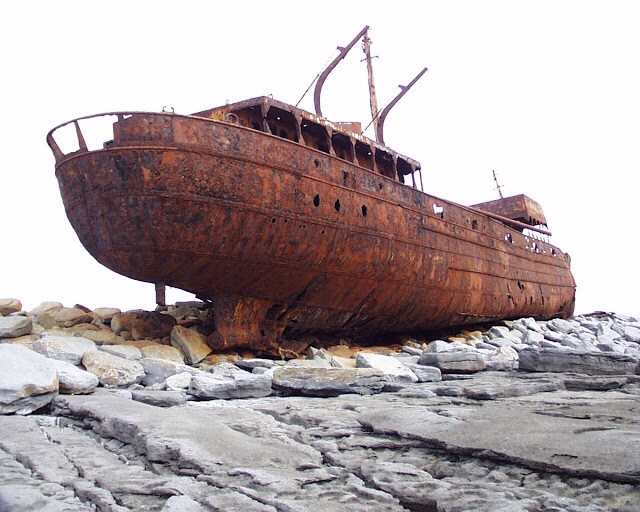
The Miracle and Myth of the MV Plassy

Not all endings are tragic. Some are the stuff of legend.

Off the wild, windswept coast of Ireland lies Inis Oírr, the smallest of the Aran Islands. It’s a place of stone walls, fierce winds, and even fiercer people. In 1960, this tiny island community became the setting for one of the most incredible sea rescues in modern history.

20140306-223138.webp

The cargo vessel MV Plassy was caught in a vicious Atlantic storm. Battered by colossal waves and hurricane-force winds, she was driven helplessly towards the rocks of Inis Oírr. Her fate seemed sealed. But the islanders refused to watch. In an act of breathtaking courage, they assembled on the shore and, using a primitive breeches buoy—a rocket-fired rope and a canvas sling—they pulled every single crew member from the doomed ship to safety. Not a soul was lost.

The story doesn’t end there. The sea wasn’t finished with the Plassy. In the weeks that followed, another powerful storm lifted the entire wreck from the rocks and hurled it high onto the shoreline, where it rests to this day. It’s a landmark, a tourist attraction, and even the star of the opening credits of the beloved Irish comedy series *Father Ted*. But some islanders will tell you that on the anniversary of the wreck, when the wind howls just right, you can still hear the phantom clang of the ship’s bell, a ghostly thank you to the people who defied the storm.

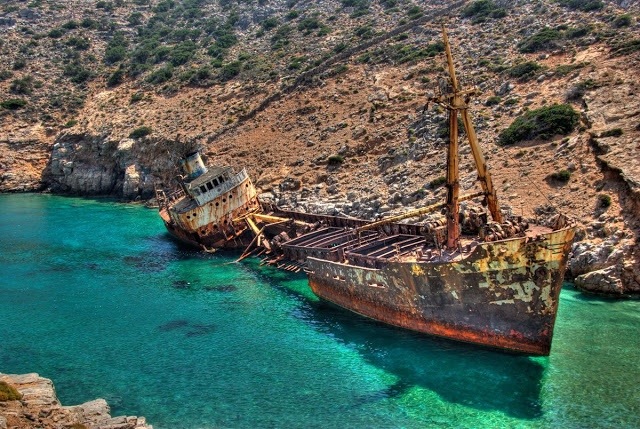
The Olympia and the Rumor of Pirates

Some wrecks are famous for how they died. Others are famous for who saw them die.

The wreck of the Olympia, beached in a pristine cove on the Greek island of Amorgos, is one of the most cinematic shipwrecks in the world. And for good reason. It was featured prominently in the 1988 Luc Besson film *Le Grand Bleu* (*The Big Blue*). For millions, this image of a broken ship in a perfect blue bay is the definition of a beautiful disaster.

20140306-223226.webp

The official story of her 1980 demise is almost comically mundane. The captain, trying to find shelter from a storm, steered her into the cove, but the anchors dragged and she was pushed onto the rocks. Simple. Boring.

The local legend, however, is anything but. The story passed down in the tavernas of Amorgos is one of modern-day pirates. They say the Olympia was targeted, chased into the bay by smaller, faster boats, and deliberately wrecked by a crew who wanted to collect the insurance money. Some versions of the tale even claim the pirates boarded her, scuttling the ship themselves before vanishing into the Aegean night. Is it true? Who knows. But the ship’s previous name was ‘Inland,’ a strange irony for a vessel that would find its final, permanent home on solid ground. Coincidence? Or a clue to a much deeper conspiracy?

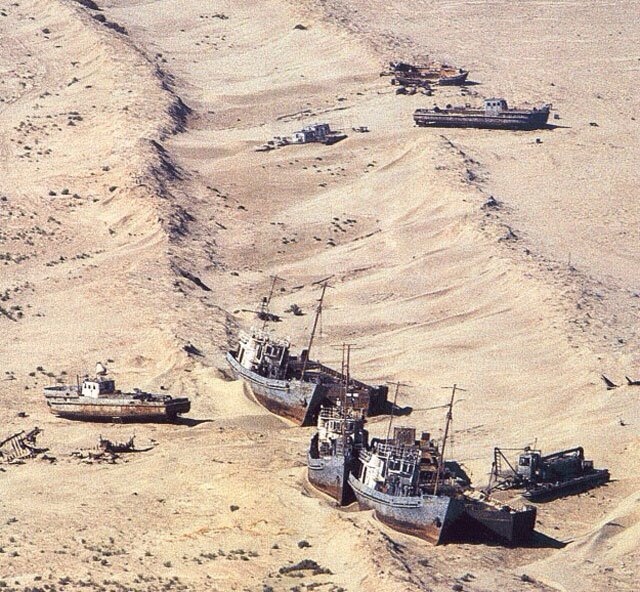
Deep Dive: The Ships of the Dust Sea

This isn’t a shipwreck. This is an apocalypse.

What you are looking at is not a coast. It is a desert. The city is Muynak, in western Uzbekistan. And those ships? They are stranded in a sea of sand. This is the Aral Sea. Or what’s left of it.

20140306-223330.webp

This was once the fourth-largest lake in the world, a thriving ecosystem teeming with fish, supporting a massive commercial fishing fleet. Muynak was a bustling port town. Then came the Soviet Union’s grand plan in the 1960s. They decided to become a global cotton superpower. To do this, they diverted the two major rivers that fed the Aral Sea to irrigate vast cotton plantations in the desert.

The result was one of the worst man-made environmental disasters in human history. The Aral Sea began to shrink. Rapidly. The water receded, year after year, leaving the fishing boats of Muynak sitting on the dock. Then on the mud. And finally, on the dry, cracked, salt-poisoned earth. The captains and fishermen just walked away. They left their vessels, their livelihoods, their entire way of life, to be swallowed by the new desert.

Walking through the Muynak ship graveyard today is a surreal, heartbreaking experience. You can touch the hulls of these massive trawlers, their names still painted on their bows, and see nothing but sand stretching to the horizon. They didn’t sink in a storm. They were suffocated by a bureaucratic decision made a thousand miles away. They are not ghosts of the sea; they are ghosts of a sea that was murdered.

Nouadhibou: The World’s Biggest Ship Graveyard

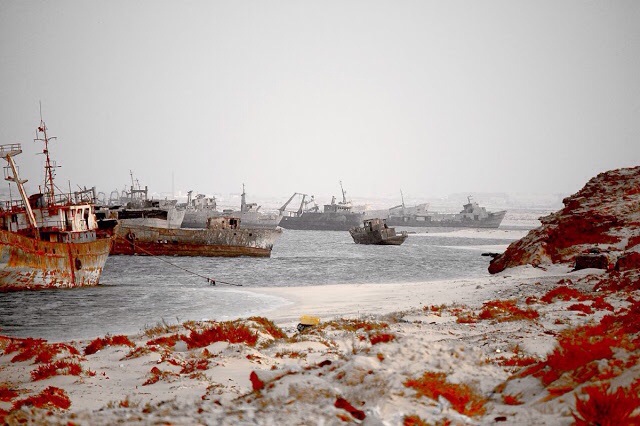
If Muynak is a tragic memorial, then the bay of Nouadhibou in Mauritania is a full-blown necropolis. A city of the dead.

This isn’t a handful of wrecks. This is a fleet. Hundreds upon hundreds of rusting ships choke the bay, forming the largest ship graveyard on the planet. From a satellite, it looks like a wound, a festering collection of steel carcasses polluting the West African coast.

20140306-223458.webp

How did this happen? It was a perfect storm of corruption and convenience. In the 1980s, Mauritania’s fishing industry was nationalized, and many private boat owners found themselves with vessels they couldn’t use. At the same time, maritime laws were lax, and local officials were easily bribed. So, ship owners from around the world discovered a cheap, easy way to dispose of their old, unwanted vessels. They would pay a small fee, sail the ship into Nouadhibou Bay, and simply abandon it.

The result is an environmental catastrophe and a photographer’s dream. The water is thick with oil, asbestos, and other toxic chemicals leaking from the decaying hulls. Yet, people live and work here. Scrappers pick apart the wrecks for any salvageable metal, a dangerous and desperate living. The bay is a haunting testament to our disposable culture, a place where the titans of global commerce are sent to rot in full view of the world.

The Weeping Wreck of Tierra del Fuego

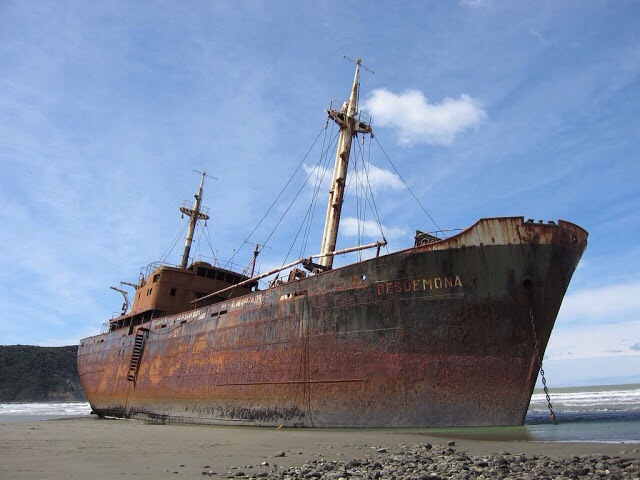
At the very end of the world, on a desolate beach in Argentina’s Tierra del Fuego—the “Land of Fire”—lies the wreck of the Desdemona. And if any ship looks haunted, it’s this one.

20140306-223559.webp

Named after the tragic heroine from Shakespeare’s *Othello*, the Desdemona’s end was fittingly dramatic. In 1985, the coastal transport ship ran aground at Cabo San Pablo during a violent storm. The massive tides of the region pushed her so far up the beach that when the water receded, she was left stranded, high and dry, like a beached whale.

Her skeleton, orange with rust against the gray skies and dark mountains of Patagonia, is an incredibly eerie sight. The way her bow is buried in the sand, she looks as though she is weeping for the ocean she can no longer reach. Local photographers and urban explorers who visit the wreck speak of a profound sadness that hangs in the air. They report strange noises coming from within the hull—not just the wind, but something more. A mournful groaning, a metallic sigh, as if the ship itself is still in agony. It’s a place where the line between decaying metal and living myth feels terrifyingly thin.

The Skeleton Coast’s Diamond Ghost

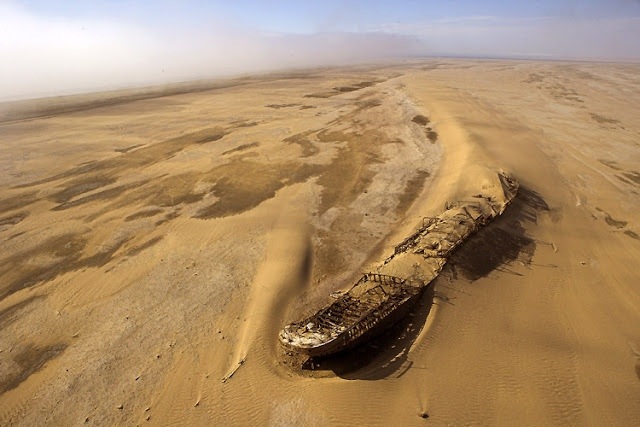
Namibia’s Skeleton Coast is well-named. It is one of the most treacherous, inhospitable coastlines on Earth—a place where the desert meets the sea in a maelstrom of fog, rocks, and violent surf. It’s a ship-killer. And its most famous victim is the Eduard Bohlen.

On September 5, 1909, this German cargo ship was lost in a thick, disorienting fog. The captain thought he was miles out to sea. He was wrong. The ship ran aground with a sickening crunch. The crew was saved, but the ship was lost to the relentless waves.

But here is where the story gets truly bizarre. Over the last century, the desert has reclaimed the land. The coastline has shifted so dramatically that the wreck of the Eduard Bohlen now lies over a quarter of a mile inland. It’s a ship in the middle of the desert, its decaying form half-buried by sand dunes, a mind-bending illusion.

What If? A Secret Cargo

The official manifest says the Eduard Bohlen was carrying supplies for diamond mines. But a persistent conspiracy theory suggests it was carrying something far more valuable: a secret, undeclared shipment of uncut diamonds, a payroll for the miners that was being smuggled to avoid taxes. The theory claims the “fog” was just a cover story. The ship was deliberately run aground in a botched attempt to offload the gems secretly. When the plan failed, the conspirators had to abandon the ship, leaving the fortune behind.

Is it possible that somewhere within that sand-filled hull, or buried in the dunes nearby, a treasure trove of diamonds still waits to be found? The Namibian government certainly doesn’t want people looking. The area is now part of a restricted national park. Are they protecting the fragile desert ecosystem? Or are they protecting a century-old secret?

These wrecks are more than just tourist attractions or ecological warnings. They are time capsules. They are question marks made of steel. Each one is a silent witness to a final, frantic moment. They remind us that for all our technology and all our hubris, the planet’s wild places still hold the power to claim us, to swallow our creations, and to turn our proudest achievements into haunting monuments of rust and ruin.

Amit Ghosh
Amit Ghoshhttps://coolinterestingnews.com
Aloha, I'm Amit Ghosh, a web entrepreneur and avid blogger. Bitten by entrepreneurial bug, I got kicked out from college and ended up being millionaire and running a digital media company named Aeron7 headquartered at Lithuania.
RELATED ARTICLES
- Advertisment -

Most Popular

Recent Comments

Warren Pan Abbott on The legend of the Devil Monkey !
chris davies on The McPherson Tape Mystery
Reed Reedly on ET has Internet!
Bea Houseoffashion on Proof Of Time Travellers – Gallery
Marcus2012 on ET has Internet!
Reed Reedly on ET has Internet!
LaughsAtConspiracyNuts on The 9/11 Conspiracy – Myths and Facts
Alex Sliverman on Did the ancients fly?
Doctor Wholigan on Time Traveler in 1938 film
chris davies on The McPherson Tape Mystery
Archie1954 on 10 secret UFO hideouts
chris davies on Ghosts of flight 401
Marcus2012 on ET has Internet!
jason Macdonald on Proof of Time Travel? – China
chris davies on Long-Lost Pyramids Found?
Reed Reedly on ET has Internet!
Milkman on Connected Universe
Tenmiles on Baigong Pipes Mystery
Simon Foster on Sirius – The Documentary
From the 1st April on 2013 – Alien Contact date ?
SkyWatcher on Is ET ignoring us?
I Come From The Future on Obama to make UFO Alien disclouser soon ?
ÛñK?øWn on 2013 – Alien Contact date ?
Just another person on 2013 – Alien Contact date ?
Malcolm Windowcleaner on The strange case of Rudolph Fentz
Mason Servio on Strange Things on Mars
Marke Wisdom Seeker on What will we find as arctic melts?
Andrea A Elisabeth Levyne on Aliens Captured in Varginha, Brazil
Mitch Grouyeki on Amazing Space Shuttle pictures