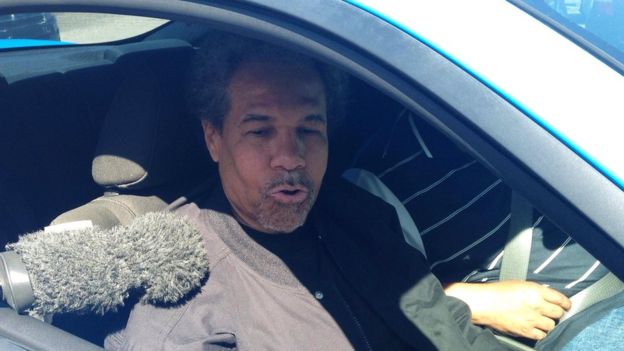
Home Weird World Strange Stories Albert Woodfox freed after 43 years in US solitary prison

Albert Woodfox freed after 43 years in US solitary prison

0
65

43 Years in a Concrete Box: The Unbreakable Spirit of Albert Woodfox

Imagine a room. A concrete box. Six feet wide, nine feet long. Smaller than a parking space. Now imagine living there. For 43 years.

Not just living. Surviving.

For 23 hours a day, every day, for more than 15,000 days, this was the world of Albert Woodfox. A world of gray concrete and steel bars. A world of silence so profound it becomes a noise of its own. On his 69th birthday, a day he’d marked 44 times inside that cage, a door finally opened. He walked out of the Louisiana State Penitentiary, known to the world by a more infamous name: Angola. He walked into a world he no longer recognized, a free man who had spent more of his life in solitary confinement than any other human being in American history.

But was it justice? Or was it the final act in a four-decade-long cover-up?

solitary

The official story is simple. Woodfox, a prisoner, was convicted of murdering a prison guard. But the official story is rarely the whole story. To understand what really happened, you have to go back. Back to a time of revolution, of rage, and of a government terrified of losing control.

Who Were the Angola Three?

You can’t talk about Albert Woodfox without talking about Herman Wallace and Robert King. Together, they were the Angola Three. They weren’t just three random inmates who got thrown into solitary. They were something far more dangerous to the prison establishment.

They were organizers.

They were leaders.

They were Black Panthers.

More Than Inmates: Black Panthers Behind Bars

Think about Angola in the late 1960s and early 1970s. It wasn’t just a prison; it was a former slave plantation, and it still operated with that brutal mentality. The guards were all white. The prisoners were overwhelmingly black. Violence was a management tool. A system of sexual slavery, where stronger inmates preyed on the weak, was not just tolerated but encouraged by guards to maintain a fractured, terrified population.

Into this hellhole walked Albert Woodfox and Herman Wallace. Already politicized by the Black Panther Party on the outside, they saw the prison not just as a place of punishment, but as a battlefield for human rights. They started the first-ever prison chapter of the Black Panther Party. Their platform was radical for a place like Angola. They organized hunger strikes and work stoppages. They taught other inmates to read. They fought to protect younger prisoners from the rampant sexual assault. They preached unity among the inmates, black and white, to stand up against the brutal conditions.

To the prison wardens, this was poison. It was an insurrection. Woodfox and Wallace weren’t just prisoners anymore; they were a threat to the entire power structure of the prison. They had to be broken. They had to be silenced.

The authorities just needed a reason.

And on a spring morning in 1972, they got one.

The Blood-Soaked Day That Changed Everything

April 17, 1972. The day starts like any other at Angola. Tense. Humid. The air thick with unspoken violence. Inside a prison dormitory, a 23-year-old corrections officer named Brent Miller is found dead. He’s been stabbed multiple times. The scene is a chaotic mess of blood and confusion.

An investigation begins. Or, what passed for an investigation at Angola.

A Murder in America’s Bloodiest Prison

Panic gripped the prison administration. A guard was dead. Someone had to pay, and fast. The prison was a powder keg, and the two men who had been challenging the status quo, the two Black Panther organizers, were the most obvious targets. Albert Woodfox and Herman Wallace were immediately fingered for the crime.

The problem? There was no physical evidence connecting them to the murder. None. Not a single drop of blood on their clothes. No murder weapon.

What the state did have, however, was a collection of desperate inmates they could squeeze.

The “Evidence” That Wasn’t: A Case Built on Lies?

The prosecution’s entire case rested on the testimony of a handful of other prisoners. Let’s look at the star witnesses.

One was Hezekiah Magee, an inmate serving a life sentence for rape. He claimed he saw Woodfox and Wallace commit the murder. What wasn’t mentioned in the original trial? Magee was promised a pardon for his testimony—a promise the state later made good on. He walked free. Does that sound like a reliable witness?

Another key piece of “evidence” was a bloody fingerprint found at the scene. For decades, the prosecution implied it belonged to one of the accused. But here’s the twist: modern analysis proved the print did not belong to Woodfox, Wallace, King, or the victim, Brent Miller. It belonged to someone else entirely. Who? We still don’t know. The state never bothered to find out.

And then there’s the story of the makeshift knife. A witness, a career criminal named Joseph Richey, later recanted his testimony in a sworn affidavit. He admitted that he was coached by the warden and promised favorable treatment for his testimony, which he completely fabricated. He lied. He admitted he lied. But by then, it was too late. The men had already been convicted.

The trial itself was a sham. The all-white jury convicted Woodfox in a matter of hours. The sentence wasn’t just life in prison. It was a life sentence to be served in a tiny box. A living death.

Surviving the Silence: 4 Decades in Solitary

Forty-three years. It’s a number so large it’s hard to comprehend. It’s longer than many people’s entire lives. It’s four decades of birthdays, holidays, and world events all passing by from behind a steel door.

A 6-by-9-Foot World

Try to picture it. The cell is bare. A concrete slab for a bed. A toilet. A sink. That’s it. For 23 hours a day, you are in this room. You get one hour of “exercise” in a slightly larger cage, alone. The food is pushed through a slot in the door. You have almost no human contact. The guards are forbidden from speaking to you about anything other than commands.

This is called Closed Cell Restriction, or CCR. It is a scientifically recognized form of torture. The sensory deprivation is designed to shatter a person’s mind. Many people in solitary confinement experience severe psychological damage, from hallucinations and paranoia to full-blown psychosis. It’s meant to break you.

So how did they survive?

How Do You Keep Your Mind from Breaking?

They refused to be broken. The same spirit of resistance that led them to form the Black Panther chapter is what kept them alive. They became masters of their tiny universes. They would read anything they could get their hands on. They studied law, becoming expert jailhouse lawyers to fight their own cases.

They never stopped organizing. They developed a system of communication, tapping on pipes and toilets in a kind of Morse code. They would shout from cell to cell, holding political education classes through concrete walls. They maintained their connection, their brotherhood, even though they might not see each other for years at a time. They were physically isolated, but they were never truly alone.

They kept their minds sharp by inventing games, by debating politics, by dreaming of the day they would be free and could tell the world the truth.

The Unwinnable War Against the State

While Woodfox and Wallace fought to survive inside, a dedicated team of lawyers and activists fought for them on the outside. Their case became a global cause, a symbol of America’s broken justice system. Amnesty International declared them political prisoners.

Overturned. And Overturned Again.

The legal battle was a staggering, decades-long marathon. It was a slow, grinding war of appeals and motions against a system that refused to admit it had made a mistake.

And here’s the crazy part: they kept winning.

Woodfox’s conviction for the murder of Brent Miller was overturned not once, but twice, by federal courts. The first time, in 1992, was due to an incompetent defense. The second time, in 2008, was on the grounds of racial discrimination in the selection of the grand jury foreman. Robert King’s conviction was also overturned, and he was released in 2001 after 29 years in solitary.

But the state of Louisiana would not let go. Each time a conviction was thrown out, the state would appeal, or simply re-indict and prepare for a new trial, forcing Woodfox to remain locked in his cage. It seemed they would rather see him die in that cell than ever admit the truth.

Herman Wallace came heartbreakingly close. His conviction was finally overturned in 2013. He was released from prison, terminally ill with liver cancer. He tasted freedom for exactly three days before he died. It was a victory, but a gut-wrenching one.

That left Albert. Alone. The last of the Angola Three still behind bars.

A “No Contest” Plea: The Price of Freedom

After his conviction was overturned for a final time, the state, incredibly, announced its intention to try him a third time. By now, Woodfox was nearly 70 years old. His health was failing. The key witnesses were dead. The physical evidence was lost or contaminated. A fair trial was impossible.

He was faced with an impossible choice. He could spend years more in his cell, fighting a case he might never win against a state with unlimited resources, and likely die in prison. Or, he could take a deal.

The deal was a “no contest” plea to the lesser charges of manslaughter and aggravated burglary. It was a bitter pill to swallow. A “no contest” plea is not an admission of guilt. It’s a legal maneuver that says, “I do not admit guilt, but I accept the conviction.” For the state, it allowed them to save face and avoid admitting a 43-year-long injustice. For Woodfox, it meant one thing: freedom.

“Although I was looking forward to proving my innocence at a new trial, concerns about my health and my age have caused me to resolve this case now and obtain my release,” he said in a statement. It wasn’t surrender. It was the last strategic move in a long war he had no other way of winning.

The Lingering Shadow: If Not Them, Then Who?

Albert Woodfox walked free, but the case leaves a dark stain. The murder of Brent Miller remains, for all intents and purposes, unsolved. If the Angola Three didn’t do it—and the mountain of flawed evidence, recanted testimonies, and prosecutorial misconduct strongly suggests they didn’t—then who did?

Was it another inmate who was never properly investigated? Was it the man whose bloody fingerprint was found at the scene, a man the state never bothered to identify?

Internet Sleuths and the Unanswered Questions

In the age of the internet, the case of the Angola Three has found new life. Online forums and true-crime communities continue to pick apart the details, unearthing old documents and proposing new theories. The consensus among many who look at the facts is clear: this was a frame-up. It was a political assassination of a different kind, designed to neutralize activists who were becoming too effective. The murder of Brent Miller wasn’t the crime being punished; it was the excuse.

The real crime, in the eyes of the Angola authorities, was trying to bring humanity and justice to a place that had neither.

A Life Reclaimed: The Final Chapter

Albert Woodfox died in 2022 from complications of COVID-19. He had just six years of freedom after 43 years of hell. But he didn’t waste a moment. He wrote a powerful, gut-wrenching memoir, “Solitary,” which was a finalist for the Pulitzer Prize. He traveled the world, speaking out against the barbarity of solitary confinement and fighting for the rights of the incarcerated.

He never got the official apology he deserved. The state of Louisiana never admitted its wrong. But he won something more important. He reclaimed his name. He told his story. He exposed the truth of a system that tried for 43 years to bury him alive.

His body was imprisoned, but his spirit never was. It was a spirit of resistance that survived a concrete box, a spirit that ultimately walked out into the sun, and a spirit that continues to inspire the fight for justice today.

Originally posted 2016-03-15 12:28:19. Republished by Blog Post Promoter