Tuesday, May 12, 2026
HomeWeird WorldStrange StoriesAbominable Snowman 'close to being - Yeti Proof

Abominable Snowman ‘close to being – Yeti Proof

The Siberian Yeti: Did Russian Officials Announce the Discovery of a Lifetime?

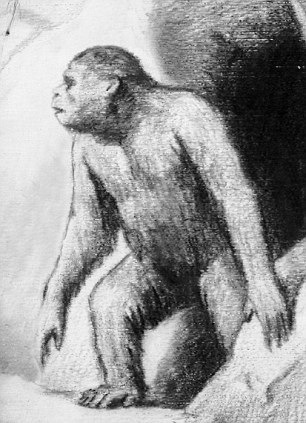
They told us it was a legend. A myth. A campfire story whispered in the frozen wastes of Siberia, a shaggy beast haunting the treeline of our collective imagination.

Then, in 2011, the unthinkable happened.

An official government announcement. A press release that sent shockwaves through the worlds of cryptozoology and mainstream science alike. A team of international researchers, backed by a regional Russian administration, declared they had found “indisputable evidence” of the Yeti’s existence in the remote Shoria mountains.

This wasn’t some blurry photo from a shaky trail cam. This wasn’t a third-hand account from a frightened hunter. This was an official statement. For a fleeting, breathless moment, it seemed the world was about to change forever. The history books were about to be rewritten. Humans were not alone.

But were they?

Or was this the beginning of one of the strangest, most convoluted tales of modern cryptozoology—a story of science, tourism, and secrets buried deep in the Siberian snow?

The Bombshell from Kemerovo

Picture this. It’s October 2011. A team of experts from Russia, the United States, Canada, Sweden, and China converge on the Kemerovo region of Siberia. This isn’t a casual camping trip. It’s a high-profile expedition and conference, centered on one tantalizing target: the creature known locally as the “Snow Man.”

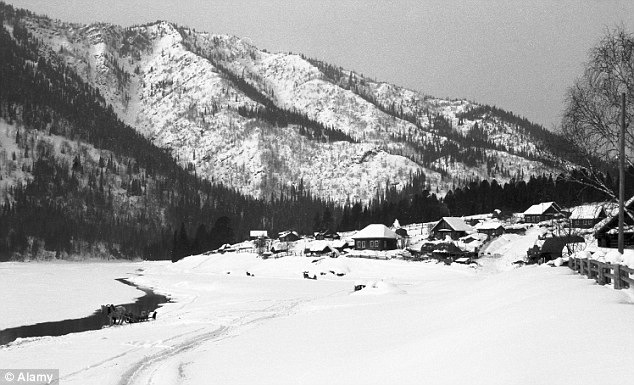
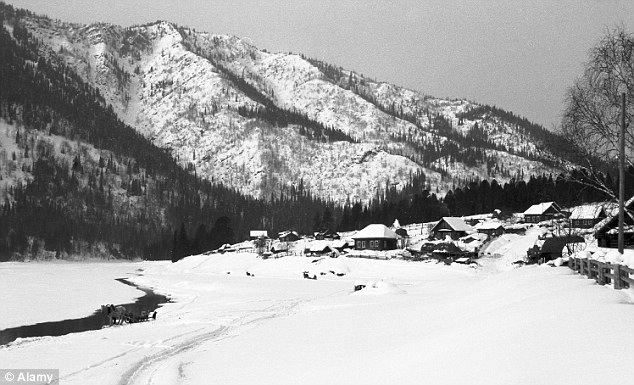
Their destination? The Azasskaya cave, nestled deep within the vast, imposing wilderness of Mount Shoria—a place locals have long associated with strange encounters and colossal, bipedal figures.

The expedition concludes. The world holds its breath. And then the press release drops from the Kemerovo administration.

“During the expedition to the Azasskaya cave,” the statement read, “conference participants gathered indisputable proof that the Shoria mountains are inhabited by the Snow Man.”

Indisputable. A powerful word. A definitive word.

The statement went on to list the findings. They claimed to have discovered the creature’s footprints. Its supposed bed. And, most curiously, “various markers with which the Yeti uses to denote his territory.” The researchers, they said, were now “95 percent” certain this creature existed.

The news exploded. Major outlets across the globe picked up the story. Was this it? The moment of discovery? The vindication for decades of searching?

The problem was, the evidence itself was far from indisputable.

20131101-002511.webp

A Forensic Look at the “Proof”

When the dust settled and the initial media frenzy died down, people started asking the hard questions. If the proof was so solid, where was the body? Where was a high-resolution photo? Where was the DNA?

The answers were… unsatisfying. Let’s break down what they actually presented.

H3: The Twisted Branches and “Territorial Markers”

One of the key pieces of evidence cited were trees that had been snapped and twisted together in unusual ways. To the researchers, this was a clear sign of a powerful, intelligent creature marking its territory, much like a bear might claw a tree trunk. Bigfoot and Sasquatch researchers in North America have documented similar phenomena for years, often referring to them as “tree structures” or “glyphs.”

Could a nine-foot-tall hominid be creating these strange formations? Absolutely. But could a Siberian winter, with its heavy snows and brutal winds, also bend and snap trees in odd configurations? Also, yes. Bears, too, are known to break branches. Without more context, this “proof” was intriguing but remained circumstantial.

H3: The Footprint

The expedition found a single, unclear footprint in the dirt. Not a pristine track in fresh mud, but one partial impression. While exciting for the team on the ground, a single print offers very little scientific data. You can’t determine gait, stride, or weight distribution. You can’t rule out a misshapen print from a known animal or even a clever hoax. It was a world away from the famous Patterson-Gimlin film, which captured dozens of clear footprints that allowed for detailed analysis. This was a pale imitation.

H3: The Hair and the “Bed”

Perhaps the most compelling physical evidence was found inside the Azasskaya cave itself. The team discovered what they described as a primitive “bed”—a depression in the ground suggesting something large had been sleeping there. And nearby, they found it. A small sample of gray hair.

This was the potential smoking gun. Hair contains DNA. With modern science, you can definitively identify the species it came from. This tiny clump of hair held the power to either confirm the existence of a new primate or expose the whole thing as a misidentification.

So what happened to it? The hair samples were reportedly taken for analysis. The world waited for the lab results that would change everything. And waited. And waited.

The results never came. Or, if they did, they were never made public in a peer-reviewed, scientifically accepted way. The trail went cold, leading to a host of new questions and dark speculation.

A Publicity Stunt or a Suppressed Discovery?

As the “indisputable proof” began to look more and more disputable, a new theory emerged, one that had nothing to do with biology and everything to do with money.

The Kemerovo region is traditionally known for one thing: coal mining. It’s a gritty, industrial area, not exactly a top-tier tourist destination. But what if it were home to a world-famous monster? Suddenly, you have a reason for people to visit. You have a brand.

Critics immediately pointed out that the entire expedition felt less like a scientific mission and more like a publicity campaign. The “95 percent certainty” claim, announced by a politician and not in a scientific journal, raised red flags. Could the twisted branches, the single footprint, and the patch of unidentified hair have been… staged?

The theory gained traction. The region soon leaned into its newfound fame, establishing an official “Yeti Day” holiday and even offering a one-million-ruble reward for a sighting. A local museum began displaying Yeti-themed exhibits. The Siberian Snow Man was becoming a cottage industry.

But there’s another, more tantalizing possibility. What if the evidence *was* real?

What if the DNA analysis came back, and the results were so shocking, so world-altering, that they were immediately classified? Think about it. The discovery of a non-human hominid, an evolutionary cousin, wouldn’t just be a scientific curiosity. It would have profound religious, philosophical, and even military implications. Perhaps the Kemerovo administration jumped the gun with their announcement, and a higher authority—in Moscow, perhaps—stepped in and shut the entire thing down, burying the results to prevent a global panic.

A ridiculous fantasy? Maybe. But in the world of unexplained phenomena, the absence of evidence is sometimes just as loud as its presence.

20131101-002607.webp

Deep Dive: Siberia, The Perfect Hiding Place

To dismiss the Siberian Yeti, you have to dismiss the place itself. And that’s a mistake.

Siberia is not a park. It’s a continent-sized wilderness of staggering scale. The Siberian taiga alone, the vast boreal forest, covers nearly 5 million square miles. That’s larger than the entire United States, including Alaska. It is a sparsely populated, largely unexplored expanse of mountains, forests, and swamps, a place where a small population of large, reclusive animals could exist for centuries without being formally discovered by science.

We are still finding new species on this planet. The Saola, a forest-dwelling bovine, was only discovered in Vietnam in 1992. The Coelacanth, a fish thought to be extinct for 65 million years, was found alive and well in 1938. The idea that a relict hominid could survive in the most expansive and unforgiving wilderness on Earth is not, from a purely logical standpoint, impossible.

H3: The Almas and Other Russian Wildmen

The 2011 Kemerovo Yeti is not an isolated story. It’s part of a rich tapestry of Russian and Central Asian folklore. For centuries, reports have trickled out of the Caucasus Mountains of the *Almas* or *Almasty*—a creature described as more human-like than the ape-like Yeti of the Himalayas. These beings are often said to be covered in reddish-brown hair, with features that sound remarkably similar to our scientific reconstructions of Neanderthals.

In the far northeast of Siberia, the Yakut people have legends of the *Chuchunaa*, a tall, hairy, primitive man who shuns contact with modern humans. Are these all separate myths? Or are they different regional names for the same continent-spanning, undiscovered species?

Some theorists, including the late Dr. Igor Burtsev, a leading Russian hominologist who was part of the 2011 expedition, believe these creatures could be surviving pockets of Neanderthals or perhaps even *Homo erectus*, ancient ancestors who we thought vanished tens of thousands of years ago. Could they have retreated into the deepest parts of Asia, surviving in the shadows as *Homo sapiens* came to dominate the planet?

The Internet Age and the Enduring Mystery

More than a decade has passed since the Kemerovo announcement. The world has moved on. And yet, the story hasn’t completely died. It lives on in internet forums, on late-night podcasts, and in the quiet corners of the web where mysteries are kept alive.

New “evidence” occasionally surfaces. A grainy video from a dashcam in the Urals. A strange audio recording of a howl that sounds neither like a wolf nor a bear. Digital sleuths on Reddit and YouTube analyze satellite images of the Siberian wilderness, pointing out strange clearings or potential structures that defy easy explanation.

The core question remains the same. Was the 2011 expedition a cynical grab for tourist dollars? A moment of genuine, if premature, excitement from a team of dedicated researchers? Or was it a brief, accidental crack in a wall of secrecy, a glimpse of a truth so profound that we are not yet ready to face it?

The Siberian forests are quiet. The officials in Kemerovo now talk more about coal than cryptozoology. But the mystery of the Azasskaya cave lingers. The “indisputable proof” may have vanished into thin air, but the possibility it represents—the possibility that we are not the only humans on this planet—continues to haunt the frozen edges of our world.

Amit Ghosh
Amit Ghoshhttps://coolinterestingnews.com
Aloha, I'm Amit Ghosh, a web entrepreneur and avid blogger. Bitten by entrepreneurial bug, I got kicked out from college and ended up being millionaire and running a digital media company named Aeron7 headquartered at Lithuania.
RELATED ARTICLES
- Advertisment -

Most Popular

Recent Comments

Warren Pan Abbott on The legend of the Devil Monkey !
chris davies on The McPherson Tape Mystery
Reed Reedly on ET has Internet!
Bea Houseoffashion on Proof Of Time Travellers – Gallery
Marcus2012 on ET has Internet!
Reed Reedly on ET has Internet!
LaughsAtConspiracyNuts on The 9/11 Conspiracy – Myths and Facts
Alex Sliverman on Did the ancients fly?
Doctor Wholigan on Time Traveler in 1938 film
chris davies on The McPherson Tape Mystery
Archie1954 on 10 secret UFO hideouts
chris davies on Ghosts of flight 401
Marcus2012 on ET has Internet!
jason Macdonald on Proof of Time Travel? – China
chris davies on Long-Lost Pyramids Found?
Reed Reedly on ET has Internet!
Milkman on Connected Universe
Tenmiles on Baigong Pipes Mystery
Simon Foster on Sirius – The Documentary
From the 1st April on 2013 – Alien Contact date ?
SkyWatcher on Is ET ignoring us?
I Come From The Future on Obama to make UFO Alien disclouser soon ?
Just another person on 2013 – Alien Contact date ?
Malcolm Windowcleaner on The strange case of Rudolph Fentz
Mason Servio on Strange Things on Mars
Marke Wisdom Seeker on What will we find as arctic melts?
Andrea A Elisabeth Levyne on Aliens Captured in Varginha, Brazil
Mitch Grouyeki on Amazing Space Shuttle pictures