Home Weird World Strange Places Will the Gulf’s manmade islands sink into the sea?

Will the Gulf’s manmade islands sink into the sea?

0
51

Dubai’s Sinking Dream: The Billion-Dollar Ghost Town in the Sea

They tried to build a new world. Literally.

Out in the shimmering turquoise waters of the Persian Gulf, they conjured land from the sea. An act of god-like ambition. An archipelago shaped like the entire planet, a monument to wealth and imagination so extreme it bordered on science fiction. But what happens when a dream built on sand starts to wash away? What happens when the world… starts to sink?

This isn’t just a story about real estate. It’s a mystery. A tale of hubris, collapse, and whispers that a multi-billion-dollar paradise is being silently reclaimed by the ocean it was stolen from. Forget what the glossy brochures tell you. We’re going deeper.

20131101-000404.webp

The Audacity of Creation

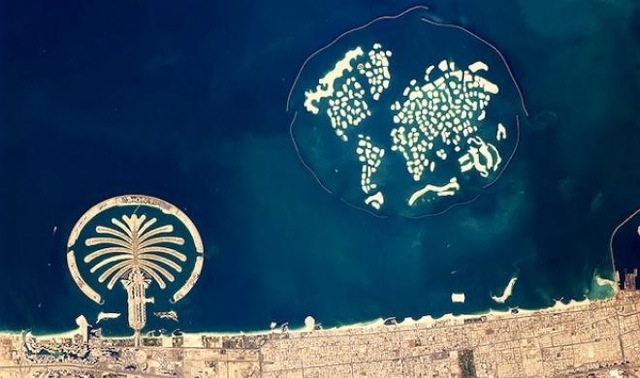
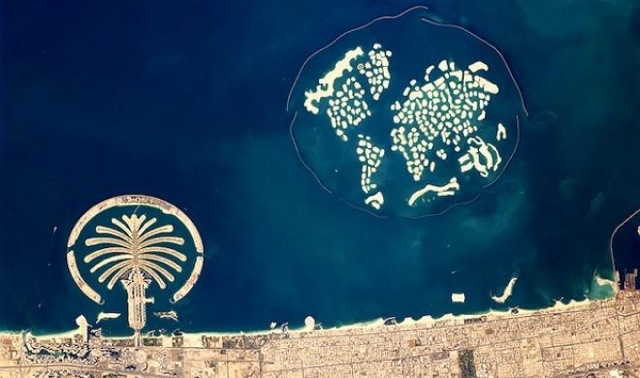
To even understand the catastrophe, you have to appreciate the miracle. Before the World Islands, there was The Palm Jumeirah. You’ve seen the pictures. A colossal palm tree etched into the coastline, its fronds laden with luxury villas and five-star hotels. It was a statement. A declaration that in Dubai, the impossible was just a matter of money and engineering.

The developer, a state-owned giant named Nakheel, didn’t stop there. They doubled down. Tripled down. If they could build a palm tree, why not the entire globe?

The plan for The World was breathtaking. A collection of 300 private islands, meticulously arranged to form a map of Earth. You could buy “England.” You could own “California.” You could host parties on “Australia.” Each island was an exclusive kingdom, a blank canvas for the mega-rich to build their own private utopias. The project was invitation-only. This wasn’t just real estate; it was a status symbol beyond all others. Brangelina reportedly bought “Ethiopia.” The hype was electric. It felt like the dawn of a new age.

And then they announced the next phase. The Universe. An even bigger project surrounding The World, with islands shaped like the sun, the moon, and the planets. The ambition was truly cosmic.

Deep Dive: How Do You Build an Island?

It sounds simple, but it’s an act of brute force against nature. The process is called dredging. Massive ships, essentially floating vacuum cleaners, suck up millions of tons of sand from the deep seabed of the Persian Gulf. They then sail to the designated coordinates and spray that sand out with high-pressure cannons, a technique known as “rainbowing,” to create the new landmass.

Over 321 million cubic meters of sand and 31 million tons of rock were used to build The World. Think about that. That’s enough material to build a wall around the entire planet. This wasn’t just building; it was terraforming. They weren’t just defying the ocean; they were re-drawing the map of the Earth itself.

But here’s the first dark secret. The sand from the nearby desert? Useless. Wind-eroded desert sand is too fine, too smooth. It would simply dissolve in the water. They had to use marine sand, dredged from the bottom of the Gulf, disrupting ecosystems in ways we are only now beginning to understand.

The foundations were set. The world was built. The invitations went out. And then, the real world came crashing in.

The Great Unraveling: When the Money Disappeared

In 2008, the global economy hit a wall. Hard.

The Lehman Brothers collapse sent shockwaves across the planet, and the tsunami of financial ruin slammed directly into Dubai’s coast. The river of foreign investment that had fueled these fantastical projects dried up overnight. It wasn’t a slowdown; it was a full-stop, screeching halt.

Dubai real estate prices didn’t just dip. They plummeted, falling over 60% from their peak. The grand plans for The World and The Universe were frozen, suspended in amber. The developer, Nakheel, was on the brink of collapse, requiring a massive bailout from neighboring Abu Dhabi to stay afloat.

The World Islands, once the hottest ticket on the planet, became a silent, desolate archipelago. A ghost town in the sea. For years, the only sign of life on any of the 300 islands was a single model home built by Dubai’s ruler, Sheikh Mohammed bin Rashid al-Maktoum, on the “Greenland” island. A lonely palace on an empty planet. The dream was turning into a nightmare.

The Whisper Becomes a Shout: “The Islands are Sinking”

This is where the story takes a sharp turn into the conspiratorial. For years, there were whispers. Rumors among boat captains and marine engineers. But in 2011, the rumor exploded into a headline.

A lawyer for Penguin Marine, a company hired to provide ferry services to the islands, stood up in a property tribunal and dropped a bombshell. He claimed his client’s research showed that the islands were eroding. The channels between them were silting up. In his words, the islands were “gradually falling back into the sea.”

The developer for one of the main projects, a company called Kleindienst Group, later reported a shocking claim to Arabian Business: the islands *will* erode if they remain undeveloped. They needed rock and vibro-compaction to be stable. The bare sand, left exposed to the relentless currents of the Gulf, was washing away.

Suddenly, the ghost town had a ghost story. The world’s most ambitious construction project was facing its oldest enemy: nature. The sea was taking back what was stolen from it.

The news sent shockwaves through the already terrified market. A UK-based developer who had bought “Finland,” “Sapporo,” and “Kathmandu” immediately announced they were canceling a $653 million investment and desperately trying to sell their sinking land. The price tags told the story. Islands once valued at $20 to $50 million were being offered for a fraction of that. Finland was on the market for $17 million. Kathmandu for just $15 million. It was a fire sale for a dissolving world.

What the Satellite Images Reveal

This is where the internet-age sleuths come in. You don’t have to take a lawyer’s word for it. Just open Google Earth.

For years, online forums and Reddit threads have been dedicated to tracking the state of The World. Users post satellite images from different years, comparing them side-by-side. What do they show? To the untrained eye, it’s a map. But to those looking closely, the story is in the soft edges, the blurring coastlines, the murky water where sharp lines of sand used to be.

Official sources, of course, deny everything. Nakheel has repeatedly insisted the islands are stable and have not eroded. They call the claims “wholly inaccurate.” They point to regular monitoring surveys as proof. But the visual evidence, however subtle, keeps the debate raging. Is that a blurry satellite image, or is it the coastline of “Great Britain” slowly melting away? Are the channels between “Europe” and “Asia” filling in, or is it just a trick of the light? The official narrative says one thing. Your own eyes might tell you another.

The Heart of Europe: Miracle or High-Tech Mirage?

Just when it seemed the entire project was doomed, one developer pushed forward. The Kleindienst Group, the same company that warned about erosion, is behind “The Heart of Europe,” the most significant development on the islands to date.

Their vision is as audacious as the original concept. It covers the islands of Austria, Germany, Netherlands, St. Petersburg, Sweden, and Switzerland. Each is being transformed to mimic its namesake. “Austria” will be built on a hill. “Sweden” will feature a “climate-controlled raining street.” Yes, you read that right. A street where it rains on command in the middle of the desert.

The project boasts underwater villas called “Floating Seahorses,” where your bedroom window looks out into a coral reef. It features “floating palaces,” luxury hotels, and a relentless marketing campaign promising a slice of European life in the Arabian Gulf.

But is this a sign of recovery, or is it a desperate, high-tech distraction? Critics ask tough questions. Is pumping money into a few islands while hundreds of others remain barren sandpiles truly a success? Are “raining streets” and underwater rooms just a gimmick to lure in new investors before the fundamental problems become too obvious to ignore? The first phase of the project, the “World Island Beach Club” on “Lebanon” island, did open. It’s a luxury spot for yachters, a tiny outpost of life in a vast, empty sea of sand. A symbol of hope, or the exception that proves the rule?

The Deeper Conspiracy: What If It’s Not About Sinking?

The sinking narrative is compelling. But some online theories suggest it’s a cover story for something else entirely.

What if the islands were never meant to be fully developed? What if the entire project was one of the largest money-laundering schemes in history? A way to move vast sums of money into a tangible, high-profile asset. Once the money was “cleaned,” the investors could walk away, and the “sinking” story provides the perfect excuse for why the project was abandoned. It’s a wild theory, but in a story this strange, nothing is off the table.

Then there’s the ecological price. Building these islands fundamentally changed the flow of ocean currents in the Gulf. It buried coral reefs and oyster beds. The stagnant water within the breakwaters has led to algae blooms and anoxic conditions, killing marine life. Some argue the “sinking” isn’t a failure of engineering, but a form of planetary karma. The Earth is actively fighting back against the scar that was carved into it.

A World For Sale

Today, the fate of The World remains uncertain. While The Heart of Europe pushes on, many of the other 200+ islands remain empty, undeveloped, and for sale. Emirates 24/7 and other local outlets regularly report on various “continents” and “countries” being put on the market by real estate agencies.

The dream of a planet populated by the elite has morphed into a strange, fragmented reality. A few pockets of extreme luxury surrounded by an ocean of uncertainty and empty sand.

The Pointe at Palm Jumeirah, another Nakheel project, shows that development in Dubai hasn’t stopped. It’s an opulent retail complex with dancing fountains, a clear sign that the company is back on its feet. They promise easy access, “if not arriving by private boat.” But this success on the old, established Palm only highlights the eerie silence out at The World.

So, we’re left with the question that started it all. Will the world sink?

Maybe it already has. Not in a sudden, dramatic plunge, but in a slow, quiet surrender to economics and entropy. The official story is one of a project delayed but not defeated. A vision that is still, slowly, coming to life. But the satellite photos, the court documents, and the vast stretches of empty, silent sand tell a different tale. They tell of a dream that flew too close to the sun, a modern-day Atlantis myth playing out in slow motion before our very eyes. It stands as a monument to human ambition, and perhaps, a warning about its limits.

Originally posted 2013-10-31 23:05:32. Republished by Blog Post Promoter