Imagine standing in the blistering heat of the Egyptian desert. The sands of Saqqara shift under your feet. On the surface, it looks like nothing. Just wind, dust, and the scorching sun. But beneath your boots? Something darker is waiting. Something so massive, so incomprehensible, that it defies logic.
We aren’t talking about a few dusty pharaohs wrapped in gold. We aren’t talking about a hidden treasure chest.
We are talking about a city of the dead. A sprawling, suffocating labyrinth packed tight with corpses. Not humans. Dogs.

Millions of them.
Recent excavations near the historic Saqqara site have cracked open a secret that has been sleeping in the dark for thousands of years. Researchers have discovered catacombs containing an estimated 8 million dog mummies. Let that number sink in. Eight. Million.
This isn’t just a discovery. It’s a revelation that changes everything we thought we knew about the ancient world, their economy, and their terrifying obsession with the afterlife.
The God with the Jackal Head
Why dogs? Why kill and preserve millions of innocent animals? To understand the horror and the majesty of this find, you have to look into the eyes of Anubis.
In the ancient Egyptian pantheon, Anubis is the heavy hitter. He’s the guy you meet when your heart stops beating. Depicted with the head of a jackal (or a wild dog), he was the god of death, mummification, and the afterlife. He presided over the Weighing of the Heart—the final judgment where your soul was measured against the feather of truth.
For centuries, historians knew Anubis was popular. But this discovery? It proves he wasn’t just “popular.” He was the center of a massive, industrial-scale death cult that operated for hundreds of years.
The sheer volume of mummies found in these tunnels suggests that Anubis wasn’t just worshipped; he was a staple of daily existence. He was the fear in the back of everyone’s mind. And the only way to appease him, the only way to send a message to the other side, was through a messenger. A dog.
The Catacombs of Silence
Paul Nicholson, the director of the excavation, was left reeling by what his team found. You can almost hear the shock in his voice.
“We’re very pleased and somewhat surprised by the results,” Nicholson admitted. “We hadn’t expected that there would be so many animals, and it opens up a new series of questions.”
Surprised is an understatement. When the team first broke into the tunnel system, they weren’t walking into a museum. They were walking into a mass grave. The “Dog Catacombs” were built in the 4th century BC, and they are enormous. We are talking about a central corridor that stretches on and on, with side tunnels branching off into the darkness.
And every inch was packed.
Imagine the smell back then. Imagine the torches flickering against the limestone walls, illuminating pile after pile of mummified canines. Some were wrapped in intricate linen bandages. Others were dipped in resin. They were stacked like firewood, floor to ceiling.
The “Puppy Mills” of Ancient Egypt
Here is where the story gets gritty. It gets dark. How do you get 8 million dogs?
You don’t just find them wandering the streets. You can’t just catch strays.
This discovery points to something disturbing: The Industrialization of Ritual.
Historians now believe that Saqqara wasn’t just a temple; it was a factory. To support a number like 8 million, there had to be massive puppy mills surrounding the temple complex. Thousands of dogs were likely bred solely for the purpose of being killed.
Many of the mummies found were very young. Puppies. Some didn’t even have their adult teeth yet. They were born, they lived for a few weeks or months, and then they were sacrificed. Why? Because a pilgrim needed a favor from Anubis.
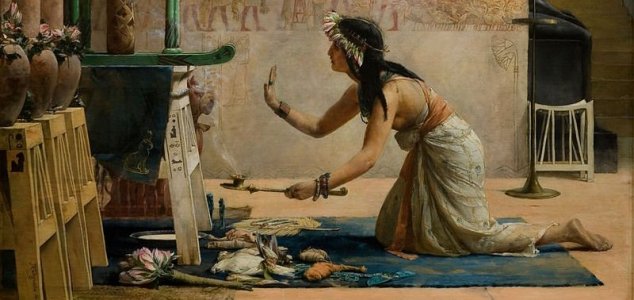
Think of it like lighting a candle in a church, but with much higher stakes. A pilgrim would come to Saqqara, buy a puppy from the temple breeders, pay a priest to sacrifice and mummify it, and then place it in the catacombs. The dog was a vessel. It carried the pilgrim’s prayers straight to the ears of the Jackal God.
“It would have been a busy place,” said Nicholson. “A permanent community of people living there supported by the animal cults.”
Merchants selling food. Priests selling blessings. Breeders selling lives. It was a booming economy of death.
Beyond the Dogs: The Zoo of the Dead
If 8 million dogs weren’t enough to creep you out, the tunnels held other secrets. The excavation team found more than just canines. It seems Anubis wasn’t the only one getting deliveries.
The catacombs contained a bizarre menagerie of mummified creatures:
- Cats: Offerings to Bastet, the warrior goddess.
- Foxes & Jackals: Wild cousins of the dog, perhaps seen as more potent messengers.
- Falcons: Representatives of Horus, the sky god.
- Mongooses: Wait, mongooses? Yes. The ichneumon (mongoose) was sacred to the sun god Ra because they killed snakes. In a land where cobras could kill you in minutes, the mongoose was a hero.
This variety paints a picture of a society completely obsessed with animal symbolism. Every creature had a link to the divine. Every animal was a potential phone line to the gods.
The 48-Million-Year-Old Monster in the Ceiling
Just when you think this story is weird enough, it takes a sharp left turn into “Ancient Mystery” territory. While the researchers were crawling through these suffocating tunnels, examining the dogs, they looked up.
Embedded in the ceiling of the catacomb was something that shouldn’t be there. A fossil.
But not just a clam or a leaf. It was the fossilized remains of a long-extinct sea monster. A marine vertebrate dating back millions of years, from a time when the Sahara Desert was the bottom of a prehistoric ocean.
Did the Egyptians know it was there?
“The ancient quarry men may have been aware of it, or they may have gone straight through it, it’s hard to know,” said Nicholson.

Let’s speculate for a second. Imagine being an ancient stonecutter. You are carving out a tomb for the God of Death. Suddenly, you hit a layer of rock containing the bones of a giant, stone beast. Do you ignore it? Or do you think, “This is a sign.”
Some theorists believe the Egyptians built these catacombs in this specific spot because of the fossils. Did they think these were the bones of the old gods? Or the Titans of chaos? We may never know, but the image of mummified dogs resting beneath the skeleton of a prehistoric sea creature is pure, high-octane mystery fuel.
Where Did They All Go?
If there were 8 million mummies, why aren’t they spilling out of the museums today? Where are they?
The tragic reality is that history is often destroyed by greed. These days, only a small fraction of the mummies remain in the catacombs. The rest? Gone.
Many disintegrated into dust over the centuries, crushed by the weight of the pile or destroyed by changing humidity. But the human element is worse. Grave robbers plundered these sites for centuries. But they weren’t stealing gold. They were stealing the bodies.
In the 19th century, during the Victorian era’s bizarre obsession with Egypt, thousands of animal mummies were dug up and shipped to Europe. And get this—they weren’t displayed. They were ground up.
They were used as fertilizer for English fields. Some reports even claim that mummies were burned as fuel for steam trains because they were cheaper than coal and burned hot due to the resins and dried flesh. It sounds like a horror story, but it’s historical fact.
We burned history to make the corn grow faster.
The Lingering Mystery
The Saqqara discovery is a wake-up call. It reminds us that the ancient world wasn’t just quiet temples and slow rituals. It was loud. It was bloody. It was crowded.
The dedication required to breed, feed, kill, and wrap 8 million animals is staggering. It speaks to a level of faith—or fear—that we can barely comprehend today. What were they so afraid of? What did they think would happen if the offerings stopped?
Did it work? Did Anubis grant their requests? Or are those 8 million souls still waiting in the dark, guarding the secrets of the sands?
Next time you look at your dog, remember this: thousands of years ago, their ancestors were the most important currency in the spiritual world. They were the bridge between the living and the dead.
And deep beneath the Egyptian sand, the fragments of that bridge are still waiting to be found.
Originally posted 2015-09-24 15:41:22. Republished by Blog Post Promoter